You look at the dust blowing from your vents and wonder if you really need to pay a professional. The question “can you clean air ducts yourself” crosses your mind as you reach for your vacuum cleaner. The honest answer is yes, partially. You can clean certain parts of your duct system without hiring anyone. But there are limits. Some parts of the job require professional equipment, and some situations demand expert handling.
The good news is that regular maintenance you do yourself can keep your ducts in good shape between professional cleanings. You can remove vent covers, vacuum what you can reach, and wipe down accessible surfaces. This DIY approach works well for homes without major problems like mold, pests, or heavy contamination. However, a deep, whole-system cleaning that reaches every branch and main trunk line is usually best left to professionals with truck-mounted vacuums and rotating brushes. This guide helps you understand exactly what you can do yourself and where you should draw the line.
The Tools You Need For DIY Duct Cleaning
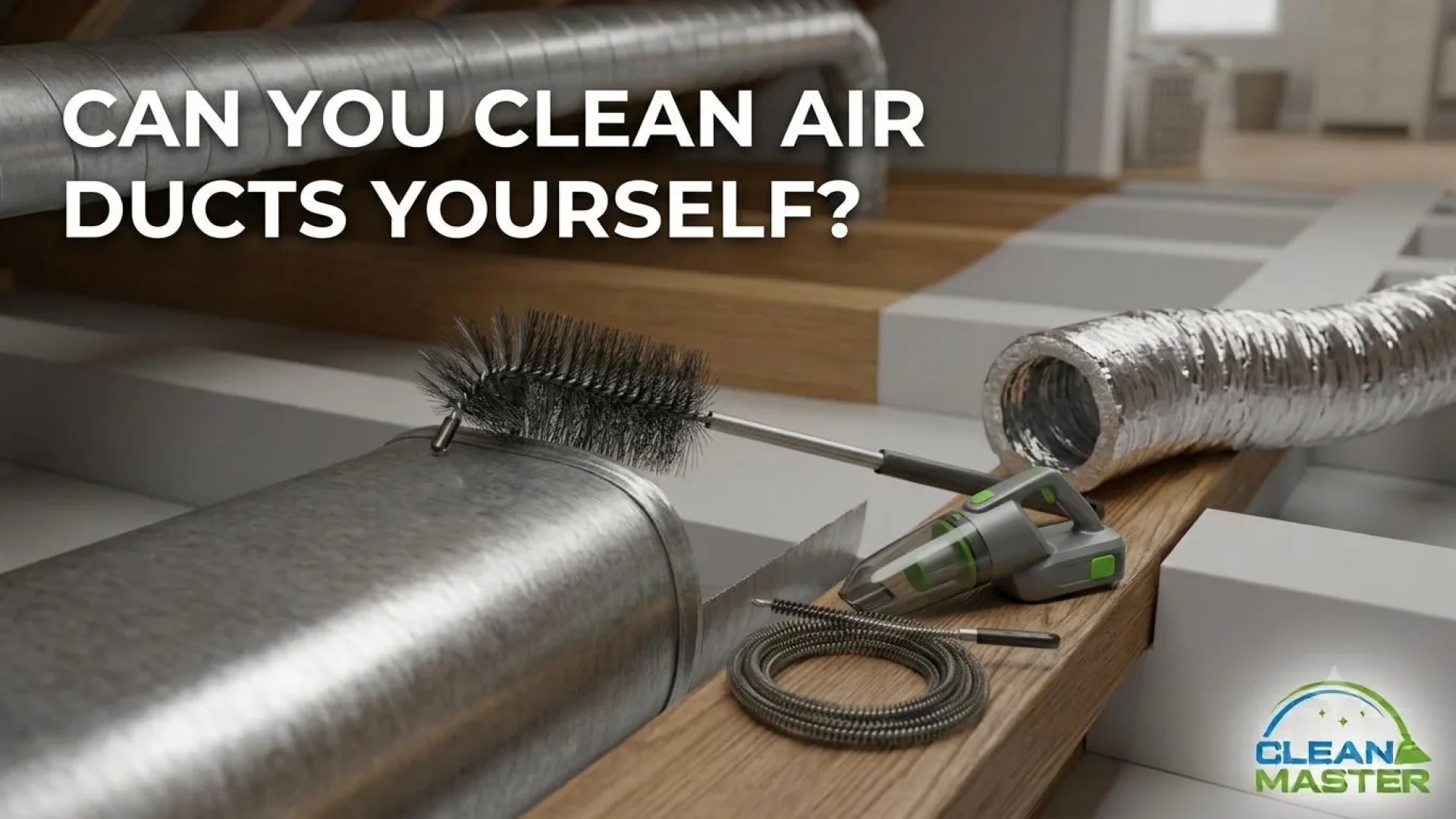
If you decide to answer “can you clean air ducts yourself” with a yes, you need the right tools. Do not expect to do the job with your household vacuum alone. A standard upright vacuum does not have a long enough hose or enough suction power to pull dust from deep inside ducts. You need a wet-dry shop vac with at least four horsepower and a long, flexible hose. The hose should be at least six feet long, but longer is better. You also need a crevice tool and a brush attachment.
A soft-bristled brush on a long handle helps loosen stuck-on dust. You can buy a duct cleaning brush from a hardware store, or use a clean toilet brush or bottle brush attached to a dowel. Microfiber cloths are essential for wiping down surfaces after vacuuming. A flashlight or headlamp helps you see what you are doing. You also need a screwdriver to remove vent covers. For safety, wear an N95 mask, goggles, and gloves. Duct dust contains skin cells, pet dander, pollen, and sometimes mold spores. You do not want to breathe that.
A Step By Step Guide To DIY Duct Cleaning
So you have decided to try. Can you clean air ducts yourself effectively? Follow these steps for the best results. First, turn off your HVAC system completely at the thermostat and the circuit breaker. You do not want the fan blowing dust around while you work. Remove every vent cover in your home. Set them aside in a bucket of warm soapy water to soak while you clean. Cover the floor beneath each open vent with a drop cloth or old towel.
Attach the longest hose to your shop vac. Insert the hose as far as it will go into each duct. Vacuum all surfaces you can reach the bottom, sides, and top. Use your long-handled brush to gently loosen stuck dust. Work from the deepest point back toward the opening. Vacuum again after brushing. For flexible ducts, be gentle. The inner liner tears easily. Wipe the accessible surfaces with a damp microfiber cloth. After you finish all ducts, scrub the vent covers with a brush, rinse them, and let them dry completely. Reinstall the covers, turn your system back on, and run the fan for thirty minutes.
When You Must Call A Professional Instead
For every situation where DIY works, there are five where the answer to “can you clean air ducts yourself” is a firm no. Call a professional if you see visible mold inside your ducts. Mold requires special handling, containment, and EPA-registered biocides. Disturbing mold with a shop vac can release millions of spores into your home. Call a professional if you have rodents or insects in your ducts. Droppings and nests are biohazards that require proper disposal and disinfection.
Call a professional if your ducts are lined with fiberglass insulation. Scrubbing fiberglass releases fibers into the air that irritate lungs and skin. Call a professional if your home was built before 1980 and you have never had your ducts inspected. Older ducts may contain asbestos. Call a professional if you have heavy, matted dust that looks like felt or lint. This indicates years of accumulation that requires a truck-mounted vacuum to remove. Call a professional if anyone in your home has severe asthma, allergies, or a compromised immune system. The risk of stirring up contaminants is too high.
The Hidden Risks Of Aggressive DIY Cleaning
Even if you are handy and own a good shop vac, there are risks to cleaning your own ducts. The biggest risk is damaging your ductwork. Flexible ducts have a thin plastic or foil inner liner. Scrubbing too hard or pushing a vacuum hose aggressively can tear this liner. Once torn, the duct leaks cool air into your attic or crawlspace, wasting energy and reducing comfort. The tear also pulls unfiltered, dusty air into your system, making your indoor air quality worse than before you started.
Another risk is damaging your HVAC equipment. If you insert a brush or vacuum hose too far into a supply duct, you might hit the air handler or the blower fan. These components have delicate parts. A damaged blower wheel costs several hundred dollars to replace. There is also a risk of stirring up contaminants without properly capturing them. If your shop vac does not have a HEPA filter, it will blow fine particles back into your home through the vacuum’s exhaust. You might end up with dirtier air after cleaning than before. Always use a HEPA filter in your shop vac, and consider wearing an N95 mask yourself.
A Simple Maintenance Plan For Cleaner Ducts
Whether you clean your ducts yourself or hire a professional, the most important factor in keeping them clean is regular maintenance. Change your HVAC air filter every one to three months. Use a filter with a MERV rating of at least eight. A clean filter stops dust before it enters your ducts. Keep your home clean. Vacuum carpets and rugs weekly with a HEPA vacuum. Dust surfaces with a damp cloth so particles do not become airborne and get sucked into your returns.
Control your home’s humidity. Mold needs moisture to grow. Keep indoor humidity below fifty percent using dehumidifiers in basements and crawlspaces. Seal your ductwork. Leaky ducts pull dusty attic or crawlspace air directly into your system. Have a professional test your ducts for leaks every few years. Finally, inspect your vents seasonally. Remove a few covers and look inside. If you see dust buildup, vacuum it out before it becomes thick. A little prevention goes a long way. Clean ducts start with clean filters and a clean home, not just occasional vacuuming of vents.
More Air Duct Guides
- How Much Does It Cost To Replace Air Ducts
- How To Disinfect Air Ducts
- How To Stop Condensation On Air Ducts
FAQ’s:
1. Can you clean air ducts yourself with a regular household vacuum?
You can try, but a regular household vacuum is not designed for duct cleaning. Most upright vacuums have short hoses that cannot reach more than a few inches into a duct. Their suction power is also much weaker than a shop vac or professional equipment. You will only remove dust that is right at the opening. The dust further inside will stay there. If you want to DIY, buy or rent a wet-dry shop vac with at least four horsepower, a long hose, and a HEPA filter. A household vacuum is better than nothing, but barely.
2. How often should I clean my own ducts if I do it myself?
If you are doing DIY cleaning of just the vent openings and the first few feet of each duct, aim for once every one to two years. This is less frequent than professional cleaning recommendations because DIY cleaning is less thorough. You are only maintaining the accessible parts of your system. The deeper parts will still accumulate dust over time. Every three to five years, you should still hire a professional for a whole-system cleaning. Think of DIY cleaning as dusting and professional cleaning as deep cleaning. You need both.
3. Can cleaning my own ducts make the air quality worse?
Yes, it can if you are not careful. If your shop vac does not have a HEPA filter, it will blow fine dust particles back into your home through the vacuum’s exhaust. You might end up with more airborne dust after cleaning than before. Aggressive brushing can also loosen dust that you do not capture, and that dust can blow out of vents when you turn your system back on. To avoid this, use a HEPA filter, vacuum gently, and run your HVAC fan for thirty minutes after you finish to capture any remaining loose dust in your system’s filter.
4. Do I need to clean my ducts if I change my air filter regularly?
Changing your air filter regularly is the single best thing you can do for your ducts. A good filter captures most dust before it ever enters your ductwork. However, some dust still gets through, especially if you use low-quality fiberglass filters. Dust also enters through return vents when you vacuum or sweep. Over years, this dust accumulates. Changing your filter every one to three months dramatically reduces how often you need to clean your ducts, but it does not eliminate the need entirely. Most homes still benefit from a professional cleaning every three to five years, even with perfect filter maintenance.
Final Thoughts:
So, can you clean air ducts yourself? The answer is yes, but with important limits. You can vacuum the first few feet of each vent, wash your vent covers, and remove loose dust near openings. This DIY maintenance keeps your system cleaner between professional cleanings and costs almost nothing. However, you cannot reach the main trunk lines, clean the air handler, or remove mold and pests. For those jobs, and for a truly thorough cleaning, you need professional equipment and training.
The best approach is a hybrid one. Clean your own vents every year or two as part of your regular home maintenance. Change your air filter religiously. Keep your home clean and control humidity. Then hire a professional every three to five years for a whole-system cleaning. This gives you the benefits of both worlds. You save money on routine maintenance while still getting the deep clean that only professionals can provide. Your air ducts work hard every day to keep your home comfortable. A little attention from you and occasional help from a professional keeps them working well for years to come.