
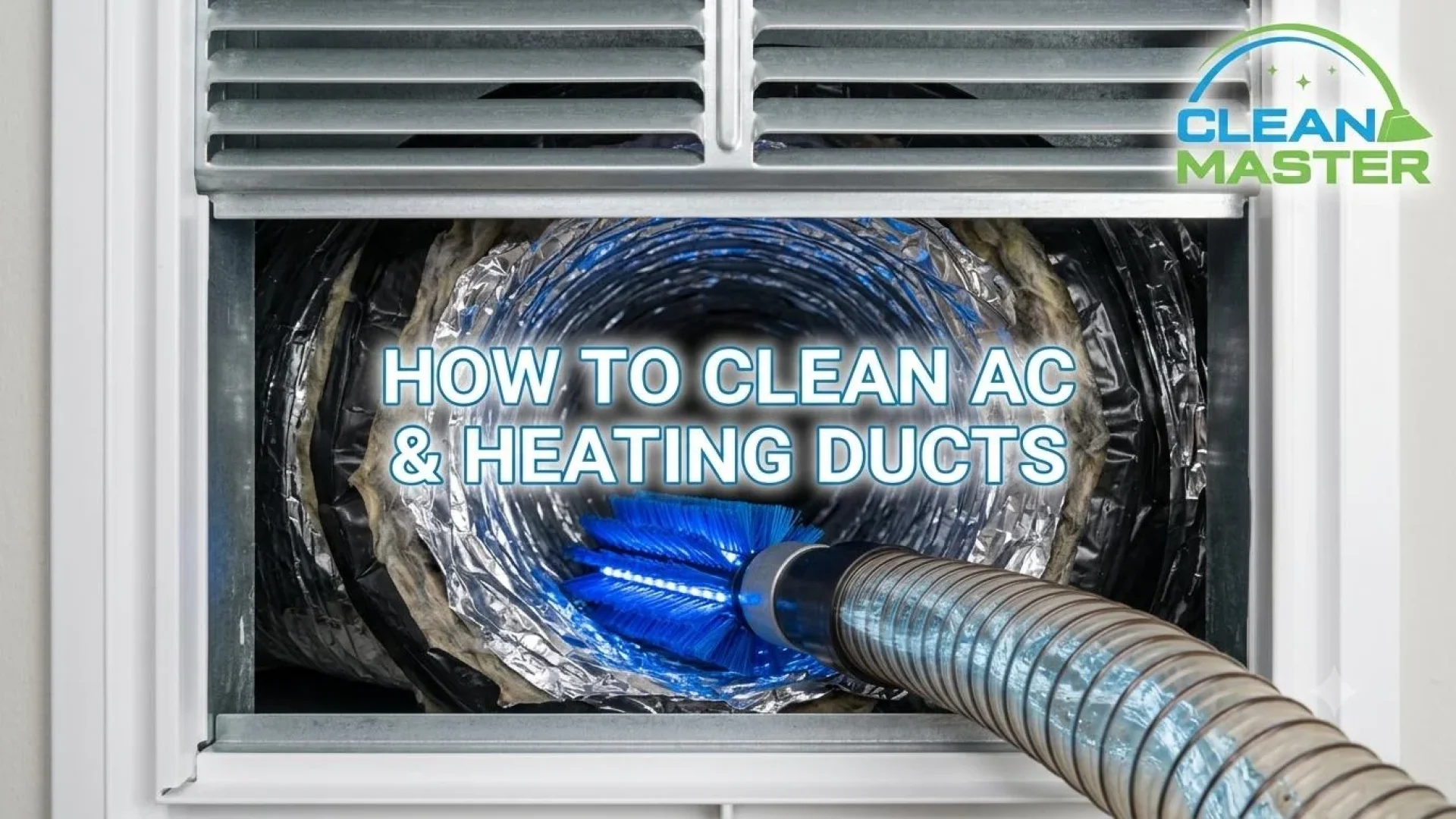
When you’re searching for a fast way to clean your AC and heating ducts, you’re probably dealing with something specific, a musty smell, allergy symptoms flaring up, or just a sense that the system hasn’t been touched in years and you want results without it becoming a weekend project. The honest answer is that there are genuinely fast DIY wins worth doing right now, and there’s a separate, faster path to an actually clean system that most people overlook because it doesn’t feel like the “DIY fast fix” they were searching for.
At Clean Master Carpet Cleaning, we clean air ducts across the entire DFW area every week, and we can tell you plainly: the fastest way to a fully clean duct system isn’t a DIY trick, it’s booking a professional. Here’s both sides of that, laid out honestly.
The Fastest DIY Wins You Can Do Right Now
These genuinely take minutes, not hours, and they address the most immediately impactful parts of the system.
Replace the Filter: 2 Minutes, Highest Impact
If you do nothing else on this list, do this. A clogged filter is restricting airflow and allowing more contamination into your duct system with every cycle the HVAC runs. Pull the old filter, check the size on the frame, and put in a fresh one. This is the single fastest action that improves both air quality and system performance immediately, the difference is often noticeable in airflow within the next heating or cooling cycle.
Quick Register Vacuum and Wipe: 5 to 10 Minutes Per Room
With your household vacuum’s brush attachment, run it across each supply and return register, then vacuum into the duct opening as far as the hose reaches. Wipe the grille with a damp cloth. For a typical home with 12 to 15 registers, this is realistically a 30 to 45 minute task, not instant, but fast relative to its impact, and it’s the highest-value DIY step beyond the filter.
What This Combination Actually Achieves
Together, a fresh filter and a register pass address the most visible and most immediately air-quality-relevant parts of the system in well under an hour. It’s a legitimate fast win, but it’s worth being clear-eyed about what it doesn’t touch: the branch ducts running through your walls and attic, the trunk lines, and the air handler interior, none of which are reachable in a quick DIY session.
Why “Fast Fixes” Beyond This Don’t Actually Work
A lot of advice circulating online suggests quicker ways to “clean” the deeper duct system, and most of it doesn’t hold up.
Dryer sheets or air fresheners taped inside vents mask odor with fragrance; they don’t remove anything that’s actually in the ductwork. The smell returns as soon as the fragrance fades, because the source was never addressed.
Running the fan on high with all vents open doesn’t dislodge or remove anything meaningfully, airflow at normal HVAC speeds isn’t strong enough to loosen debris that’s adhered to duct interior surfaces over months or years.
Spraying cleaning solution into vent openings introduces moisture and chemical residue into a duct system with no way to extract it back out, at best it does nothing, at worst it adds a new problem (mold-friendly moisture, chemical residue distributed through the home) on top of whatever was already there.
None of these are fast paths to clean ducts. They’re fast paths to feeling like you did something, which isn’t the same thing.
The Genuinely Fast Path: Professional Cleaning
This is the part of the answer that surprises people, because professional service doesn’t usually get filed under “fast.” But compare it honestly against the alternative, spending weeks trying to assemble the right tools, attempting partial DIY access to branch ducts (which carries real injury and damage risk), and still ending up with a system that’s only partially addressed.
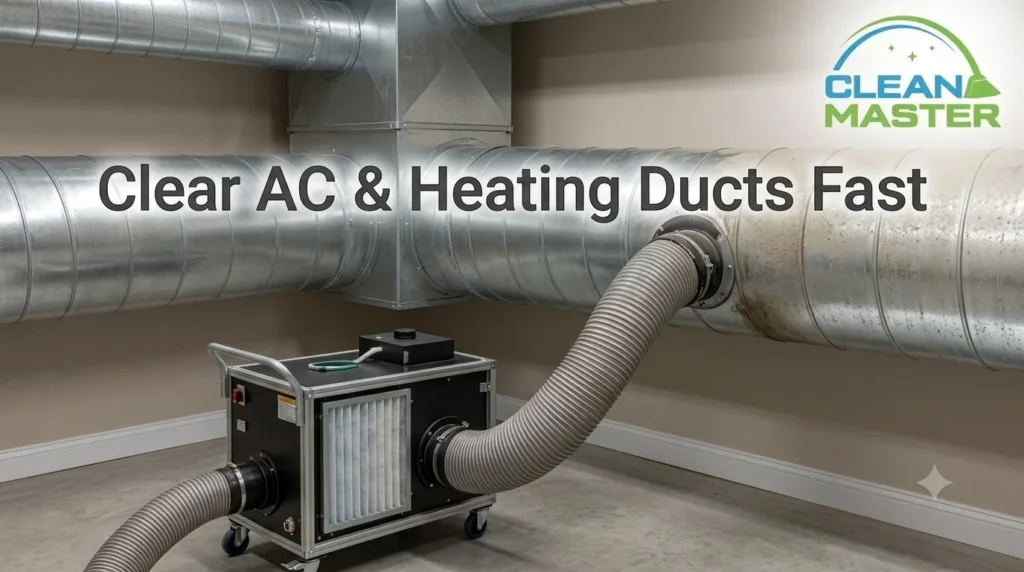
A single Clean Master appointment, typically 2 to 4 hours, fully cleans the entire system in one visit:
- Every supply and return branch duct, agitated and extracted with rotating brushes and negative pressure equipment
- Main trunk lines
- The air handler interior and evaporator coil
- All registers, removed, hand-cleaned, and reinstalled
- A fresh filter installed at the end
There is no DIY path that gets you this result in 2 to 4 hours, or at all, realistically, given that the equipment required (negative pressure vacuum systems, flexible rotary brush cables long enough to traverse full duct runs) isn’t something most homeowners own or can rent. The honest comparison isn’t “DIY fast fix vs. slow professional service,” it’s “DIY partial fix that takes time and doesn’t fully solve the problem vs. one afternoon that actually solves it.”
A Realistic Timeline Comparison
| Approach | Time Investment | What You Actually Get |
| Filter and register vacuum | 30 to 45 minutes | Cleaner registers, fresh filter, improved airflow at the surface level |
| Attempting deeper DIY access | Hours to a full weekend, plus risk | Partial, uneven results; injury and damage risk; often incomplete |
| Professional duct cleaning | 2 to 4 hours, one appointment | Fully cleaned system: branches, trunk lines, air handler, coil, registers |
The middle option, the one that feels most like a “fast fix” attempt, is actually the slowest and least reliable path to a real result once you account for the time spent and the partial outcome.
How to Make the Professional Appointment Itself as Fast as Possible
If your goal is genuinely the fastest path to clean ducts, here’s how to streamline the professional visit:
- Replace your filter before the appointment so the fresh filter is already in place when cleaning begins
- Clear access to every register beforehand, move furniture, rugs, or anything blocking a vent so technicians don’t lose time working around obstacles
- Have your home’s square footage and approximate vent count ready when booking, so you get an accurate time estimate and the right crew size scheduled
- Book a two-person crew if your home is large, this can meaningfully cut the total appointment time compared to a single technician working through a bigger system
Frequently Asked Questions
Is there any way to deep-clean ducts myself in under an hour?
No, not safely or effectively. The equipment required to reach and extract debris from full duct runs isn’t something a quick DIY session can replicate, regardless of how much time you’re willing to spend. The fast wins available to you (filter, registers) genuinely take under an hour; anything beyond that requires either much more time and risk, or professional equipment.
How quickly will I notice a difference after cleaning?
For the DIY filter and register steps, often within the next HVAC cycle, airflow and immediate surface dust improve quickly. For a full professional cleaning, many homeowners notice a difference in airflow consistency and air quality within the first day, with the fuller benefit (reduced dust settling, less odor) becoming apparent over the following week as the system runs through normal cycles with a clean filter and clean ductwork.
Can I get same-day or next-day professional duct cleaning in DFW?
Availability varies by schedule, but Clean Master can often accommodate appointments faster than homeowners expect, particularly if you’re flexible on time of day. Contact us directly with your timeline and we’ll let you know the soonest available slot.
The Bottom Line: Do the 30-Minute Version Today, Book the Real Fix This Week
If you want results right now, replace your filter and vacuum your registers, that’s a legitimate 30-to-45-minute win. If you want your ducts actually clean, not just the visible parts, a single professional appointment is the fastest real path to that result. Anything in between costs more time than either option for less reliable results. Contact Clean Master Carpet Cleaning today to schedule professional air duct cleaning across the entire DFW area.