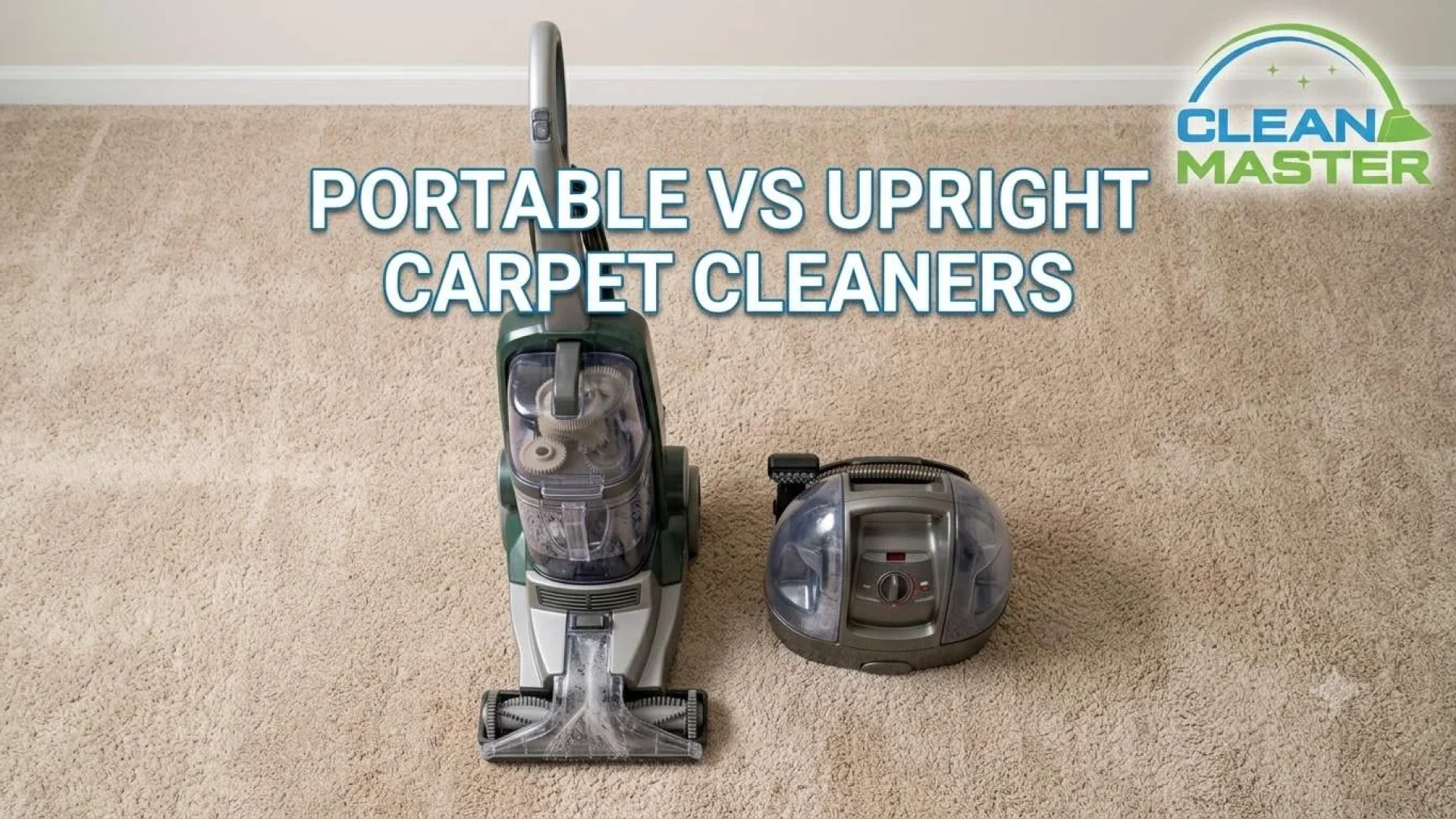
You have a portable spot cleaner and an upright full-size carpet cleaner, and one of them is out of solution. The other has solution left. It’s tempting to assume that carpet cleaning solution is carpet cleaning solution, but portable and upright machines use meaningfully different formulations, and putting the wrong one in the wrong machine causes problems that range from poor cleaning results to machine damage.
At Clean Master Carpet Cleaning, we work with professional equipment every day and understand the engineering decisions that make different machines work the way they do. Here’s the clear answer on portable vs. upright solution compatibility, and how to make sure you’re using the right product in your specific machine.
Why Portable and Upright Machines Aren’t the Same System
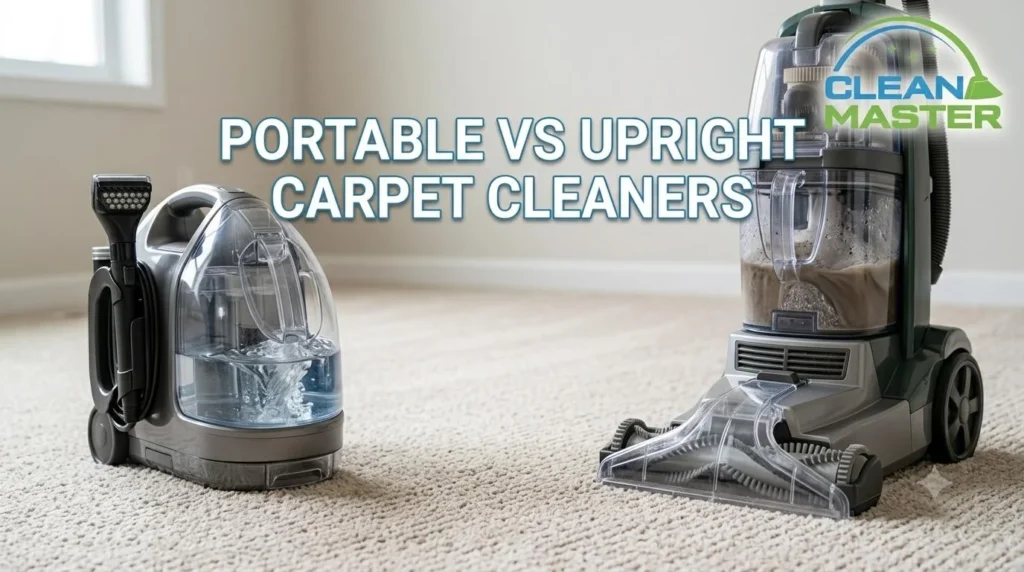
Portable carpet cleaners, compact handheld or countertop units like the Bissell Little Green, Hoover Spotless, or similar, and full-size upright carpet cleaners are designed around different operating parameters. The most significant difference for solution compatibility is how each machine delivers solution to the carpet surface.
Portable machines typically use a pressurized spray system that delivers a concentrated fine mist to a small, targeted area. Because the cleaning area is small and the dwell time before extraction is short, portable solutions are formulated at a higher concentration, more cleaning chemistry per unit volume, to compensate for the limited contact time and smaller water volume involved.
Upright machines work differently. They distribute solution through a wider spray bar or nozzle across a full cleaning path, use more total water volume per pass, and typically have a longer contact time between solution and carpet before extraction. Upright solutions are formulated at lower concentration because the greater water volume and wider distribution dilutes the solution to the working strength automatically.
This concentration difference is the core incompatibility. Using a concentrated portable solution in an upright machine without adjusting for the different dilution ratio means putting a significantly stronger solution into a system designed for a weaker one.
What Happens When You Use the Wrong Solution
Excessive Foaming
This is the most immediate and most visible consequence. Portable solutions formulated for small-area concentrated use produce significantly more foam when distributed through an upright machine’s higher-volume spray system. The foam:
- Fills the recovery tank with foam rather than liquid, reducing effective tank capacity and requiring frequent stops to empty
- Reduces suction performance, foam in the extraction path diminishes the suction power available to pull liquid from the carpet fiber
- Leaves foamy residue in the carpet, which dries as a sticky film that attracts soil and causes the re-soiling problem we see regularly in DFW homes where the wrong solution was used
The reverse scenario, upright solution in a portable machine, typically produces underwhelming cleaning results because the lower-concentration formula isn’t strong enough for the small-area, short-contact-time application the portable machine is designed for. Read our guide on getting rid of carpet cleaner residue if you’re already dealing with this problem.
Machine Damage and Warranty Issues
Beyond the immediate performance problems, using non-recommended solutions in either machine type creates longer-term risks.
Foam accumulation in an upright machine’s internal pathways, pump, spray bar, and recovery tank connections, can cause blockages and seal damage over time. The foam that seems like a cosmetic problem in the recovery tank is the same foam moving through the machine’s internal components with every cleaning pass.
Warranty implications are equally significant. Bissell, Hoover, Rug Doctor, and virtually every other carpet cleaner manufacturer specify in their warranty documentation that only manufacturer-recommended or approved solutions should be used. Using a solution designed for a different machine type, even a solution from the same brand, falls outside this approval in most cases. If the machine malfunctions after using an incompatible solution, the warranty claim is at risk.
Performance That Doesn’t Match Expectations
Even in cases where the solution mismatch doesn’t cause immediate foam overflow or machine issues, the cleaning result will likely disappoint. A portable formula in an upright machine at full upright water volume is either over-concentrated, causing residue, or gets diluted to below effective strength by the higher water volume. Neither outcome is the cleaning performance the solution was designed to deliver. An upright formula in a portable machine is under-strength for the application and produces noticeably weaker cleaning on the spot being treated.
How to Identify the Correct Solution for Your Machine
The right solution for any carpet cleaner is the one the manufacturer recommends, not the one that’s available, the cheapest, or the most familiar.
Check the machine’s manual first. Every carpet cleaner comes with documentation that specifies compatible solution types and in many cases lists specific products by name or product code. If you no longer have the manual, the manufacturer’s website typically has the same information available as a downloadable PDF.
Look for machine-specific branding on solution packaging. Bissell solutions, for example, are labeled for specific machine lines. These aren’t just marketing distinctions, they reflect genuine formulation differences for different machine operating parameters.
When in doubt, contact the manufacturer. Most major carpet cleaner brands have customer service lines or chat support that can confirm solution compatibility for your specific model number. A two-minute call or chat prevents a problem that’s difficult to fix after the fact.
Do Generic Carpet Cleaning Solutions Work in Either Machine Type?
This is the question that comes up most often, and the answer is: sometimes, with caution.
Some third-party and generic carpet cleaning solutions are formulated for “universal” use across both portable and upright machines. These typically achieve this by using a moderate concentration with low-foaming surfactants designed to perform adequately across different dilution ratios and machine types.
For generic solutions to be appropriate in your machine:
- The label should explicitly state compatibility with the machine type you’re using (portable spot cleaner, full-size upright, or both)
- The solution should specify low-foaming formulation, this is the single most important characteristic for machine safety
- The recommended dilution ratio should match what your machine delivers (check the machine manual for the expected solution concentration)
Generic solutions that meet these criteria can work reasonably well. Generic solutions that don’t specify machine type, don’t specify low-foaming, or list concentration recommendations incompatible with your machine should be avoided, the risk of the problems described above is real regardless of the solution’s brand or price point.
At a Glance: Portable vs. Upright Solution Compatibility
| Portable Solution in Upright | Upright Solution in Portable | Machine-Specific Solution | |
| Foaming risk | High | Low | Designed for machine, minimal |
| Cleaning performance | Over-concentrated or residue | Under-strength | Optimized for machine |
| Machine damage risk | Moderate, pathway buildup | Low | None when used as directed |
| Warranty implications | At risk | Potentially at risk | Protected |
| Recommended? | No | No | Yes |
Matching the right solution to the right machine keeps your carpets safe, but neither a portable nor an upright unit reaches the heat and suction of a professional system. For heavily soiled rooms, our Dallas–Fort Worth carpet cleaning team can handle the deep clean so your own machine only has to cover quick touch-ups between visits.
More Carpet Care Guides
Frequently Asked Questions
Can I dilute a portable solution to use it in an upright?
Theoretically yes, if you know the portable solution’s concentration and your upright machine’s expected dilution ratio, you could calculate an appropriate further dilution. In practice, this is guesswork without detailed formulation information from the manufacturer, and the foaming behavior of the solution doesn’t change with dilution in a predictable way for all formulas. The simpler and safer answer is to use the solution the upright machine was designed for.
My portable and upright are both Bissell. Can I use the same solution?
Not necessarily. Bissell makes machine-specific solutions for different product lines, and a solution designed for the Bissell Little Green portable cleaner is not the same formulation as one designed for the Bissell ProHeat 2X upright. Even within the same brand, check the specific solution’s compatibility with your specific machine model before using it.
What should I do if I already used the wrong solution and my machine is foaming?
Stop the machine and empty the recovery tank fully. Run two to three tanks of clean warm water through the machine in extraction-only mode to flush the foam and residual solution from the internal pathways. Allow the machine to run until the recovery tank shows only water with minimal foam, this indicates the system is largely flushed. For the carpet, run a plain warm water extraction pass to remove solution residue from the fiber, then allow to dry actively.
The Bottom Line: Solution Compatibility Isn’t Optional
Portable and upright carpet cleaners are different machines with different solution systems. Using portable solution in an upright creates foaming, residue, and machine risk. Using upright solution in a portable produces underwhelming cleaning results. The right solution is the one your specific machine was designed for, and the two minutes it takes to check the manual or manufacturer’s website is significantly less than the time and cost of dealing with a foaming recovery tank, a residue-laden carpet, or a voided warranty.
For cleaning that doesn’t require managing solution compatibility or machine maintenance, contact Clean Master Carpet Cleaning today for professional carpet cleaning across the entire DFW area.