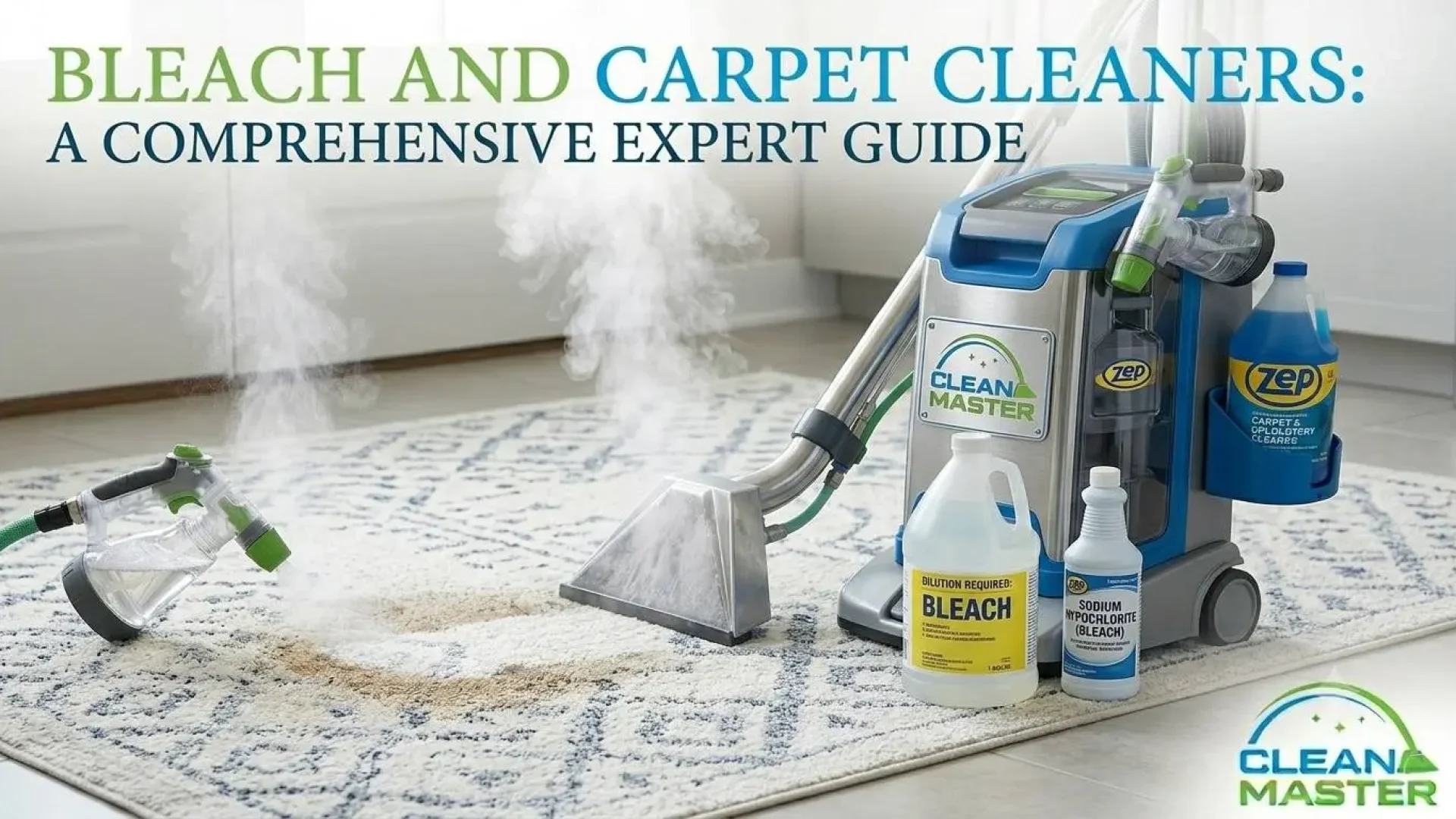
The logic seems reasonable on the surface: bleach kills bacteria, disinfects surfaces, and tackles tough stains in other parts of the home. If a carpet needs a deep, sanitizing clean, why not add some to the carpet cleaner?
Because bleach and carpet are fundamentally incompatible, and the damage bleach causes is permanent, immediate, and in some cases extends well beyond the carpet itself.
At Clean Master Carpet Cleaning, we’ve taken calls from DFW homeowners who used bleach in their carpet cleaner or applied it directly to carpet and were left with results they couldn’t undo. The calls share a common thread: the damage was obvious within minutes and there was nothing to be done about it after the fact. Here’s the complete picture of what bleach does to carpet, why it’s dangerous in a cleaning machine, and what actually works instead.
What Bleach Is and Why It’s Wrong for Carpet
Chlorine bleach, sodium hypochlorite, is an oxidizing agent. It works by breaking chemical bonds in organic compounds, which destroys the molecular structure of bacteria, viruses, and biological material. On hard, non-porous surfaces like tile or sealed countertops, this makes it an effective disinfectant. Applied and wiped away, it leaves the surface intact.
Carpet is not a hard, non-porous surface. It’s a dyed fiber system, typically nylon, polyester, or olefin, where the color is chemically bonded into the fiber during manufacturing. Bleach doesn’t distinguish between the bacteria it’s targeting and the dye bonds it contacts. It attacks both with equal indifference.
The result is not a cleaner carpet. It’s a discolored, structurally weakened carpet that cannot be restored.
The Risks and Why Each One Is Serious
Permanent Color Stripping and Discoloration
This is the most immediately visible consequence, and it’s irreversible. Chlorine bleach begins stripping color from carpet fibers on contact. The speed and severity depends on the bleach concentration, the carpet dye type, and the fiber material, but no carpet is immune. Synthetic fibers dyed with acid dyes or disperse dyes are particularly vulnerable and can show visible discoloration within seconds of contact.
The discoloration typically progresses from the original carpet color to orange, yellow, or white as dye is progressively destroyed. Unlike a stain that sits on top of the fiber, this is a chemical change to the fiber itself. There is no cleaning treatment, no color restoration product, and no professional technique that reverses bleach discoloration on carpet. The affected area either gets cut out, patched, or the carpet gets replaced.
We’ve had DFW clients contact Clean Master after bleach, sometimes applied intentionally as a cleaning attempt, sometimes from an accidental spill, left orange streaks or white patches across their carpet. In every case, the honest answer was the same: the discoloration is permanent. A professional clean could address anything around it, but the bleached area itself was beyond recovery.
Dangerous Fumes When Mixed With Cleaning Solution Residue
This is the risk that goes beyond the carpet itself, and it’s the one that makes bleach in a carpet cleaner particularly dangerous rather than just damaging.
Carpet cleaning machines typically have residue from previous cleaning solutions in their tanks, hoses, and internal components. Many carpet cleaning solutions contain ammonia compounds, surfactants, or other chemicals that react with chlorine bleach to produce toxic gases, including chloramine vapors and in some combinations chlorine gas. These gases are respiratory irritants that cause coughing, shortness of breath, chest pain, and eye and throat irritation. In enclosed spaces like carpeted rooms with limited ventilation, the concentration can build quickly.
Even if the machine is clean, the carpet itself may carry residue from previous cleaning products. Bleach introduced through a carpet cleaner contacts that residue across the entire cleaned area, a far larger exposure surface than a localized spill.
This isn’t a theoretical risk. It’s a documented consequence of mixing bleach with common household and cleaning chemicals, and it’s a significant reason why bleach has no place in a carpet cleaning machine under any circumstances.
Fiber Degradation Weakening Carpet Structure
Beyond color, bleach damages the structural integrity of carpet fibers over time. The oxidizing action that makes bleach effective as a disinfectant also attacks the polymer chains in synthetic fibers, breaking them down progressively and reducing tensile strength.
Carpet treated with bleach may initially look merely discolored, but the fiber degradation continues after the bleach has dried. Affected fibers become brittle, break more easily under foot traffic, and begin to shed or fray at an accelerated rate. Over weeks and months, a bleached area develops a worn, thin appearance that spreads beyond the initial contact point as degraded fibers are ground down by normal use.
What About Diluted Bleach? Is That Safer?
This question comes up regularly, and the answer is no, for the same reasons as concentrated bleach, just with a slightly longer timeline before the damage becomes visible.
Dilution reduces the speed of the reaction but doesn’t change its nature. A diluted bleach solution still oxidizes carpet dye, still risks chemical reactions with cleaning solution residue, and still degrades fiber structure. The only variable is how quickly the damage manifests, not whether it does.
There is no safe bleach concentration for use on carpet or in a carpet cleaning machine.
What to Use Instead
Enzyme Cleaner for Organic Stains and Odors
For the biological contamination that most commonly drives disinfection concerns, pet urine, vomit, blood, and other organic material, enzyme cleaners are both more effective and completely safe for carpet fibers and machines. Enzyme cleaners break down organic compounds at a molecular level, eliminating both the stain and the odor source rather than simply oxidizing the surface.
Unlike bleach, enzyme cleaners work with carpet chemistry rather than against it. They’re safe for all synthetic carpet types, won’t affect dye bonds, and leave no harmful residue. Read our full guide on how to use enzyme cleaner on carpet for the right technique. For pet odor specifically, the most common scenario where people consider bleach as a last resort, enzyme treatment is the professional standard, not a compromise.
Hydrogen Peroxide for Spot Treatment, With Important Caveats
Hydrogen peroxide at 3% solution, standard pharmacy grade, has mild bleaching properties that make it useful for certain light stains on light-colored carpet. It’s significantly gentler than chlorine bleach and is less likely to cause dramatic discoloration, but it is not color-safe on all carpet types.
Before using hydrogen peroxide on any carpet stain, test in a hidden area and allow it to dry fully before assessing. Never use hydrogen peroxide on dark or vibrant carpet colors, even the 3% solution can cause visible lightening. And never use it in a carpet cleaning machine tank, it’s a spot-treatment tool applied carefully to a specific area, not a cleaning solution for broad application.
If you’re uncertain whether your carpet can tolerate hydrogen peroxide, skip it and use an enzyme cleaner instead. The risk-reward calculation doesn’t favor hydrogen peroxide on any carpet where color matters.
Oxygen Bleach as a Safer Alternative
Oxygen bleach, sodium percarbonate or sodium perborate, found in products like OxiClean, releases hydrogen peroxide when dissolved in water, making it a gentler oxidizing cleaner than chlorine bleach. It’s color-safer on most synthetic carpets, biodegradable, and doesn’t produce the toxic fume risk associated with chlorine bleach mixing with other chemicals.
Oxygen bleach is not color-safe on all carpet types, so test in a hidden area before any broader application, but it’s a substantially safer option for homeowners who need an oxidizing cleaner for specific stain types. Check that any oxygen bleach product you’re considering is explicitly listed as safe for carpet before use, and follow dilution instructions carefully.
Oxygen bleach is also safe to use in most carpet cleaning machines when properly diluted, unlike chlorine bleach, which should never go in a machine under any circumstances.
Professional Carpet Cleaning for Deep Disinfection
For genuine disinfection needs, post-illness cleaning, sanitizing after flooding or contamination, or deep treatment of heavily soiled carpet, professional carpet cleaning with hot water extraction and professional-grade antimicrobial treatments is the appropriate solution.
At Clean Master Carpet Cleaning, we use professional formulations designed to clean, sanitize, and deodorize carpet without the damage risks of bleach. Hot water extraction at high temperatures combined with appropriate chemistry achieves the disinfection result people are looking for when they consider bleach, and leaves the carpet intact, color-correct, and structurally sound.
We serve the entire DFW area with carpet cleaning, upholstery cleaning, tile and grout cleaning, and air duct cleaning. When a carpet situation feels beyond what safe DIY methods can address, that’s exactly when professional equipment and professional chemistry make the difference.
A Quick Alternative Reference
| Goal | Don’t Use | Use Instead |
| Eliminate pet urine odor | Bleach | Enzyme cleaner |
| Remove organic stains | Bleach | Enzyme cleaner |
| Lighten specific stains on light carpet | Bleach | Hydrogen peroxide (test first) |
| General oxidizing clean | Chlorine bleach | Oxygen bleach (test first) |
| Deep disinfection of heavily soiled carpet | Bleach | Professional hot water extraction |
Bleach can permanently strip color from carpet in seconds and weaken fibers over time. For tough stains that tempt you to reach for the bleach, our carpet cleaning Fort Worth technicians use color-safe spotters that lift the stain without leaving a pale patch.
Frequently Asked Questions
What if I already put bleach in my carpet cleaner? What should I do?
Stop using the machine immediately. Flush the tank, hoses, and internal components thoroughly with clean water multiple times before using the machine again with any other product. Ventilate the room fully. Assess the carpet once it’s dry. If discoloration has occurred, contact a professional to understand your options, though be aware that bleach discoloration on carpet fibers is not reversible.
Can I use bleach on carpet in a rental property between tenants?
No, for all the reasons above. Bleach will discolor and degrade the carpet, creating a liability and a replacement cost far exceeding whatever cleaning benefit was intended. Enzyme cleaner and professional extraction are the appropriate tools for rental property carpet cleaning between tenants.
Is there any carpet type that can handle bleach?
Solution-dyed carpet, where color is added to the fiber during manufacture at the polymer level rather than after, has significantly higher bleach resistance than conventionally dyed carpet. Some solution-dyed commercial carpet can tolerate diluted bleach without visible discoloration. However, the fume risk and fiber degradation concerns still apply, and bleach is still not recommended for use in carpet cleaning machines even with solution-dyed carpet. If you have solution-dyed carpet and a specific contamination concern that seems to require bleach, consult a professional before proceeding.
The Bottom Line: Bleach Has No Place in a Carpet Cleaner
Putting bleach in a carpet cleaner isn’t a bold cleaning strategy, it’s a guaranteed path to permanent color damage, potential toxic fume exposure, and structural fiber degradation. The damage is irreversible and the cleaning benefit that prompted the decision could have been achieved safely with enzyme cleaner, oxygen bleach, or professional extraction.
Whatever the carpet problem is that made bleach seem like the answer, there’s a safer solution that actually solves it, without the aftermath. Contact Clean Master Carpet Cleaning today for professional carpet cleaning across the entire DFW area, and get the deep clean result you’re looking for without putting your carpet or your household at risk.