
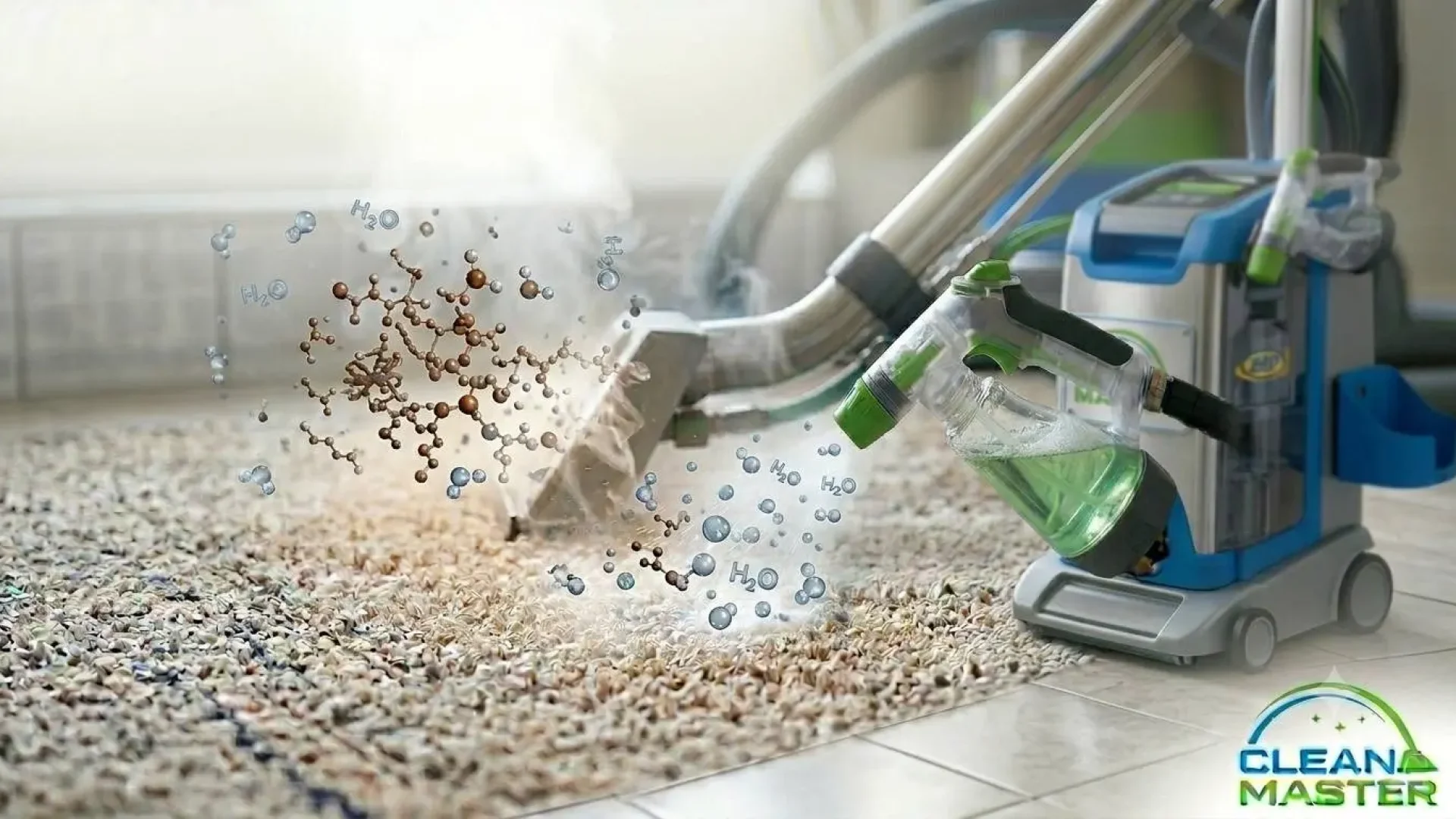
Steam cleaning has a genuine deodorizing effect on carpet, the heat neutralizes many odor-causing compounds and the vapor lifts surface contamination that contributes to stale smells. For a lot of common carpet odors, it works well.
But steam has a ceiling. For odors rooted deep in the carpet backing, padding, or fiber structure, steam addresses the symptom without reaching the source, and in one important case, it can actually make the problem worse before making it better.
At Clean Master Carpet Cleaning, we’ve seen both outcomes across DFW homes. Here’s the odor-by-odor breakdown of what steam handles, what it doesn’t, and what to reach for instead.
Odor-by-Odor: What Steam Cleaning Actually Does
General Stale Carpet Smell: Works Well
The flat, musty odor that accumulates in carpet over months of normal use, foot traffic, dust, skin cells, ambient household smells, responds well to steam cleaning. The heat disrupts the volatile compounds responsible for that background stale smell, and the vapor lifts the surface-level organic material contributing to it.
For carpets that simply smell lived-in and need refreshing, steam cleaning delivers a noticeable improvement that lasts for weeks with regular vacuuming maintenance.
Food and Cooking Odors: Works Well for Recent Odors
Food odors absorbed into carpet fiber, spilled cooking oil, food particles, general kitchen traffic, respond reasonably well to steam, particularly when the source is relatively recent. The heat breaks down volatile fatty acids and organic compounds that carry food smell.
For older or deeply embedded food odors, a baking soda pre-treatment applied before steaming significantly improves results. Sprinkle generously, leave for 30 minutes to absorb odor compounds, vacuum thoroughly, then steam. The combination addresses both surface and absorbed odor more effectively than steam alone.
Pet Urine Odor: Steam Alone Makes It Worse
This is the most important exception, and the one that catches the most people off guard. Steam heat activates the uric acid crystals in pet urine, temporarily intensifying the odor before it dissipates. Without enzyme pre-treatment to break down those crystals first, steam doesn’t solve pet urine smell. It briefly amplifies it, then leaves the underlying source intact.
The correct sequence for pet urine odor is always:
- Apply enzyme cleaner generously to the affected area
- Allow full dwell time, 15 to 30 minutes minimum, longer for set stains
- Blot thoroughly
- Steam as a finishing step only after enzyme treatment is complete
Enzyme cleaner breaks down uric acid at the molecular level, eliminating the odor source rather than temporarily masking or activating it. Read our full guide on how to use enzyme cleaner on carpet for the right technique. Steam alone is never the right first response to pet urine smell.
Musty and Mildew Odor: Works on Surface, Not Deep Mildew
Steam’s heat kills surface mold and mildew spores effectively, which is why it works on the mild mustiness that develops in carpet in humid conditions. For light, surface-level mildew odor, steam cleaning often resolves it completely.
For mildew that has established itself in the carpet backing or padding, typically from a previous over-wetting event or persistent humidity, steam can’t reach deep enough to address the source. The surface smell may improve temporarily, but if the mildew is in the padding, it returns. This situation requires professional extraction and in more serious cases, padding replacement. Read our guide on whether carpet cleaning can cause mold to understand how moisture and mildew develop in carpet systems.
If the musty smell returns within a few days of steam cleaning, the source is below the surface and needs professional assessment.
Smoke and Tobacco Odor: Steam Alone Is Insufficient
Smoke odor is one of the most persistent carpet odors to eliminate because the compounds responsible, polycyclic aromatic hydrocarbons and other particulates, penetrate deeply into fiber, backing, and padding. They also settle into walls, upholstery, and HVAC systems simultaneously, which means carpet-only treatment addresses one part of a whole-room problem.
Steam improves smoke odor in carpet noticeably, the heat volatilizes some surface-level smoke residue and the vapor lifts particulates from the fiber. But for meaningful, lasting smoke odor removal from carpet, professional hot water extraction with odor-neutralizing chemistry is required. Steam alone produces a temporary improvement that fades as remaining compounds off-gas from deeper fiber layers.
At a Glance: Steam Cleaning Odor Effectiveness
| Odor Type | Steam Effectiveness | Best Approach |
| General stale smell | Very good | Steam clean as normal |
| Food and cooking odors | Good | Baking soda pre-treatment then steam |
| Pet urine odor | Can worsen | Enzyme cleaner first, then steam |
| Musty and surface mildew | Good for surface only | Steam for light cases; pro clean for deep mildew |
| Smoke and tobacco | Temporary improvement only | Professional extraction and odor treatment |
When to Call Clean Master Instead
Steam cleaning handles maintenance-level odor effectively. When the smell is coming from deeper in the carpet system, backing, padding, or embedded contamination, professional hot water extraction is what reaches it.
At Clean Master Carpet Cleaning, we combine professional-grade extraction with chemistry matched to the specific odor type. Pet odor, smoke, mildew, each requires a different treatment approach, and getting it right means the odor doesn’t come back in a week.
We serve the entire DFW area with carpet cleaning, upholstery cleaning, tile and grout cleaning, and air duct cleaning. If steam hasn’t resolved the smell, we will.
Frequently Asked Questions
How long after steam cleaning does carpet odor go away?
For odors steam handles well, stale smell and light food odors, the improvement is noticeable once the carpet dries, typically within 1 to 3 hours. If odor returns after the carpet is fully dry, the source is deeper than steam reached. Read our guide on why carpet smells worse after cleaning if you’re dealing with a persistent post-clean smell.
Can I add deodorizer to my steam cleaner to boost odor removal?
Most steam cleaner manufacturers recommend distilled water only in the tank. Adding deodorizing products risks machine damage and can leave residue. If you want to boost odor removal, use baking soda as a dry pre-treatment before steaming rather than adding anything to the machine.
My carpet smells worse immediately after steam cleaning. Is that normal?
For pet urine areas, yes, steam heat temporarily activates uric acid crystals, which intensifies the smell before it fades. This is why enzyme pre-treatment is essential before steaming any pet urine area. For other odor types, a brief intensification during the wet phase that clears as the carpet dries is normal. If it persists after full drying, the source needs deeper treatment.
The Bottom Line: Steam Deodorizes, It Doesn’t Always Eliminate
Steam cleaning is a genuine and effective tool for surface-level carpet odor. General mustiness, light food smells, and everyday stale carpet odor all respond well. Pet urine, deep smoke contamination, and mildew in the backing require more, either enzyme pre-treatment, professional extraction, or both.
Match the treatment to the odor source and you get lasting results. Rely on steam alone for odors it can’t reach and you get temporary improvement that cycles back. Contact Clean Master Carpet Cleaning today for odor treatment that goes to the source across the entire DFW area.