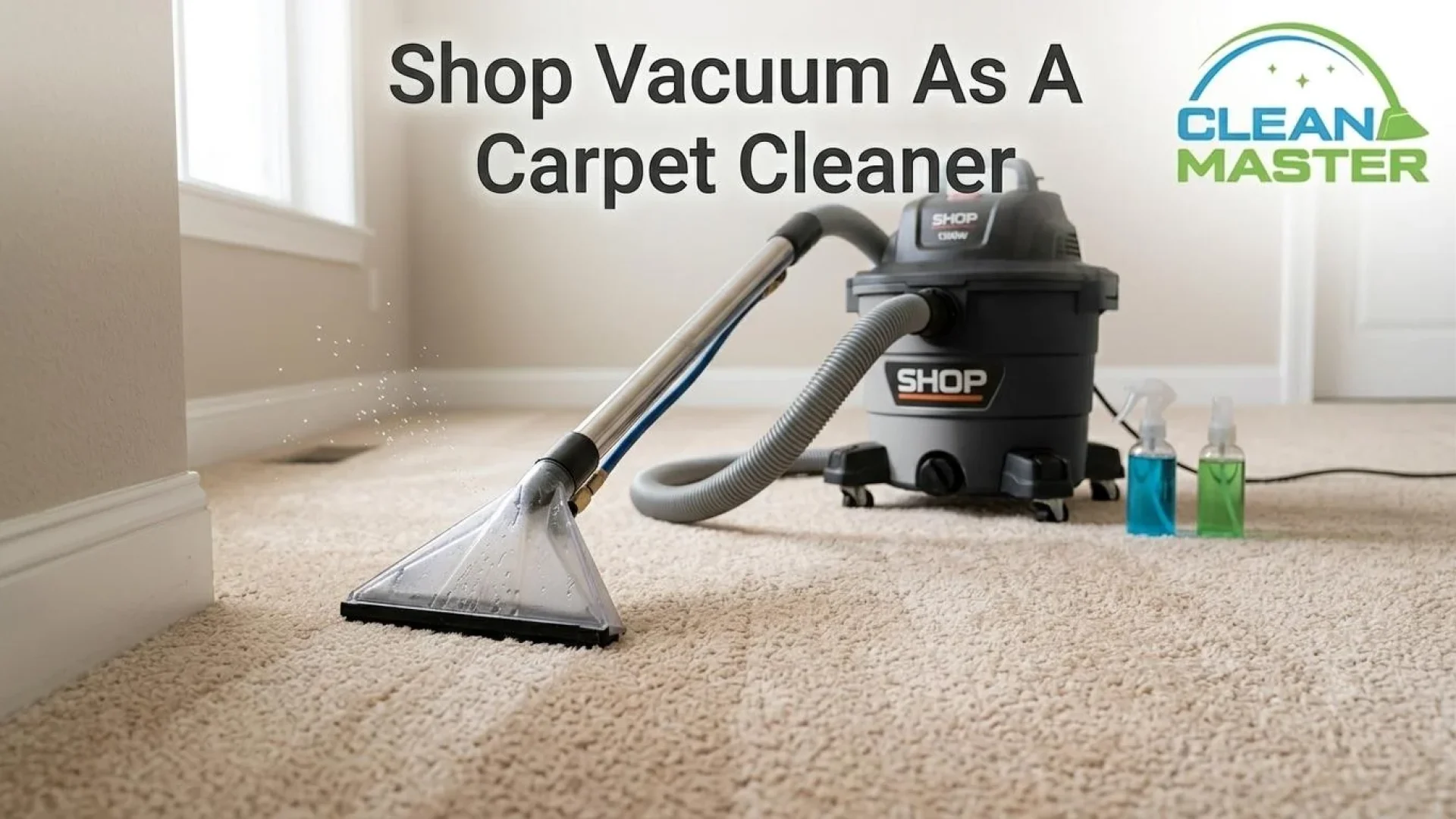
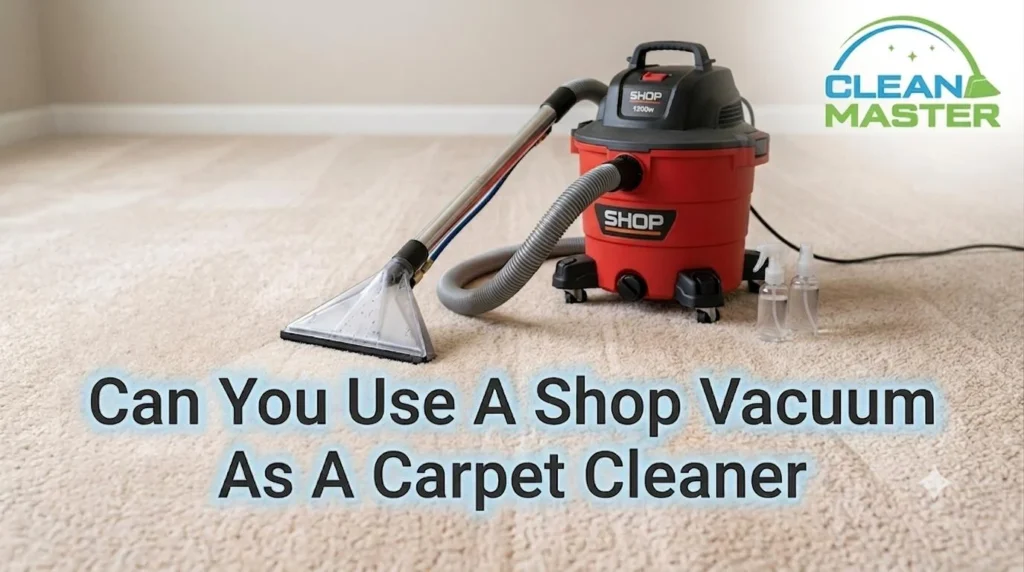
A shop vac is one of the most genuinely useful tools in a garage, powerful suction, durable, handles wet and dry debris, and a fraction of the cost of a dedicated carpet cleaning machine. So it’s a reasonable question: can it stand in for a carpet cleaner?
The short answer is no, not because a shop vac isn’t powerful, but because it’s solving a different problem entirely. At Clean Master Carpet Cleaning, we work with the equipment that actually cleans carpet every day across the DFW area, and understanding the gap between extraction and cleaning explains exactly where a shop vac fits and where it doesn’t.
What a Carpet Cleaner Actually Does That a Shop Vac Doesn’t
The fundamental difference comes down to one missing capability: a shop vac has no way to apply cleaning solution and agitate it into the carpet fiber. It’s a suction tool, it pulls things out. A carpet cleaner is a complete system that puts cleaning chemistry in, mechanically works it into the fiber, and then extracts it back out along with the soil it loosened.
No rotating brush agitation to loosen embedded soil is the specific gap that matters most. Carpet cleaning machines use a rotating brush or agitation head that physically works cleaning solution down into the base of the carpet pile, breaking the bond between soil particles and the fiber. This mechanical action is what actually lifts soil that’s worked its way deep into the carpet over weeks or months of foot traffic, the embedded grime that sits below the surface, not just collecting on top of it.
A shop vac has no agitation mechanism at all. Run a shop vac hose over carpet and it removes loose surface debris, crumbs, dirt, hair, anything sitting on top of the fiber that isn’t bonded to it. It does nothing to the soil that’s actually embedded in the pile, because there’s no mechanism to loosen that soil in the first place. You can run a shop vac over dirty carpet a dozen times and the embedded grime will still be there, because suction alone was never going to remove it.
This is the core reason a shop vac can’t replace a carpet cleaner: cleaning carpet requires loosening soil before you can extract it, and a shop vac only does the second half of that process.
Where a Shop Vac Genuinely Helps With Carpet Care
None of this means a shop vac is useless for carpet maintenance, it has a real, specific role that complements rather than replaces proper cleaning.
Pre-vacuuming before a real carpet clean. A shop vac’s strong suction is excellent for removing loose surface debris before a carpet cleaning machine goes to work, arguably more thorough than a standard household vacuum for this purpose, particularly on heavier debris like pet hair or post-renovation dust. Clearing that surface material first means the carpet cleaner’s solution and agitation can focus entirely on embedded soil rather than wasting effort on material a vacuum could have handled. Read our guide on whether you should vacuum before carpet cleaning for more on this step.
Extracting standing water from spills. A wet/dry shop vac is genuinely one of the best tools available for pulling up a fresh spill or minor flooding before it has a chance to soak deep into carpet fiber and padding. Run in extraction-only mode (no solution, just suction), a shop vac with strong suction can pull a meaningful volume of liquid out of carpet quickly, faster, in some cases, than a smaller-capacity carpet cleaner with a limited recovery tank.
Post-construction or heavy debris cleanup. For drywall dust, wood shavings, or other coarse debris from renovation work, a shop vac’s power and large canister capacity make it a better first-pass tool than a household vacuum before any carpet cleaning is attempted.
In each of these cases, the shop vac is doing what it’s actually designed to do, strong suction extraction of loose material or liquid, rather than being asked to clean the way a carpet cleaning machine does.
At a Glance: Shop Vac vs. Carpet Cleaner
| Capability | Shop Vac | Carpet Cleaner |
| Removes loose surface debris | Yes | Yes |
| Extracts standing water and spills | Yes | Limited by tank size |
| Applies cleaning solution | No | Yes |
| Agitates fiber to loosen embedded soil | No | Yes |
| Removes deep-set, bonded-in soil | No | Yes |
What to Use Instead
If you don’t own a carpet cleaning machine, two paths get you a genuine clean: renting a purpose-built carpet cleaner (available at most hardware stores), or booking professional hot water extraction. Rental machines work the same basic way, solution, agitation, extraction, just at lower power than commercial equipment. For carpet that’s heavily soiled, hasn’t been cleaned in years, or has pet odor and staining, professional cleaning reaches further into the pile and extracts more completely than any consumer-grade machine, rented or owned.
More Carpet Care Guides
Frequently Asked Questions
Can I put carpet cleaning solution in my shop vac and use it like a carpet cleaner?
No, and this risks damaging the shop vac. Shop vacs aren’t designed to dispense or agitate cleaning solution into carpet; they’re built for suction only. Introducing solution without an application and agitation system just leaves wet, unworked product sitting on the carpet surface, which the shop vac then either sucks back up immediately (achieving nothing) or leaves behind as residue.
Is a shop vac good enough for cleaning area rugs?
For removing loose debris and light surface dust, yes. For an actual clean, lifting embedded soil, a shop vac falls short the same way it does on wall-to-wall carpet, for the same reason: no agitation.
The Bottom Line: Great Suction, Wrong Tool for the Job
A shop vac is a powerful, genuinely useful tool, just not for cleaning carpet. It excels at extracting loose debris and liquid, which makes it a great pre-cleaning and spill-response tool. What it can’t do is loosen and remove the soil that’s actually embedded in carpet fiber, because that requires solution and agitation a shop vac simply doesn’t have. Contact Clean Master Carpet Cleaning today for professional carpet cleaning across the entire DFW area, the right tool for the job a shop vac can’t do.