
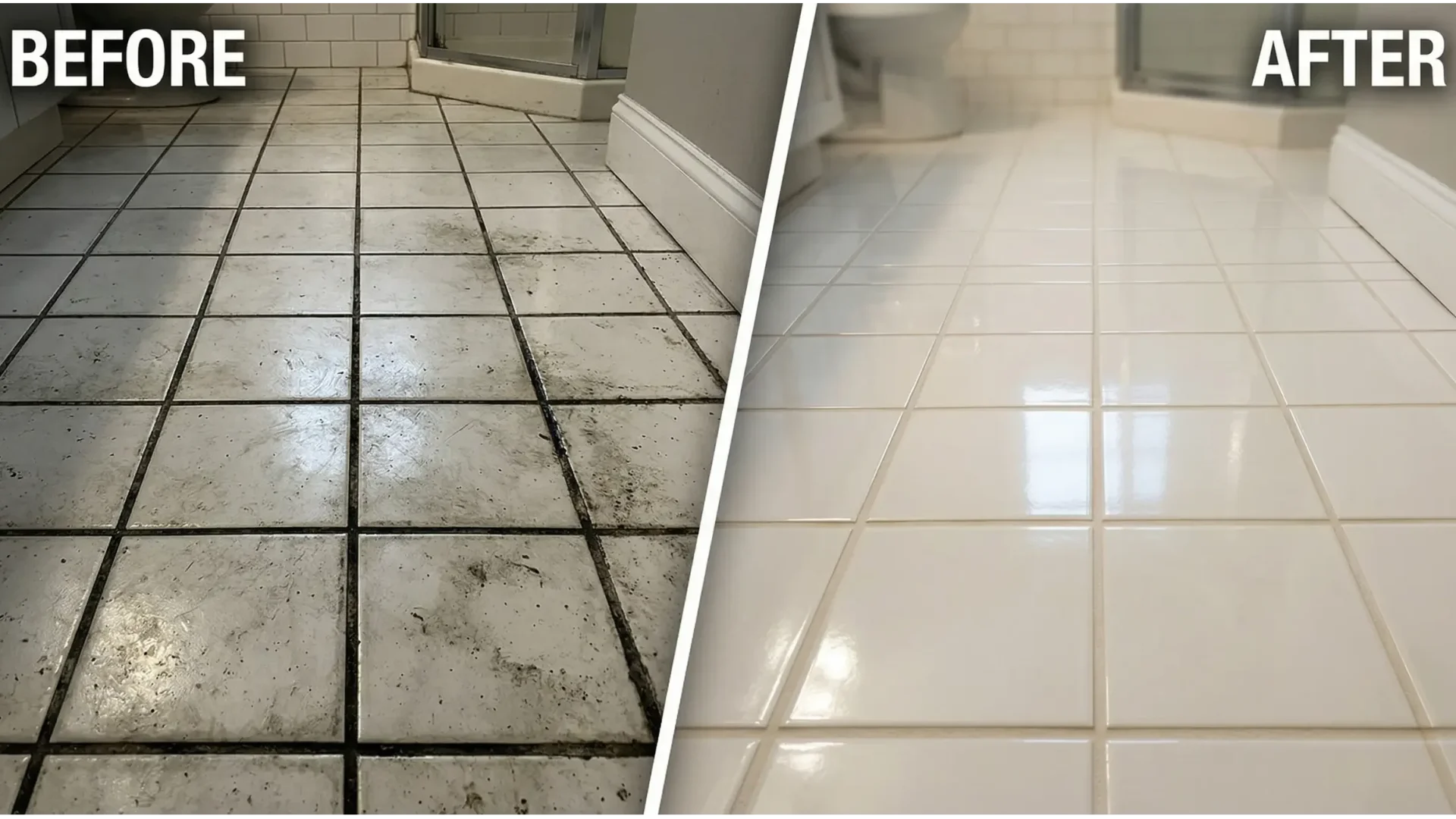
If you’ve ever stared at grimy grout lines and wondered whether that bottle of toilet bowl cleaner under your sink could actually do the job the answer is yes. Sometimes.
At Clean Master Carpet Cleaning, we’ve been cleaning tile and grout professionally across the Dallas Fort Worth area for years. We’ve tested just about every method out there, including this one. And while toilet bowl cleaner isn’t always the first thing we reach for on a tough job, it earns its place in the toolkit more often than people expect, especially for homeowners dealing with mild to moderate grout stains who want a quick, budget-friendly fix without ordering specialist products.
Here’s exactly how to do it right, what to watch out for, and when to call in something stronger.
Does Toilet Bowl Cleaner Actually Work on Grout?
Short answer yes, and better than most people expect for everyday staining.
The reason it works is chemistry. Most toilet bowl cleaners, including the ones we’ve tested extensively Clorox, Lysol, and HEB contain hydrochloric acid or similar acidic compounds that break down mineral deposits, soap scum, mold, and mildew effectively. These happen to be exactly the same types of buildup that make grout look dark and dirty over time.
In our professional experience, toilet bowl cleaner performs really well on mild to moderate grout stains across all tile types bathroom, kitchen, and floor and on all grout types including sanded, unsanded, and epoxy. For severe, deeply set staining though, dedicated grout cleaners are going to outperform it. We’ll get to that distinction later.
What You’ll Need Before You Start
- Toilet bowl cleaner (Clorox, Lysol, or HEB all work well)
- Old toothbrush for standard stains
- Stiff bristle brush for more stubborn areas
- Electric scrubber for heavy buildup
- Rubber gloves
- Good ventilation open windows or run a fan
- Clean water for rinsing
Step by Step: How to Clean Tile Grout With Toilet Bowl Cleaner
Step 1: Prepare the Area
Before you apply anything, sweep or vacuum the tile surface to remove loose dirt and debris. This stops you from scrubbing grit into the grout and making the job harder than it needs to be. Open a window or turn on your bathroom fan toilet bowl cleaners have strong fumes and you don’t want to be breathing them in a closed space.
Put your rubber gloves on before you open the bottle. Non-negotiable.
Step 2: Apply the Toilet Bowl Cleaner
Apply the cleaner directly onto the grout lines. Most toilet bowl cleaner bottles have an angled nozzle that makes it easy to squeeze it along the grout lines in a controlled stream rather than flooding the whole tile surface. You don’t need to drench it, a consistent thin application across the grout lines is enough.
Step 3: Let It Sit
This is where most people go wrong; they either wipe it off too quickly or leave it on too long.
For mild staining, 5 minutes is usually sufficient. For moderate staining, let it sit for up to 10 minutes. In our experience across hundreds of tile cleaning jobs in the DFW area, that 5–10 minute window hits the sweet spot for the cleaner to break down the buildup without risking any surface damage.
Do not leave it on for more than 15 minutes. We tested this firsthand on epoxy grout specifically, leaving the toilet bowl cleaner on for longer than 15 minutes and then scrubbing aggressively with a stiff bristle brush caused minor but noticeable surface damage. It’s not worth the risk.
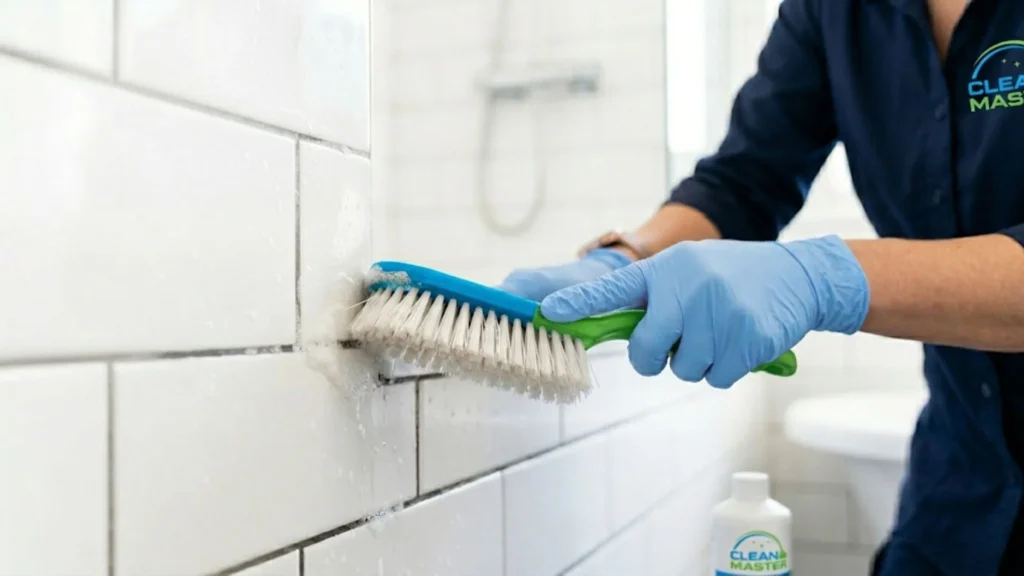
Step 4: Scrub the Grout Lines
Once the dwell time is up, it’s time to scrub. Here’s how we approach it based on stain severity:
- Mild stains on an old toothbrush works perfectly. The narrow head fits the grout lines precisely and gives you enough control to work methodically without splashing cleaner everywhere.
- Moderate to stubborn stains step up to a stiff bristle brush. More pressure, broader coverage, better results on deeper buildup.
- Heavy buildup of an electric scrubber makes the job significantly easier and reduces the physical effort on larger tile surfaces. We use these regularly on commercial jobs across Dallas Fort Worth.
Scrub in short back and forth motions along the grout lines rather than in circles. It’s more effective and keeps the cleaner working where it needs to.
Step 5: Rinse Thoroughly
Once you’ve scrubbed, rinse the entire area with clean water immediately. Make sure no cleaner residue is left sitting on the tile or grout especially on colored grout, where prolonged contact could potentially affect the color over time. A mop or damp cloth works well for floor tiles, a showerhead or wet cloth for wall and bathroom tiles.
What Grout Types Is This Safe For?
In our professional testing across all grout types, toilet bowl cleaner is safe for:
- Sanded grout handles it well within the recommended dwell time
- Unsanded grout same, no issues observed under normal use
- Epoxy grout is safe within 5–10 minutes, but as mentioned above, extended contact combined with aggressive scrubbing caused minor surface damage in our tests. Stick to the toothbrush or a softer brush on epoxy and keep the dwell time conservative.
Toilet Bowl Cleaner vs Dedicated Grout Cleaners Which Wins?
Honestly? It depends entirely on what you’re dealing with.
For mild to moderate staining the kind most homeowners are dealing with on a regular basis, toilet bowl cleaner does a genuinely impressive job. It’s affordable, widely available, and when used correctly it delivers results that are hard to argue with.
For severe, deeply set staining years of buildup, heavy mold penetration, or grout that hasn’t been cleaned in a long time, dedicated grout cleaners are the stronger choice. They’re formulated specifically for this kind of work and they outperform toilet bowl cleaner when the staining is serious.
Our rule of thumb at Clean Master Carpet Cleaning: start with toilet bowl cleaner for routine maintenance and moderate cleaning. If after two rounds it’s still not shifting, bring in a dedicated grout cleaner or give us a call.
Safety Rules Don’t Skip These
Three non-negotiables every time:
Always wear gloves. Toilet bowl cleaners are acidic and will irritate your skin with prolonged contact. Rubber gloves, every single time.
Always ventilate the space. The fumes from these cleaners build up fast in enclosed bathrooms. Open windows, run the fan, or prop the door open. If you feel lightheaded at any point, step out immediately.
Never mix with other cleaners. This one is critical. Mixing toilet bowl cleaner with bleach or other household cleaners can produce toxic chlorine gas. Use it on its own, rinse completely before introducing any other product to the surface.
Who Is This Method Best For?
This method is ideal for homeowners dealing with mild to moderate grout staining who want a cost-effective, accessible solution using products they likely already have at home.
If your grout is heavily stained, if you’re working with a large surface area, or if you’ve tried this method and it hasn’t shifted the buildup, that’s when professional tile and grout cleaning is worth considering. Our team at Clean Master Carpet Cleaning serves the entire Dallas Fort Worth area and handles everything from routine grout cleaning to full tile restoration.
Final Thoughts
Toilet bowl cleaner is one of those surprisingly effective household hacks that actually holds up under professional scrutiny within the right parameters. Use the right brands, respect the dwell time, match your scrubbing tool to the stain severity, and follow the safety basics. Done right, it’s a genuinely solid option for keeping your tile grout clean between professional cleans.
Got grout that’s beyond the DIY stage? Clean Master Carpet Cleaning is here to help across the Dallas Fort Worth area. Reach out and we’ll take it from there.