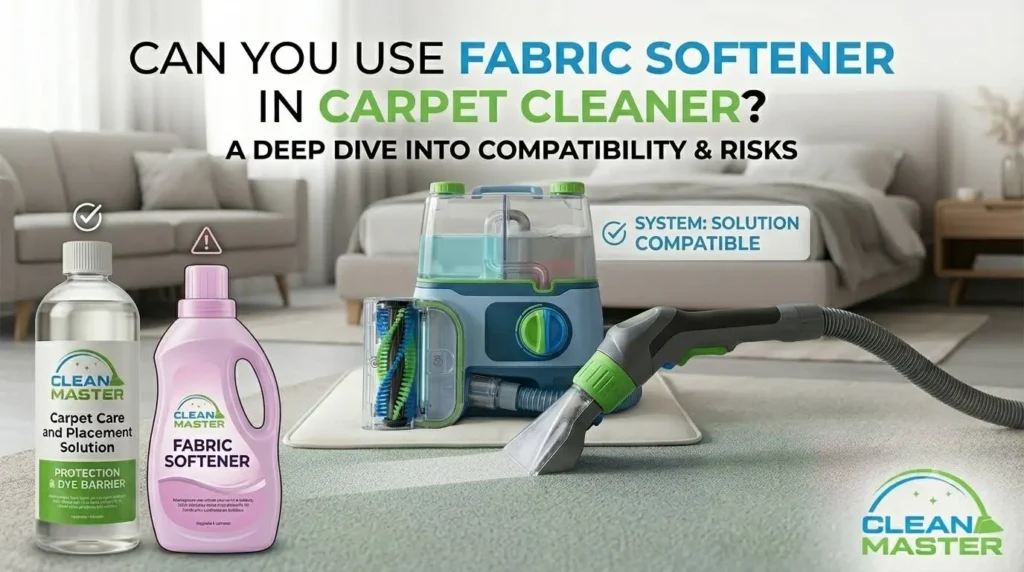
The idea makes intuitive sense. Fabric softener makes laundry feel soft and smell fresh, so why not add a little to the carpet cleaner for the same effect? It’s a question we hear at Clean Master Carpet Cleaning, and the answer is a clear no, not because it’s dangerous, but because the outcome is consistently worse than doing nothing at all.
Here’s the complete picture of what fabric softener actually does to carpet, to your cleaning machine, and to your long-term maintenance burden.
What Fabric Softener Is Designed to Do
Fabric softener works by depositing a thin layer of lubricating chemical compounds, typically quaternary ammonium compounds or silicone derivatives, onto fabric fibers. That coating reduces static, makes fibers feel slippery and soft to the touch, and releases fragrance gradually as the fabric moves.
In a washing machine, this works because:
- The coating is applied to individual clothing fibers in a controlled rinse cycle
- Clothes are worn briefly and washed again regularly, limiting buildup
- The finished item is dry when used, so the coating doesn’t attract debris
Carpet is none of these things. It’s walked on continuously, rarely rinsed, and sits in contact with everything that enters the room. What feels like a softening benefit in laundry becomes a liability on a floor surface.
What Actually Happens When You Use It in a Carpet Cleaner
It Leaves a Sticky Residue That Attracts Dirt
This is the outcome we see most consistently from DFW clients who’ve tried fabric softener in their carpet cleaner. The same coating that makes laundry feel soft leaves a slightly tacky film on carpet fibers, invisible at first, but effective at trapping dust, debris, and foot traffic soil.
Carpet treated with fabric softener typically re-soils noticeably faster than untreated carpet. Within days of cleaning, the freshly cleaned areas look grimy again, not because the cleaning failed, but because the residue is actively pulling debris out of the air and off shoes and feet and holding it on the fiber surface. Read our guide on why carpets get dirtier after cleaning for more on how residue drives this pattern.
We’ve had clients come to us genuinely confused about why their carpet keeps getting dirty so quickly. In several cases, fabric softener used in previous cleans was the direct cause. A professional extraction clean to remove the residue, followed by cleaning with the correct solution, resolved the resoiling pattern.
It Coats Fibers and Reduces Their Soil-Release Properties
Modern carpet fibers, particularly nylon and polyester, are engineered with soil-release properties. The fiber surface is designed to hold dirt loosely enough that it can be vacuumed away rather than bonding to the fiber. Fabric softener’s lubricating coating interferes with this by filling the microscopic surface texture of the fiber that makes soil-release possible.
Over repeated applications, the coating accumulates. The carpet may feel noticeably softer initially, which is what leads homeowners to keep using it, but underneath that soft feeling, the fiber is progressively losing the property that makes it cleanable. Vacuuming becomes less effective. Stains bond more readily. The carpet’s functional lifespan shortens.
It Voids Your Carpet Cleaner’s Warranty
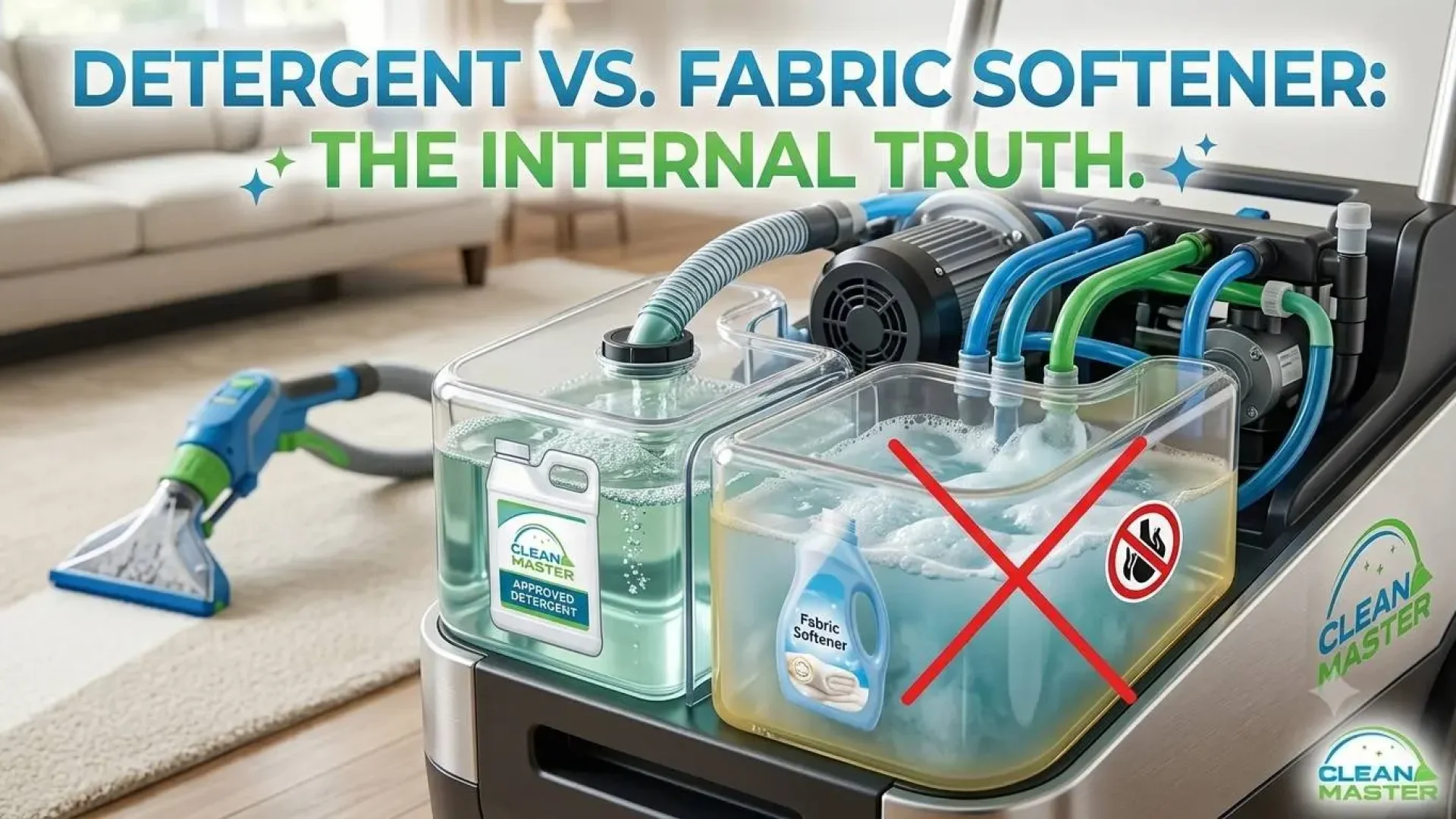
This is the risk that surprises most people. Virtually every carpet cleaning machine manufacturer, Bissell, Hoover, Rug Doctor, and others, specifies in their warranty documentation that only approved cleaning solutions should be used in the machine. Fabric softener is not an approved solution for any carpet cleaner on the market.
The reason is practical: fabric softener’s coating compounds accumulate inside the machine’s water pathways, pump, and spray nozzles over time. This reduces spray performance, can cause blockages, and in some cases damages internal seals and components. If a machine malfunctions after fabric softener use, the manufacturer is within their rights to deny the warranty claim, and often does.
What to Use Instead
The goals fabric softener is meant to achieve, softer-feeling carpet and fresher smell, are achievable through approaches that don’t create residue problems or machine damage.
Purpose-made carpet cleaning solution is the straightforward answer for machine use. Quality carpet cleaning solutions are formulated to clean without leaving the kind of residue that attracts soil or coats fibers. Many include fiber-conditioning agents that improve carpet texture and soil-release without the downsides of fabric softener chemistry. Used at the correct dilution for your machine, they clean effectively and leave nothing behind that works against you.
Professional carpet cleaning delivers the fiber refreshing result that fabric softener promises but can’t actually provide. Hot water extraction at professional temperatures and pressure genuinely restores carpet texture, not by coating the fiber, but by removing the accumulated soil, oils, and residue that make fibers feel coarse and look dull. Clean Master’s professional cleaning across the DFW area leaves carpet that feels legitimately softer because it’s cleaner, not because it’s coated.
At a Glance: Fabric Softener vs. Purpose-Made Solution
| Fabric Softener | Purpose-Made Carpet Cleaner | |
| Designed for carpet? | No | Yes |
| Leaves residue? | Yes, sticky and dirt-attracting | Minimal when used correctly |
| Affects soil-release? | Yes, degrades it over time | No, preserves fiber properties |
| Machine-safe? | No, voids warranty | Yes |
| Improves carpet feel? | Short-term only | Yes, by actually cleaning |
Fabric softener coats fibers with a waxy film that traps dirt, which is the opposite of what you want from a clean carpet. If softness is the goal, a thorough professional rinse from our carpet cleaning Dallas team leaves fibers soft without any added chemicals.
Frequently Asked Questions
What if I only use a very small amount?
Smaller amounts reduce the speed of buildup but don’t eliminate the fundamental incompatibility. Fabric softener deposits accumulate with each application, a small amount used repeatedly produces the same outcome as a larger amount used less often, just on a longer timeline. The machine warranty risk also applies regardless of quantity.
My carpet smells stale. What should I use instead of fabric softener?
Baking soda applied dry, left for 30 minutes, and vacuumed thoroughly is the safest deodorizing option with no residue risk. For persistent odor from organic sources, an enzyme cleaner addresses the source rather than masking it. For carpet that genuinely needs refreshing rather than just deodorizing, a professional clean from Clean Master restores the fiber in a way no additive can.
Can a professional clean remove fabric softener residue?
Yes, hot water extraction at professional temperatures and pressure effectively strips fabric softener coating from carpet fibers. If your carpet has been cleaned with fabric softener repeatedly and is re-soiling unusually fast, a professional extraction clean is the reset it needs. Read our guide on how to get rid of carpet cleaner residue for steps you can take in the meantime.
The Bottom Line
Fabric softener in a carpet cleaner is one of those ideas that sounds reasonable until you understand what it actually does. The short-term softness comes at the cost of sticky residue, faster resoiling, degraded fiber performance, and a voided machine warranty. None of those trade-offs are worth it, especially when purpose-made solutions and professional cleaning deliver the actual result fabric softener only promises.
Contact Clean Master Carpet Cleaning today for professional carpet cleaning across the entire DFW area and carpet that feels better because it’s genuinely clean.