
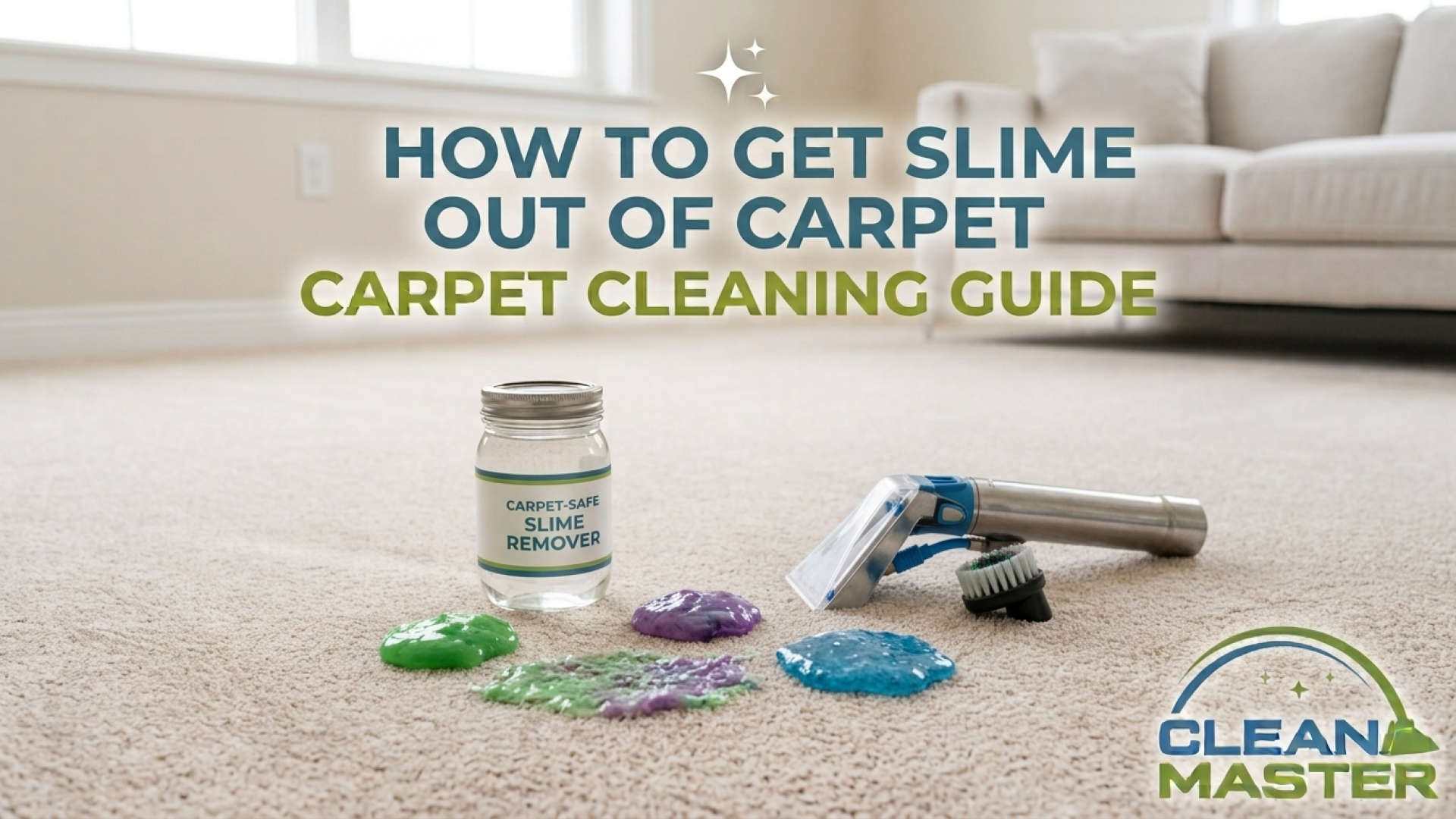
To get slime out of carpet, pick off as much of the slime as you can by hand, then soak the remaining spot with white vinegar, let it sit for five to ten minutes, and gently work it with a soft brush before blotting it away. Vinegar breaks down the bonds that hold most homemade and store bought slime together, so the sticky mass turns soft and runny and can be lifted out of the fibers. Finish with a dish soap and water rinse, then blot dry. Any color left behind can usually be treated with rubbing alcohol.
Slime is one of the most common messes in homes with children, and it looks far worse than it is. Unlike paint or nail polish, it rarely leaves permanent damage if you treat it the right way. This guide explains why vinegar works, how to handle fresh and dried slime, and what to do about colored and glitter slime.
Quick Steps: The Vinegar Method
- Pick up the large pieces of slime by hand, or dab them with a ball of fresh slime, which often lifts the stuck bits.
- Pour or spray white vinegar onto the remaining slime until it is soaked.
- Wait five to ten minutes for the vinegar to break the slime down.
- Gently work the area with a soft brush or old toothbrush, then blot with a white cloth.
- Repeat until the slime is gone, then rinse with a dish soap solution and plain water, and blot dry.
Why Vinegar Works on Slime
Most slime is made from PVA glue, the white or clear school glue, mixed with an activator such as borax, contact lens solution, or saline solution containing boric acid. The activator links the long molecules in the glue together, turning a liquid into a stretchy, rubbery mass. Those links are what make slime cling to carpet fibers and stretch rather than wipe away.
White vinegar is a mild acid. When it soaks into slime, it disrupts those links, and the slime loses its structure and turns back into a softer, looser material that can be blotted out. That is why vinegar often succeeds where soap and water fail. Our article on using vinegar for carpet cleaning covers where vinegar is useful and where it should be avoided.
Step by Step: Removing Fresh Slime
Remove What You Can by Hand
Fresh slime is still stretchy and holds together, which works in your favor. Pull up the largest pieces with your fingers, lifting rather than dragging so you do not spread it. A useful trick is to take a ball of fresh slime from the container and press it onto the stuck slime. Slime sticks to itself, so this often pulls up small pieces that are hard to grab. Keep going until only the thin layer trapped in the fibers is left.
Soak With White Vinegar
Pour white vinegar directly onto the area or use a spray bottle to saturate it. Use enough to soak the slime, but not so much that it floods the carpet backing. On most synthetic carpets, undiluted white vinegar is fine for this short treatment. Let it sit for five to ten minutes. You should see the slime start to soften and lose its rubbery texture.
Work It Out Gently
Use a soft brush or an old toothbrush to work the softened slime loose, brushing gently in small circles or in one direction. Avoid hard scrubbing, which frays fibers. Blot with a white cloth or paper towels to lift the dissolved slime. Repeat the vinegar soak and brushing until no more slime comes up.
Rinse and Dry
Mix a teaspoon of clear dish soap into two cups of warm water and dab it onto the area to remove any remaining glue and vinegar. Blot, then rinse with plain water and blot again. Press a folded towel onto the spot with something heavy on top until it is nearly dry. The vinegar smell fades as the carpet dries.
Removing Dried Slime
Dried slime is often easier to deal with than fresh slime, because it becomes hard and crusty rather than sticky. Start by scraping off the crust with a spoon or dull knife and vacuuming up the flakes. Then follow the vinegar method on what remains. Dried slime may need a longer soak, around fifteen minutes, to soften completely. Be patient and repeat as needed.
Colored and Glitter Slime
Many slimes are colored with food coloring or other dyes. Once the slime itself is removed, a tint may remain in the carpet. Dab the stain with a white cloth dampened with rubbing alcohol, blotting often and moving to a clean part of the cloth. Test the alcohol on a hidden area first. On light colored synthetic carpet, a small amount of 3 percent hydrogen peroxide can lift a stubborn tint, but it can also lighten carpet dye, so test it carefully and do not use it on wool. Dye stains from colored drinks behave in a similar way, as explained in our guide on getting Kool-Aid out of carpet.
Glitter slime adds another step. After the slime is dissolved, glitter often stays trapped between fibers. Press packing tape or a lint roller onto the area to lift it, then vacuum thoroughly. It may take a few passes over several days to collect every last piece.
Other Methods That Can Help
If you do not have vinegar, rubbing alcohol can also break down slime, though it is usually less effective than vinegar on the glue itself. Some parents freeze slime with a bag of ice to make it brittle, then chip it off, which works well for thicker pieces. That is the same approach used for gum, covered in our guide on getting gum out of carpet. Hot water is not recommended. It can soften slime but tends to spread it deeper into the carpet.
| Method | Best For | Notes |
|---|---|---|
| White vinegar | Most fresh and dried slime | Breaks down the glue, most reliable option |
| Ice | Thick or large pieces | Makes slime brittle so it chips away |
| Rubbing alcohol | Dye left behind, small residue | Test first on a hidden area |
| Dish soap and water | Final cleanup | Removes glue and vinegar residue |
Homemade vs Store Bought Slime
Homemade slime made from school glue and an activator responds very well to vinegar, because the recipe is simple and the glue base breaks down easily. Store bought slime is more varied. Many brands use the same glue and borax style chemistry, but some contain extra thickeners, oils, or fragrances, and a few are made from different polymers altogether. If vinegar does not seem to soften a store bought slime after ten minutes, switch to the ice method to remove the bulk, then use dish soap and warm water to clean up the residue.
Check the packaging if you still have it. Some manufacturers list cleanup advice, and that can save time when a particular slime does not behave like the homemade kind.
Butter, Cloud, and Clear Slime
Newer slime styles add their own challenges. Butter slime often contains soft clay mixed in, which can leave a chalky or colored residue after the slime itself is gone. Treat that residue with dish soap and warm water, blotting until the cloth comes away clean. Cloud slime contains fake snow material that dries into small white specks, which vacuum up easily once the slime is dissolved. Clear slime is usually the simplest, since it has no dye or fillers, although it can be harder to see, so feel the carpet with your hand to make sure none is left.
Slime on Different Carpet Types
Nylon, polyester, and olefin carpets handle the vinegar method well. Plush and high pile carpet takes more time, since slime works its way down between long fibers. Berber and loop carpets need gentle brushing to avoid pulling loops. Wool is more sensitive to acids, so dilute the vinegar with an equal amount of water, test it first, and keep contact time short. For valuable wool rugs, professional help is the safest option.
Slime on Couches and Clothing
Slime on upholstery can be treated in the same way, using less vinegar so the cushion foam does not get soaked. Check the care code first. Fabrics marked S should not get wet, and slime on those is best left to a professional. Our upholstery cleaning team can remove slime and dye from fabrics that are not safe to treat at home. Clothing can usually be treated with vinegar and then washed as normal.
What Not to Do
Do not rub or scrub slime hard, which spreads it and damages fibers. Do not use hot water, which drives it deeper. Avoid bleach, which can remove the color from carpet. Do not mix vinegar with bleach or other cleaners, since some combinations release harmful fumes. And do not cut the carpet to remove slime unless only the very tips of a few fibers are affected and everything else has failed.
Keeping Slime Off the Carpet
Slime is a great activity for kids, and it does not have to be banned to protect your carpet. Set up a slime station at a kitchen table or on a hard floor, and lay down a plastic tablecloth or a washable mat. Keep slime in sealed containers when not in use, since it dries out and crumbles when left open, which spreads small pieces around the house. A quick rule that slime stays at the table saves a lot of cleanup.
It also helps to keep a small cleanup kit near the slime station: a spray bottle of white vinegar, a few white cloths, an old toothbrush, and a roll of tape for glitter. When a piece does land on the carpet, children can help pick up the big pieces while you prepare the vinegar, which turns a stressful moment into a quick, routine fix.
Homes with young children also benefit from more frequent professional cleaning, since spills, crumbs, and play stains build up quickly. Our guide on how often carpet should be cleaned suggests a schedule for busy family homes.
When to Call a Professional
Call a professional if slime covers a large area, if dye from the slime will not come out, if the carpet is wool or a delicate rug, or if home treatment has left a sticky or dark patch. Professionals can rinse out glue residue and treat dye stains with products made for carpet. Clean Master’s carpet cleaning service includes spot treatment for these problems, and you can contact us or call (817) 253-2867 for advice.
Frequently Asked Questions
Does vinegar dissolve slime?
Yes. White vinegar breaks down the links that hold slime together, turning it soft so it can be blotted out of carpet.
How long should vinegar sit on slime?
Five to ten minutes for fresh slime, and up to fifteen minutes for dried slime. Repeat if needed.
Is it easier to remove slime when it is wet or dry?
Dried slime is often easier, because it becomes hard and can be scraped off before treating what remains with vinegar.
How do I get slime dye out of carpet?
Dab it with rubbing alcohol on a white cloth after testing a hidden area. Hydrogen peroxide can help on light synthetic carpet, but not on wool.
Will vinegar damage my carpet?
White vinegar is safe for most synthetic carpets when rinsed afterward. Dilute it and test it first on wool.
How do I get glitter slime out of carpet?
Dissolve the slime with vinegar, then lift the glitter with tape or a lint roller and vacuum thoroughly.
The Bottom Line
Slime looks like a disaster on carpet, but it usually comes out completely with the vinegar method. Remove the bulk by hand, soak the rest with white vinegar, work it out gently, and rinse with dish soap and water. Treat any dye with rubbing alcohol, lift glitter with tape, and call a professional only when slime is widespread or the carpet is delicate. With a bottle of vinegar on hand, slime day does not have to mean carpet damage.