
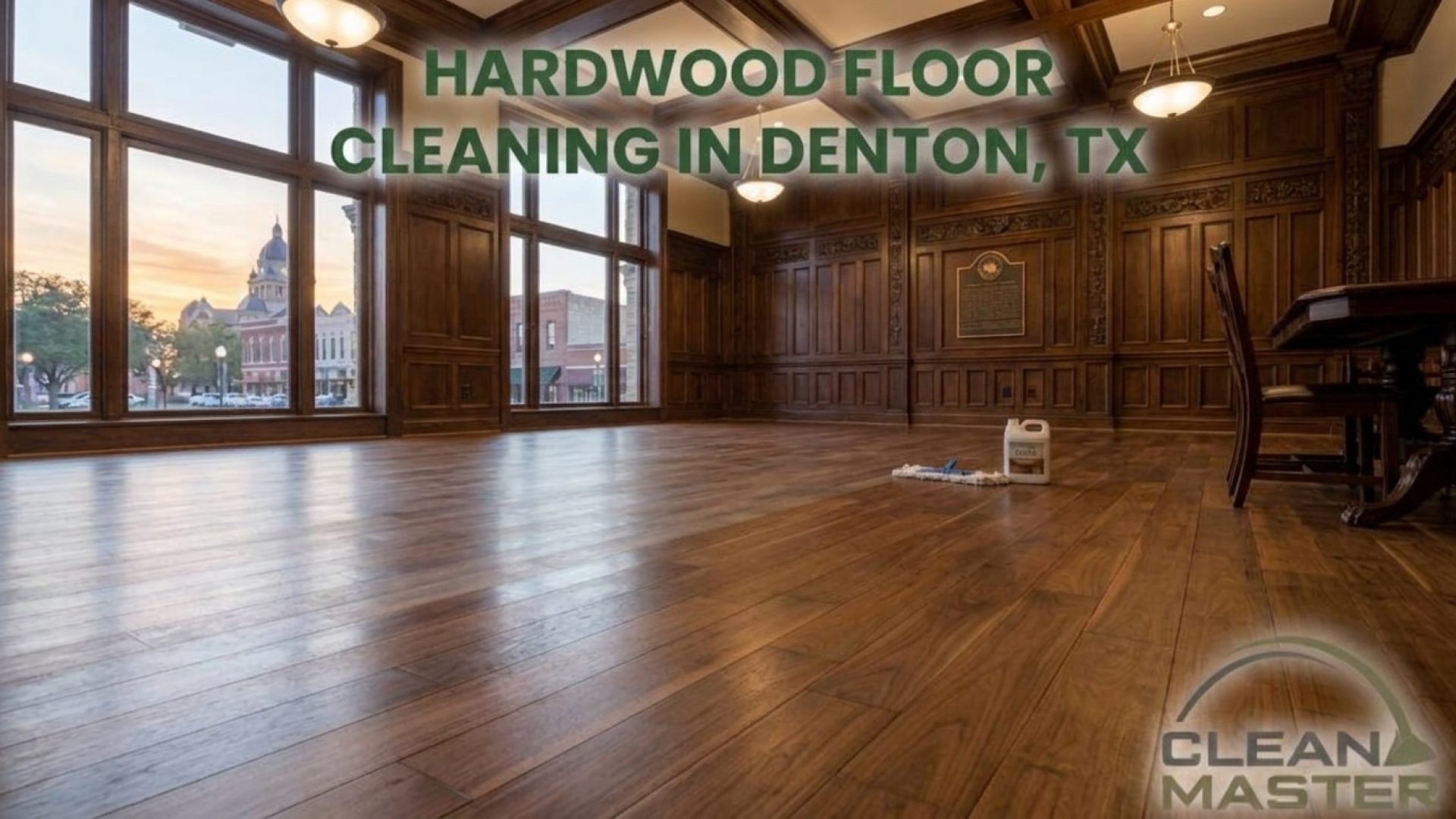
Hardwood floors look perfect in showrooms. In a real Denton home, with kids, pets, muddy shoes, and a kitchen that is used every day, they need a little more help. Clean Master Carpet Cleaning provides professional hardwood floor cleaning in Denton, TX that removes the grime, residue, and buildup that everyday mopping leaves behind, without the excess water and harsh chemicals that damage wood. We clean the whole floor, then help you keep each busy zone of your home looking good between visits. Our team has been caring for floors across North Texas for more than 26 years.
If your floors look dull, feel tacky underfoot, or never seem clean even after you mop, professional cleaning can make a visible difference. Call us at (817) 253-2867 or request a free quote, and tell us about your floors and how your household uses them.
Hardwood Floor Cleaning Services in Denton, TX
Most hardwood floors in homes today have a protective finish, usually polyurethane, that sits on top of the wood. That finish is what you are actually cleaning. Over time, it collects a layer of dirt, cooking grease, pet oils, and residue from cleaning products, especially sprays and mop solutions that are not designed for wood. That layer dulls the shine, traps more dirt, and can make the floor feel sticky.
Professional hardwood cleaning removes that layer using wood safe solutions and equipment designed to lift soil out of the surface and seams with controlled moisture. It restores the floor’s natural look without sanding or refinishing. Hardwood cleaning is part of our wider range of professional cleaning services, so we can also clean carpet, tile, and upholstery in the same visit.
What Our Hardwood Cleaning Includes
- Inspection of the wood, finish, and problem areas
- Dry soil removal from the surface and between boards
- Deep cleaning with wood safe solutions and controlled moisture
- Spot treatment for sticky residue, pet marks, and scuffs
- Drying and advice on simple care for each area of your home
Why Everyday Mopping Is Not Enough
Regular mopping removes loose dust and fresh spills, but it rarely removes the film that builds up over months. In many homes, mopping actually makes the problem worse. Too much water seeps into seams between boards, causing swelling and gaps. Vinegar and harsh cleaners can dull the finish. Oil soaps and products that promise shine leave a residue that grabs dirt, so the floor looks clean for a day and then dull again. Steam mops push heat and moisture into the wood and can cloud or lift the finish.
Professional cleaning breaks that cycle by removing old residue completely, so routine cleaning starts from a clean surface again. Once that residue is gone, most homeowners find their usual routine works far better, because the mop is cleaning the finish instead of spreading old buildup around.
Signs Your Floors Need Professional Cleaning
The clearest sign is a floor that looks dull or cloudy even right after mopping. Other signs include a sticky or tacky feel underfoot, footprints and smudges that show up easily, dark lines along the edges of boards where dirt has packed into the seams, and a haze around areas where you use spray cleaners most often. In kitchens, a slippery film near the stove usually means grease has built up on the finish. If the floor looks better for a day after cleaning and then dull again, residue is almost always the reason.
A Zone by Zone Guide to Hardwood in Busy Homes
Different parts of your home put different demands on hardwood. Thinking about your floor in zones helps you focus effort where it matters most.
Entryways
Entries take the most abuse. Grit and sand tracked in from outside act like sandpaper, scratching the finish with every step. Rain and mud add moisture. Place a coarse mat outside the door and a soft absorbent mat inside, ask family members to take shoes off where possible, and sweep or vacuum this zone daily. A dust mop near the door makes quick cleanups easy.
Kitchens
Kitchens collect cooking grease, food spills, and water around the sink and dishwasher. Grease spreads from the stove area and builds into a film that dulls the floor and makes it slippery. Wipe spills right away, especially water, and use a washable runner in front of the sink. Check under the dishwasher and sink regularly for slow leaks, which can damage wood before you notice.
Living Areas
Living rooms and family rooms see steady foot traffic and furniture movement. Felt pads under chairs, tables, and sofas prevent scratches and dents. Area rugs in main walkways reduce wear, but make sure rug pads are safe for finished wood, since some rubber backings can discolor it.
Pet Areas
Pets bring dirt, hair, drool, and occasional accidents. Water and food bowls cause splashes and drips that can leave white rings or dark marks in the finish. Place a waterproof mat under bowls, keep nails trimmed to reduce scratches, and clean up accidents immediately, since urine can soak through the finish into the wood and leave dark stains. For pet odors in carpeted rooms, our pet odor removal in Denton handles the source of the smell.
Kids’ Rooms and Play Areas
Toys with wheels, dropped snacks, juice spills, and crafts all take their toll. A washable play mat or rug in the main play area protects the floor, and a quick daily pickup of crumbs and spills prevents sticky buildup. Avoid using general household sprays on wood floors to clean up after kids, since many leave residue.
| Zone | Main Risk | Best Daily Habit |
|---|---|---|
| Entryway | Grit scratches, mud, moisture | Mats inside and out, sweep daily |
| Kitchen | Grease film, water near sink | Wipe spills right away, runner by sink |
| Living areas | Furniture scratches, dents | Felt pads, rugs in walkways |
| Pet areas | Water rings, urine, nail scratches | Mat under bowls, clean accidents fast |
| Play areas | Sticky spills, rolling toys | Play mat, quick daily pickup |
Our Hardwood Cleaning Process
- We check the type of wood and finish and test a small area to choose the right solution.
- Loose dirt and grit are removed from the surface and between boards.
- A wood safe cleaning solution is applied and agitated to loosen residue.
- Soil and solution are removed with controlled moisture so water does not sit on the wood.
- The floor is dried, and we walk you through what we found and how to care for each zone.
Cleaning vs Restoration
Cleaning removes dirt and residue from the finish. It cannot fix scratches that go into the wood, gray areas where the finish has worn through, deep water stains, or boards that are cupped or damaged. If your floor has those problems, it may need a recoat or a full refinish. We will tell you honestly if cleaning is not enough. In many cases, a professional clean is still worth doing first, because it shows clearly which marks are dirt and which are real damage, so any restoration that follows is planned around the actual condition of the wood. Our page on hardwood floor restoration in Denton explains when restoration makes sense and how it compares with replacing the floor.
Products to Avoid on Hardwood
Avoid vinegar, ammonia, bleach, and general purpose cleaners on finished wood. Skip oil soaps and wax products on polyurethane floors, since they leave residue that makes future recoating difficult. Do not use steam mops, and never use carpet cleaning machines on wood. Our article on using a carpet cleaner on wood floors explains why water and heat cause damage. For routine care, use a cleaner made for your floor’s finish and a microfiber mop that is barely damp. Our guide to hardwood floor maintenance covers more simple habits.
Finishes and What They Mean for Cleaning
The finish on your floor decides how it should be cleaned. Most floors installed or refinished in recent decades have a polyurethane finish, either water based or oil based, which forms a protective layer on top of the wood. These floors handle careful damp cleaning well. Many prefinished floors from the factory have very hard, durable coatings that resist wear but can still collect residue.
Older homes sometimes have floors finished with penetrating oil or wax rather than polyurethane. These finishes soak into the wood instead of sitting on top, so water based cleaning can damage them and leave white marks. They need different products and a much lighter touch. If you are not sure what finish you have, a simple test in a hidden corner tells us, and it is one of the first things we check before cleaning.
Hardwood and North Texas Weather
Wood expands and contracts with humidity. In Denton, humid summers and drier winter months mean floors move throughout the year. Small gaps between boards in winter are normal and usually close again as humidity rises. In summer, too much moisture can cause boards to swell and cup, especially near outside doors, sinks, and areas where water is spilled often.
Keeping indoor humidity fairly steady with your air conditioning and heating helps floors stay stable. It is also another reason to avoid wet mopping. Water that sits in seams during humid months is far more likely to cause swelling than the same amount of water on a dry winter day.
Preparing for Your Appointment
Pick up toys, shoes, rugs, and small items from the floor, and move lightweight furniture out of the rooms being cleaned if you can. Let us know about any areas of concern, such as sticky patches, pet marks, or boards that look damaged, and which cleaning products you have been using, since some residues need special attention. Keep pets in another room until the floor is dry.
What Affects the Cost of Hardwood Cleaning
The price depends on the square footage, the condition of the floor, and how much residue has built up. Floors coated with layers of shine products or wax take longer to clean. Furniture moving, stairs, and spot treatment for pet marks or sticky areas can add time. Combining hardwood cleaning with carpet or tile cleaning in the same visit usually gives better value, and our current specials may include savings. We give you a clear price before any work begins.
Why Denton Homeowners Choose Clean Master
Clean Master has served Denton and the Dallas Fort Worth area for over 26 years, and our technicians are IICRC certified. We test before we clean, use products that are safe for your finish, and give practical advice for the way your household actually uses the floor. Many customers combine hardwood cleaning with home carpet cleaning so every floor in the house is refreshed at once.
Frequently Asked Questions
How often should hardwood floors be professionally cleaned?
Every 12 to 18 months for most homes, and more often for busy households with pets and children.
Will professional cleaning remove scratches?
Cleaning removes dirt and residue but not scratches that go into the wood. Those need a recoat or refinish.
Is professional hardwood cleaning safe for my floors?
Yes. We use wood safe solutions and controlled moisture, and we test a small area before cleaning the whole floor.
Why do my floors look dull right after I mop?
Residue from cleaning products, especially shine products and oil soaps, builds up on the finish and dulls it. Professional cleaning removes that residue.
Can you clean engineered hardwood?
Yes. Engineered hardwood has a real wood surface with a finish, and we clean it the same careful way as solid hardwood.
How long until I can walk on the floor?
Usually soon after we finish, once the floor is dry. We will tell you when it is safe to put furniture and rugs back.
Book Hardwood Floor Cleaning in Denton
Clean hardwood makes your whole home feel brighter. Call Clean Master Carpet Cleaning at (817) 253-2867 or contact us online for a free quote on hardwood floor cleaning in Denton, TX. Tell us about your floors and the areas that bother you most, and we will take care of the rest. If you are not sure whether your floor needs cleaning or restoration, we can help you decide.