
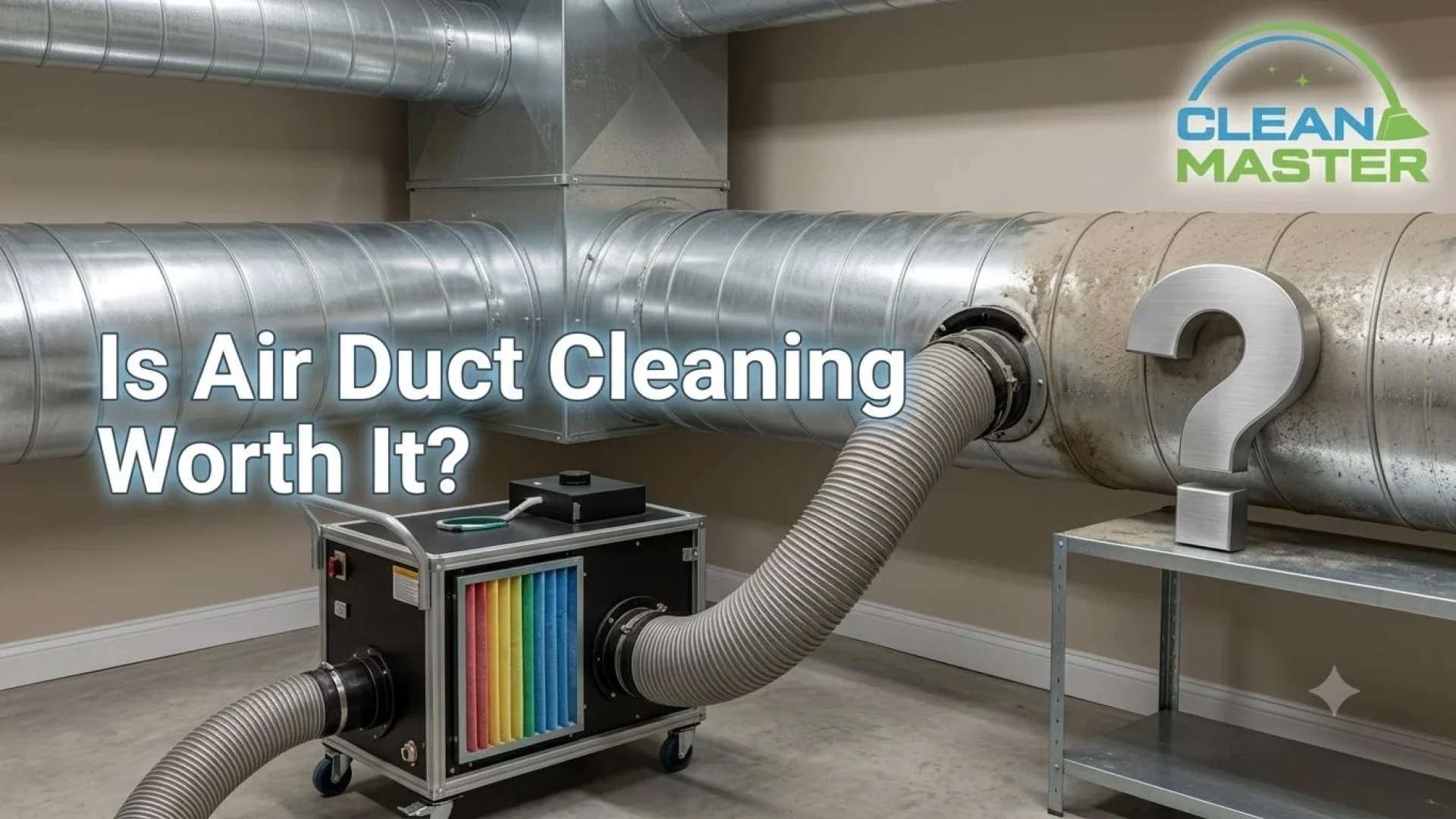
This is one of the more genuinely debated home services, and for good reason. Air duct cleaning costs real money, the benefits aren’t always immediately visible the way a clean carpet or a sparkling tile floor is, and the EPA itself has historically taken a cautious stance on whether it’s necessary for every home. The honest answer is that it depends on your specific situation, and the best way to decide is to weigh the actual cost against the actual benefits rather than relying on a blanket yes or no.
At Clean Master Carpet Cleaning, air duct cleaning is one of our core DFW services. Here’s the cost-benefit framework we’d want a homeowner to use before deciding, with the numbers and the genuine upside laid out clearly.
The Cost Side of the Equation
Before weighing benefits, you need an accurate cost figure to compare against. Legitimate professional air duct cleaning in the DFW market runs:
| Home Size | Typical Cost Range |
| Small home (under 1,500 sq ft) | $300 to $450 |
| Standard home (1,500 to 2,500 sq ft) | $350 to $550 |
| Large home (2,500 to 4,000 sq ft) | $500 to $750 |
This is a periodic expense, typically every 3 to 5 years for a well-maintained home, not an annual cost. Spread across that interval, a $450 cleaning works out to roughly $90 to $150 per year. That annualized figure is the number worth comparing against the benefits below, because it’s the realistic ongoing cost of the maintenance practice rather than a one-time expense in isolation.
The Benefit Side: Energy Efficiency
This is the most measurable, dollar-comparable benefit of air duct cleaning, and the one that makes the cost-benefit calculation genuinely favorable for many DFW homes.
How Duct Contamination Affects Energy Use
A duct system accumulates dust, debris, and in some cases mold or pest contamination on the interior surfaces over years of use. This accumulation has two specific effects on HVAC efficiency.
Restricted airflow: as debris builds up on duct interior walls, the effective cross-section of the duct narrows slightly, similar to how a partially clogged pipe restricts water flow. This increases static pressure in the system, forcing the HVAC blower to work harder to push the same volume of air through the home. A harder-working blower consumes more electricity for the same heating or cooling output.
Coil efficiency loss: this is the more significant factor. The evaporator coil, where refrigerant absorbs heat from return air, is highly sensitive to surface contamination. Even a thin layer of dust on the coil fins meaningfully reduces heat transfer efficiency, because the dust acts as an insulating layer between the air and the refrigerant. A dirty coil can reduce overall system efficiency by a measurable percentage, and professional duct cleaning that includes coil cleaning (as Clean Master’s service does) directly addresses this.
What the Energy Savings Actually Look Like
The Department of Energy and multiple HVAC efficiency studies indicate that a poorly maintained duct system, including a contaminated coil and restricted airflow, can account for a meaningful percentage of unnecessary cooling and heating energy consumption, with figures commonly cited in the range of 10 to 30% depending on the severity of the contamination.
For a DFW home running central air conditioning for 7 to 8 months of the year, even a conservative efficiency improvement translates to real dollar savings. Here’s a simplified way to think about the math: if your average monthly cooling-season electric bill is $250 and duct/coil contamination is causing even a 10% efficiency loss, that’s roughly $25 per month in avoidable cost during the 7-8 month cooling season, $175 to $200 annually. At 20% efficiency loss (more likely for a system with a genuinely dirty coil that hasn’t been addressed in years), that figure roughly doubles.
Compare that to the annualized cost of duct cleaning, $90 to $150 per year when spread across a 3 to 5 year interval, and the energy savings alone can offset or exceed the cost of the service, particularly for homes where the duct system has accumulated significant contamination.
Where This Math Is Most Favorable
The energy efficiency case for duct cleaning is strongest when the system has never been professionally cleaned, or it’s been 5+ years since the last cleaning, filter maintenance has been inconsistent leaving gaps that allow more contamination to reach the coil and duct interior, the home runs AC heavily given DFW’s long, hot cooling season means more hours of operation where efficiency losses compound, and there’s been recent renovation since construction dust accelerates coil and duct contamination beyond normal accumulation rates.
The math is less compelling for a newer system with consistent filter maintenance and a recent cleaning, there’s simply less accumulated contamination to remove, so the efficiency gain from removing it is smaller.
Building Your Own Cost-Benefit Calculation
Here’s a practical framework to apply to your specific situation.
Step 1: Establish your cost. Get a quote for your home size, typically $300 to $750 depending on size, per the table above. Divide by your expected interval between cleanings (3 to 5 years) to get an annualized cost.
Step 2: Estimate your current efficiency loss. This is harder to know precisely without a professional inspection, but indicators that suggest meaningful loss include it being over 5 years since any duct cleaning (or never), cooling bills feeling high relative to your home’s size and thermostat settings, some rooms being noticeably harder to cool than others, and inconsistent filter replacement history.
Step 3: Compare your annualized cooling costs against a reasonable efficiency improvement estimate. Even a modest 10% reduction in cooling costs, applied across a DFW summer, often meets or exceeds the annualized cost of cleaning.
Step 4: Factor in the non-energy benefits as a bonus, not a requirement. Improved airflow consistency between rooms, a cleaner system going into cooling season, and the general value of fresh ductwork all add to the case without needing to be quantified precisely.
A Practical Example
Take a 2,200 sq ft DFW home that hasn’t had professional duct cleaning in 7 years, with average summer electric bills around $280/month during the cooling season:
- Cleaning cost: $450 (standard home size), or roughly $90/year if cleaned every 5 years
- Estimated efficiency loss from 7 years of accumulation: reasonably 15 to 20% given the duration
- Annual cooling season cost: $280 times 7 months equals $1,960
- Estimated annual savings from addressing contamination: $1,960 times 15% equals $294
In this example, the annualized cost of cleaning ($90) is meaningfully lower than the estimated annual energy savings ($294), making the case straightforwardly favorable. The numbers will vary by home, system age, and actual contamination level, but this is the kind of calculation that turns “is it worth it” from a guess into an informed decision.
What This Calculation Doesn’t Capture
Worth noting: the energy efficiency math above is the most quantifiable benefit, but it’s not the only one. Improved indoor air quality, more consistent room-to-room temperature, and reduced strain on HVAC equipment (which can extend its operating life) are real benefits that don’t show up directly in a monthly electric bill but contribute to the overall value of the service. Treating the energy savings as the floor of the value calculation, with these additional benefits as upside, is a reasonable way to think about it.
At a Glance: The Cost-Benefit Snapshot
| Factor | Numbers |
| Typical DFW cleaning cost | $300 to $750 depending on home size |
| Annualized cost (3 to 5 year interval) | $60 to $250/year |
| Potential cooling efficiency improvement | 10 to 30% depending on contamination level |
| DFW cooling season length | 7 to 8 months |
| Break-even point | Often within the first cooling season post-cleaning |
Frequently Asked Questions
How do I know my actual efficiency loss without guessing?
A professional inspection, which Clean Master provides before any cleaning, can assess visible coil and duct contamination and give you a more informed estimate than guesswork alone. Some HVAC contractors also offer efficiency testing that measures system performance more precisely.
Does the energy savings calculation apply to heating too?
Yes, though DFW’s heating season is shorter and milder than the cooling season, so the dollar impact is typically smaller relative to the cooling-season savings. The same restricted airflow and coil contamination issues affect heating efficiency, just over fewer months of the year.
Is the energy savings guaranteed?
No, it’s an estimate based on documented efficiency loss patterns from contaminated systems, not a guarantee for any individual home. The actual savings depend on how contaminated your specific system was before cleaning. Homes with minimal prior contamination will see a smaller benefit than the example above; homes with years of accumulation typically see more.
The Bottom Line: Do the Math for Your Specific Home
Air duct cleaning’s worth comes down to a calculation you can actually run: your cost (typically $300 to $750, annualized to $60 to $250/year) against your potential energy savings (often 10 to 30% of cooling costs for a contaminated system, compounded by a 7 to 8 month DFW cooling season). For most homes that haven’t been cleaned in 5+ years, the math tends to favor cleaning, particularly once you account for the additional comfort and air quality benefits beyond the energy savings alone. Contact Clean Master Carpet Cleaning today for a professional duct inspection and an accurate cost-benefit picture for your specific DFW home.