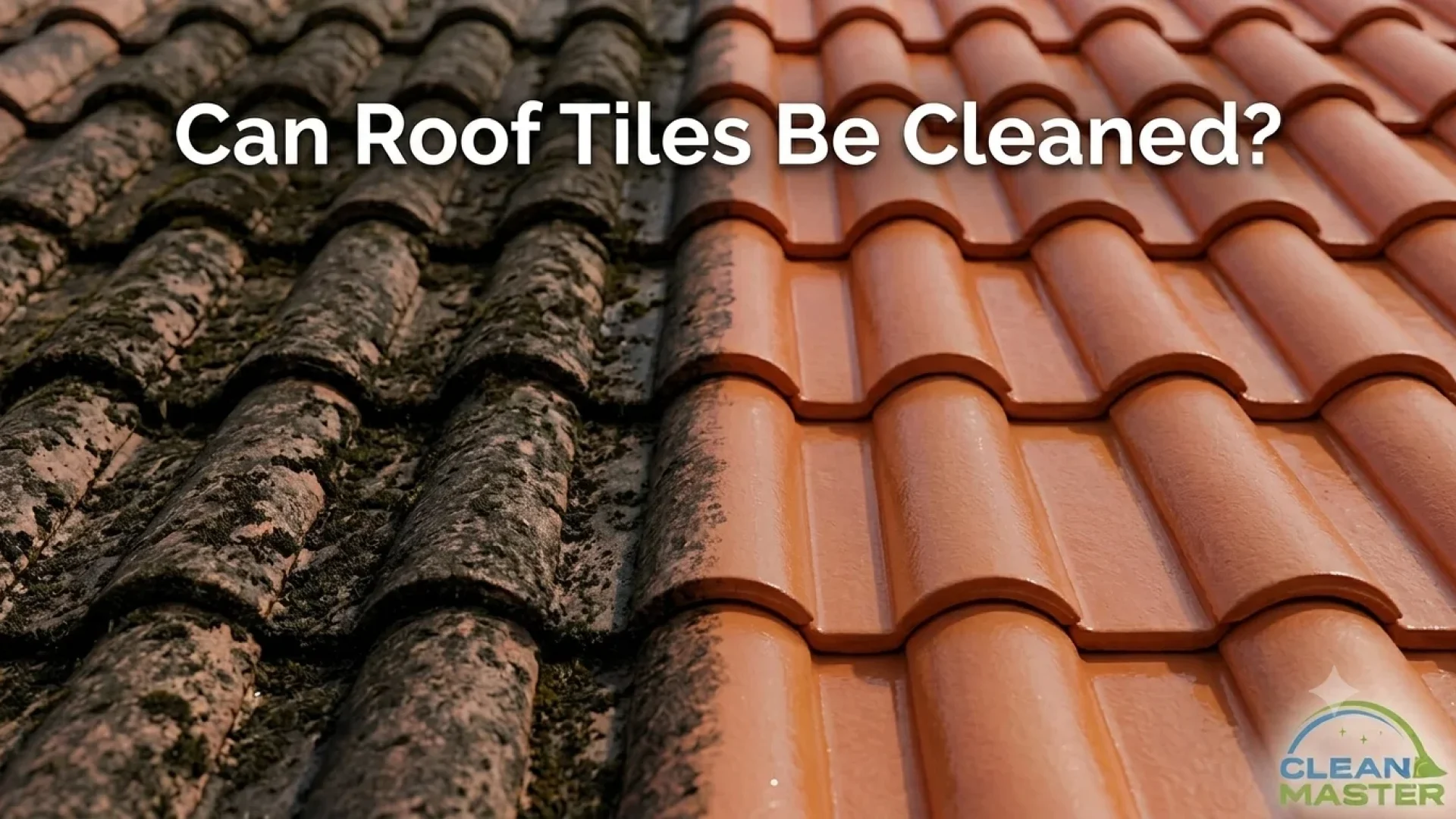
Yes, roof tiles can absolutely be cleaned, and doing so isn’t just about appearance. Algae, moss, and lichen growth on a roof can actually shorten the tile’s lifespan over time if left unaddressed, since these organisms retain moisture against the tile surface and, in the case of moss and lichen, can work their way into small cracks or gaps.
That said, roof tile cleaning comes with real risks, both to the tiles themselves and to whoever is doing the cleaning, which is why the right method matters just as much as the decision to clean in the first place.
This guide covers what’s actually growing on your roof, how cleaning approaches differ by tile material, and why pressure washing, the most common DIY instinct, is often the wrong choice.
What’s Actually Growing on Your Roof
Before getting into cleaning methods, it helps to know what you’re dealing with, since algae, moss, and lichen each behave differently.
- Algae, often appearing as dark streaks or patches, is the most common roof discoloration issue. It thrives in humid climates and tends to show up first on the shaded, north-facing sections of a roof.
- Moss forms a thicker, more three-dimensional growth, often green and slightly raised from the tile surface. Moss retains moisture against the tile longer than algae does, which is part of why it’s considered more concerning for the tile’s condition over time.
- Lichen is a combination organism that can actually bond more tightly to the tile surface than algae or moss, sometimes making it visibly rooted into small surface irregularities, which makes it the most stubborn of the three to remove without specialized treatment.
Why Roof Growth Matters Beyond Appearance
While a lot of roof cleaning is driven by wanting the roof to look better, there are real functional reasons to address algae, moss, and lichen growth:
- Moisture retention. Moss and algae both hold moisture against the tile surface longer than a clean, dry tile would experience naturally, which can contribute to gradual deterioration over years.
- Physical intrusion. Moss, in particular, can work its way into small gaps between tiles or into surface imperfections, potentially lifting tiles slightly or creating pathways for water intrusion.
- Reduced tile lifespan. Left unaddressed over many years, heavy growth can contribute to faster wear on the tile surface, particularly on more porous materials like unglazed clay or concrete.
Roof Tile Cleaning by Material Type
Clay Roof Tile
Clay tile, particularly unglazed clay, is porous and can be more susceptible to algae and lichen taking hold in its surface texture. Cleaning clay tile generally calls for:
- Low-pressure cleaning methods, since clay can crack or chip under high-pressure water force
- Algaecide or biocide treatments formulated for roofing material, applied and allowed to work before any rinsing
- Careful handling to avoid walking directly on tiles, since clay tile can crack under foot traffic, especially older or more brittle tiles
Concrete Roof Tile
Concrete tile is generally more durable and less prone to cracking under pressure than clay, but it’s also more porous, which means algae and moss can penetrate slightly into the surface rather than sitting entirely on top.
- Moderate-pressure cleaning is generally more tolerable on concrete than on clay, though still requires caution
- Biocide treatments help address growth that’s penetrated slightly below the immediate surface, not just what’s visible
- Periodic resealing can help reduce how readily new growth takes hold after cleaning, particularly in consistently humid or shaded areas
Slate Roof Tile
Slate is a natural, layered stone, similar in structure to slate flooring, and that layered composition means it requires the most cautious approach of the three.
- Very low-pressure or no-pressure cleaning methods are strongly preferred, since slate’s layered structure makes it more vulnerable to pressure-related damage, including surface flaking
- Manual removal with soft tools for moss and lichen, rather than relying heavily on pressure
- Extra caution around foot traffic, since slate is both slippery when wet and prone to cracking under uneven weight distribution
Roof Tile Material Comparison
| Material | Pressure Tolerance | Main Risk | Best Approach |
| Clay | Low | Cracking, chipping | Low-pressure cleaning, biocide treatment |
| Concrete | Moderate | Surface penetration of growth | Moderate-pressure cleaning, biocide, periodic sealing |
| Slate | Very low | Layer flaking, delamination | No-pressure or very low-pressure, manual removal |
Why Pressure Washing Is Often the Wrong Choice
Pressure washing is the most common instinct for roof cleaning, since it’s effective and widely used on driveways, siding, and other exterior surfaces. On roof tile, though, it carries real risks:
- Physical damage to tiles. High-pressure water can crack, chip, or dislodge tiles, particularly clay and slate, which are more brittle than concrete.
- Forcing water under tiles. Pressure washing can push water up and underneath tiles rather than just across the surface, potentially causing damage to underlayment or contributing to leaks that aren’t immediately obvious.
- Stripping protective coatings. Some roof tiles have a factory-applied coating or finish that pressure washing can strip away, reducing the tile’s resistance to future staining and growth.
- Voiding manufacturer warranties. Many roofing manufacturers explicitly exclude pressure washing damage from warranty coverage, since it’s a widely recognized risk in the roofing industry.
A soft wash approach, low-pressure application of water combined with an appropriate cleaning or biocide solution, is generally the safer and more widely recommended method across all three tile materials discussed here.
Safety Considerations: Why This Isn’t a Typical DIY Job
Roof cleaning carries genuine physical risk that goes well beyond most home cleaning tasks:
- Fall risk. Working at height, often on a sloped and potentially slippery surface, is inherently dangerous, particularly once any part of the roof is wet from cleaning solution or rinse water.
- Tile breakage risk to the person cleaning, not just the roof. Walking on roof tile incorrectly can crack tiles underfoot, which can then shift or give way unexpectedly.
- Equipment handling at height. Managing hoses, cleaning solution containers, and tools while maintaining balance on a roof adds complexity that isn’t present with most other DIY cleaning tasks.
For anything beyond very limited, ground-level touch-up work, such as treating growth visible on a low, easily accessible section, professional roof cleaning is strongly recommended. This isn’t just about getting a better result, it’s a genuine safety consideration given how much can go wrong with DIY roof access.
Preventing Regrowth After Cleaning
A few steps help slow how quickly algae, moss, or lichen return after a cleaning:
- Trim overhanging branches that create excess shade and reduce airflow across the roof surface, both of which encourage growth
- Consider zinc or copper strips, which some roofing professionals install near the roof ridge, since rainwater running over these metals creates conditions less favorable to algae and moss growth
- Address gutter and drainage issues that keep certain areas of the roof consistently damp longer than the rest
- Schedule periodic maintenance cleaning rather than waiting until growth becomes heavy and more visually obvious
Frequently Asked Questions
Is it safe to clean roof tiles myself?
Limited, ground-level touch-up work may be manageable, but full roof cleaning carries significant fall risk and potential for tile damage, which is why professional cleaning is generally recommended for anything beyond minor, easily accessible spots.
Can pressure washing damage roof tiles?
Yes. High-pressure water can crack or chip tiles, particularly clay and slate, and can force water underneath tiles in ways that may contribute to leaks. Many roofing manufacturers exclude pressure washing damage from warranty coverage.
What’s the difference between algae, moss, and lichen on a roof?
Algae typically appears as dark streaking and is the most common issue. Moss forms a thicker, raised growth that retains more moisture. Lichen bonds more tightly to the tile surface and is generally the most difficult to remove.
Which roof tile material is the most fragile to clean?
Slate generally requires the most caution due to its layered structure, which makes it more vulnerable to pressure-related damage and flaking compared to clay or concrete.
Does roof tile growth actually shorten the tile’s lifespan?
Yes, particularly with moss, which retains moisture against the tile and can work into small gaps or surface imperfections, potentially contributing to gradual deterioration over years if left unaddressed.
How often should roof tiles be cleaned?
This depends heavily on climate, shade, and tile material, but periodic maintenance cleaning before growth becomes heavy is generally more effective and lower-risk than waiting until buildup is extensive.
Final Thoughts
Roof tiles absolutely can be cleaned, and for clay, concrete, and slate alike, a low-pressure approach paired with an appropriate biocide treatment is consistently the safer path compared to pressure washing, which carries real risk of cracking tiles, forcing water underneath them, or voiding a manufacturer’s warranty. Slate calls for the most caution given its layered structure, while concrete tolerates moderate pressure better than clay or slate.
Beyond the tile-specific considerations, the physical safety risks of working at height, on a sloped and potentially slippery surface, are significant enough that this is a job worth approaching carefully. For anything beyond minor, easily accessible touch-up work, professional roof cleaning is generally the safer and more reliable path to a genuinely clean result without risking damage to the tiles or injury in the process.