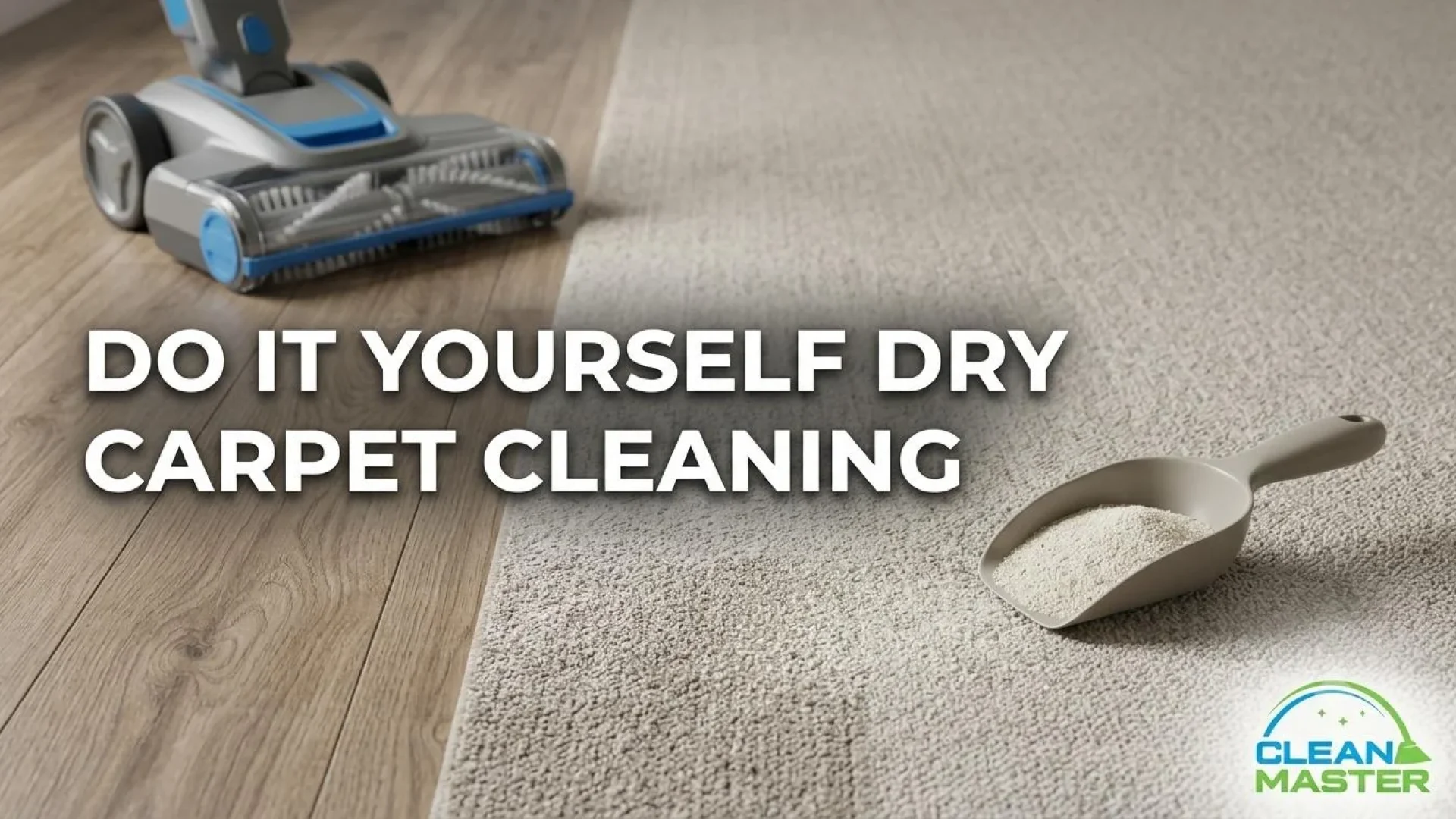
Dry carpet cleaning is exactly what it sounds like, cleaning carpet without introducing meaningful moisture, which means no drying time and no waiting before the room is back in use. For the right situations, it’s a genuinely practical maintenance approach that produces real results without the setup and drying time of wet cleaning methods.
At Clean Master Carpet Cleaning, we serve the entire DFW area with professional wet cleaning, but we’re also practical about what homeowners can accomplish between professional visits. Here’s the honest guide to DIY dry carpet cleaning: what methods work, how to use them correctly, and where their limits are.
When Dry Carpet Cleaning Makes Sense
Dry cleaning is appropriate for:
- Maintenance cleaning between professional hot water extraction visits, keeps surface soil manageable and carpet looking fresh
- Quick turnaround situations, when a room needs to be usable immediately after cleaning
- Moisture-sensitive carpet types, certain natural fiber rugs and delicate carpet styles benefit from low-moisture approaches
- Deodorizing and freshening when the carpet looks acceptable but smells stale
It’s not appropriate for liquid stains, pet urine, embedded soil, or as a replacement for periodic deep extraction cleaning. Dry methods work at the surface, which is both their advantage (no moisture) and their limit (no depth).
Method 1: Dry Carpet Cleaning Powder
Best for surface soil removal and mild deodorizing on synthetic carpet.
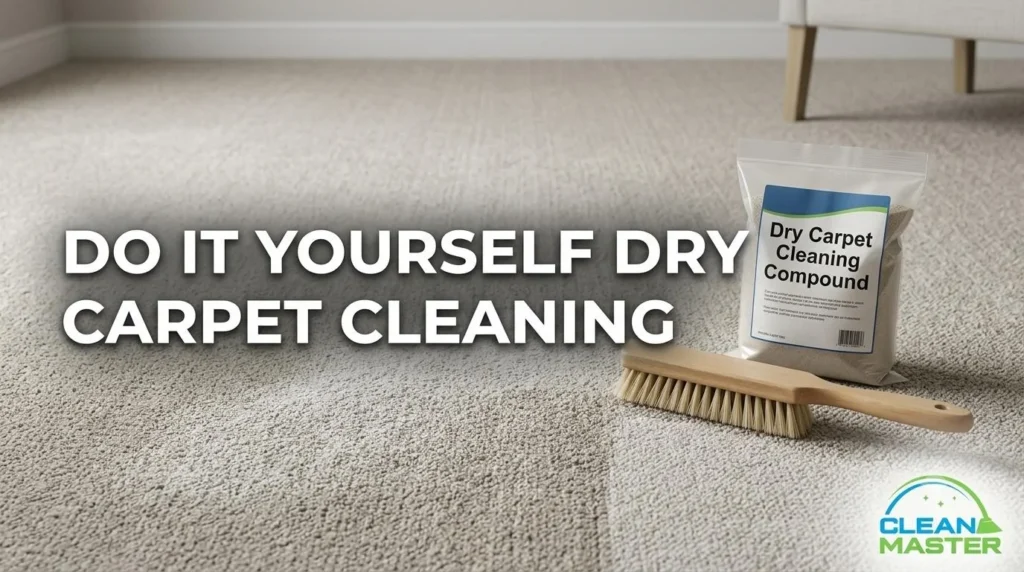
Commercial dry carpet cleaning powders, brands like HOST, Capture, and similar products, contain absorbent compounds (often corn cob or cellulose-based) impregnated with cleaning agents and sometimes a mild solvent. The powder absorbs surface soil and oils when worked into the fiber, then gets vacuumed away along with the material it absorbed.
How to use it:
- Vacuum thoroughly first, loose debris on the surface reduces how effectively the powder contacts and absorbs soil in the fiber
- Sprinkle the powder evenly across the carpet, don’t over-apply. A light, even layer is more effective than a heavy dump that sits on the surface
- Work the powder into the pile using the brush provided with the product or a soft-bristle carpet brush, this is the step most people skip, and it’s the one that determines whether the powder actually reaches the soil in the fiber rather than sitting on top of it
- Allow dwell time, most products specify 30 minutes minimum; for lightly soiled carpet in a maintenance scenario, 30 minutes is sufficient; for more significant soil, an hour improves results
- Vacuum thoroughly in multiple directions, the powder and the soil it absorbed need to be fully removed. Under-vacuuming leaves powder residue in the fiber, which is one of the main limitations of repeated dry powder use
Limitation to know: dry cleaning powder used repeatedly without periodic hot water extraction causes residue to accumulate in the carpet pile over time. The powder is designed to be fully vacuumed out, but no vacuum removes 100% of what was applied. Over months and years, this residue builds in the base of the fiber and becomes a soil attractor. Professional extraction every 12 to 18 months removes what the vacuum can’t. Read our guide on getting rid of carpet cleaner residue if buildup is already an issue.
Method 2: Baking Soda for Deodorizing
Best for odor absorption and general freshening without any cleaning agent.
Baking soda is the simplest and most accessible dry carpet treatment, not a cleaner in the soil-removal sense, but an effective odor absorber that works on general mustiness, light food smells, and surface-level pet odor between professional treatments.
How to use it:
- Vacuum the carpet first, remove loose debris so the baking soda contacts fiber rather than surface material
- Sprinkle baking soda generously and evenly across the carpet, more evenly distributed coverage is better than thick piles in some spots and bare fiber in others
- Allow 30 minutes to several hours depending on odor severity, for significant odor, an overnight dwell with the room closed is ideal
- Vacuum thoroughly in multiple directions to remove all baking soda from the pile
Baking soda is safe for all carpet types including natural fibers. It doesn’t clean, it deodorizes. For pet urine odor specifically, it temporarily improves surface smell but doesn’t address uric acid crystals in the fiber and backing. Enzyme cleaner is required for that.
Method 3: Dry Foam Method
Best for light surface cleaning with slightly more cleaning power than powder.
Dry foam carpet cleaning uses a foaming shampoo applied to carpet, worked into the fiber, and vacuumed away once dry. It bridges dry powder and wet extraction, there’s minimal moisture introduced, but slightly more cleaning action than dry powder alone.
How to use it:
- Vacuum first, same as all dry methods
- Apply dry foam shampoo to a section of carpet according to product directions, most are applied via a brush applicator or sprayed and spread
- Work the foam into the pile with a soft brush in circular motions, the foam lifts surface soil into the foam structure
- Allow to dry completely, dry foam products typically take 30 to 60 minutes to dry at the surface. Don’t vacuum before the foam is fully dry, wet foam in the vacuum creates a different set of problems
- Vacuum thoroughly to remove the dried foam and the soil suspended in it
Dry foam leaves slightly less residue than powder when used correctly, but carries the same residue accumulation risk with repeated use. As with powder, periodic professional extraction removes what the vacuum can’t.
A Note on Encapsulation Cleaning
Encapsulation is a professional semi-dry method worth understanding as context for the DIY methods above. Professional encapsulation applies a polymer solution that crystallizes around soil particles as it dries, encapsulating them so they can be vacuumed away without water extraction.
Encapsulation is faster and lower-moisture than hot water extraction and works well as a maintenance clean in commercial settings where downtime matters. As a professional method, it reaches the fiber more effectively than DIY dry powder and leaves a polymer residue that continues to release soil on subsequent vacuuming passes.
DIY encapsulation products exist but require specific application equipment to work as intended. This is a professional service area rather than a practical DIY approach for most homeowners, but knowing it exists is useful when discussing cleaning options with professional services.
At a Glance: Dry Cleaning Methods Compared
| Method | Cleans Soil? | Deodorizes? | Drying Time | Residue Risk | Best Use |
| Dry cleaning powder | Surface level | Mild | None | Moderate with repeated use | Surface soil maintenance |
| Baking soda | No | Yes | None | None | Odor freshening only |
| Dry foam | Surface level | Mild | 30 to 60 min | Low to moderate | Light surface cleaning |
| Encapsulation (professional) | Good surface clean | Yes | Minimal | Low | Professional maintenance clean |
The Limits of Dry Cleaning and When to Call Clean Master
Dry cleaning methods work at and near the carpet surface. They don’t reach the embedded soil in the carpet fiber base and backing that accumulates with months of foot traffic, and they can’t address:
- Liquid stains, stains that have penetrated the fiber need wet treatment and extraction to remove
- Pet urine odor, uric acid crystals in the backing require enzyme treatment and extraction, not dry absorption
- Deep-set soiling, the matted, dark appearance of high-traffic areas that doesn’t lift with surface cleaning needs professional hot water extraction
Dry cleaning used consistently between professional visits extends the life and appearance of professional cleans, it’s maintenance that makes the deep clean more effective when it comes. It doesn’t replace the deep clean. Read our guide on how often you should get your carpet cleaned to stay on the right schedule.
Clean Master Carpet Cleaning provides professional hot water extraction across the entire DFW area. For carpet that’s past what dry methods can maintain, we’re the next step. Contact Clean Master Carpet Cleaning today to schedule your DFW professional carpet clean and keep the baking soda and powder for between visits.