Cat urine in carpet is one of the most persistent odor problems a homeowner can face, and one of the most commonly mishandled. Standard carpet cleaning doesn’t fully eliminate it. DIY treatments often make it worse before it gets better. And the smell has a way of returning even when it seemed like the problem was solved.
Professional carpet cleaning does remove cat urine odor, but only when the treatment is matched to what cat urine actually does to carpet, and how deep it actually goes. At Clean Master Carpet Cleaning, we’ve resolved cat urine odor in DFW homes that clients had been struggling with for months, using an approach built on understanding the chemistry and the contamination depth. Here’s what you need to know.
Why Cat Urine Is Harder to Remove Than Dog Urine
This isn’t a myth, cat urine genuinely presents a more difficult odor removal challenge than dog urine, for specific chemical reasons.
Cat urine contains a higher concentration of uric acid than dog urine, along with felinine, a sulfur-containing compound unique to cats that contributes significantly to the characteristic pungent smell. These compounds are more chemically stable than those in dog urine, which means they don’t break down as readily over time or with standard cleaning chemistry.
Cat urine also tends to be deposited in the same location repeatedly, cats return to spots they’ve used before because they can detect residual odor that humans can’t. This layering effect concentrates contamination in specific areas over time, driving it progressively deeper into the carpet system with each incident.
The combination of more complex chemistry, greater concentration, and repeated deposition in the same spots is what makes cat urine the most challenging urine odor a carpet cleaner encounters.
The Core Problem: Uric Acid Crystals
Understanding why standard cleaning fails starts with understanding uric acid crystals, the specific compound responsible for the odor that returns after a clean.
When cat urine dries, the liquid evaporates but the uric acid remains in the carpet as microscopic crystals bonded to the fiber, backing, and padding. These crystals are not water-soluble, mopping, steam cleaning, and standard carpet cleaning solution don’t dissolve them. At best, they move them around or temporarily suppress the odor while the crystals remain intact.
Moisture reactivates uric acid crystals. Heat reactivates them more aggressively. This is why cat urine odor returns after cleaning, particularly after steam cleaning or hot water extraction applied without enzyme pre-treatment. The cleaning process adds moisture and heat, the crystals are reactivated, and the odor surges temporarily before settling back to its baseline level, reduced but not eliminated.
The only chemistry that breaks down uric acid crystals is enzyme-based treatment, specifically protease and urease enzymes that dissolve the crystal structure at a molecular level, converting the uric acid into compounds that can be fully extracted and don’t produce odor. Read our guide on how to use enzyme cleaner on carpet for more on how this process works.
How Deep Cat Urine Actually Goes
This is the contamination depth picture that most homeowners underestimate, and why surface-level treatment consistently fails to produce lasting results.
A typical cat urine incident, a single accident on carpet, follows this penetration path:
- Carpet fiber, where most of the visible stain appears and where surface cleaning makes the most immediate difference
- Carpet backing, the woven or bonded material beneath the fiber layer, which absorbs urine rapidly through the fiber
- Padding, the foam or fiber cushion beneath the carpet, which can absorb significant volume and retain it at depth
- Subfloor, in cases of repeated accidents in the same location, urine eventually reaches the subfloor surface where it can penetrate wood or concrete and requires the most intensive treatment
Standard carpet cleaning reaches layers 1 and 2 effectively. Professional hot water extraction with enzyme pre-treatment reaches layers 2 and 3. Layer 4, subfloor contamination, typically requires padding replacement and direct subfloor treatment before re-laying carpet.
For a single, recent cat urine incident caught early, professional treatment can resolve contamination through layers 1 to 3 completely. For repeated incidents in the same location over months or years, padding replacement is frequently necessary for complete odor elimination.
Why DIY Treatment Often Makes Things Worse
The most common DIY approaches to cat urine, vinegar and water, baking soda, steam cleaning, or general-purpose odor sprays, share a common limitation: they address the surface without breaking down the uric acid crystals beneath it.
Worse, some approaches actively complicate professional treatment.
Steam cleaning without enzyme pre-treatment heats the uric acid crystals, temporarily intensifying the odor and potentially heat-setting the stain into the fiber, making it harder to lift later.
Vinegar neutralizes the ammonia odor component temporarily but doesn’t touch uric acid crystals. The vinegar smell fades, the cat urine smell returns.
Odor-masking sprays layer fragrance over the odor source without eliminating it. As the fragrance fades, the underlying odor returns, sometimes with the masking agent having interacted with the urine compounds to create a combined smell worse than either alone.
Over-application of water spreads the urine contamination laterally into a larger area while diluting it slightly, creating a wider zone of contamination than the original incident.
We’ve worked with DFW clients who had applied multiple DIY treatments to the same spot over several weeks before calling Clean Master. In most cases the contamination zone was larger than the original incident, and the layered treatments had created additional chemistry that needed to be considered in the professional approach. It’s not a disaster, but it does make the job more complex and sometimes extends the number of treatments needed.
Clean Master’s Professional Approach to Cat Urine
Step 1: UV Light Inspection to Map All Affected Areas
Cat urine fluoresces under ultraviolet light, which makes UV inspection an essential first step before any treatment begins. UV inspection reveals:
- The true extent of each contamination zone, which is almost always larger than the visible stain
- Multiple spots not visible in normal light, particularly important in homes where a cat has been using carpet in multiple locations
- Evidence of older, dried incidents that may not have produced visible staining but are still producing odor
Treating only visible stains while missing adjacent UV-revealed contamination is one of the most common reasons cat urine odor persists after a clean. We map every affected area before treating any of them.
Step 2: Enzyme Pre-Treatment with Full Dwell Time
With the contamination map established, we apply professional-grade enzyme treatment to every identified area, applied generously enough to saturate to the depth the urine reached. This is not a light surface application. The enzyme solution needs to contact the uric acid crystals throughout the full contamination depth to break them down completely.
Dwell time is non-negotiable. The enzymatic process takes time, the bacteria in the solution need to produce enzymes, and the enzymes need time to dissolve the crystal structure. We allow a minimum dwell time appropriate to the contamination severity, covered where necessary to prevent premature evaporation, before any extraction begins.
Step 3: Hot Water Extraction Through the Full Contamination Depth
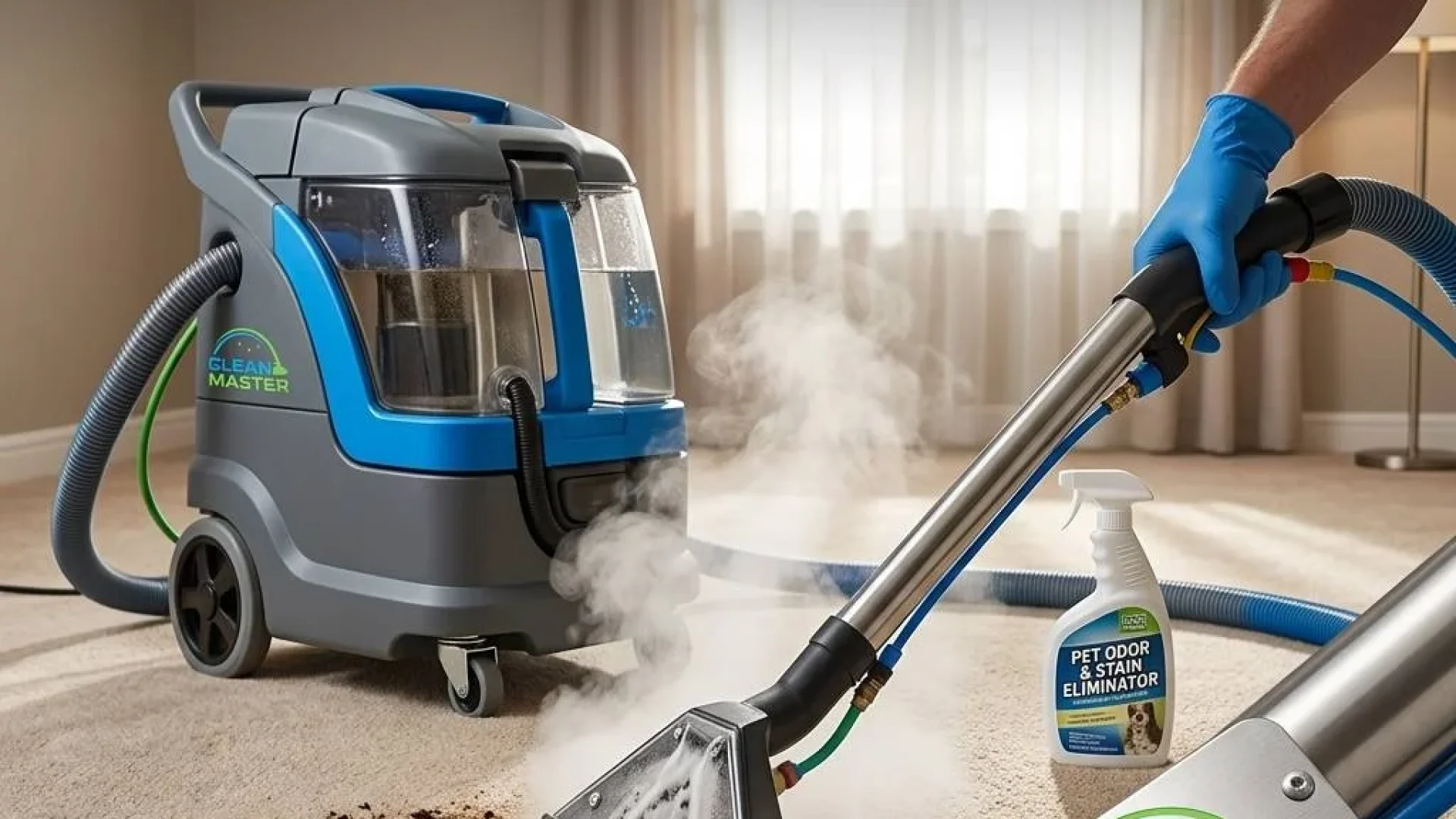
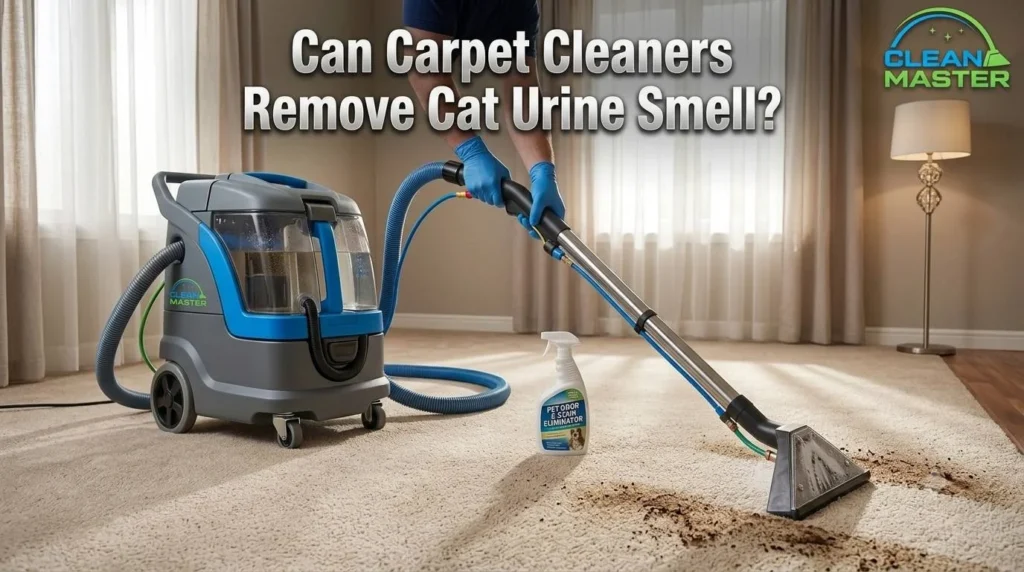
Following enzyme dwell time, professional hot water extraction removes the broken-down uric acid compounds, the enzyme solution, and any remaining contamination through the carpet fiber and backing. Our truck-mounted equipment operates at extraction pressure and temperature that consumer machines can’t match, reaching deeper into the carpet system and removing more completely.
For contamination that has reached the padding, additional treatment volume ensures the enzyme solution and subsequent extraction address that layer directly rather than stopping at the carpet backing.
The result, when contamination hasn’t reached the subfloor, is complete odor elimination that doesn’t return. The uric acid crystals are broken down and extracted rather than suppressed or masked.
When Professional Cleaning Isn’t Enough: Padding Replacement
For carpet that has had repeated cat urine accidents in the same location over an extended period, the padding beneath the carpet has often absorbed contamination at a volume and depth that extraction alone can’t fully address. In these cases, padding replacement is the right path to complete odor elimination:
- Carpet is pulled back from the affected area
- Contaminated padding is removed and replaced
- The subfloor is inspected and treated if urine penetration has occurred
- New padding is installed and carpet is re-laid
This is a more involved and more costly process than standard treatment, but it’s the solution for situations where treatment of the carpet alone has produced incomplete results despite a professional-grade approach.
During our UV inspection and initial assessment, we identify areas where padding replacement is likely necessary and communicate this before treatment begins so clients have accurate expectations.
At a Glance: What Professional Treatment Addresses
| Contamination Layer | Standard Cleaning | Professional and Enzyme | Padding Replacement Needed |
| Carpet fiber | Partially | Fully | No |
| Carpet backing | Rarely reaches | With proper extraction | No |
| Padding | No | Partially, depends on severity | For heavy or repeated contamination |
| Subfloor | No | No | Yes, direct subfloor treatment required |
More Carpet Care Guides
Frequently Asked Questions
How many professional treatments does cat urine typically need?
For a single incident caught within a few days, one professional treatment with proper enzyme pre-treatment and extraction typically resolves the odor completely. For older, set contamination or repeated incidents in the same area, a second treatment after a full drying interval may be needed to address residual crystals that weren’t fully reached in the first pass. We assess after each treatment and recommend a second only when the initial inspection and post-treatment odor assessment indicates it’s necessary.
Will professional cleaning remove the visible cat urine stain as well as the odor?
In most cases, yes, the enzyme treatment and hot water extraction removes both the stain compounds and the odor source simultaneously. Very old, dried stains or those that have been set by heat from steam cleaning without enzyme pre-treatment may leave a residual discoloration even after odor is fully eliminated. This is fiber discoloration rather than remaining contamination, the odor is gone even if a faint mark remains.
Can cat urine odor come back after professional treatment?
If the treatment was properly done, enzyme pre-treatment at full dwell time, extraction reaching the contaminated depth, all UV-identified areas treated, the odor should not return. Return of odor after professional treatment typically indicates one of three things: an area that wasn’t identified in the initial inspection was missed, the contamination reached the padding and wasn’t fully addressed there, or the cat has re-used the spot after treatment. We address the first two through thorough inspection and treatment; the third requires behavioral management on the pet owner’s side alongside the professional treatment.
The Bottom Line: Professional Treatment Works, When It’s Done Right
Cat urine odor in carpet is genuinely one of the harder problems to fully resolve, the chemistry is more complex than other odors, the contamination goes deeper than it appears, and the standard approaches that work on most carpet problems fail specifically because they don’t address uric acid crystals.
Professional treatment with UV inspection, enzyme pre-treatment at proper dwell time, and deep hot water extraction does work. We’ve seen complete cat urine odor elimination in DFW homes that clients had been struggling with for months, not because the problem was easy, but because the treatment was matched to what the problem actually is. Contact Clean Master Carpet Cleaning today for professional cat urine treatment across the entire DFW area and odor elimination that actually lasts.