
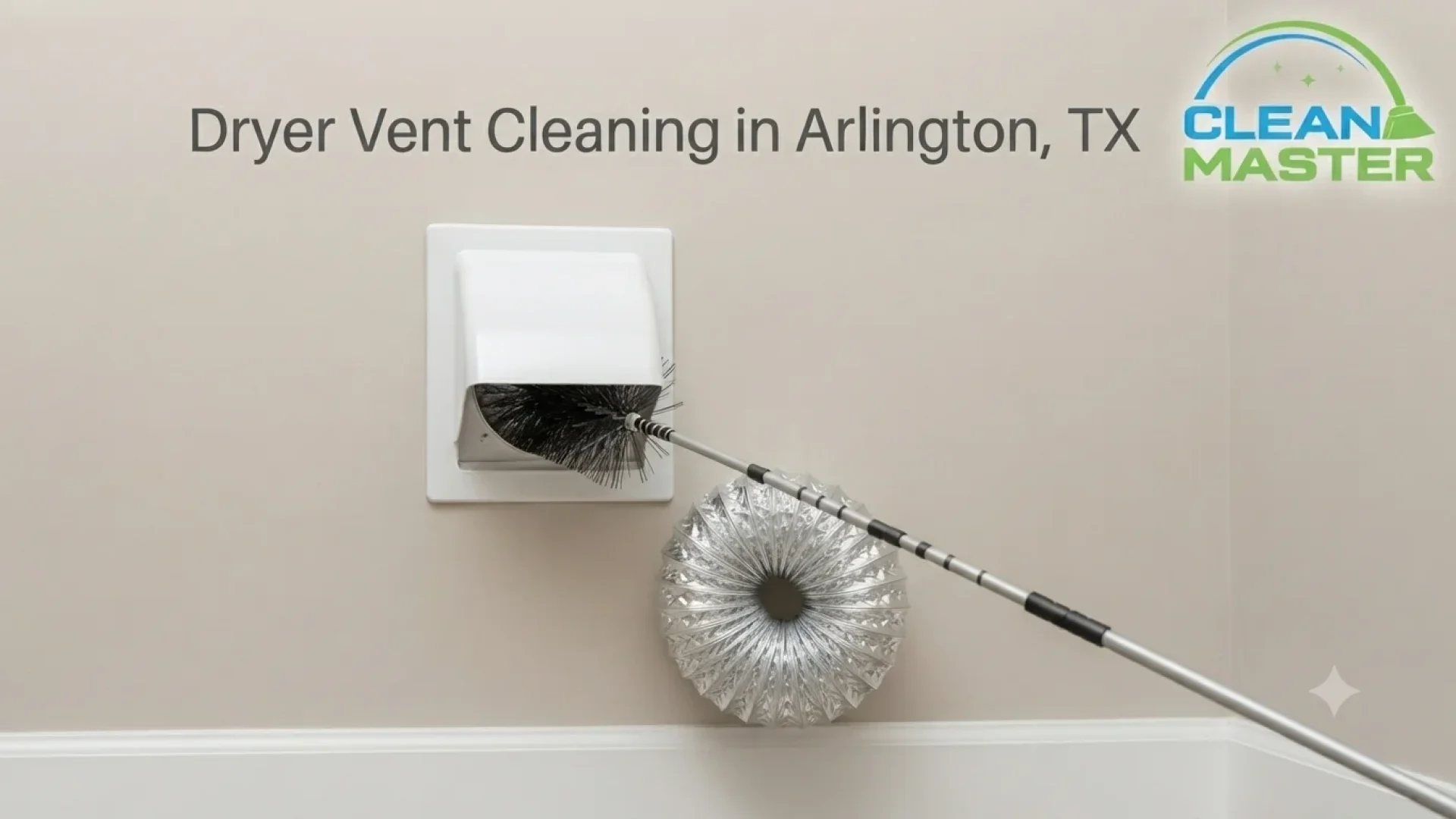
Most homeowners think about dryer maintenance in terms of cleaning the lint trap after every load, and that’s a great habit to have. But the lint trap only catches a portion of the lint your dryer produces. The rest travels through the vent line, and over time, it builds up inside that line where it’s completely out of sight. Unlike carpet or upholstery, a dryer vent isn’t something you’ll notice getting dirty just by looking at it, which is exactly why it tends to get overlooked until something goes wrong.
This guide covers why dryer vent cleaning from Clean Master Carpet Cleaning matters, the warning signs that your vent needs attention, what the cleaning process involves, and how often it should be done for homes across Arlington.
Why Dryer Vent Cleaning Is About More Than Just Efficiency
It’s easy to assume a slow-drying dryer is just an inconvenience, but a clogged dryer vent is actually one of the more overlooked fire risks in a home. Lint is highly flammable, and as it builds up inside the vent line, it restricts airflow and traps heat that would normally escape outside. This buildup is a leading contributor to house fires that start in the laundry area, according to fire safety data tracked by organizations like the National Fire Protection Association.
Beyond the safety angle, a clogged vent also means:
- Longer drying times, since restricted airflow makes the dryer work harder to remove moisture
- Higher energy usage, as the dryer runs longer cycles to get clothes fully dry
- More wear on the dryer itself, since the appliance has to work harder than it’s designed to under normal conditions
- Excess heat buildup, which is both a safety concern and a strain on the appliance’s components
Over time, these effects compound. A dryer that’s quietly working harder every cycle wears down its internal components faster, which often means costlier repairs or a shorter appliance lifespan than a well-maintained one would have.
Signs Your Dryer Vent Needs Cleaning
A few signs point pretty clearly to a vent that needs attention:
- Clothes take longer than usual to fully dry, even on a normal cycle
- The dryer or laundry area feels noticeably hotter than usual during a cycle
- Clothes come out hotter than normal at the end of a cycle
- A burning or musty smell during or after drying
- Visible lint buildup around the outside vent opening
- The exterior vent flap doesn’t open freely, or barely moves when the dryer is running
- It’s been a year or more since the vent was last cleaned, or it’s never been done
If you’re noticing even one or two of these signs, especially longer drying times combined with excess heat, it’s worth having the vent checked. It’s worth noting that these signs tend to develop gradually, which means many homeowners adjust unconsciously, running an extra cycle here or there, without realizing how much the vent’s condition has changed over time.
How Lint Builds Up Inside a Dryer Vent
Even with a lint trap cleaned after every load, a portion of lint still escapes into the vent line during each drying cycle. Over time, this lint accumulates along the walls of the vent, gradually narrowing the space available for air to pass through. The longer the vent line, the more bends it has, or the longer it’s gone without cleaning, the more buildup tends to accumulate. Vents with several turns or a long run to the exterior wall are often more prone to significant buildup than a short, straight vent line.
Homes with the laundry room located in the interior of the house, rather than along an exterior wall, often have longer, more winding vent runs by necessity. These setups are worth monitoring a bit more closely, since the extra length and bends give lint more surface area to catch and accumulate on with every cycle.
How We Clean Dryer Vents in Arlington
Our dryer vent cleaning is a standalone service, separate from air duct cleaning, since dryer vents are a distinct system with their own specific cleaning needs. Here’s what the process generally involves:
- Initial check — We take a look at the dryer setup, vent line length, and exterior vent location to understand the scope of the job.
- Interior vent line cleaning — Using professional equipment, built-up lint is loosened and removed from inside the vent line, from the dryer connection through to the exterior wall.
- Exterior vent cap cleaning — The exterior vent cover, sometimes called the vent cap or hood, is also cleaned as part of the service. This part is easy to overlook, but a clogged or stuck exterior flap can be just as much of an airflow problem as buildup inside the line itself.
- Basic visual safety check — We do a basic visual inspection for signs of lint buildup, airflow issues, or visible damage to the vent line as part of the visit.
Most standard residential dryer vent cleanings are completed in under an hour, though vent lines with more bends or a longer run to the exterior wall can take a bit more time to fully clear.
Why the Exterior Vent Cap Matters Too
It’s common for homeowners to think of dryer vent cleaning as only an interior job, but the exterior vent cap plays just as important a role. This is the cover on the outside of the house where hot, moist air is supposed to exit freely. Over time, lint can build up around this opening, and in some cases, the flap itself can get stuck or clogged enough that it barely opens, even when the dryer is running at full heat. A vent line can be perfectly clean on the inside and still cause drying problems if the exterior cap is restricted. Because of this, cleaning the exterior vent cap is included as part of our standard service, not treated as a separate add-on.
Homeowners sometimes assume drying problems must be coming from inside the wall since that’s the part they can’t see, when in reality a quick look at the exterior cap can sometimes reveal the more obvious culprit, especially in homes with nearby trees or plants that shed debris near the vent opening.
Dryer Vent Cleaning Cost in Arlington, TX
Pricing is generally flat-rate for a standard residential dryer vent cleaning. As a general guide:
| Service | Typical Price Range |
| Standard dryer vent cleaning (interior line and exterior cap) | $75 to $150 |
| Longer or more complex vent runs (multiple bends, longer distance) | Toward the higher end of that range |
For an exact number based on your specific setup, the best step is a quick, free quote. Check our current specials as well, since dryer vent cleaning is sometimes eligible for savings when bundled with other home services.
How Often Should Dryer Vents Be Cleaned?
The right frequency depends on how often the dryer is used and the length and layout of the vent line:
| Household Situation | General Guidance |
| Average household use | Once a year |
| Larger families or frequent laundry use | Every 6 to 12 months |
| Long or complex vent runs (multiple bends, long distance to exterior) | More frequent cleaning may be worth considering |
| Noticing warning signs (long drying times, excess heat) | As soon as possible, regardless of last cleaning date |
If you’re not sure when the vent was last cleaned, or if it’s ever been done since the home was built, that’s generally a good sign it’s overdue. This is especially true for homes purchased from a previous owner, where maintenance history is often unclear or simply unknown.
What a Basic Safety Check Looks For
As part of the service, a basic visual check covers a few key things:
- Whether lint is visibly built up inside the accessible portions of the vent line
- Whether airflow seems restricted based on how the vent responds during the visit
- Whether the exterior vent flap opens and closes properly
- Any visible signs of damage to the vent line itself, such as crushed sections or disconnected joints
This isn’t a full appliance inspection, but it does help flag anything that stands out as a potential concern beyond the lint buildup itself. If something more significant is spotted, like a crushed section of ductwork behind a wall, we’ll let you know so you can decide how to address it, whether that’s a repair, a replacement section, or simply keeping an eye on it going forward.
Preventing Buildup Between Cleanings
A few habits can help reduce how quickly lint builds up between professional cleanings:
- Clean the lint trap before every load, not just occasionally, since this reduces how much lint escapes into the vent line in the first place.
- Check the exterior vent flap periodically to make sure it’s opening freely when the dryer runs.
- Avoid overloading the dryer, since larger loads tend to produce more lint per cycle.
- Pay attention to drying times, since a noticeable change is often the earliest sign of a developing clog.
- Have the vent line checked after any home renovation near the laundry area, since construction dust and debris can sometimes end up inside the line.
- Avoid drying items that shed heavily, like certain blankets or towels, in back-to-back loads without a lint trap check in between, since this can accelerate buildup faster than typical laundry.
How Dryer Vent Cleaning Fits Into Home Maintenance
Dryer vent cleaning is a good example of a maintenance task that’s easy to overlook simply because it’s invisible day to day, much like air duct cleaning for the rest of the home’s HVAC system. Many homeowners find it convenient to schedule both around the same time of year, treating them as part of an annual home maintenance check rather than two separate, easy-to-forget tasks. If your home is also due for a carpet cleaning, bundling these services into one visit can be a practical way to knock out several maintenance items at once.
Frequently Asked Questions
How often should dryer vents be professionally cleaned?
Most households benefit from cleaning once a year, though larger families, frequent dryer use, or long and complex vent runs may benefit from cleaning every 6 to 12 months.
Is a clogged dryer vent really a fire risk?
Yes. Lint buildup inside a dryer vent is highly flammable, and restricted airflow traps heat that would normally escape outside, which is a leading contributor to house fires that start in the laundry area.
How do I know if my dryer vent needs cleaning?
Common signs include longer drying times, clothes coming out hotter than usual, a burning or musty smell, visible lint around the exterior vent, or the exterior vent flap not opening freely.
Does dryer vent cleaning include the exterior vent cap?
Yes. Our service includes cleaning the exterior vent cap and cover, not just the interior vent line, since a restricted exterior flap can cause drying problems even if the interior line is clean.
How much does dryer vent cleaning cost in Arlington, TX?
Standard cleaning typically falls in the $75 to $150 range, with longer or more complex vent runs sometimes falling toward the higher end.
Is dryer vent cleaning the same as air duct cleaning?
No. Dryer vent cleaning addresses the vent line connected specifically to the dryer, while air duct cleaning addresses the home’s HVAC system. We offer dryer vent cleaning as a standalone service, separate from duct cleaning.
Does dryer vent cleaning include a safety inspection?
We include a basic visual safety check as part of the service, looking at lint buildup, airflow, and any visible signs of damage to the vent line.
Can a dirty dryer vent damage the dryer itself?
Yes. When a dryer has to work harder and run hotter to compensate for restricted airflow, it puts extra strain on internal components over time, which can shorten the appliance’s lifespan or lead to more frequent repairs.
Get a Free Dryer Vent Cleaning Quote in Arlington, TX
If your dryer is taking longer than usual to dry clothes, running hotter than normal, or it’s simply been a while since the vent was cleaned, Clean Master Carpet Cleaning has been serving homes across the Dallas-Fort Worth area, including Arlington, for over 26 years.
Request a free quote and we’ll help you get your dryer vent cleaned safely and thoroughly, inside and out. Learn more about our team and our approach to home maintenance across Arlington and the surrounding area.