
You’ve just had your carpets cleaned, or done it yourself, and now you’re tip-toeing around the house wondering when it’s safe to walk normally again. It’s one of the most common questions we hear from homeowners in the DFW area, and the answer isn’t one-size-fits-all.
Drying time depends on how your carpet was cleaned, what your carpet is made of, and the conditions in your home. The good news: in most cases, a damp carpet is completely normal and temporary. Here’s exactly what to expect and how to get things back to normal faster.
Drying Times by Cleaning Method
The single biggest factor in how long your carpet takes to dry is the cleaning method used. Different methods introduce very different amounts of moisture into your carpet, which is the starting point for everything else.
Steam Cleaning: 1 to 2 Hours
Steam cleaners use heat and vapor rather than large volumes of liquid water, which means they introduce significantly less moisture into carpet fibers than other methods. Under normal conditions with good ventilation, steam-cleaned carpet is typically dry within one to two hours, sometimes less.
This is one of the reasons steam cleaning has become popular for regular maintenance. The fast drying time means minimal disruption to your day, and the low moisture reduces the risk of mildew or over-wetting issues.
Professional Hot Water Extraction: 6 to 12 Hours
Professional carpet cleaning uses hot water extraction, a process that injects hot water and cleaning solution deep into the carpet fibers and then immediately extracts it along with the loosened dirt and debris. It’s the most effective method for deep cleaning, but it introduces more moisture than steam cleaning, even with powerful extraction equipment.
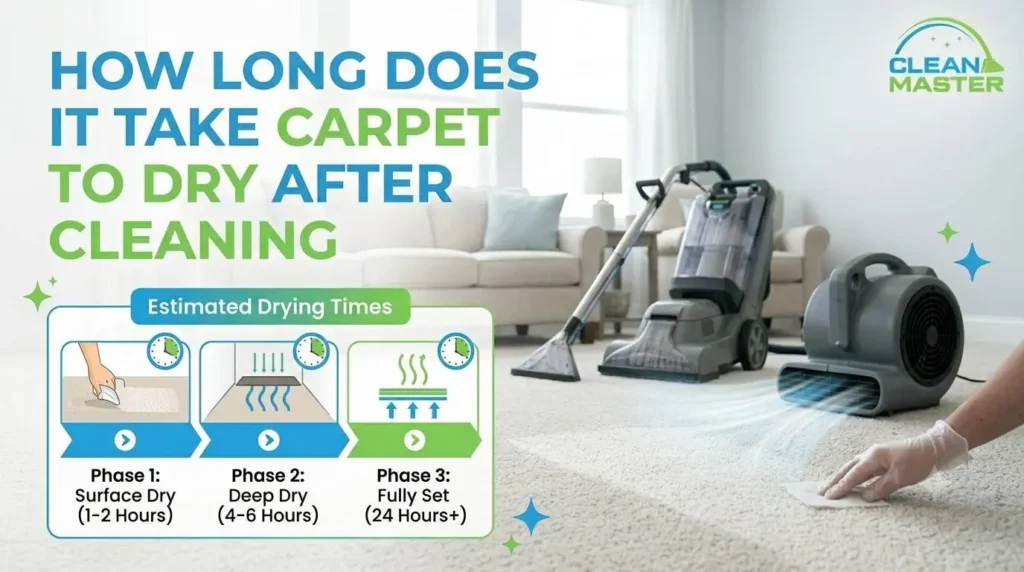
For most professionally cleaned carpets, 6 to 12 hours is a reliable drying window under normal conditions. Many of our DFW clients schedule morning appointments and find their carpets are ready for normal use by evening. In some cases, particularly with plush or thick carpets or in humid weather, drying can extend to 24 hours.
DIY Carpet Cleaner and Shampooer: 12 to 24 Hours
Consumer-grade carpet cleaning machines are effective for surface-level cleaning, but their extraction power is significantly lower than professional equipment. That means more moisture is left behind in the carpet after cleaning, which directly translates to longer drying times.
For DIY carpet shampooer jobs, 12 to 24 hours is a realistic expectation. In less-than-ideal conditions, high humidity, thick carpet, poor ventilation, drying can stretch beyond that. This isn’t a cause for alarm, but it does mean planning your cleaning day carefully, especially if the room needs to be back in use quickly.
Factors That Affect How Long Your Carpet Takes to Dry
Knowing the method gives you a baseline. These three factors will push that timeline shorter or longer depending on your specific situation.
Humidity and Weather Conditions
This one is particularly relevant for homeowners in the DFW area. North Texas summers bring heat and humidity that can significantly slow carpet drying, not because of temperature, but because humid air is already moisture-saturated and less able to absorb evaporation from your carpet.
On a dry winter day with low humidity, carpets can dry noticeably faster than the baseline estimates above. On a muggy July afternoon in Dallas with humidity above 70%, that same carpet might take several hours longer. This is one of the reasons we often recommend scheduling professional carpet cleaning in cooler, drier months when possible, though it’s not always practical, and the right equipment and ventilation can compensate significantly.
Carpet Thickness and Fiber Type
A thin, low-pile synthetic carpet dries much faster than a thick, plush carpet or a high-pile rug. Thicker carpets absorb and hold more moisture, and that moisture has to travel further to evaporate from the surface.
Fiber type also plays a role. Synthetic fibers like nylon and polyester are less absorbent than natural fibers like wool and cotton, which means they release moisture more readily and dry faster. If you have a thick wool or natural fiber carpet, add a few hours to whatever baseline estimate applies to your cleaning method.
Ventilation and Airflow in the Room
A closed, still room is the worst possible environment for drying carpet. Without airflow, the moisture evaporating from your carpet has nowhere to go, it just hangs in the air above the carpet and slows evaporation to a crawl.
Good ventilation is the single most controllable factor in drying time. A well-ventilated room with fans running can cut drying time almost in half compared to a sealed room with no airflow. This is why professional cleaners, including our DFW team, set up air movers before leaving a job. The equipment does the cleaning, but airflow finishes the job.
How to Speed Up Carpet Drying
You don’t have to wait passively. These steps make a measurable difference.
Run Fans and Air Movers
Point fans directly at the carpet surface and run them continuously until the carpet is dry. Box fans, tower fans, and oscillating fans all work, the goal is to keep air moving across the carpet surface to carry moisture away. If you have access to a professional air mover, sometimes called a blower fan, even better. They move a much higher volume of air than household fans and can cut drying time dramatically.
Open Windows and Create Cross-Ventilation
If outdoor humidity isn’t high, open windows on opposite sides of the room to create a cross-breeze. Moving air in from one side and out the other accelerates evaporation significantly. Even a modest breeze through an open window does more than a still, closed room with a fan running.
On humid days, however, opening windows can work against you by bringing in more moisture from outside. Check the outdoor humidity before opening up. If it’s above 60 to 65%, keep windows closed and rely on fans and your AC instead.
Use a Dehumidifier
A dehumidifier pulls moisture from the air, which accelerates evaporation from the carpet below. This is especially useful in DFW summers when outdoor humidity makes window ventilation counterproductive. Run the dehumidifier in the same room as the damp carpet and empty the reservoir as needed. Combined with fans, this is the most effective combination for humid-weather drying.
Keep Foot Traffic Off Until Fully Dry
This isn’t just about comfort, it’s about protecting your clean carpet. Walking on damp carpet fibers presses them flat, can re-soil freshly cleaned areas, and slows drying by compressing moisture deeper into the pile. Keep the room as clear as possible until the carpet is fully dry. Read our full guide on when you can walk on carpet after cleaning for more detail. If you need to cross the space, wear clean socks rather than bare feet or shoes.
When Should You Be Concerned?
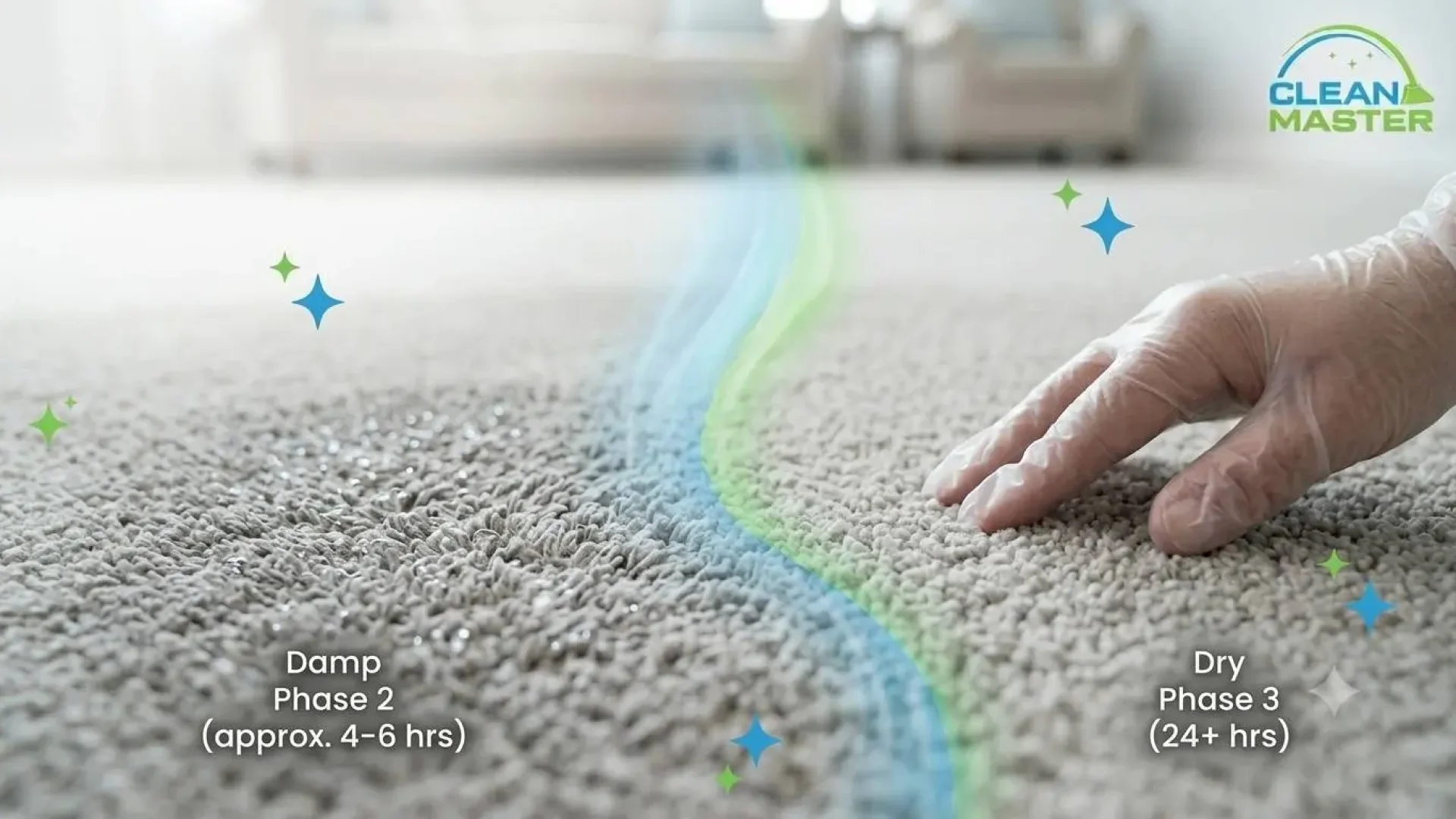
A damp carpet for 6 to 24 hours is normal. But if your carpet is still wet after 24 hours, or if you notice a musty or mildew smell developing, that’s a sign that moisture is being retained longer than it should be.
The most common causes are insufficient ventilation during drying, over-wetting from too many passes with a DIY machine, or a thick carpet in a humid environment without any active drying measures in place.
If the carpet feels wet after 48 hours, or if a musty smell appears and doesn’t clear, contact a professional. Read our guide on whether carpet cleaning can cause mold to understand the risks. Prolonged moisture in carpet backing and padding creates conditions for mold and mildew growth that won’t resolve on their own.
More Carpet Care Guides
Frequently Asked Questions
Can I turn on the heat to dry carpet faster?
Warm air holds more moisture than cool air, which can actually help with evaporation, but only if that moisture has somewhere to go. Running heat in a sealed room just creates a warm, humid environment that slows drying. Combine heat with open windows or a dehumidifier to make it useful rather than counterproductive.
Is it okay to put furniture back on damp carpet?
No. Placing furniture on damp carpet can leave permanent indentations, transfer dye from furniture feet onto carpet fibers, and trap moisture beneath legs that never fully dries. Wait until the carpet is completely dry before returning furniture. Read our guide on how long after carpet cleaning you can put furniture back for specific timing. If you need to move pieces back sooner, place plastic furniture coasters or foil squares under each leg as a temporary barrier.
Why is my carpet still damp after 24 hours?
The most likely causes are high humidity, insufficient airflow, a very thick or dense carpet, or over-wetting during the cleaning process. Start by running fans and a dehumidifier and check again in a few hours. If the carpet is still damp at 48 hours, contact a professional to assess whether the padding underneath has retained moisture.
The Bottom Line: Damp Carpet Is Normal, Here’s How Long It Should Last
Steam cleaned carpet dries in 1 to 2 hours. Professionally extracted carpet dries in 6 to 12 hours. DIY shampooer jobs take 12 to 24 hours. Those are your baselines, and humidity, carpet thickness, and ventilation will move the needle in either direction.
The fastest path to dry carpet is simple: keep air moving, run a dehumidifier if humidity is high, stay off the carpet while it dries, and give it the time it needs. In the vast majority of cases, you’ll be back to normal within a day.
If drying is taking longer than expected or you’re noticing any musty odor that isn’t fading, our DFW carpet cleaning team is always happy to help assess the situation and get things back on track. Contact our DFW team today if your carpet isn’t drying the way it should, we’ll sort it out.