
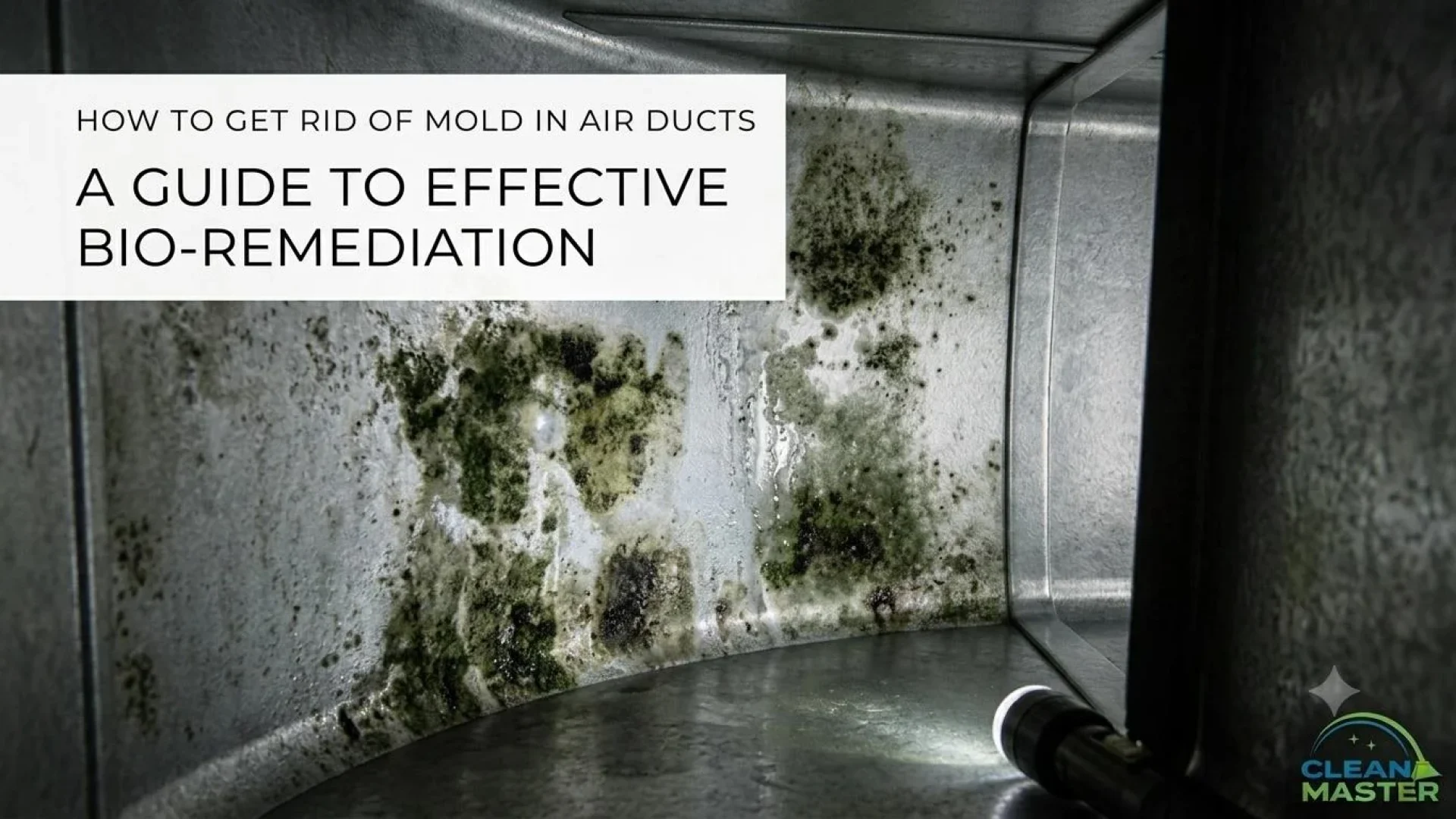
Mold in air ducts is one of the more serious indoor air quality problems a homeowner can face, and one of the most commonly mishandled. The instinct to scrub visible mold with a cleaning solution is understandable, but in a duct system that distributes air throughout the entire home, disturbing mold without properly containing and removing it can spread spores to every room simultaneously.
At Clean Master Carpet Cleaning, we serve the entire DFW area and we’ve assessed duct systems with mold ranging from minor register surface growth to established growth in main trunk lines, the result of DFW’s warm, humid conditions interacting with condensation in poorly maintained HVAC systems. Here’s the honest guide to what you can address yourself, what requires professional remediation, and how to prevent recurrence after the problem is resolved.
The Health Risk: Why Duct Mold Is Taken Seriously
Before getting into identification and treatment, it’s worth being clear about why mold in ductwork is a more significant health concern than mold in a contained area like a bathroom corner.
When mold grows in a duct system, every time the HVAC runs, it distributes mold spores and the mycotoxins some mold species produce throughout the entire home via the air supply. Residents are breathing continuously circulated air that contains whatever is growing in the ductwork. Exposure is ongoing and whole-home rather than localized.
Health effects associated with mold exposure vary by individual sensitivity and mold species, but commonly include:
- Respiratory symptoms such as coughing, wheezing, and shortness of breath
- Nasal and sinus congestion and irritation
- Eye, skin, and throat irritation
- Worsening of existing asthma or allergy conditions
- In sensitive individuals or with certain mold species, more serious respiratory effects
DFW’s warm climate and the humidity that accompanies summer storms and high dew points creates particularly favorable conditions for mold in HVAC systems. Condensation on cooling coils and ductwork surfaces, combined with accumulated organic debris in the ducts, provides the moisture and food source mold needs to establish itself.
Identifying Mold in Air Ducts vs. Dust and Debris
Not every dark mark in ductwork is mold. Before deciding on a course of action, it’s worth understanding what you’re actually looking at.
Signs that suggest mold rather than dust or debris:
- Visible fuzzy or powdery growth around registers, inside accessible duct openings, or on the air handler, mold has a texture that dust doesn’t
- Musty smell from vents when the HVAC runs, this is one of the most reliable early indicators of duct mold, often appearing before visible growth is accessible
- Musty smell that’s strongest when the system first starts and then diminishes slightly, consistent with mold spores being initially disturbed by airflow
- Discoloration that reappears after cleaning a register, mold re-establishes; dust wiped away stays gone until it re-accumulates gradually
- Household members experiencing allergy or respiratory symptoms that improve when away from home and worsen upon return
If you’re uncertain whether what you’re seeing is mold, a surface mold test kit available at hardware stores can provide basic confirmation. For identification of specific mold species, relevant when the species determines the remediation approach, professional sampling and lab analysis is the appropriate method.
The DIY Limit: Where It’s Appropriate and Where It Isn’t
This is the most important distinction in this guide. Attempting to clean duct mold beyond the appropriate DIY scope is one of the most common mistakes we see, and it often makes the situation worse rather than better by distributing spores before appropriate containment is in place.
What DIY Can Appropriately Address
Surface mold on registers and grilles, visible mold limited to the register surface and the immediately accessible duct opening (the first inch or two inside the duct), is within DIY scope when:
- Growth is limited to the surface and not extending visibly into the duct
- The area is accessible without disassembling ductwork
- The growth appears minor and isolated
DIY process for register-level surface mold:
- Turn off the HVAC system before removing any registers, prevent the system from distributing disturbed spores during cleaning
- Wear appropriate PPE, N95 or higher respirator, nitrile gloves, and eye protection. This is not optional for mold work
- Remove the register and take it outside or to a utility sink for cleaning, don’t clean it in place where residue falls into the duct
- Scrub the register with a solution of 1 cup of bleach per gallon of water or a commercial mold cleaner, rinse thoroughly, and allow to dry completely in fresh air before reinstalling
- Wipe the accessible duct interior (first 1 to 2 inches only) with the same solution applied to a microfiber cloth, don’t spray solution into the duct opening
- Replace the HVAC filter immediately after completing the cleaning, a fresh filter captures any spores disturbed during the process
- Monitor for recurrence over the following 2 to 4 weeks, if mold returns to the same registers within this timeframe, the source is deeper in the system
What Requires Professional Remediation
Any of the following situations is beyond DIY scope and warrants contacting a professional:
- Mold visible inside accessible duct sections beyond the first inch or two from the register
- Musty smell persisting after register cleaning, indicates mold is deeper in the system where surface cleaning didn’t reach
- Mold on or around the air handler, coil, or blower, these components require technical handling and mold here distributes spores with every heating and cooling cycle
- Black or dark green mold, potentially Stachybotrys or other species requiring professional identification and containment protocol
- Widespread growth across multiple registers simultaneously, indicates systemic duct mold rather than isolated surface growth
- Household members with significant respiratory conditions or immune compromise, mold exposure risk during cleaning is higher for these individuals
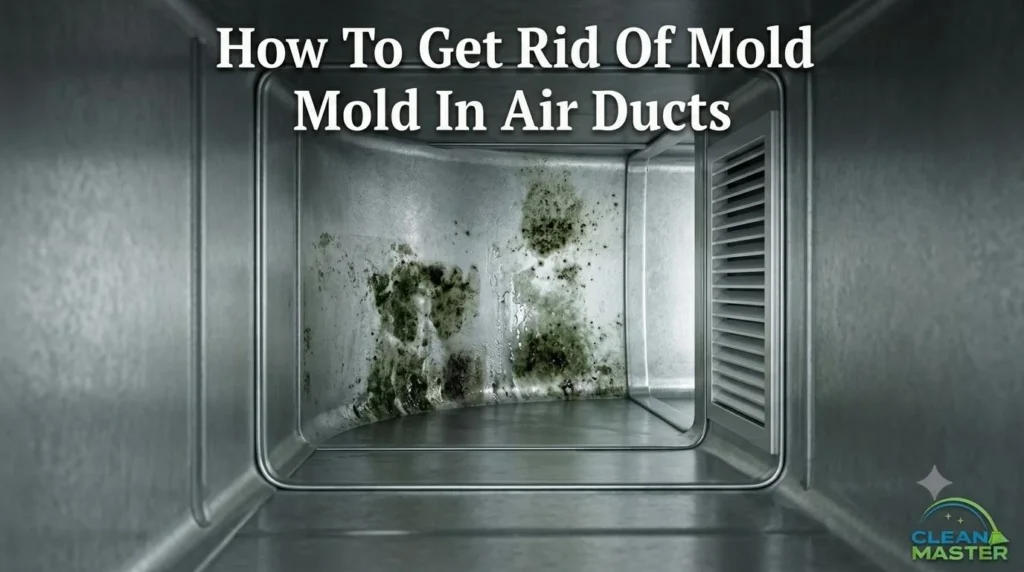
We’ve encountered DFW homes where well-intentioned DIY duct mold cleaning, spraying bleach into duct openings, running the HVAC after surface cleaning without addressing the filter, distributed spores more broadly than the original growth had done. The duct system is connected: what enters one opening travels throughout.
How Professional Mold Remediation in Ducts Works
For situations beyond DIY scope, professional duct mold remediation follows a structured process that addresses containment, removal, and the source of the moisture that allowed growth to establish.
1. Assessment and Testing
A professional remediator assesses the extent of growth, identifies the mold species where relevant, locates the moisture source that created conditions for growth (condensation issue, duct leak, previous water event), and determines the remediation scope before any cleaning begins.
2. Containment
Before cleaning begins, affected duct sections are isolated to prevent spore distribution during the remediation process. The HVAC system remains off throughout remediation.
3. Physical Removal with HEPA-Filtered Extraction
Mold in ductwork is physically removed using HEPA-filtered vacuum equipment that captures spores rather than redistributing them. For accessible metal ductwork, antimicrobial solutions appropriate for the surface material are applied and contact time is maintained before extraction.
4. Antimicrobial Treatment
EPA-registered antimicrobial agents are applied to affected duct surfaces after physical removal to inhibit recurrence. The specific product and application method depend on duct material, metal ductwork is treated differently from flex duct.
5. Source Remediation
The moisture source that enabled mold growth is addressed, whether that’s a condensation issue at the air handler, a duct leak drawing in humid unconditioned air, or insufficient insulation causing surface condensation. Without addressing the source, mold recurrence is likely regardless of how thoroughly the existing growth was removed.
6. Post-Remediation Verification
Air testing or surface sampling after remediation confirms that spore counts have returned to normal levels before the HVAC system is returned to operation.
Clean Master’s air duct cleaning service addresses duct contamination including mold at the register and accessible duct level. For extensive mold remediation requiring containment protocols and full system access, we coordinate with licensed mold remediation contractors in the DFW area and can help clients understand what their specific situation requires.
Prevention: How to Stop Mold From Returning
Once mold has been addressed, the priority is eliminating the conditions that allowed it to develop. In DFW specifically, humidity management is the central variable.
Filter Maintenance
A clogged HVAC filter reduces airflow and increases the time air spends in the duct system, both of which increase condensation risk. Replace filters on schedule (every 60 to 90 days minimum) and upgrade to MERV 8 or higher to capture more organic debris that serves as mold food. Read our expert tips guide on air duct cleaning for a full filter maintenance schedule.
Condensate Drain Maintenance
The air handler’s condensate drain removes moisture extracted from the air during cooling. A clogged condensate drain allows water to accumulate in the drain pan and potentially overflow into the duct system. Check and clear the condensate drain annually, it’s typically accessible and cleanable with a wet/dry vac.
Humidity Control
Keep indoor relative humidity below 60%, the threshold above which mold growth is significantly more likely. In DFW summers, running air conditioning continuously maintains this more effectively than cycling the system on and off. A whole-home dehumidifier is worth considering for homes that struggle with persistent humidity above 60% even with AC running.
Duct Sealing
Unsealed or poorly sealed ductwork draws humid unconditioned air from attics and crawl spaces, introducing moisture directly into the duct system. Professional duct sealing eliminates this moisture pathway and improves system efficiency simultaneously.
Annual Inspection
For DFW homes where humidity and HVAC run time make duct mold more likely than in drier climates, annual inspection of registers and accessible duct openings, combined with regular filter maintenance, catches early growth before it becomes systemic.
At a Glance: DIY vs. Professional Duct Mold Remediation
| Situation | Approach | Who Handles It |
| Mold on register surface only | Clean register, wipe accessible opening, replace filter | DIY with proper PPE |
| Mold returning to registers after cleaning | Source is deeper, inspection needed | Professional assessment |
| Musty smell persisting after register cleaning | Mold in deeper duct sections | Professional remediation |
| Mold visible inside duct sections | Beyond DIY scope | Professional remediation |
| Mold on air handler, coil, or blower | Technical access required | Professional remediation |
| Black or dark-colored mold growth | Species identification needed | Professional assessment and remediation |
| Widespread growth across multiple registers | Systemic duct mold | Professional remediation |
Frequently Asked Questions
Can I spray bleach into my air ducts to kill mold?
No, and this is one of the most common DIY mistakes. Spraying bleach or any liquid directly into duct openings without simultaneous extraction distributes the solution throughout the duct system without removing the mold. Bleach also evaporates and the fumes are distributed through the home by the HVAC when the system runs. Physical removal with appropriate extraction is the correct approach, not liquid application without removal.
How do I know if the mold smell is coming from ducts or somewhere else?
Duct mold smell is characteristically strongest when the HVAC first starts, the initial airflow distributes spores and odor compounds that have settled during the off cycle. If the musty smell is consistent regardless of whether the HVAC is running, the source is more likely in a room surface, carpet, or wall rather than the duct system. If it peaks at HVAC startup and comes specifically from vents, the duct system is the most probable source.
Does Clean Master handle mold in air ducts?
Clean Master’s professional air duct cleaning service addresses contamination including surface mold at the register and accessible duct level across the entire DFW area. For extensive mold remediation requiring full containment protocols, we assess the situation and connect clients with appropriate licensed remediation resources in DFW. Contact us for an assessment of your specific situation.
The Bottom Line: Match the Response to the Scope
Minor mold at the register surface level is within careful DIY scope, with proper PPE, correct technique, and filter replacement immediately after. Anything beyond the register and first inch of accessible ductwork, anything that returns after cleaning, and anything involving the air handler or blower requires professional remediation with containment protocols that prevent the cleaning process itself from making the distribution problem worse.
In DFW’s climate, the conditions that produce duct mold, humidity, extended HVAC operation, and condensation, are present for much of the year. Prevention through humidity management, filter maintenance, and condensate drain care is significantly less costly and disruptive than remediation after growth is established. Contact Clean Master Carpet Cleaning today for professional air duct cleaning across the entire DFW area and an honest assessment of what your duct system actually needs.