
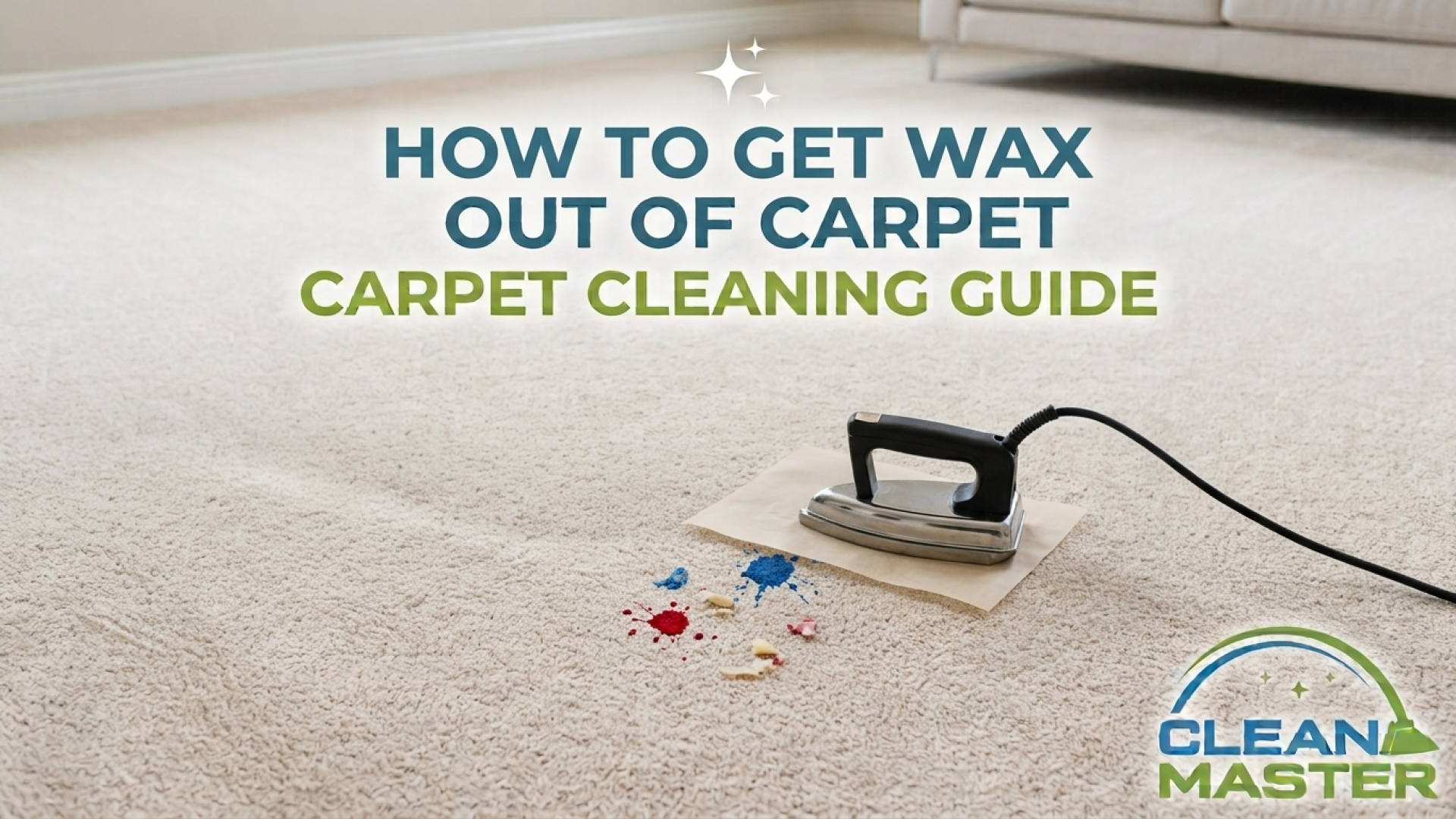
A candle tips over, a birthday cake drips, or a wax melt spills during a power cut. Hardened wax on carpet looks like it should chip right off, but it rarely does. Wax works its way down between fibers, and even when most of it comes up, it often leaves a ghost behind: a greasy patch or a stain of candle dye.
The classic fix is an iron and a paper towel. It works well when done correctly, and it can ruin carpet when done carelessly. This guide from Clean Master Carpet Cleaning explains how the method works, how to use it safely, and what to do about the color and oil that wax leaves behind.
Why Wax Is a Two-Part Problem
Removing wax from carpet involves two separate jobs.
- Remove the wax itself. Solid wax is wrapped around the fibers. It needs to be lifted out, not scrubbed.
- Remove what the wax leaves behind. Candle wax often carries dye and oils. Even after the wax is gone, you may see a colored stain or an oily dark spot.
Many people finish the first job and give up, because the color and grease remain. Treating them as two stages gives much better results.
Why the Iron and Paper Towel Method Works
Wax melts at a fairly low temperature. When you gently heat it, it turns back into a liquid. An absorbent paper towel placed over it then soaks up the melted wax like a wick, pulling it out of the fibers and into the paper.
- Low heat melts the wax without needing to scrub
- Paper absorbs the liquid wax before it can spread deeper
- Repeating with clean paper keeps drawing more wax out
- No harsh chemicals are needed for the wax itself
The method is effective, but the same heat that melts wax can damage carpet. That is why safety comes first.
Does the Type of Wax Matter?
Most household wax behaves similarly, but there are small differences worth knowing.
- Paraffin candles: The most common type. They melt readily and usually respond well to the iron method.
- Soy and plant-based candles: Often melt at lower temperatures, so they may lift with even less heat.
- Beeswax: Tends to be stickier and can take a few extra rounds.
- Scented and colored candles: More likely to leave dye and oil behind, so plan for the second stage.
- Birthday cake and taper drips: Usually small and quick, though colored ones can still stain.
Read This First: Heat Safety
Heat is the risk in this method. Take these precautions seriously.
- Use the lowest heat setting that melts the wax. Start low and increase only if needed.
- Turn steam off. Steam adds moisture and can spread wax or damage backing.
- Test the iron on a hidden spot or a carpet scrap first, such as inside a closet, with paper towel in place for a few seconds.
- Never leave a hot iron resting in one place. Keep it moving and lift it often.
- Do not leave a hot iron unattended for any reason, even for a moment.
- Place the iron on a safe surface between presses, away from carpet, children, and pets.
- Unplug the iron when finished and let it cool fully before storing it.
- Keep paper towels from touching the iron’s hot surface for long, since paper can scorch.
- Keep flammable products away. Avoid using solvents near a hot iron.
Which Carpets Can Handle Heat
| Carpet Fiber | Heat Tolerance | Guidance |
| Wool | Moderate | Low heat only, keep the iron moving |
| Nylon | Moderate | Low heat, test first, avoid lingering |
| Polyester | Moderate | Low heat, test first |
| Olefin (polypropylene) | Low, melts at lower temperatures | Skip the iron and use the ice method |
| Glued or latex backing | Varies | Heat can loosen backing, so keep contact brief |
| Unknown fiber | Treat as low | Use the ice method or call a professional |
Heat can melt synthetic fibers, leaving a shiny, hard, permanent spot. If you are unsure of your carpet fiber, use the ice method instead.
What You Need
- A household iron with adjustable temperature
- Plain white paper towels, a plain brown paper bag, or white blotting paper (avoid printed or colored paper, which can transfer ink)
- A dull knife, spoon, or old credit card
- Ice cubes and a plastic bag, for thick wax
- Clean white cloths
- Clear dish soap
- Rubbing alcohol
- A vacuum
Step-by-Step: The Iron and Paper Towel Method
Step 1: Remove the Surface Wax
Harden the wax first if it is still soft. Hold an ice pack against it for a few minutes. Then use a dull knife or spoon to lift off as much solid wax as you can, working gently with the fibers rather than digging. Vacuum up loose flakes.
Step 2: Set Up the Iron
Set the iron to its lowest setting and turn steam off. Let it warm up. Test it on a hidden spot as described above.
Step 3: Cover the Wax With Paper
Place a clean white paper towel or plain brown paper over the wax. The paper should be larger than the stain so that melted wax is absorbed and does not spread outward.
Step 4: Press and Lift
Press the iron lightly on the paper for a few seconds, then lift. Do not rub or slide the iron. You should see wax soak into the paper. Keep the iron moving and lift it often.
Step 5: Replace the Paper and Repeat
Move to a clean section of paper or a fresh towel each time. Wax that has already soaked in can melt and transfer back into the carpet. Repeat until no more wax appears on the paper.
Step 6: Let the Carpet Cool
Allow the carpet to cool completely, then check what remains. A thin film of wax may still be visible.
Alternative: The Ice Method
Use this when the carpet is olefin, you are unsure of the fiber, or you do not want to use heat.
- Fill a plastic bag with ice and hold it on the wax for several minutes until the wax is hard and brittle.
- Crack the wax gently by tapping it with the back of a spoon.
- Lift the pieces with a dull knife, working with the fibers.
- Vacuum any loose fragments.
- Repeat if more wax remains.
The ice method will not remove wax that has sunk deeply into the fibers, but it works well for thick spills and as a first step before an iron.
Dealing With the Dye Left Behind
Once the wax is gone, you may notice a colored stain. This is common with dark candles and with red, blue, and green wax, and with anything heavily scented or colored. The dye can settle in the fibers even after the wax is removed.
Step 1: Try Rubbing Alcohol
- Patch test rubbing alcohol on a hidden spot.
- Dampen a white cloth with a small amount, and never pour it directly onto the carpet.
- Dab the stain from the outside edge inward, switching to clean sections as color transfers.
- Blot dry with a clean cloth.
- Repeat several times, rather than soaking.
Step 2: Treat Any Oily Residue
Wax often leaves a greasy dark spot.
- Mix one teaspoon of clear dish soap with one cup of cool water.
- Dab onto the spot with a white cloth and let it sit for a few minutes.
- Blot, rinse with cool water, and blot dry.
- Repeat until the spot no longer feels greasy.
Step 3: Consider a Mild Oxidizer on Light Synthetic Carpet Only
For stubborn dye on light colored synthetic carpet, you can try a mix of one tablespoon of 3 percent hydrogen peroxide with a few drops of clear dish soap. Patch test first, apply briefly, blot, and rinse thoroughly. Peroxide can lighten colored carpet and damage wool, so do not use it on wool or darker carpet.
Step 4: Be Honest About Limits
Some candle dyes bond strongly to fibers. If the color remains after careful repeated attempts, further home treatment can make things worse. At that point, professional cleaning is the safer option.
Wax Residue and Dye: Quick Guide
| What Remains | Likely Cause | Best Treatment |
| Thin waxy film | Leftover melted wax | Repeat iron and clean paper, or ice method |
| Greasy dark spot | Oils from the wax | Dish soap and cool water solution |
| Colored stain | Candle dye | Rubbing alcohol on a cloth, patch tested |
| Stubborn color on light synthetic carpet | Strong dye | Mild peroxide mix, patch tested |
| Shiny hard patch | Melted carpet fibers | Cannot be fixed by cleaning, professional repair needed |
What We Often See in Practice
In our work, wax rarely becomes a permanent problem because of the wax itself. The trouble starts with the follow-up. A common pattern looks like this: someone removes most of the wax, sees a faint colored shadow, and decides the iron needs more heat. The temperature goes up, the iron sits for a moment too long, and the spot becomes a shiny, melted patch that no cleaner can undo.
The other frequent case is the stain that appears after the wax is gone. The carpet looks fine for a day, then a dark greasy ring or a pale pink or blue patch becomes visible as the fibers dry. Treating the oil and dye as a separate second stage prevents that surprise.
Common Mistakes
- Using high heat or leaving the iron in one place
- Using steam on the iron
- Using colored or printed paper, which can transfer ink
- Reusing the same section of paper, which puts wax back into the carpet
- Using an iron on olefin carpet or unknown fiber
- Scrubbing and pushing wax deeper
- Pouring solvent or alcohol directly on the carpet
- Ignoring the dye and oil stage after the wax is gone
- Leaving a hot iron unattended
When to Call a Professional
Professional carpet cleaning is the better choice when:
- The wax spill is large or has soaked into the padding
- The carpet is wool, silk, or a valuable rug
- You do not know the carpet fiber and cannot safely use heat
- Colored dye remains after careful repeated attempts
- A shiny or hardened patch has already formed from heat
- The stain is in a highly visible area of light carpet
Professional cleaning uses controlled methods and solutions matched to the fiber, and it avoids the risk of heat damage. To see what cleaning can and cannot do for leftover marks, read our post on whether steam cleaning removes carpet stains.
Preventing Wax Spills
- Use stable candle holders and place candles on hard, flat surfaces away from carpet
- Place a tray or mat under candles in carpeted rooms
- Keep candles away from edges, pets, and children
- Never leave candles burning unattended
- Consider flameless candles in high-traffic carpeted areas
- Keep a small stain kit handy with white cloths, dish soap, and a spoon
Frequently Asked Questions
Does the iron and paper towel method really work for wax?
Yes. Gentle heat melts the wax, and paper absorbs it from the fibers. Use low heat, plain white paper, and fresh paper for every press.
What temperature should I use for the iron?
Start with the lowest setting and no steam, then increase only if the wax does not melt. Test on a hidden spot first.
Can I use an iron on any carpet?
No. Avoid it on olefin carpet and on carpet of unknown fiber, since heat can melt fibers. Use the ice method instead, or call a professional.
Why is there still a stain after the wax is gone?
Candle wax often carries dye and oils that remain in the fibers. Treat the oil with a dish soap solution and the color with rubbing alcohol on a cloth, patch tested first.
Can I use a hair dryer instead of an iron?
It can melt wax, but it spreads the melted wax around and carries the same risk of heat damage. The iron and paper method gives more control.
Final Thoughts
Getting wax out of carpet is a two-stage job. First, remove the wax itself, using gentle heat and absorbent paper or ice and a dull scraper. Second, treat what the wax leaves behind: the oily residue with dish soap and cool water, and the dye with rubbing alcohol and patience.
The iron and paper towel method is effective, but heat is the real risk, so keep the iron low and moving, use fresh paper each time, test first, and skip heat entirely on olefin or unknown carpet. If the stain, the dye, or the carpet type pushes beyond what you can safely handle, a professional cleaning is the safest route to a clean result.
Need Help With a Wax Stain?
If wax or candle dye is not coming out, or you would rather not risk heat on your carpet, Clean Master Carpet Cleaning has been helping homes across the Dallas–Fort Worth area for over 26 years.
Request a free quote and tell us about your carpet and the stain, and we will help you decide the next step. Check our current specials for available savings, and learn more about our team.