
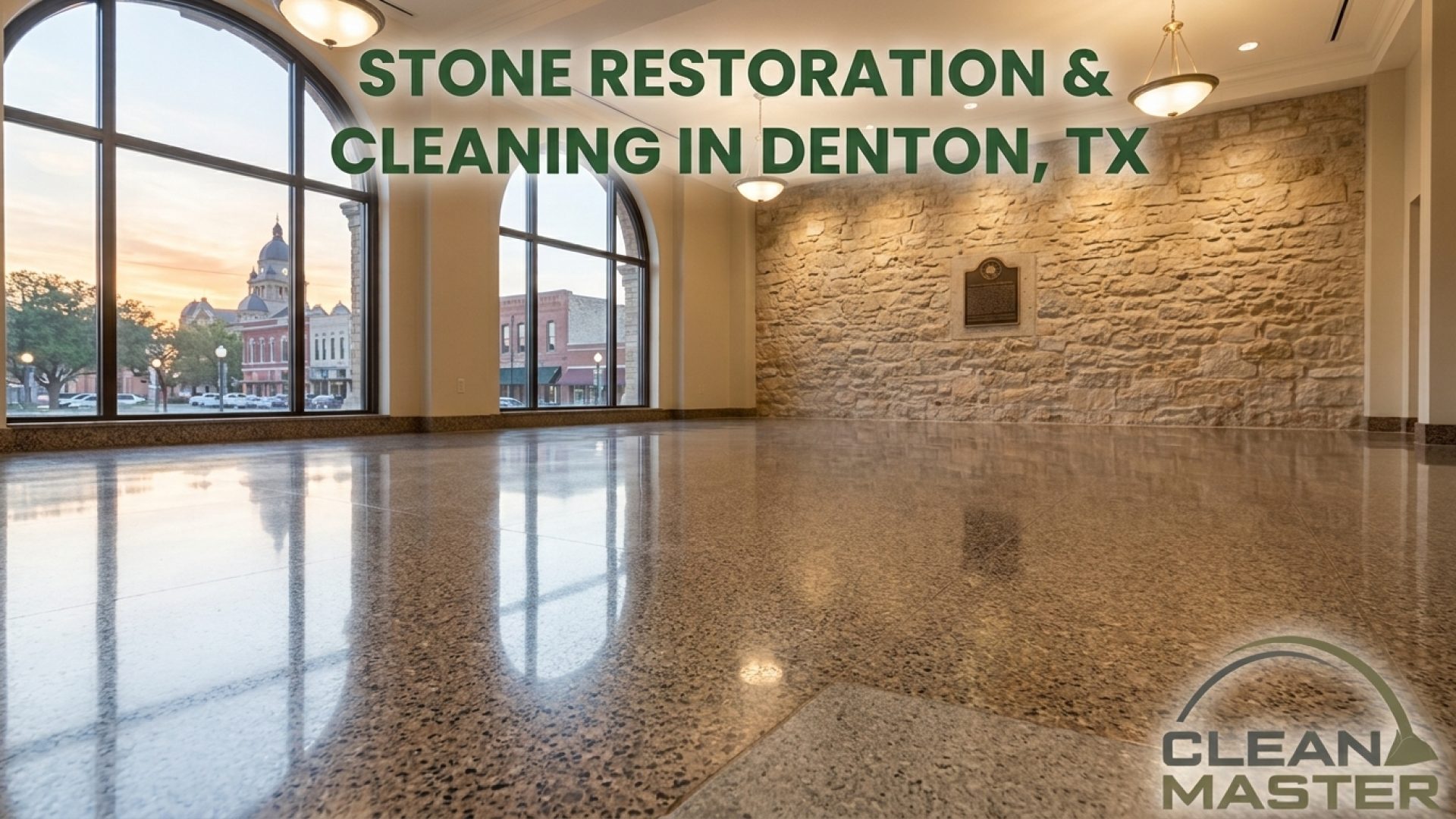
Natural stone ages differently from other flooring. Marble loses its shine and develops dull rings where drinks were set down. Travertine holes fill with dirt, limestone darkens in walkways, and slate turns flat and gray as residue builds up on its surface. Clean Master Carpet Cleaning provides stone restoration cleaning in Denton, TX that removes that buildup safely, then recommends the right finishing steps, such as honing, polishing, and sealing, to bring the stone back to its best. We have been caring for floors in North Texas homes for more than 26 years.
Stone is expensive to replace and easy to damage with the wrong product, so it pays to have it assessed properly. Call us at (817) 253-2867 or request a free quote, and we will look at your stone and explain what can be restored. We will also tell you if something cannot be fixed by restoration, such as cracked or broken tiles, so you can plan for repairs.
Stone Restoration Cleaning in Denton, TX
Stone restoration is different from ordinary tile cleaning. Natural stones are porous, many react to acids, and each type has its own finish and weaknesses. A cleaner that is fine on porcelain can etch marble in seconds, and a scrubbing pad that works on ceramic can scratch a polished surface. Restoration starts with identifying the stone and its condition, then using pH neutral products and methods made for that stone.
Our service covers stone floors, showers, countertops, and entryways in homes across Denton. Cleaning removes embedded dirt, residue, and old coatings. Where the surface itself is worn, etched, or scratched, honing or polishing can restore an even finish. Sealing at the end helps protect the restored stone. Stone restoration is part of our wider tile and grout cleaning service, and our main page on tile and grout cleaning in Denton covers ceramic and porcelain tile.
Stone We Work With
- Marble floors, showers, and vanities
- Travertine floors and patios
- Limestone and other soft calcareous stone
- Slate floors and entryways
- Granite and Saltillo tile
What Stone Restoration Can Fix
Dullness and Lost Shine
Polished stone loses its shine gradually as foot traffic wears microscopic scratches into the surface. In walkways and in front of sinks, the difference between the worn area and the stone under furniture can be obvious. Cleaning removes the film that makes stone look dull, and polishing restores the reflective finish where the surface itself is worn.
Etching
Etching is damage, not a stain. It happens when acids such as lemon juice, wine, vinegar, tomato sauce, and many bathroom cleaners react with calcium based stone like marble, travertine, and limestone. The result is a dull, rough spot or ring that looks like a water mark but cannot be wiped away. Light etching can often be polished out. Deeper etching may need honing first.
Embedded Dirt and Residue
Porous stone soaks up dirty mop water, oils, and soap. Over time, the stone darkens, especially in grout lines and textured surfaces. Many homes also have buildup from cleaners that leave a film, or from old waxes and coatings that have yellowed. Deep cleaning with stone safe products removes much of this residue.
Stains
Oil, rust, coffee, and organic stains can soak into stone and stay after cleaning. Some can be drawn out with targeted treatments called poultices, which pull the stain up out of the stone as they dry. Not every stain can be fully removed, and we will tell you what to expect before we start.
Honing, Polishing, and Sealing Explained
These three terms come up often in stone restoration, and they do different jobs.
| Step | What It Does | When It Helps |
|---|---|---|
| Honing | Grinds the surface lightly to remove scratches and etching, leaving a smooth matte finish | Deep etching, scratches, uneven wear |
| Polishing | Refines the surface to bring back shine | Dull polished marble and similar stone |
| Sealing | Fills pores to slow down stains and moisture | After cleaning or restoring porous stone |
Not every floor needs all three. Many stone floors only need deep cleaning and sealing. Others benefit from polishing to restore a lost shine. Honing is reserved for stone with damage that goes deeper than the surface finish. Some homeowners also choose honing on purpose because they prefer a softer, matte look that hides future scratches and etching better than a high polish. Once the stone is clean, we reassess what remains and recommend only the steps that will make a visible difference.
Our Stone Restoration Process
- We confirm the stone type and examine its condition, including sealant, etching, staining, and damage.
- The surface is cleaned with pH neutral, stone safe products and agitated to lift embedded dirt.
- Grout lines are cleaned, and residue is rinsed and extracted.
- Stains are treated individually where possible.
- We reassess the clean stone and, if helpful, hone or polish worn and etched areas.
- A sealer suited to the stone is applied once the surface is clean and dry.
Stone Types and Their Care
Marble is the most sensitive stone in most homes. It etches easily, scratches more readily than granite, and shows wear quickly when polished. It benefits from regular sealing and gentle cleaners. Travertine has natural holes that are usually filled during installation, but the fill can wear away over time, leaving pits that collect dirt. Restoring travertine sometimes includes refilling those holes.
Limestone is soft and porous, so it absorbs stains easily and can darken in traffic areas. Slate is tough but has a layered surface that can flake, and it often builds up a dull film from cleaners and coatings. Our guide on the best cleaner for slate tile explains how to care for it. Granite is the hardest of the common stones and resists etching, though it still needs sealing to resist stains. Saltillo is a clay tile rather than a natural stone, but it is very porous and needs similar care, as covered in our article on cleaning Saltillo tile.
Products That Damage Natural Stone
Many common cleaners are not safe on stone. Vinegar, lemon based cleaners, and most bathroom and kitchen sprays are acidic and will etch marble, travertine, and limestone. Bleach and ammonia can dull and discolor some stones. Abrasive powders and scrubbing pads scratch polished surfaces. Even some products labeled for tile are too harsh for natural stone. Our guide to the best cleaner for stone tile floors explains what to use instead.
Stone in Bathrooms and Showers
Stone showers and bathroom floors face the toughest conditions. Soap scum and hard water deposits build up on stone just as they do on tile, but the acidic cleaners usually used to remove them will etch the stone. Restoration cleaning removes the buildup safely, and sealing helps slow down how quickly it returns. Regular squeegeeing and good ventilation make a big difference. If the grout between your stone tiles is cracked or crumbling, our article on grout restoration explains how we handle grout at each stage.
Keeping Stone Looking Its Best
Dust mop or vacuum stone floors often, since grit is the main cause of scratches and dullness. Clean with a pH neutral stone cleaner and a damp, not wet, mop. Wipe up spills right away, especially acidic ones like wine, juice, and coffee. Use coasters on stone counters and tables, place mats at entrances, and put felt pads under furniture legs. Most stone benefits from resealing every one to three years, depending on the stone and traffic. A simple water test tells you when it is time: if a few drops of water darken the stone within a few minutes, the sealer has worn off.
Why Stone Looks Worse Every Year
Most stone floors do not fail because of one big event. They decline slowly because of routine care that is slightly wrong. Mopping with a general purpose cleaner leaves a thin film behind each time, and that film traps dirt. Using too much water pushes dirty water into the stone and grout, where it dries and darkens. Acidic cleaners etch the surface a little at a time until the whole floor looks dull rather than polished. Grit from outside scratches the finish every time someone walks across it.
Because the change is gradual, many homeowners assume their stone is simply old and worn out. In reality, most of what they see is residue and surface wear, both of which restoration can address. Seeing a cleaned test area next to the rest of the floor is often the clearest way to understand how much of the original stone is still there.
Countertops and Vanities
Stone counters in kitchens and bathrooms deal with a different set of problems from floors. Kitchen counters see oils, acidic foods, hot pans, and constant wiping, while bathroom vanities collect toothpaste, cosmetics, and hard water spots around faucets. Marble counters show etch rings from glasses and citrus quickly. Granite counters are tougher but can develop dark oil stains near the stove if the sealer has worn off. We clean and treat counters with the same stone safe approach as floors and can polish out light etching on marble vanities and counters.
Preparing for Your Appointment
Clear the floor of rugs, mats, and small furniture, and remove items from counters and shower shelves if those areas are included. Let us know about any stains, etched spots, cracks, or loose tiles you are concerned about, and tell us what products you have used on the stone recently, since some leave residues that need special treatment. Plan for the area to stay out of use until any sealer has had time to cure.
What Affects the Cost of Stone Restoration
The cost depends on the stone type, the size of the area, its condition, and which steps are needed. Deep cleaning and sealing cost far less than honing and polishing etched marble. Showers and small mosaic tiles take more time than open floors with large tiles. Stain treatment, refilling travertine, and repairing damaged areas add to the work. We give you a clear written price after the assessment, so you know exactly what is included.
Why Denton Homeowners Choose Clean Master
Clean Master has served Denton and the Dallas Fort Worth area for over 26 years, and our technicians are IICRC certified. We identify the stone before we clean it, use products that are safe for that stone, and explain honestly what can and cannot be restored. If you want to see how we approach stone in other cities, our page on natural stone cleaning in Fort Worth covers similar work.
Frequently Asked Questions
Can etching be removed from marble?
Light etching can often be polished out. Deeper etching may need honing before polishing. Etching is surface damage, so cleaning alone will not remove it.
What is the difference between honing and polishing?
Honing smooths the stone to remove scratches and etching and leaves a matte finish. Polishing refines the surface further to bring back shine.
How often should natural stone be sealed?
Most stone benefits from resealing every one to three years. A water drop test shows when the sealer has worn off.
Can you remove stains from stone?
Many stains can be lightened or removed with targeted treatment. Some deep or old stains may not come out completely, and we will tell you what to expect.
Is vinegar safe on stone floors?
No. Vinegar is acidic and will etch marble, travertine, and limestone. Use a pH neutral cleaner made for stone.
Do you restore stone showers?
Yes. We clean soap scum and mineral buildup from stone showers using stone safe products, then seal the surface to help protect it.
Book Stone Restoration Cleaning in Denton
Natural stone can look beautiful for decades with the right care. Call Clean Master Carpet Cleaning at (817) 253-2867 or contact us online for a free quote on stone restoration cleaning in Denton, TX. Tell us what type of stone you have and what you would like to fix, and we will recommend the right plan. A few photos of the worst areas help us give you an accurate estimate.