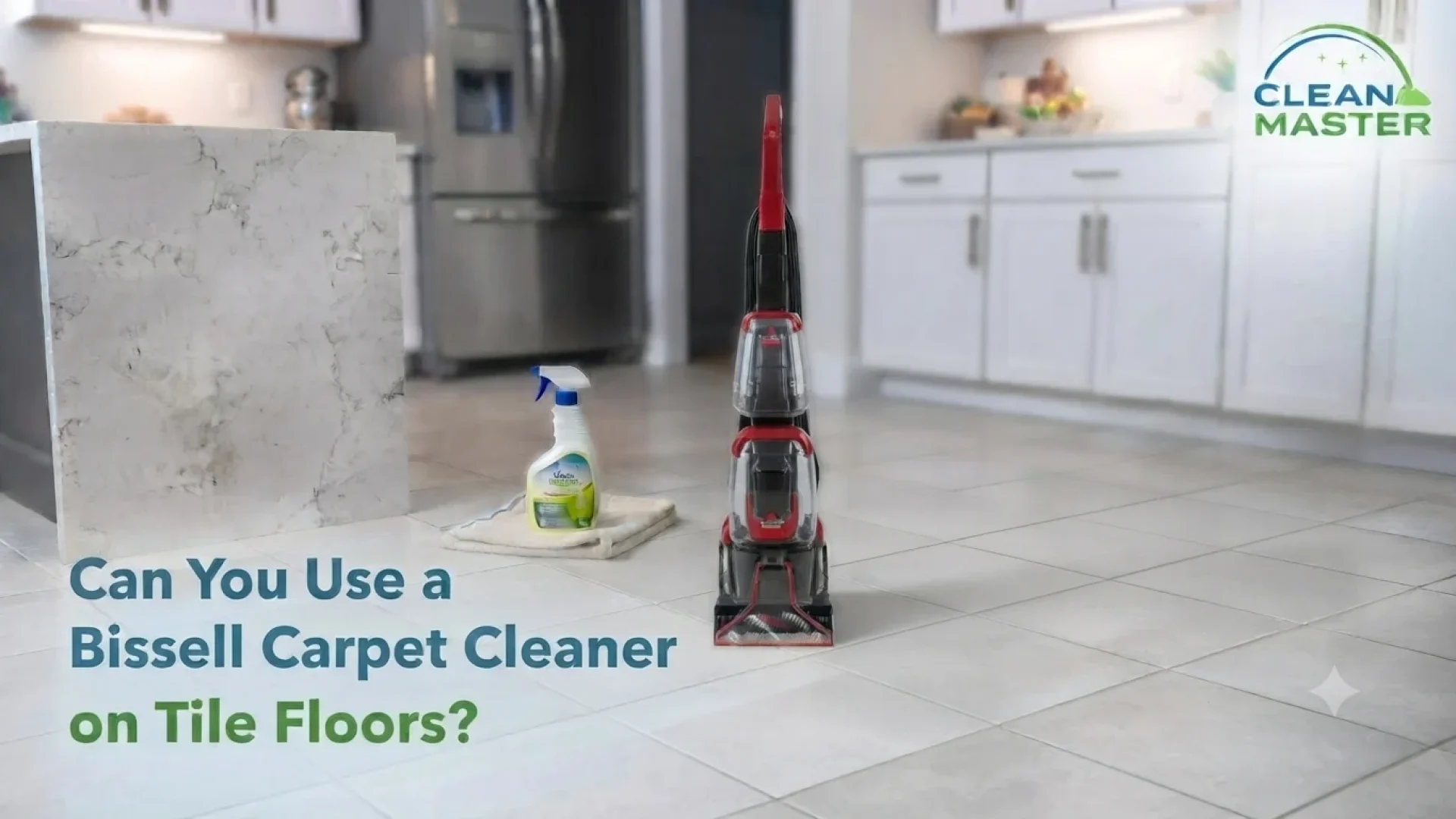
If you own a Bissell carpet cleaner, whether it’s a Bissell ProHeat, Little Green, or a similar model, it’s a natural thought to want to get more use out of it by running it over the tile floors too. The honest answer is that Bissell carpet cleaners are built specifically for carpet fibers, and using one on tile isn’t something the machine is actually designed to do well, even though it may seem harmless at first.
This guide covers how Bissell carpet cleaners work, why they’re not a good match for tile and grout, what we’ve seen go wrong when people try it anyway, and which Bissell machines are actually built for hard floors instead. If your tile and grout need a proper deep clean, our tile and grout cleaning service is also worth considering.
How Bissell Carpet Cleaners Are Designed to Work
Bissell’s carpet cleaning machines, across most of their popular models, follow a similar core process:
- Spraying water and cleaning solution down into carpet fibers
- Agitating the carpet using a brush roll or scrubbing head to loosen embedded dirt
- Extracting the dirty water back out through built-in suction, pulling moisture and grime up out of the carpet pile
This entire design is built around carpet’s structure. Carpet fibers are thick and can temporarily hold moisture during the cleaning cycle, and the machine’s suction is calibrated to pull that moisture back out of a soft, absorbent surface. Tile and the grout between it are a fundamentally different kind of surface, and that mismatch is where problems start.
Why Tile and Grout Don’t Respond the Same Way as Carpet
| Carpet | Tile and Grout | |
| Surface type | Soft, absorbent fibers | Hard, flat tile with recessed, porous grout lines |
| How moisture behaves | Temporarily held in fibers, then extracted | Can pool in grout lines rather than being pulled back out |
| What the brush roll is for | Agitating fibers to loosen dirt | Not needed the same way on a flat surface |
| Drying expectations | Designed to take some time to dry | Should dry quickly to avoid moisture sitting in grout |
Bissell carpet cleaners’ suction paths and brush heads are engineered around carpet’s texture and depth. On a flat tile surface, that same suction doesn’t have the same grip on moisture, particularly once it settles into lower grout lines, which is a very different shape than what the machine’s extraction system was built to handle.
What Can Go Wrong Using a Bissell Carpet Cleaner on Tile
Water Pooling in Grout Lines
Because the suction path on a carpet cleaner is designed for pulling moisture up out of fiber depth, not out of recessed grout lines, water and cleaning solution can end up sitting in the grout rather than being fully extracted. This is one of the more common issues we’ve seen when carpet cleaning machines get used on tile, since the moisture simply doesn’t have the same extraction path it would in carpet.
Mold and Mildew Risk in Grout
Standing moisture left in porous grout creates the right conditions for mold and mildew to start developing underneath the surface, especially in bathrooms or other rooms without great airflow. In jobs we’ve come across where a carpet cleaner was used on tile beforehand, this is one of the more frequent underlying issues we end up addressing, since the grout had been holding onto moisture longer than it should have.
Cleaning Solution Residue
Bissell’s carpet cleaning solutions are formulated specifically for fabric fibers. Used on tile, these solutions don’t always rinse away cleanly from a hard, non-porous surface the same way, which can leave a filmy residue or streaking behind once the floor dries.
Uneven Results Across the Floor
Since the machine’s brush head and suction path are shaped for carpet, coverage on a flat tile floor tends to be inconsistent. Some areas may end up over-wetted while others get barely touched, especially compared to the more even result you’d get from equipment actually designed for hard flooring.
Potential Wear on Certain Tile Finishes
Depending on the specific Bissell model, some brush heads include rotating or scrubbing action intended to work carpet fibers loose. On more delicate glazed tile finishes, this kind of repeated scrubbing action carries some risk of dulling the surface over time, though this varies by tile type and how frequently it’s used.
What We’ve Seen on Real Jobs
In our own work across Arlington homes, we regularly come across cases where a carpet cleaning machine, including popular home models like Bissell’s, was used on tile floors as a quick fix. The most common pattern we see is grout that’s stayed noticeably damp or developed a musty smell in the days following, along with occasional streaky residue left on the tile surface itself. It’s rarely a dramatic, obvious failure right away, which is part of why the practice continues, but the underlying moisture and residue issues tend to show up shortly after.
These cases often follow a similar pattern: a homeowner notices the tile looks temporarily cleaner right after using the carpet cleaner, feels satisfied with the result, and doesn’t think much more about it until a musty smell or discoloration shows up in the grout lines days or even weeks later, well after the connection to the original cleaning method has been forgotten.
When It Might Be Less Risky
There are a few situations where using a Bissell carpet cleaner on tile carries somewhat less risk, even though it’s still not the ideal approach:
- Small areas cleaned quickly, with minimal water used
- Well-ventilated rooms where any residual moisture has a better chance of drying out fast
- Already well-sealed grout, which resists absorbing standing moisture better than unsealed grout
Even under these more favorable conditions, the core mismatch between the machine’s design and tile’s surface doesn’t fully go away, so it’s still worth considering the alternatives below.
Bissell Carpet Cleaners vs. Bissell Hard Floor Cleaners
Bissell actually makes machines specifically designed for hard floors, and understanding the difference makes it clear why these are the better choice for tile:
| Bissell Carpet Cleaner (e.g. ProHeat, Little Green) | Bissell Hard Floor Cleaner (e.g. CrossWave) | |
| Designed for | Carpet and upholstery fibers | Hard floors, including tile, laminate, and sealed hardwood |
| Water/solution delivery | Deep injection into carpet pile | Controlled application suited to flat, hard surfaces |
| Suction and extraction | Built to pull moisture out of thick fibers | Built to pull moisture off a flat surface without pooling in grout |
| Brush design | Agitates carpet fibers | Designed for scrubbing hard, flat surfaces without the same fiber-based motion |
| Risk on tile | Higher risk of pooling, residue, and uneven cleaning | Built specifically to avoid these issues on hard flooring |
If a Bissell machine is what you already have on hand, the better move is a hard-floor-specific model like the CrossWave, rather than repurposing a carpet cleaner for a surface it wasn’t built to handle.
Better Alternatives for Cleaning Tile Floors
Beyond switching to a hard-floor-specific machine, a few other approaches work well for tile and grout:
- Tile and grout cleaning solutions made specifically for hard surfaces, used with a mop or grout brush
- A dedicated hard-floor machine, like Bissell’s CrossWave line, built around tile, laminate, and sealed hardwood
- Manual grout brush cleaning, especially useful for targeting grout lines specifically rather than the whole floor at once
- Professional tile and grout cleaning, particularly for larger areas or grout that’s built up significant grime over time
Comparing Cleaning Approaches for Tile Floors
| Method | Best For | Considerations |
| Bissell carpet cleaner | Not recommended for tile | Risk of grout pooling, residue, mold, and uneven results |
| Bissell hard floor cleaner (CrossWave) | Regular tile maintenance cleaning | Built specifically for hard floors, minimal pooling risk |
| Grout brush and tile cleaner | Targeted grout line cleaning | More manual effort, precise control over moisture |
| Professional tile and grout cleaning | Deep cleaning or long-neglected grout | Most thorough option for heavier buildup |
Signs a Carpet Cleaner Has Already Caused Issues on Your Tile
If a carpet cleaner has already been used on your tile floors, a few signs are worth checking for:
- Grout that feels damp or looks darker longer than expected after cleaning
- A musty smell developing in the days following the cleaning
- Streaky film left on the tile surface once fully dry
- Any dulling or fine scratching visible on the tile finish
If you notice any of these, letting the area dry out completely with good ventilation is a reasonable first step before deciding whether further cleaning or professional attention is needed. In cases where the musty smell persists even after the area has fully dried, that’s usually a sign the moisture reached deeper into the grout or subfloor than a simple airing-out can resolve on its own.
How This Fits Into Whole-Home Cleaning Habits
Mixing up equipment between surfaces is a common habit, since most households only own one type of cleaning machine and naturally want to get the most use out of it. But just as a carpet cleaner is built specifically around fiber depth and extraction, tile and grout call for tools designed around their own hard, porous structure. Keeping the two separate, using the right equipment for each surface, tends to produce better results on both ends and helps avoid the kind of hidden moisture issues that are easy to miss until they’ve already taken hold.
Frequently Asked Questions
Can a Bissell carpet cleaner physically run on tile floors?
Mechanically, most models can be run over tile, but the machine’s suction and brush design aren’t built for tile’s flat, hard surface, which is why it’s not generally recommended.
What’s the biggest risk of using a Bissell carpet cleaner on tile?
The main risk is water and cleaning solution pooling in grout lines rather than being fully extracted, which can lead to mold or mildew developing if the area doesn’t dry out completely.
Does Bissell make a machine designed for tile floors?
Yes. Bissell’s hard floor line, including the CrossWave, is built specifically for hard surfaces like tile, laminate, and sealed hardwood, unlike their carpet-focused machines.
Will using a carpet cleaner damage my tile?
It depends on the tile finish and how the machine is used, but risks include grout moisture issues, residue, and in some cases, fine scratching on more delicate glazed finishes.
Is it ever safe to use a carpet cleaner on tile in a pinch?
Small areas with minimal water and good ventilation carry somewhat less risk, but a hard-floor-specific machine or cleaning method is still the better choice whenever possible.
How do I know if my grout has already been affected by using the wrong cleaning method?
Signs include grout staying damp longer than expected, a musty smell appearing afterward, or visible discoloration or residue in the days following cleaning.
Final Thoughts
A Bissell carpet cleaner can do a great job on carpet and upholstery, but tile floors are a different kind of surface entirely, and the machine’s design simply isn’t built around it. From what we’ve seen on real jobs, the most common outcome of using a carpet cleaner on tile isn’t an immediate, obvious problem, but rather grout that holds onto moisture longer than it should, sometimes followed by a musty smell or streaky residue within a few days.
If you already own Bissell equipment and want to stick with the brand, their hard-floor line, like the CrossWave, is purpose-built for tile and avoids the pooling and extraction issues that come with repurposing a carpet cleaner. And for grout that’s already built up significant grime or has been affected by the wrong cleaning method in the past, a dedicated grout brush and tile-safe cleaner, or professional cleaning, will generally get better and safer results than any carpet cleaning machine.