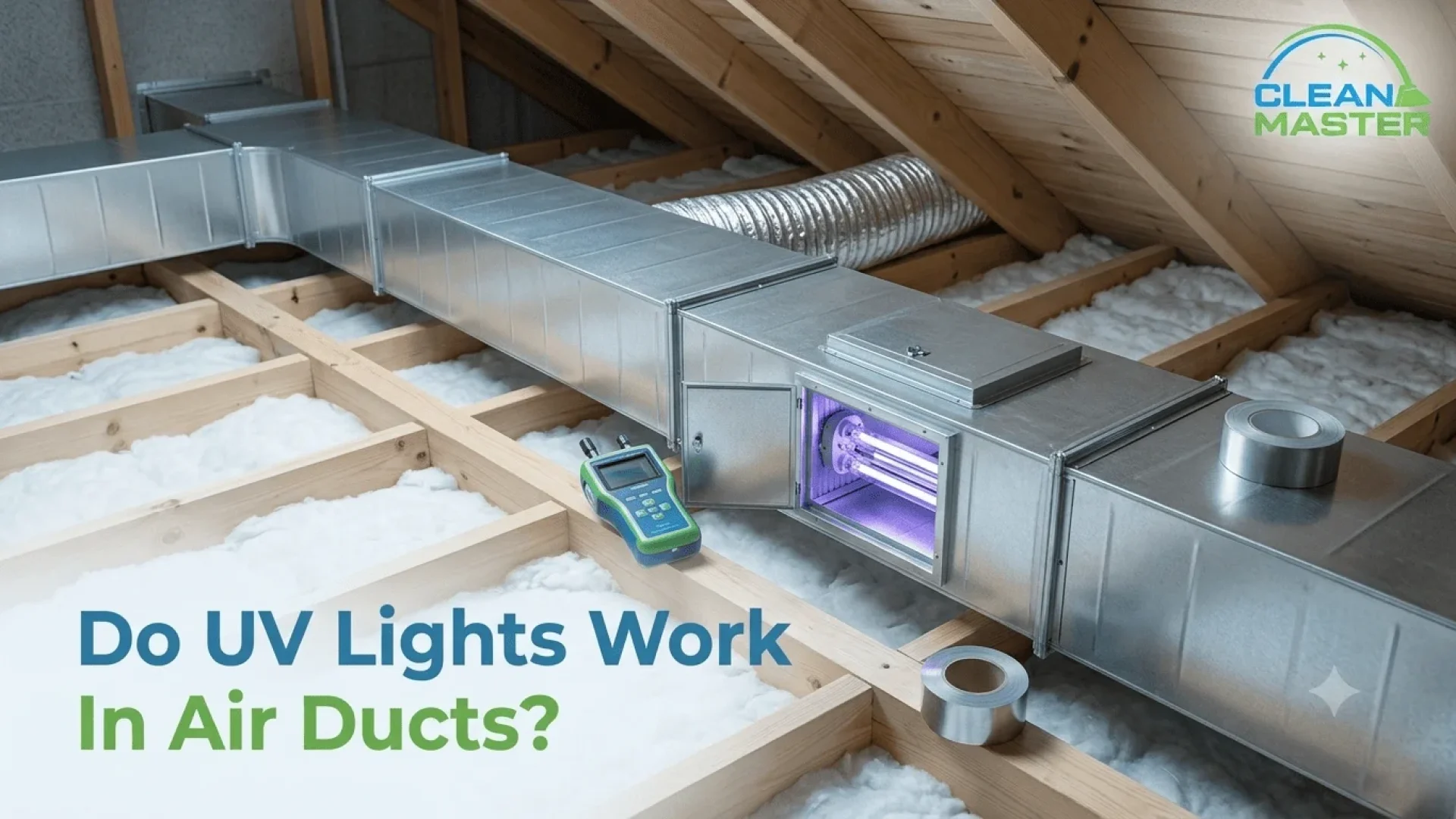
UV lights in HVAC systems are real technology with genuine science behind them, but whether they “work” depends heavily on what you’re expecting them to accomplish and where they’re actually installed. The short answer: yes, conditionally, for a specific job. For other claims sometimes attached to UV duct lights, the evidence is much thinner.
At Clean Master Carpet Cleaning, we get asked about UV duct lights regularly as an add-on to air quality conversations. Here’s the honest breakdown.
How UV Light Actually Works
UV-C light, the specific wavelength used in HVAC applications, distinct from the UV-A and UV-B you’d associate with sunlight, disrupts the DNA and RNA of microorganisms it directly contacts, preventing bacteria, mold spores, and some viruses from reproducing. This is well-established science, not a marketing invention. The mechanism is real and has been used in water treatment, hospital sterilization, and similar applications for decades.
The catch with “works” as a question is that UV-C is only effective against organisms it directly and sufficiently contacts, it doesn’t have a broader reach beyond that direct exposure, and exposure time and intensity both matter for it to be effective.
Where It Genuinely Works: The Evaporator Coil
This is the strongest, best-supported use case for UV lights in an HVAC system, and it’s worth understanding why this specific application holds up better than broader claims.
The evaporator coil is a near-ideal environment for mold and bacterial growth, consistently moist from condensation, dark, and coated with the organic debris (dust, skin cells) that gets pulled through the return air. UV lights mounted to shine directly and continuously on the coil surface genuinely reduce microbial growth there, because the light has sustained, direct contact with a fixed surface.
This is a meaningfully supported claim with research behind it specifically for coil applications, reduced biofilm buildup, less microbial growth on a surface that would otherwise be prone to it, and in some cases improved coil efficiency since a cleaner coil transfers heat more effectively.
Where the Claims Get Overstated: General Duct and Air Disinfection
This is where UV duct light marketing tends to outrun the actual science, and it’s worth being clear-eyed about.
Air moving through ducts moves too fast for meaningful UV exposure. For UV-C to disrupt a microorganism, it needs sustained contact time at sufficient intensity. Air flowing through ductwork at normal HVAC speeds passes any single point, including a UV light positioned in the duct or air handler, in a fraction of a second. That’s not enough contact time for UV to meaningfully affect most airborne pathogens passing through, regardless of how the system is marketed.
Broader “whole-home air purification” claims for duct-mounted UV are the weakest part of typical product marketing. Some products are positioned as a comprehensive air sanitizing solution for the whole home’s air supply. The physics of brief air contact time don’t support that being as effective as coil-surface UV application, where the organism sits still on a fixed surface under continuous light exposure.
What UV Lights Do Not Do, At All
This is the most important limitation to understand, regardless of how well-designed or well-installed a UV system is.
UV does not remove dust, debris, or accumulated contamination from ductwork. It’s a microorganism-disruption technology, not a cleaning or extraction mechanism. A duct system with years of accumulated dust, pet dander, and debris will still have all of that physical material sitting in the ducts whether or not a UV light is installed, UV light has no effect on non-microbial physical debris at all.
UV does not replace professional duct cleaning. These are two entirely different functions addressing different problems. Physical debris removal requires the mechanical agitation and extraction process of professional duct cleaning; UV addresses microbial growth on surfaces it directly illuminates. A home with a UV light installed but ducts that haven’t been cleaned in years still has the accumulation problem UV was never designed to solve.
Installation and Maintenance Considerations
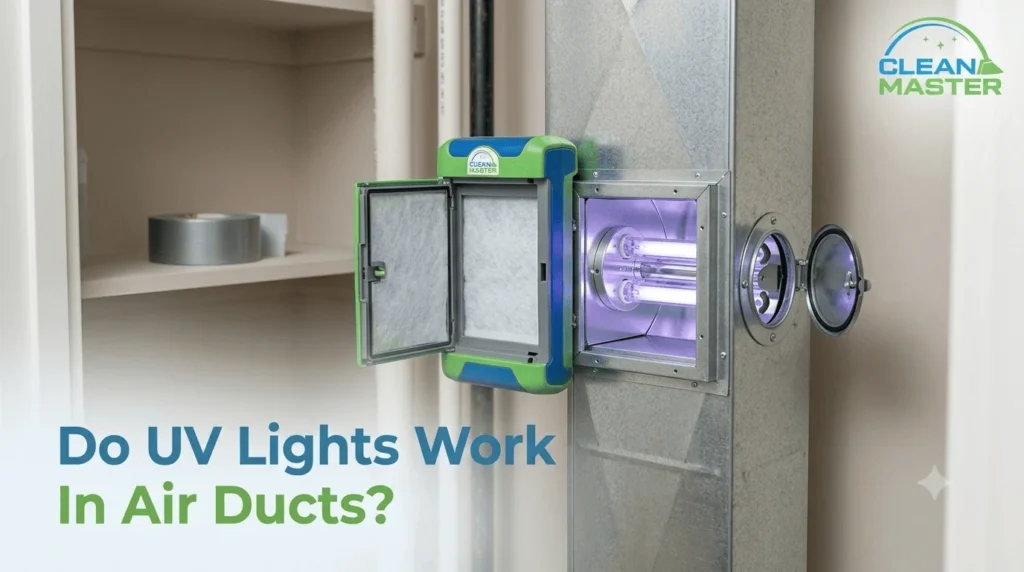
Bulb placement determines effectiveness. Coil-mounted UV, positioned to shine directly and continuously on the coil surface, is the configuration with the strongest evidence behind it. Duct-mounted units rely on air passing through the beam, which is the weaker application discussed above.
UV bulbs degrade and need periodic replacement, typically every 9 to 12 months for output to stay at an effective level, even though the light may still visibly glow well past that point. A UV system with an old, degraded bulb provides minimal real benefit despite appearing to be running normally.
At a Glance: UV Effectiveness by Application
| Application | Effectiveness | Notes |
| Coil-mounted, continuous exposure | Well-supported | Reduces mold and microbial growth on coil surface |
| Duct-mounted, air passing through | Limited | Brief air contact time reduces real-world effectiveness |
| Physical dust and debris removal | None | UV has no effect on non-microbial debris |
| Replacement for duct cleaning | No | Addresses a different problem entirely |
Frequently Asked Questions
Is a UV light worth installing if I already get professional duct cleaning?
It can be a reasonable complement specifically for coil-focused mold prevention, particularly in humid climates like DFW where coil condensation is a consistent factor, but it’s an addition to cleaning, not a substitute for it. Read our guide on how to get rid of mold in air ducts for the full prevention picture beyond UV alone.
How do I know if my UV bulb still works?
Most bulbs continue to glow visibly well after their effective output has degraded, so visible light isn’t a reliable indicator. Following the manufacturer’s recommended replacement schedule (typically annually) is more reliable than judging by appearance.
Does Clean Master install UV systems?
Clean Master specializes in professional air duct cleaning, not UV system installation, that’s HVAC contractor work. We’re happy to discuss how UV fits alongside a cleaning schedule if you’re considering one.
The Bottom Line: Real Science, Conditional Benefit
UV lights genuinely work for what they’re best suited to, reducing mold and microbial growth on a directly illuminated coil surface, particularly valuable in humid climates. The broader “purifies your whole home’s air” framing is weaker science, given how briefly air actually contacts the light source. And regardless of installation quality, UV does nothing for the physical dust and debris that only professional cleaning actually removes. Contact Clean Master Carpet Cleaning today for professional air duct cleaning across the entire DFW area, the physical debris removal that UV technology was never designed to provide.