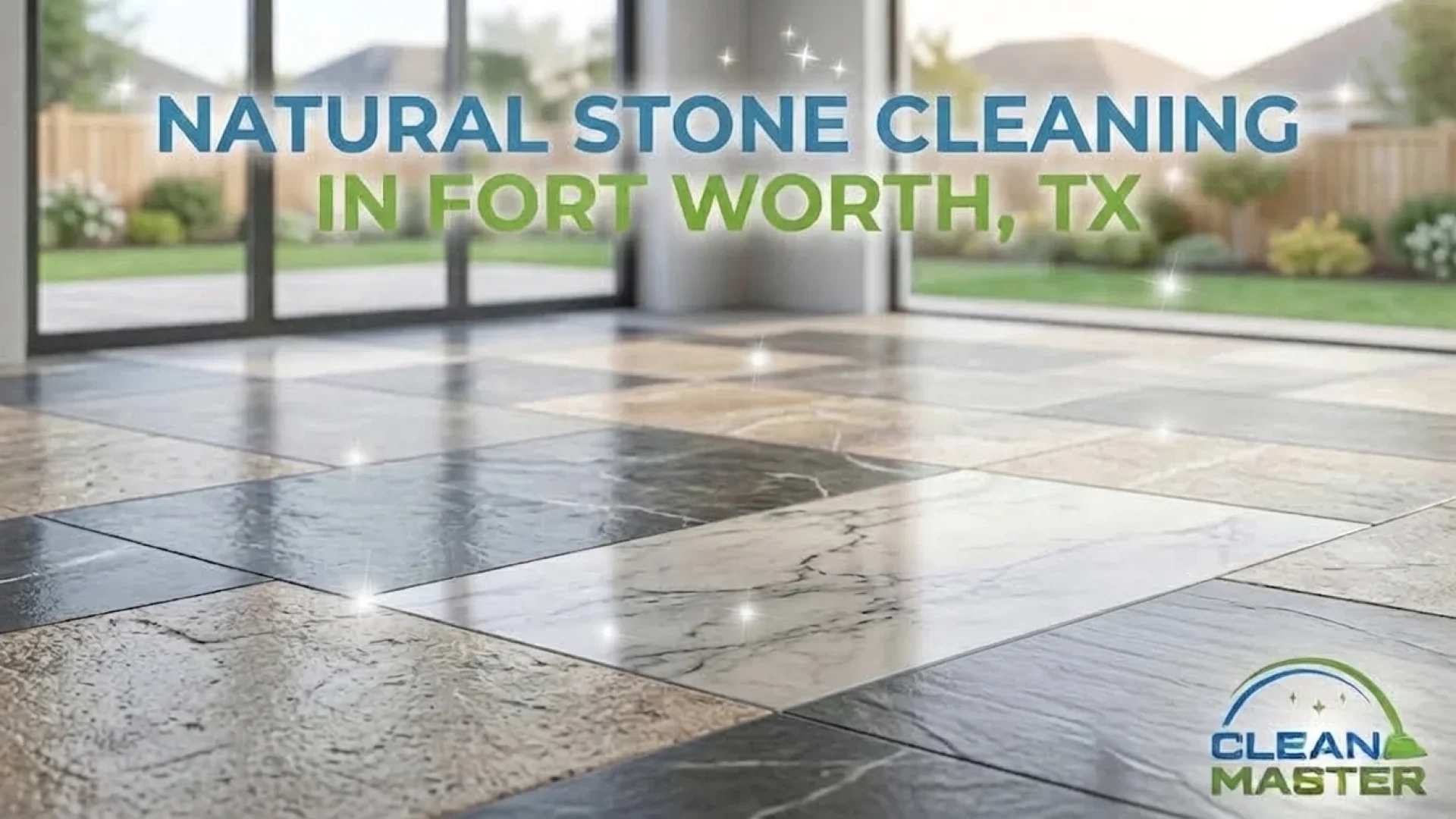
Natural stone brings a level of character to a home that manufactured tile simply can’t match, but it also demands a different kind of care. Marble, travertine, granite, slate, and Saltillo each have their own porosity, acid sensitivity, and sealing needs, which means the wrong cleaning approach on any of them can cause real, sometimes permanent damage. Getting stone cleaning right starts with treating each material according to what it actually is, not applying one generic process across the board.
This guide covers how Clean Master Carpet Cleaning approaches cleaning for each major stone type, what to expect from the process, and what it typically costs for homes across Fort Worth.
Why Natural Stone Cleaning Isn’t One-Size-Fits-All
Unlike ceramic or porcelain, which is manufactured with a consistent, predictable surface, natural stone is quarried from the earth and varies significantly in composition, even within the same stone category. This variation directly affects how a stone responds to moisture, acidic products, and physical cleaning pressure, which is exactly why a cautious, material-specific approach consistently produces better results than a generic cleaning method applied to every stone surface the same way.
Marble
Marble is a calcium carbonate-based stone, which makes it genuinely sensitive to acidic products. Even common ingredients like vinegar, often perfectly safe on ceramic tile, can etch and permanently dull marble’s surface. Our cleaning process uses pH-neutral, stone-safe products specifically formulated to avoid this reaction, while still effectively lifting dirt, soap scum, and general grime.
Common marble cleaning needs: Restoring shine dulled by everyday buildup, addressing soap scum in marble showers, and removing water spots without etching the surface.
Travertine
Travertine’s naturally pitted, porous texture makes it particularly prone to staining and moisture absorption. Its surface often has small natural holes, sometimes filled with resin during manufacturing, that can trap dirt if that fill material has worn or cracked over time. Cleaning travertine calls for the same pH-neutral approach used for marble, with extra attention to working cleaning solution into the textured surface without leaving residue behind in the pitting.
Common travertine cleaning needs: Addressing dulling in the naturally textured surface, treating grime that’s settled into worn or damaged fill material, and general maintenance cleaning for entryways and floors.
Granite
Granite is one of the more durable, less porous natural stones commonly used in homes, which gives it more tolerance for regular cleaning than marble or travertine. That said, it’s still a natural stone, and repeated exposure to acidic products can dull its polished finish over time. We use a gentle, pH-neutral approach here as well, even though granite handles occasional exposure to harsher products better than its more sensitive counterparts.
Common granite cleaning needs: Restoring shine on polished granite floors and countertops, and routine maintenance cleaning that preserves the finish long-term.
Slate
Slate’s layered, foliated structure makes it more susceptible to surface flaking if it’s cleaned too aggressively or exposed repeatedly to the wrong products. Its calcite content varies by stone, which means acid sensitivity isn’t always predictable just by looking at it. We approach slate cautiously, using pH-neutral cleaners and avoiding abrasive scrubbing that could contribute to surface wear on this more delicate structure.
Common slate cleaning needs: Working cleaning solution into cleft-finish texture where grime tends to settle, and addressing dulling that often points to worn sealant needing attention.
Saltillo
Saltillo is technically unglazed terracotta clay rather than a quarried stone, but it shares similar cleaning sensitivities. It relies entirely on a wax or sealant coating for protection, since the clay itself has no natural glaze. Ammonia and acidic cleaners, which are safe on many other surfaces, can strip this protective coating and expose the porous clay underneath. Our cleaning approach for Saltillo uses pH-neutral or terracotta-specific products designed to clean without compromising that sealant layer.
Common Saltillo cleaning needs: Restoring shine without stripping wax finish, and preparing the surface for resealing when protection has worn down.
Comparing Our Approach by Stone Type
| Stone Type | Key Sensitivity | Our Cleaning Approach |
| Marble | High acid sensitivity | pH-neutral cleaner, no abrasive scrubbing |
| Travertine | High porosity, acid sensitivity | pH-neutral cleaner, careful attention to pitted texture |
| Granite | Lower porosity, moderate acid sensitivity | pH-neutral cleaner for long-term finish preservation |
| Slate | Variable calcite content, layered structure | pH-neutral cleaner, gentle agitation to avoid flaking |
| Saltillo | Relies on wax/sealant, ammonia-sensitive | pH-neutral or terracotta-specific cleaner |
Our Stone Cleaning Process
Regardless of the specific stone type, our general process follows the same core structure, adjusted for each material’s specific needs:
- Identification and inspection. We confirm the exact stone type and assess its current condition, including any existing sealant, etching, or wear.
- Testing. For any stone we haven’t worked with in that specific home before, we test our cleaning approach in a small, inconspicuous area first.
- Pre-treatment. Problem areas, whether that’s soap scum, dulling, or embedded grime, get targeted attention before the full cleaning.
- Deep cleaning. We clean the full stone surface using the pH-neutral, material-appropriate approach for that specific stone.
- Final inspection. We check the finished surface and discuss whether sealing would benefit the space going forward.
Sealing: An Available Add-On for Most Stone Types
Sealing is available as an add-on service for most natural stone types we clean, including marble, travertine, slate, and Saltillo (for Saltillo, this typically means wax or sealant reapplication specifically). Sealing helps in a few ways:
- Adds a protective layer that makes the surface more resistant to absorbing spills
- Reduces the chances of new staining developing between cleanings
- Helps preserve the results of a fresh cleaning for longer
Since sealant naturally wears down over time, especially in high-traffic or high-moisture areas, we’re happy to assess whether your specific stone would benefit from sealing during a cleaning visit.
Stone Cleaning Cost in Fort Worth, TX
Pricing varies based on stone type, square footage, and current condition:
| Service | Typical Price Range |
| Standard stone floor cleaning | $0.50 – $1.00 per sq ft |
| Stone shower/bathroom cleaning | $75 – $150 |
| Sealing add-on | Priced separately based on square footage |
| Saltillo cleaning and resealing | Often priced slightly higher due to wax/sealant reapplication |
For an exact number based on your specific stone type and space, the best step is a quick, free quote. Check our current specials as well, especially if you’re combining stone cleaning with other services.
Signs Your Natural Stone Needs Professional Cleaning
A few signs suggest it’s time to have your stone surfaces professionally cleaned:
- Visible dulling that regular household cleaning hasn’t improved
- Water no longer beading on the surface, suggesting worn sealant
- Soap scum or hard water buildup that’s resistant to typical cleaning products
- Discoloration or staining that’s developed over time
- It’s been a long time since the stone has had anything beyond routine surface wiping
Why Getting the Cleaning Method Right Matters So Much for Stone
Unlike ceramic or porcelain, mistakes made cleaning natural stone often aren’t reversible. Etching from an acidic cleaner, for example, is a permanent chemical change to the stone’s surface, not something that can simply be cleaned away afterward. This is exactly why a cautious, material-specific approach matters more here than with almost any other type of tile cleaning, and why working with someone experienced in the specific stone you have is worth the investment compared to a generic cleaning service or DIY attempt with the wrong product.
Why Fort Worth Homes With Natural Stone Need Extra Attention
Fort Worth’s water tends to run on the harder side, which affects natural stone differently than it affects manufactured ceramic or porcelain. Mineral deposits from hard water can settle into the pitted texture of travertine or the porous surface of unsealed Saltillo more readily than they would on a smooth, glazed tile, compounding the general staining and dulling that these materials already deal with over time. Homes without a water softening system, paired with natural stone surfaces, are often better candidates for more frequent professional attention than homes with either softened water or manufactured tile alone.
The region’s humid summer stretches also affect how quickly sealant wears down on stone surfaces. Moisture exposure during these months can accelerate the natural breakdown of sealant, particularly on shower walls, bathroom floors, and outdoor-adjacent stone like entryways, meaning homeowners in this climate sometimes need to reseal on the shorter end of the general timeline compared to a drier region.
Common Mistakes Homeowners Make With Natural Stone
A recurring pattern we see involves homeowners applying general household cleaning wisdom, developed around ceramic or porcelain, to natural stone without realizing the underlying chemistry is completely different. Reaching for vinegar because “it works great on hard water spots” is a common example, since that same acidity that dissolves mineral deposits on ceramic tile will etch marble or travertine on contact. Similarly, a homeowner who’s been told that a stronger cleaner works better might reach for an ammonia-based product on Saltillo, not realizing it can strip the wax coating the material depends on for protection.
These mistakes are rarely a result of carelessness. They usually come from applying reasonable, well-intentioned cleaning habits to a material that simply doesn’t follow the same rules as the tile most people are more familiar with. This is part of why professional identification and a material-specific approach matter so much, since the safest path is knowing the specific stone’s requirements before any product ever touches the surface.
How to Extend the Life of Your Natural Stone Between Cleanings
A few everyday habits help natural stone hold up better between professional visits:
- Wipe up spills promptly, particularly anything acidic like citrus juice or vinegar-based dressings, since these can etch unsealed or under-sealed stone quickly
- Use coasters and placemats on stone countertops and surfaces to reduce direct contact with acidic or oily substances
- Avoid dragging furniture across stone floors without protective pads, since scratching risk varies by stone hardness but is a concern across nearly all natural stone types
- Sweep or dust mop regularly to remove grit before it has a chance to scratch the surface underfoot
- Test the water droplet method periodically on sealed stone surfaces to catch worn sealant before staining becomes visible
Pairing Stone Cleaning With Other Home Services
Natural stone surfaces often exist alongside other flooring and furniture that benefit from the same kind of periodic professional attention. Homes with a mix of natural stone and ceramic or porcelain tile can have both addressed under the same visit through our broader tile and grout cleaning service, and homes with carpeted rooms nearby may want to consider a carpet cleaning visit at the same time, since bundling multiple surfaces into one appointment is often more convenient than scheduling separate visits throughout the year.
Frequently Asked Questions
Can all natural stone types be cleaned the same way?
No. Each stone type, marble, travertine, granite, slate, and Saltillo, has different porosity and acid sensitivity, which is why we adjust our cleaning approach specifically to the material.
Is sealing included with stone cleaning, or is it separate?
Sealing is available as a separate add-on service, since not every stone surface needs resealing at the same time as a cleaning visit.
How do I know what type of stone I have?
We identify the stone type during our initial inspection, though marble typically has visible veining, travertine has a naturally pitted texture, granite has a speckled granular pattern, slate has a layered texture, and Saltillo has a warm, handmade clay appearance.
Why can’t I use the same cleaner on stone that I use on ceramic tile?
Natural stone varies significantly in porosity and acid sensitivity compared to manufactured ceramic or porcelain, which means products safe for one can cause permanent etching or staining on the other.
How much does natural stone cleaning cost in Fort Worth, TX?
Pricing generally runs $0.50 to $1.00 per square foot for floors, or $75 to $150 for a stone shower or bathroom, with sealing priced separately if added.
Can damaged or etched stone be fixed during a regular cleaning?
Etching is a permanent chemical change to the stone’s surface, so it typically can’t be reversed through cleaning alone. Prevention through proper cleaning products is the best approach, and any existing etching would need a separate assessment.
Does Fort Worth’s hard water make natural stone maintenance more demanding?
Yes, generally. Harder water can contribute to faster mineral buildup on porous stone like travertine or unsealed Saltillo, which is part of why homes in this area without a water softener sometimes need more frequent professional attention on natural stone surfaces.
Get a Free Stone Cleaning Quote in Fort Worth, TX
Whatever type of natural stone you have, marble, travertine, granite, slate, or Saltillo, Clean Master Carpet Cleaning has been serving homes across the Dallas-Fort Worth area, including Fort Worth, for over 26 years, with cleaning approaches tailored specifically to your stone.
Request a free quote, and we’ll assess your stone and recommend the right cleaning approach, with sealing available if your surface would benefit from added protection. Learn more about our team and our approach to natural stone care across Fort Worth and the surrounding area.