
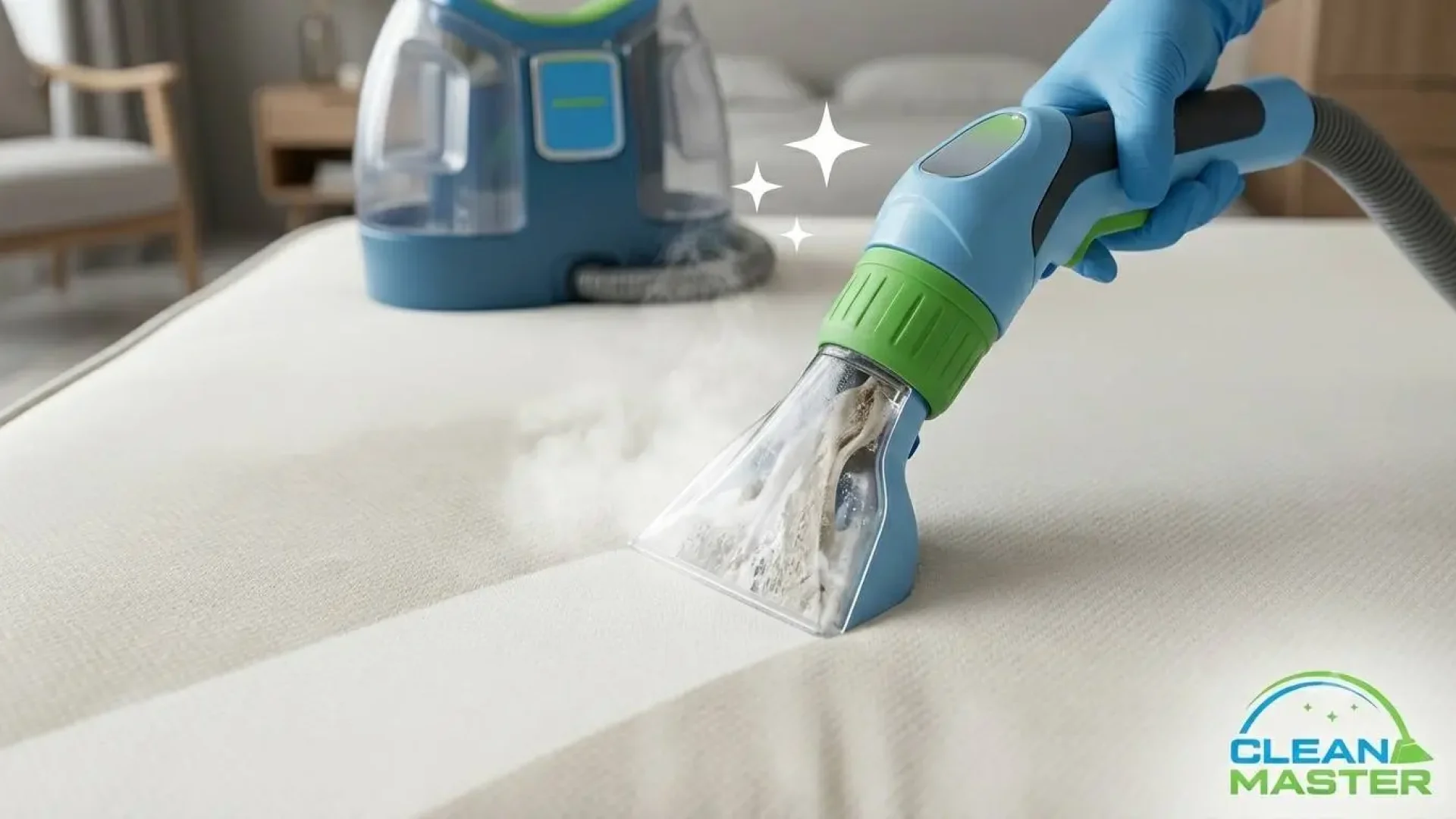
When a mattress gets stained, the instinct to reach for an upholstery cleaner makes sense. It’s designed for fabric surfaces, it’s already in the house, and a mattress is essentially a large upholstered item. So yes, in principle, an upholstery cleaner can be used on a mattress. The problem is that most people apply it the same way they’d clean a sofa, and a mattress is a fundamentally different cleaning challenge.
As professional cleaners serving the DFW area, we’ve worked with clients on both ends of this. When upholstery cleaner is used correctly on a mattress, results can be solid. When it’s used wrong, too much product, too much moisture, not enough drying time, the consequences are invisible at first and serious later. Here’s what you need to know before you start.
Why a Mattress Is Different from a Sofa
Upholstered furniture and mattresses share a surface material, but that’s where the similarity ends. A sofa cushion is typically a few inches of foam with airflow on multiple sides. A mattress is 8 to 14 inches of dense material, foam, springs, latex, or a combination, that you sleep directly on top of for 7 to 8 hours a night.
That difference has two critical implications for cleaning.
First, moisture introduced to a mattress surface has very limited escape routes. Unlike a sofa cushion you can stand upright to dry, a mattress sits flat with its underside against a base or box spring, trapping any moisture that migrates below the surface. That trapped moisture doesn’t evaporate, it creates the warm, dark, damp conditions that mold needs to establish itself.
Second, whatever goes into a mattress surface stays close to your body every night. Chemical residue from upholstery cleaners, surfactants, fragrances, solvents, doesn’t just sit on a mattress the way it might on a chair you sit in briefly. It’s in direct contact with your skin, your face, and your airways for hours at a time.
These two factors, mold risk from moisture and residue risk from chemicals, are what make mattress cleaning genuinely different from upholstery cleaning, even when the same product is involved.
How Each Mattress Type Responds to Upholstery Cleaner
Not all mattresses handle moisture the same way. Here’s what to know before you apply anything:
| Mattress Type | Moisture Tolerance | Key Risk |
| Memory foam | Very low | Absorbs moisture deeply; slow to dry; high mold risk |
| Latex | Low | Dense material traps moisture; latex can degrade with harsh chemicals |
| Hybrid | Moderate | Foam layers vulnerable; springs can rust if moisture reaches core |
| Innerspring | Moderate | Surface fabric handles moisture better; spring rust risk if over-wet |
Memory Foam
Memory foam is the most vulnerable mattress type when it comes to moisture. The open-cell structure that makes it comfortable to sleep on also makes it highly absorbent, liquid introduced at the surface wicks rapidly into the foam beneath. Once moisture is inside memory foam, it dries extremely slowly and in the meantime creates ideal mold conditions. With memory foam, less moisture is always better, and any cleaning approach needs to prioritize minimal liquid application.
Latex Mattresses
Latex shares memory foam’s sensitivity to over-wetting, with an added complication: harsh surfactants and solvents in some upholstery cleaners can degrade latex over time, affecting both the material’s integrity and its feel. If you have a latex mattress, check the upholstery cleaner’s ingredient list carefully and avoid any product containing bleach, ammonia, or petroleum-based solvents.
Hybrid Mattresses
Hybrid mattresses combine foam comfort layers with an innerspring support core. The foam layers carry the same over-wetting risks as memory foam, while the spring core introduces the additional risk of rust if moisture penetrates deep enough to reach the metal. Surface-level, carefully applied cleaning is generally safe; anything that saturates the mattress is not.
Innerspring Mattresses
Traditional innerspring mattresses are somewhat more forgiving, the surface fabric and thin padding layers dry faster than dense foam materials. The primary risk is still over-wetting, which can reach the spring core and cause rust that transfers as orange staining to your mattress cover and bedding. Keep moisture at the surface and you reduce that risk significantly.
The Right Way to Use Upholstery Cleaner on a Mattress
If you’re going to use an upholstery cleaner on a mattress, technique is everything. The difference between a good outcome and a mold problem is almost entirely about how much moisture you introduce and how thoroughly you remove it.
Spot-Clean Only, Never Full-Surface Clean
This is the most important rule. Upholstery cleaners should be applied only to the specific stained or soiled area, not sprayed across the entire mattress surface as a general refresh. Full-surface application introduces far more moisture than a mattress can safely handle and dramatically increases drying time and mold risk.
Identify the stain, treat only that area, and leave the surrounding mattress untouched.
Apply Product to a Cloth, Not Directly to the Mattress
Spray your upholstery cleaner onto a clean microfiber cloth rather than directly onto the mattress surface. This gives you immediate control over how much moisture contacts the mattress and prevents the product from soaking in faster than you can work with it. Use the dampened cloth to gently blot, not rub, the stained area, working from the outside of the stain inward.
Extract as Much Moisture as Possible
After treating the stain, immediately press clean dry towels firmly into the area to absorb as much moisture as possible before it can migrate deeper. Replace towels as they become damp and repeat until minimal moisture transfers. The goal is to remove as much liquid from the mattress as quickly as possible, not to let it sit and air dry on its own.
Dry Actively and Thoroughly
Point a fan directly at the treated area and run it continuously until the spot is completely dry, typically 4 to 6 hours for a small spot-treated area under normal conditions. In DFW summers with high humidity, this can take longer. Do not put bedding back on the mattress until the area is fully dry to the touch and has been for at least an hour.
If possible, open windows or run a dehumidifier in the room to assist drying. For a full guide on drying technique, see our post on how to dry carpet after cleaning, many of the same principles apply.

The Risks of Getting It Wrong
Mold You Can’t See
This is the risk that concerns us most, and it’s the one we’ve seen cause the most serious problems for clients. Mold growth inside a mattress doesn’t announce itself immediately, it develops silently in the days and weeks after a cleaning that introduced too much moisture. By the time a musty smell is detectable or visible spots appear on the surface, the mold is already established throughout the foam or batting layers beneath.
We’ve had DFW clients contact us after DIY mattress cleaning left them with a persistent musty smell they couldn’t locate or eliminate. In several cases, the mattress had to be replaced entirely, a far more expensive outcome than a professional clean from the start.
Chemical Residue on Your Sleeping Surface
Many upholstery cleaners contain fragrances, optical brighteners, and surfactant blends that are appropriate for occasional contact with furniture but weren’t designed for nightly face-down contact with a sleeping surface. Residue left in mattress fabric after cleaning can cause skin irritation, respiratory sensitivity, or simply an unpleasant smell that lingers longer than expected.
Always check that any product you use on a mattress is free from harsh solvents, bleach, and ammonia. When in doubt, choose a gentler option specifically formulated for sleeping surfaces.
Better Alternatives for Specific Problems
Enzyme Cleaner for Bodily Fluid Stains
For urine, sweat, blood, or other bodily fluid stains, the most common mattress cleaning challenges, an enzyme-based cleaner is significantly more effective than a standard upholstery cleaner and safer for mattress materials. Enzyme cleaners break down the organic compounds in bodily fluids at a molecular level, eliminating both the stain and the odor rather than masking it. Apply sparingly, blot thoroughly, and dry actively as described above.
Baking Soda for Odor and General Freshening
For general odor control and surface freshening without any moisture risk, baking soda is the safest and most effective option. Strip the mattress, sprinkle a generous even layer of baking soda across the entire surface, and leave it for a minimum of 30 minutes, several hours is better. The baking soda absorbs odors and surface moisture from the fabric. Vacuum it off thoroughly and the mattress is fresher without a drop of liquid introduced.
This is our standard recommendation to DFW clients who want to maintain their mattress between professional cleans. For a full walkthrough, see our guide on how to clean your mattress.
Professional Mattress Cleaning
For deep stains, persistent odors, post-illness cleaning, or any situation where you’re not confident in a DIY approach, professional mattress cleaning is the right call. Professional equipment uses controlled low-moisture methods specifically appropriate for mattress materials, with extraction power that removes both the cleaning solution and the contaminants it lifts, without the over-wetting risk that makes DIY mattress cleaning so tricky.
As a DFW cleaning company, mattress cleaning is one of the services we approach with particular care, because what goes into a mattress stays close to you every night, and getting it right matters more than almost any other surface in the home.
If your mattress needs more than a careful spot clean, Clean Master Carpet Cleaning also handles professional upholstery and mattress cleaning across Dallas and Fort Worth, using low-moisture methods that won’t soak the foam.
More Upholstery Care Guides
Frequently Asked Questions
Can I use a fabric or upholstery spray on my mattress protector?
Yes, mattress protectors are designed to be removed and laundered, and most fabric-safe upholstery sprays are appropriate for spot-treating them. Always check the care label and launder the protector after treatment rather than putting it back on the mattress damp.
How long after cleaning can I sleep on my mattress?
Wait until the treated area is completely dry, not just dry at the surface, but dry when you press firmly into the spot with the back of your hand. For a small spot-cleaned area with active drying, that’s typically 4 to 8 hours. In humid conditions, give it longer. Sleeping on a damp mattress undoes your drying work and risks the mold outcome you were trying to avoid.
What’s the fastest way to dry a mattress after cleaning?
Fan aimed directly at the treated spot, run continuously. Dehumidifier in the room if humidity is high. Windows open if outdoor humidity is low. Strip all bedding and keep it off until fully dry. Flip the mattress if possible to allow airflow on both sides. Do all of these together and a small spot-cleaned area should be dry within 4 to 6 hours under normal DFW conditions.
The Bottom Line: It Can Work, If You Respect the Mattress
An upholstery cleaner on a mattress isn’t automatically a mistake. Used with the right technique, spot-cleaning only, minimal moisture, immediate extraction, active drying, it can address surface stains effectively. Used the way most people use it, sprayed broadly, left to air dry, bedding back on while still damp, it’s a setup for mold growth you won’t notice until it’s already a serious problem.
When in doubt, keep it simple: enzyme cleaner for stains, baking soda for odors, and a professional clean when the job is beyond what a careful DIY approach can safely handle.
Our DFW cleaning team is here when you need us, for mattresses, carpets, and everything in between. Contact our DFW cleaning team today for a professional mattress clean that’s done safely and done right.