
You cleaned your carpet, so why does it feel worse than before? If your carpet is sticky underfoot, looks dull, or seems to be attracting dirt faster than ever, you’re not imagining it. You’re dealing with carpet cleaner residue, and it’s one of the most common post-cleaning frustrations homeowners run into.
The good news is that residue is fixable. As professional carpet cleaners serving the DFW area, we see this regularly, and we know exactly what causes it, how to identify it, and how to get rid of it for good. Here’s the complete breakdown.
What Is Carpet Cleaner Residue?
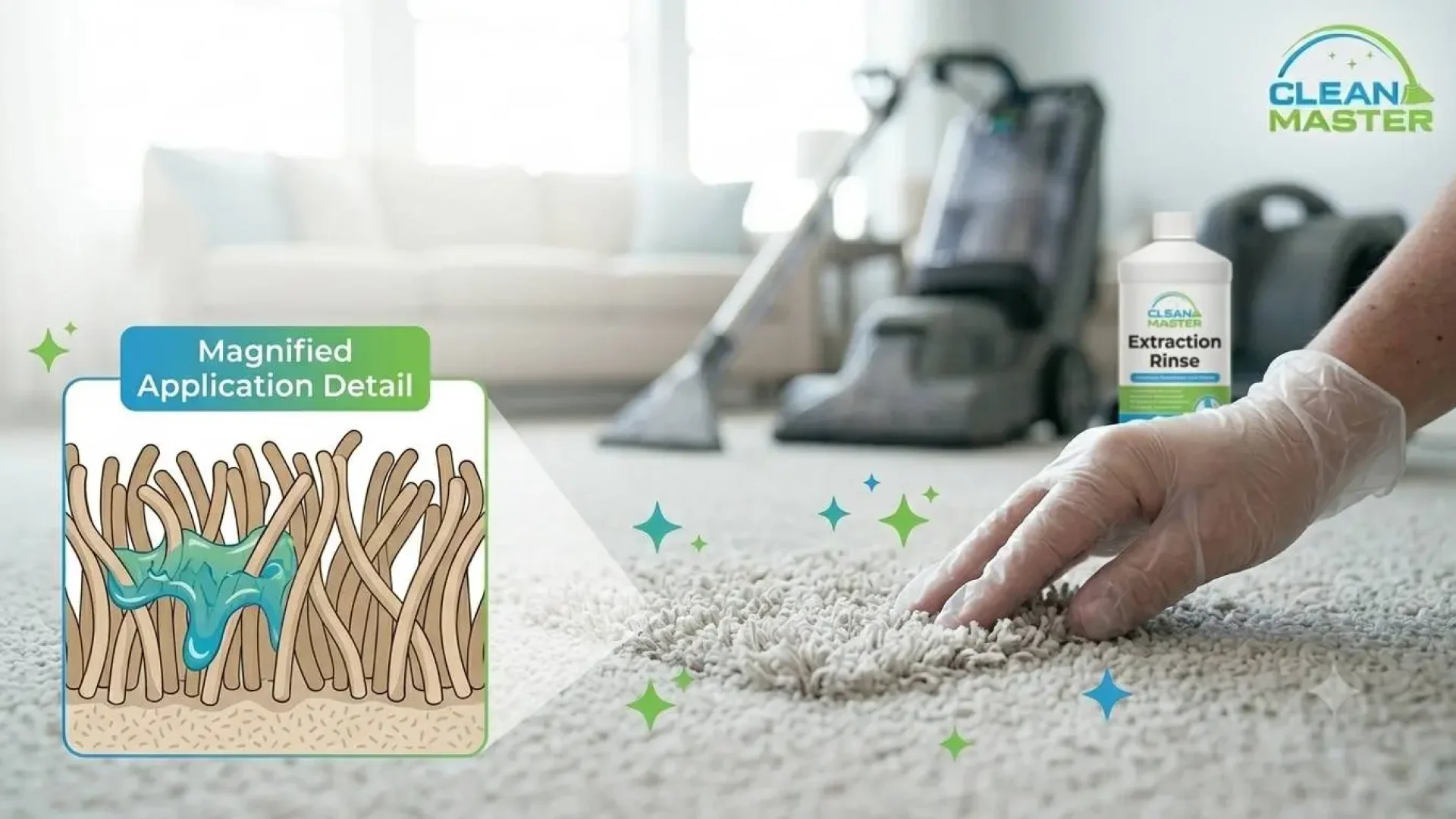
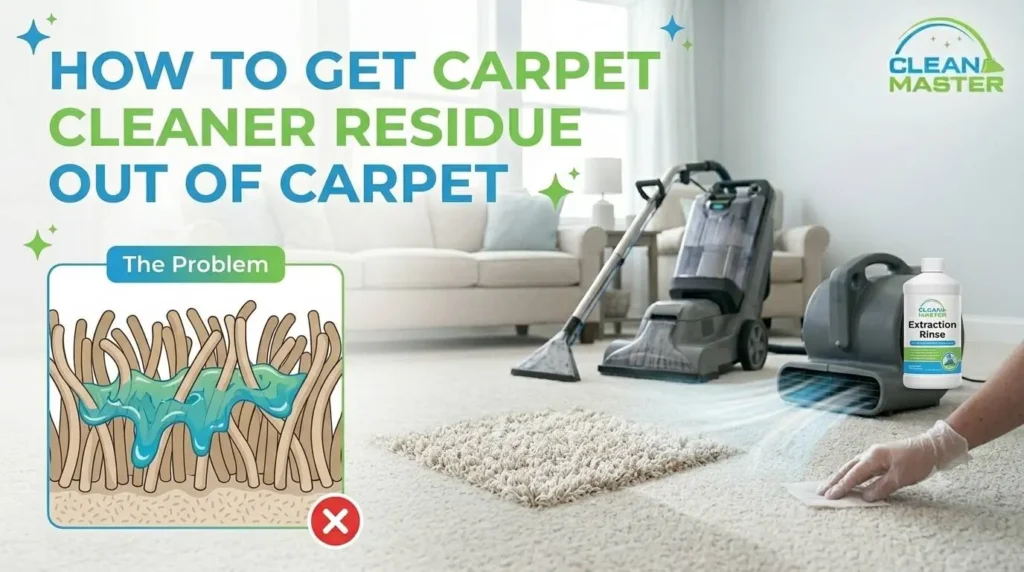
Residue is cleaning solution, or the dirt it loosened, that wasn’t fully extracted from your carpet fibers during the cleaning process. Instead of being pulled out with the wastewater, it dried in place inside the fibers.
Once dry, that leftover solution acts like a magnet. It has a sticky, slightly tacky quality that traps airborne dust and foot traffic debris far more aggressively than clean carpet fibers would. The result: a carpet that looks and feels worse than it did before cleaning, and that re-soils at an accelerated rate going forward.
How to Tell If Your Carpet Has Residue
Residue doesn’t always announce itself obviously. Here are the four signs to look for.
Sticky or Crunchy Texture
Run your hand across the carpet or walk across it in bare feet. If the fibers feel sticky, stiff, or slightly crunchy rather than soft and springy, that’s a strong indicator of trapped solution. This is most noticeable in areas that received the most cleaning product, high-traffic zones, stain-treated spots, or areas that were scrubbed repeatedly.
Carpet Re-Soiling Unusually Fast
If you cleaned your carpet last week and it already looks grimy again, residue is almost certainly the reason. The sticky film left behind by unextracted solution grabs onto everything, dust, pet dander, tracked-in dirt, and holds it on the surface. Carpets with residue can look dirty again within days of cleaning, no matter how carefully you maintain them. Read our guide on why carpets get dirtier after cleaning for more on this pattern.
White or Chalky Marks on Carpet Fibers
In some cases, residue is visible, particularly with solution-heavy DIY cleans. Look for white or chalky marks along carpet fibers, especially in areas where product was applied directly or where the machine overlapped repeatedly. This is dried cleaning solution, and it won’t brush away with vacuuming alone.
Dull or Flat Appearance
Clean carpet fibers have a natural reflectivity and texture that makes the surface look fresh and even. Residue coats the fibers and mutes that appearance, leaving the carpet looking flat, lifeless, and grey, even if it was just cleaned. If your carpet looks duller after cleaning than before, residue is a likely culprit.
What Causes Carpet Cleaner Residue?
Understanding the cause helps you fix the right problem and avoid repeating it.
Insufficient Rinsing and Extraction Passes
This is the most common cause. Cleaning solution is applied to the carpet, but not enough rinse passes are made to flush it out fully before extraction. The solution loosens dirt effectively, but if it isn’t thoroughly flushed and pulled from the fibers, it dries in place.
With DIY machines especially, it’s tempting to do a single pass and move on, but carpets, particularly in high-traffic areas, often need multiple rinse passes to extract cleaning product completely. Skipping this step leaves residue behind every time.
Using the Wrong Product
Laundry detergent, dish soap, and general-purpose household cleaners were not designed for carpet cleaning. They’re high-sudsing formulas that foam excessively when agitated in a carpet cleaner, produce far more residue than purpose-made carpet solutions, and are much harder to extract fully. Even small amounts of these products left in carpet fibers create significant residue problems.
This is one of the reasons we consistently advise against using laundry soap in a carpet cleaner, not just because of machine damage risk, but because the residue outcome is almost guaranteed.
DIY Carpet Cleaners with Low Extraction Power
Consumer carpet cleaning machines are useful tools, but their suction power is considerably lower than professional-grade equipment. That extraction gap means more solution and more loosened dirt stays in the carpet after each pass. Even when the right product is used at the right concentration, a machine that can’t extract powerfully enough will leave residue behind simply because it lacks the capability to remove everything it disturbed.
This isn’t a reason to avoid DIY carpet cleaning altogether, but it is a reason to understand its limits and compensate with thorough rinsing technique.
How to Remove Carpet Cleaner Residue
Method 1: Warm Water Rinse Pass
This is the first thing to try, and it works well for mild to moderate residue from purpose-made cleaning solutions.
Fill your carpet cleaner’s tank with plain warm water, no solution, no additives. Run slow, overlapping passes over the affected area, allowing the warm water to penetrate the fibers and re-dissolve the dried residue. Follow each pass immediately with an extraction pass to pull the water and the residue it’s carrying back out.
For best results, make at least two full rinse-and-extract cycles over the area. After the final pass, run the machine in extraction-only mode to remove as much remaining moisture as possible. Then set up fans and allow the carpet to dry fully before assessing. See our guide on how to dry carpet after cleaning for the fastest drying approach.
For many cases of mild residue, one thorough warm water rinse is all it takes. The carpet will feel noticeably softer and look brighter once dry.
Method 2: Baking Soda Dry Absorption
For residue that has fully dried, particularly the white, chalky variety visible on fibers, a dry absorption approach can be effective as either a standalone treatment or a complement to the rinse method above.
Sprinkle a generous, even layer of baking soda over the affected area. Work it gently into the fibers with a soft brush or your fingertips, then allow it to sit for at least 30 minutes, up to a few hours for heavier residue. The baking soda absorbs the dried solution from the fibers as it sits.
Vacuum thoroughly afterward, going over the area multiple times in different directions to ensure complete removal. This method works particularly well on sticky texture and mild re-soiling issues, and it’s completely safe for all carpet types. For best results, follow the baking soda treatment with a warm water rinse pass as described above.
Method 3: Professional Re-Clean with Proper Extraction
If warm water rinsing and baking soda treatment haven’t resolved the problem, or if the residue is widespread, the re-soiling is severe, or the carpet feels persistently sticky after drying, it’s time to bring in a professional.
Professional carpet cleaning equipment operates at a significantly higher extraction power than consumer machines, which means it can pull out residue that a DIY machine simply can’t reach. A professional re-clean with hot water extraction will flush and extract residue thoroughly, leaving fibers genuinely clean rather than coated.
As a DFW carpet cleaning company, we handle residue remediation regularly, often as a follow-up to DIY cleaning jobs that didn’t quite go as planned. There’s no judgment in that. Sometimes the right tool for the job is a professional one.
How to Prevent Residue in the Future
Getting rid of residue is satisfying, but preventing it from happening again is better. Three habits make the biggest difference.
Use the right product at the right concentration. Always use a carpet cleaning solution designed specifically for carpet cleaners, and follow the dilution instructions precisely. More product does not mean better cleaning, it means more residue risk. When in doubt, use less than you think you need.
Always follow cleaning passes with dedicated rinse passes. After applying solution and making your cleaning passes, switch to plain warm water and run at least one full rinse cycle over the entire area. This step flushes remaining solution from the fibers before extraction pulls it out.
Let the machine do the extraction work. Move slowly and make deliberate extraction passes. The slower and more deliberate your extraction pass, the more liquid the machine removes. Fast passes leave more behind.
Frequently Asked Questions
Can I use white vinegar to remove carpet cleaner residue?
Yes. A solution of one part white vinegar to two parts warm water can help break down and neutralize alkaline cleaning solution residue. Add it to your carpet cleaner’s tank and run a rinse pass as described above. It’s a useful option if warm water alone isn’t shifting the residue, particularly for soap-based products. Allow the carpet to dry fully afterward, any vinegar smell will dissipate completely once dry.
How long does it take to get rid of carpet cleaner residue?
For mild cases treated with a warm water rinse, you’ll see results after one treatment and a full drying cycle, typically within 6 to 12 hours. For more stubborn residue requiring multiple treatments or professional intervention, allow 24 to 48 hours from start to finish. Patience during drying is important, carpets often look better than they feel when still damp, and the final result is only visible once fully dry.
Will vacuuming remove carpet cleaner residue?
Vacuuming alone won’t remove residue that has bonded to carpet fibers, it can only lift loose surface material. The baking soda method above uses vacuuming as part of the process, but the absorption step is what actually dislodges the residue. For any residue that has dried into the fibers, a liquid rinse method is required.
The Bottom Line: Residue Is Fixable and Preventable
Carpet cleaner residue is frustrating, but it’s not permanent. A warm water rinse pass, a baking soda treatment, or a professional re-clean will resolve it in the vast majority of cases, and understanding what caused it means you can avoid it next time.
If your carpet is sticky, re-soiling fast, or just not looking right after a clean, don’t assume the carpet itself is the problem. Nine times out of ten, the answer is residue, and residue has a straightforward fix.
Our DFW carpet cleaning team is here when you need backup. Whether it’s a residue issue, a full deep clean, or just advice on the right approach for your home, we’re happy to help. Contact our DFW carpet cleaning team today and let’s get your carpets feeling the way they should.