
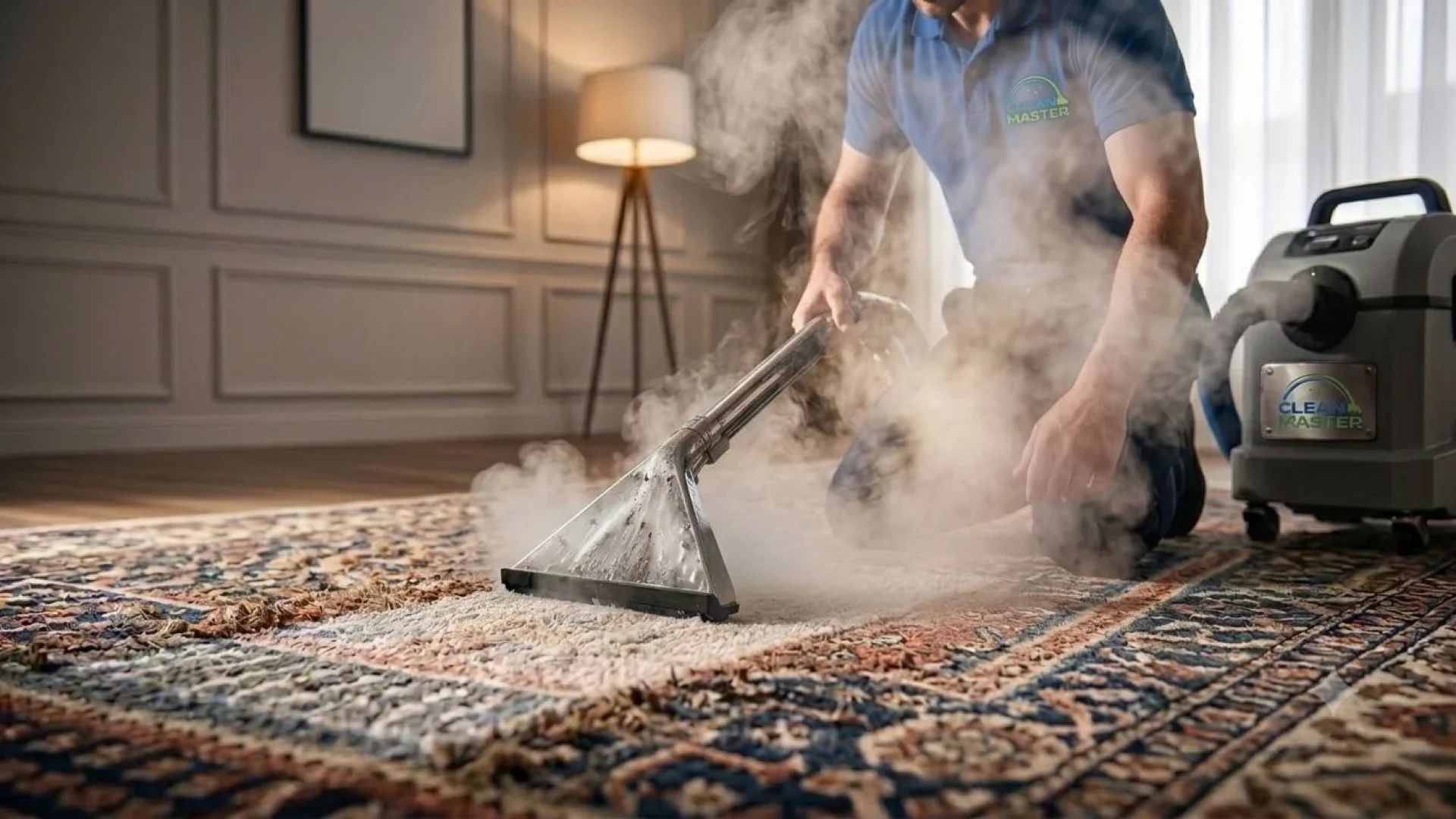
Freshly cleaned carpet that looks flat and matted instead of full and soft is one of the more frustrating post-cleaning outcomes, particularly when the clean itself went well. The good news is that in most cases, flat carpet after cleaning is temporary and fixable with the right technique applied at the right time.
At Clean Master Carpet Cleaning, pile restoration is something we address with DFW clients regularly. Here’s why carpet goes flat after cleaning, and the methods that genuinely restore it.
Why Carpet Goes Flat After Cleaning
Understanding what caused the flattening tells you which restoration method to use.
Over-wetting during cleaning is the most common cause of post-clean pile flatness. Excess moisture in the carpet fiber makes it pliable and compression-prone, fibers that would normally spring back under foot pressure stay down when wet. If the carpet was over-wetted during cleaning, common with DIY machines that have lower extraction power, the pile may lie flat as it dries rather than recovering naturally.
Foot traffic on wet carpet compounds this. Every step on damp carpet presses fibers in the direction of the footfall and holds them there as they dry. The resulting directional matting is visible as traffic paths once the carpet is fully dry, darker-looking strips where fibers are compressed compared to surrounding untouched pile. Read our guide on when you can walk on carpet after cleaning to avoid this.
Furniture indentations from pieces returned too early are a different category, concentrated compression under heavy furniture legs on damp carpet creates circular or rectangular depressions that can set as the fiber dries. These are stubborn but in most cases recoverable. Read our guide on how long after carpet cleaning you can put furniture back to prevent this from happening.
Method 1: Carpet Rake or Grooming Brush
Best for general post-clean pile restoration across large areas.
A carpet rake, a long-handled tool with plastic or metal tines designed specifically for carpet grooming, is the most effective general-purpose pile restoration tool available, and one of the most underused by homeowners.
How to use it:
- Wait until the carpet is fully dry, the hand-test should confirm no coolness or dampness when you press your palm firmly into the pile
- Work in sections across the room, pulling the rake toward you in long, even strokes
- Work against the direction the pile is lying, if fibers are matted forward, rake backward to lift them
- Follow with a pass in the direction of the natural pile to leave a consistent, even finish
- Vacuum lightly after raking to remove any loosened debris
We’ve seen clients transform dull, flat post-clean carpet into genuinely fresh-looking pile with a single thorough raking session. The difference on plush and saxony carpet styles in particular is dramatic, these high-pile styles benefit most from grooming because their longer fibers show directional compression most clearly.
A carpet rake costs $15 to $30 and is worth having for any home with soft-pile carpet. A stiff-bristle upholstery brush works similarly on smaller areas.
Method 2: Damp Towel and Hair Dryer
Best for stubborn flat areas that didn’t respond to raking.
For sections where the pile has dried fully in a compressed position and raking alone isn’t lifting it, introducing controlled moisture and heat reactivates the fiber’s memory and allows it to be reshaped.
How to use it:
- Dampen a clean white towel, wrung out so it’s barely damp, not wet
- Lay the towel over the flattened section and press gently, you’re introducing a small, controlled amount of moisture, not re-wetting the carpet
- Use a hair dryer on a medium heat setting, held 3 to 4 inches above the towel, moving continuously rather than holding in one spot
- As the area warms and the fibers become pliable, use your fingers or a brush to work them upright
- Continue with the dryer on the area directly without the towel while lifting fibers, then allow to cool in the upright position
The heat resets the fiber, the same principle as using a clothes steamer on a wrinkled fabric. Once cooled in the restored position, the pile holds better than it did immediately after cleaning.
Method 3: Ice Cube Trick for Furniture Indentations
Best for circular or rectangular compression marks from furniture legs.
This method consistently surprises clients with how well it works on furniture dents, and it requires nothing more than ice from the freezer.
How to use it:
- Place one or two ice cubes directly in the center of the indentation, use enough to cover the compressed area without flooding surrounding fibers
- Allow the ice to melt completely, this typically takes 2 to 6 hours depending on room temperature
- As the ice melts, the slow release of water gradually rehydrates the compressed fibers from below, lifting them gently as they absorb moisture
- Once the ice has fully melted and the area has dried slightly (damp but not wet), use a coin, spoon bowl, or your fingers to work the fibers upright
- Rake or brush the restored area to blend it with the surrounding pile, then allow to dry completely
The ice method works because slow, even moisture release is gentler on carpet fibers than direct wetting, the gradual absorption gives fibers time to rehydrate fully before being lifted, rather than being manipulated while water is still actively flowing through them.
We’ve recommended this method to DFW clients after furniture was returned to damp carpet before it was fully dry, and the success rate on standard synthetic carpet is high. Natural fiber carpets and older carpet with weakened fiber memory may not respond as completely, but the method rarely makes things worse.

Method 4: Vacuuming in Multiple Directions
Best for light post-clean pile lift and finishing after other methods.
Vacuuming is the simplest pile-lifting tool, and the direction matters more than most homeowners realize. Standard vacuuming in one direction compresses the pile consistently in that direction, which is fine for maintenance but doesn’t lift flat carpet effectively.
For post-clean pile restoration:
- Make one pass in your normal direction
- Follow with a pass at 90 degrees, perpendicular to the first
- Finish with a pass against the direction the pile naturally lies
This cross-directional vacuuming lifts fibers from multiple angles, separates compressed strands, and leaves the pile looking fuller and more even than single-direction vacuuming produces. It’s not a replacement for raking on significantly flat carpet, but it’s an effective finishing step after any of the methods above.
At a Glance: Which Method for Which Problem
| Cause of Flat Carpet | Best Method | Time Required |
| General post-clean flatness across whole room | Carpet rake and multi-direction vacuum | 30 to 60 minutes |
| Directional matting from foot traffic on wet carpet | Carpet rake against the mat direction | 20 to 45 minutes |
| Furniture indentations from legs | Ice cube method, finger lift, and rake | 3 to 6 hours (ice melt time) |
| Stubborn compressed sections after drying | Damp towel, hair dryer, and rake | 15 to 30 minutes per section |
When Carpet Won’t Fully Recover
Most post-clean pile flatness is temporary and responds well to the methods above. The cases where full recovery isn’t achievable:
- Fiber damage from repeated over-wetting, carpet that has been over-wetted multiple times develops weakened fiber structure that loses its springback capacity permanently
- Low-quality carpet with weak fiber memory, entry-level cut pile carpet has less resilient fiber that compresses more easily and recovers less completely than quality nylon or wool
- Very old carpet with accumulated wear, fibers that have been compressed repeatedly over many years have reduced recovery capacity regardless of cleaning quality
In these cases, pile restoration methods improve appearance but may not fully restore the original height and texture. A professional assessment from Clean Master can confirm whether the issue is temporary post-clean compression or more permanent fiber wear, and what realistic expectations should be.
Matted traffic lanes often spring back after a deep clean and proper grooming. Our carpet cleaning in Fort Worth service includes post-cleaning grooming that lifts the pile so carpets dry evenly and look fuller.
Frequently Asked Questions
How long after cleaning should I wait before trying to fluff the carpet?
Always wait until the carpet is fully dry, confirmed by the hand-test with no coolness or dampness when you press your palm firmly into the pile. Attempting to rake or restore pile while the carpet is still damp risks re-compressing wet fibers in the direction of the tool. For professional hot water extraction, that’s typically 6 to 12 hours with good ventilation and air movers running.
Does raking damage carpet?
No, a carpet rake used correctly is gentle on fibers and beneficial for pile height and appearance. The tines lift rather than cut, and the motion separates compressed fiber strands rather than stressing them. Use even, consistent strokes rather than aggressive scrubbing and the rake won’t cause any harm.
My carpet has been flat for weeks after cleaning. Is it too late?
Not necessarily. The damp towel and hair dryer method works on dried compressed carpet as well as freshly dried carpet, the heat and controlled moisture reactivates fiber memory regardless of how long it’s been flat. Try the method on a test section before assuming the damage is permanent.
The Bottom Line: Flat Carpet After Cleaning Is Usually Fixable
A carpet rake handles most post-clean pile flatness across large areas. Ice cubes restore furniture indentations with minimal effort. The damp towel and hair dryer method addresses stubborn compressed sections. Multi-directional vacuuming finishes and maintains the restored pile.
The right method matched to the right cause produces results that genuinely impress, and we’ve seen it transform carpets that clients assumed were permanently flat into soft, full pile that looked better than before the clean. Contact Clean Master Carpet Cleaning today for professional carpet cleaning across the entire DFW area, including post-clean grooming that leaves your carpet looking exactly the way it should.