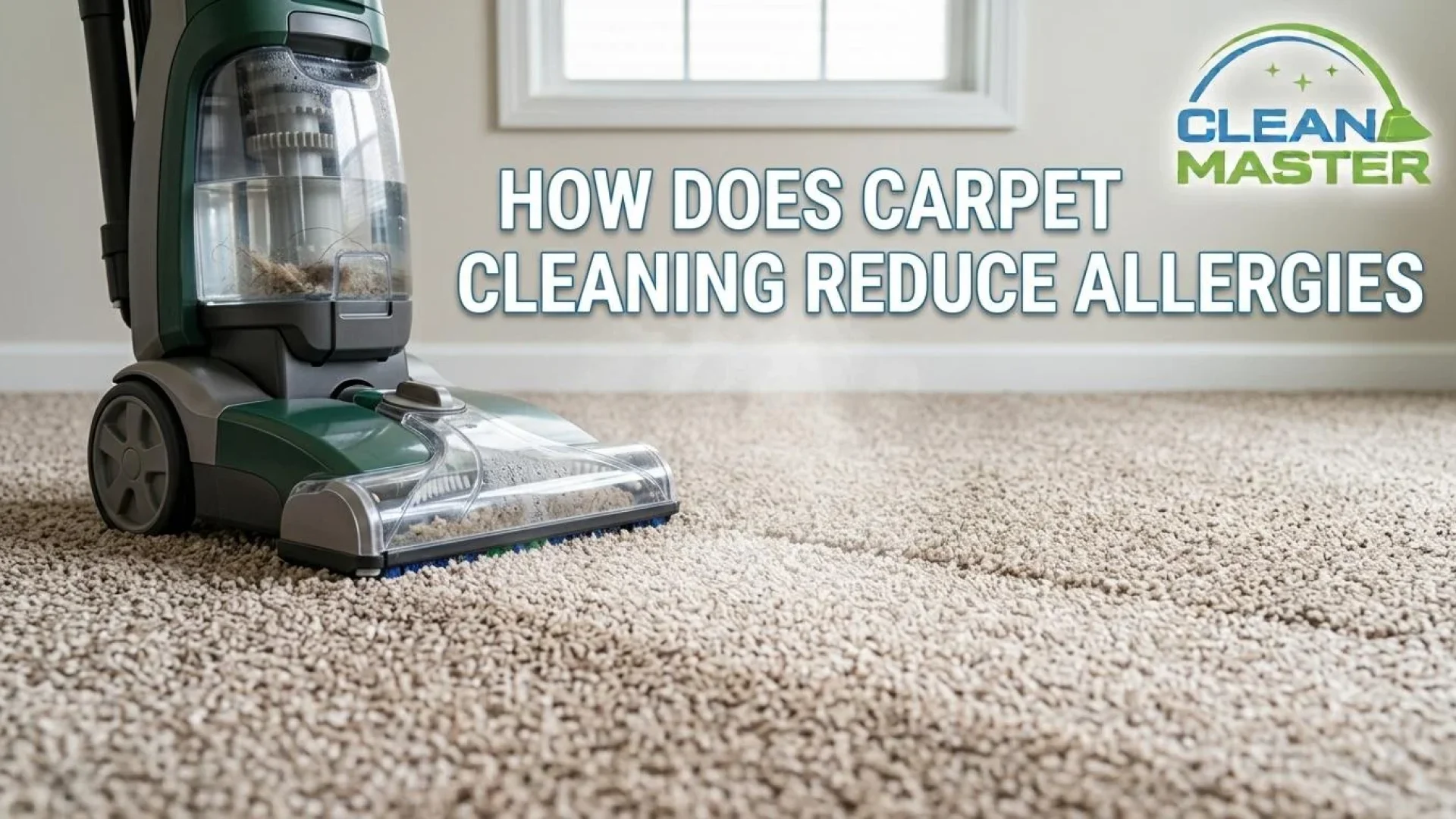
If you or someone in your household deals with allergies or asthma, the floor beneath your feet may be contributing more to the problem than anything else in the room. Carpet is one of the most effective allergen traps in a home, which is both a disadvantage and an opportunity. The same fiber structure that captures allergens from the air also holds them in place, away from the breathing zone, until they’re either disturbed by foot traffic or removed by cleaning.
At Clean Master Carpet Cleaning, we serve the entire DFW area and we’ve seen the connection between carpet cleaning and allergy improvement consistently across client homes, particularly in a market like DFW where pollen seasons are aggressive and homes run HVAC systems for most of the year. Here’s the complete picture of what’s in your carpet, how it affects your indoor air quality, and what cleaning approaches actually reduce allergen load effectively.
Why Carpet Is Both the Problem and the Solution
The instinct in allergy households is sometimes to remove carpet entirely and switch to hard flooring. The reasoning makes sense on the surface, carpet holds allergens, hard floors don’t. But research has shown a more nuanced picture: carpet actually acts as a reservoir that keeps allergens out of the air, while hard floors allow the same allergens to be continuously redistributed by foot traffic and air movement.
The critical variable isn’t whether you have carpet, it’s whether the carpet is cleaned frequently and thoroughly enough to remove what it’s accumulated. A well-maintained, regularly cleaned carpet in an allergy household is a more controlled allergen environment than a hard floor that redistributes the same allergens every time someone walks across it.
The problem is when carpet cleaning falls behind. At that point, the reservoir is full, and every step on the carpet, every draft, every vacuum pass disturbs and re-aerosolizes what’s been accumulating for months.
What’s Actually in Your Carpet: By Allergen Type
Dust Mites and Their Debris
Dust mites are microscopic arachnids that live in soft furnishings, mattresses, upholstery, and carpet, feeding on dead skin cells. They thrive in the warm, humid conditions that DFW’s climate provides for much of the year.
The allergen isn’t the mite itself but its fecal matter and body fragments, particles small enough to become airborne when carpet is disturbed and remain suspended in breathing-zone air for extended periods. A single gram of carpet dust can contain thousands of mite allergen particles. This is the most pervasive indoor allergen in most homes and the one most consistently linked to year-round allergy and asthma symptoms.
Pet Dander
Pet dander, the microscopic skin flakes shed by cats, dogs, and other animals, is one of the most potent and clinically significant indoor allergens. It’s extremely lightweight, which means it remains airborne far longer than heavier particles and penetrates deep into carpet fiber where it’s protected from surface disturbance.
In DFW homes with pets, carpet dander load can be substantial, particularly in areas where pets rest, play, or frequently pass through. Even homes without current pets can retain dander from previous animal occupants for months after the pet has left, embedded in carpet fiber and padding.
Pollen: Particularly Relevant in DFW
North Texas has one of the more aggressive pollen seasons in the country, tree pollen in spring, grass pollen through summer, and ragweed and weed pollen through fall. DFW homes run HVAC systems through most of this period, which means pollen tracked in on shoes and clothing, or entering through briefly opened doors and windows, gets distributed throughout the home and settles into carpet fiber.
DFW allergy sufferers who notice their symptoms are as bad indoors as outdoors are often experiencing this pollen accumulation in carpet, particularly in entryways, hallways, and high-traffic areas where tracking is heaviest. The carpet near entry points becomes a concentrated pollen deposit that’s disturbed every time someone walks through.
Mold Spores
Mold spores settle into carpet from air circulation and grow in carpet fiber when moisture conditions support it, over-wetted carpet, high indoor humidity sustained over time, or spills that weren’t fully dried. DFW’s summer humidity creates conditions where carpet moisture management matters more than in drier climates.
Mold spores in carpet are an allergen source when disturbed into the air, and active mold growth in carpet backing or padding creates a continuous spore source that affects air quality throughout the room. This is the allergen category most directly addressed by proper carpet drying technique after cleaning. Read our guide on whether carpet cleaning can cause mold to understand how moisture management affects mold risk.
Which Cleaning Methods Actually Reduce Allergens
Hot Water Extraction: The Most Effective Method for Allergen Removal
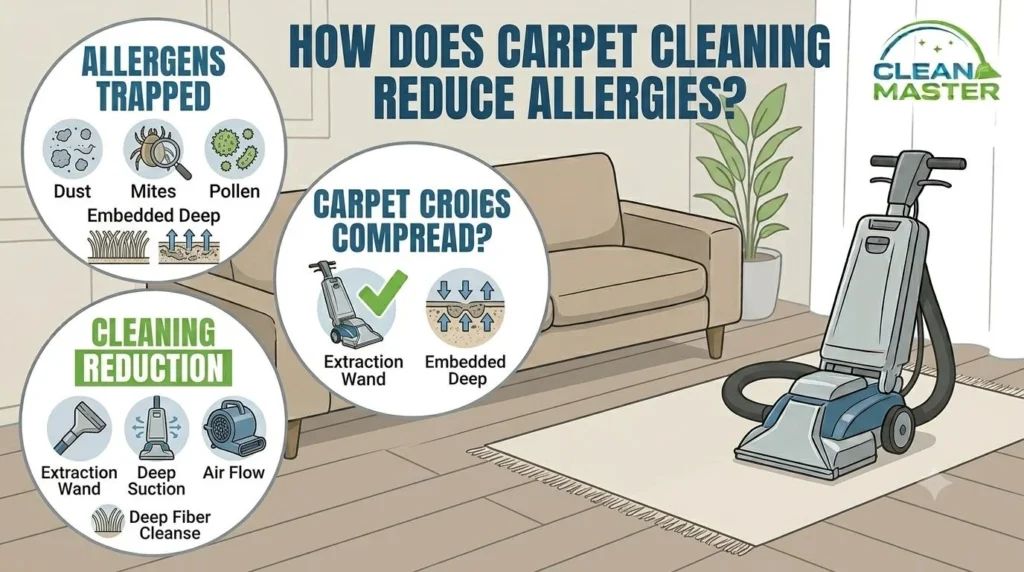
Professional hot water extraction, the method used by Clean Master, is the most effective cleaning approach for allergen reduction because it physically removes what it reaches rather than redistributing or killing it in place.
The mechanism: heated water and cleaning solution are injected into the carpet under pressure, loosening allergen particles from the fiber, and immediately extracted with powerful suction into the recovery tank. The allergens are physically removed from the carpet and the home.
This is why professional hot water extraction is recommended by the Asthma and Allergy Foundation of America as the preferred carpet cleaning method for allergy households. The extraction mechanism removes dust mite debris, pet dander, pollen, and mold spores in a way that surface-level cleaning cannot.
For DFW allergy households: professional hot water extraction every 6 to 12 months is the baseline, with more frequent cleaning in homes with pets or multiple allergy sufferers. Read our guide on how often you should get your carpet cleaned for a schedule matched to your household situation.
Steam Cleaning: Effective for Killing, Less Effective for Removing
Steam cleaning kills dust mites on contact through heat, temperatures above 130°F are lethal to mites, and steam cleaners operate well above that threshold. This is a genuine benefit for dust mite allergen reduction.
The limitation is extraction. Steam loosens and kills surface-level allergens but doesn’t remove them from the carpet the way hot water extraction does. Dead dust mite debris and dander particles remain in the fiber until vacuumed or extracted. For allergy reduction specifically, steam cleaning is a useful maintenance tool between professional extraction cleans, not a replacement for them.
Vacuuming: Frequency and HEPA Filtration Matter
Regular vacuuming is the most accessible allergen management tool available, but effectiveness depends heavily on two factors: frequency and filter quality.
Frequency for allergy households:
- High-traffic areas and entryways: 2 to 3 times per week
- Bedroom carpet, the highest-exposure area for dust mite allergens: daily or every other day
- Lower-traffic areas: weekly minimum
HEPA filtration is non-negotiable for allergy vacuuming. Standard vacuum filters allow fine allergen particles, particularly pet dander and dust mite debris, to pass through the exhaust air and be redistributed into the room. HEPA filters capture 99.97% of particles 0.3 microns and larger, meaning what goes into the vacuum stays there. Vacuuming an allergy household with a non-HEPA vacuum can temporarily worsen air quality by redistributing fine particles that were settled in the carpet.
For pet households specifically: use a vacuum with a sealed system and HEPA filtration, change or clean the filter regularly, and consider a rubber brush roll that’s more effective at extracting pet hair from carpet fiber than standard brush rolls.
Complementary Steps for Whole-Home Allergen Reduction
Carpet cleaning is the highest-impact single intervention for indoor allergen reduction, but the carpet doesn’t exist in isolation. Allergens in the home circulate through the HVAC system, settle on upholstery, and accumulate in air ducts.
Air Duct Cleaning
Your HVAC system distributes air, and whatever is in that air, throughout every room in the home every time it runs. Dust mite debris, pollen, pet dander, and mold spores accumulate in ductwork over time and are continuously recirculated.
In DFW, where HVAC systems run for extended periods due to summer heat and mild winters, duct contamination accumulates faster than in many other climates. For allergy households, combining carpet cleaning with air duct cleaning, ideally in the same service period, addresses both the floor-level reservoir and the airborne distribution system simultaneously. The combined result on indoor air quality is significantly greater than either service alone.
Upholstery Cleaning
Sofas, chairs, and upholstered furniture accumulate the same allergens as carpet, dust mites, pet dander, and pollen settle into fabric fiber and are disturbed into breathing-zone air every time someone sits down. For households with pets that use furniture, upholstery can carry a higher allergen load per square foot than the adjacent carpet.
Professional upholstery cleaning as part of a whole-home allergen reduction approach, combined with carpet and duct cleaning, addresses the full allergen reservoir rather than the most visible surface only.
Clean Master serves the entire DFW area with carpet cleaning, upholstery cleaning, tile and grout cleaning, and air duct cleaning, making it practical to address the whole-home allergen picture in a single service relationship.
The DFW-Specific Context
DFW allergy sufferers face a specific combination of challenges that makes indoor allergen management more important than average:
- Aggressive, multi-season pollen that enters homes through tracked-in particles and briefly opened doors and windows
- Extended HVAC operation that distributes settled allergens throughout the home and accelerates duct accumulation
- Warm, humid summers that support dust mite populations and create moisture conditions that favor mold growth in carpet and padding
- High pet ownership rates in suburban DFW homes, where indoor pets contribute continuous dander load
We’ve seen DFW clients report meaningful allergy symptom improvement after professional carpet cleaning, not because carpet cleaning is medical treatment, but because removing a significant allergen reservoir from the home reduces the continuous exposure load that cumulative symptoms reflect. The improvement is most pronounced when carpet cleaning is combined with HEPA vacuuming habits and air duct cleaning.
At a Glance: Cleaning Methods and Allergen Reduction
| Method | Allergens Removed | Frequency for Allergy Households |
| Professional hot water extraction | Removes dust mites, dander, pollen, mold spores from fiber | Every 6 to 12 months, more frequent with pets |
| Steam cleaning | Kills dust mites; partially removes surface allergens | Monthly maintenance between professional cleans |
| HEPA vacuuming | Removes surface-level allergens; prevents redistribution | 2 to 3x weekly high traffic; daily bedroom |
| Air duct cleaning | Removes allergens from HVAC distribution system | Every 2 to 3 years, annually for pet and allergy homes |
| Upholstery cleaning | Removes allergens from soft furniture surfaces | Every 12 to 18 months |
Frequently Asked Questions
How quickly will allergy symptoms improve after carpet cleaning?
Improvement timelines vary by individual and by how much the carpet was contributing to allergen load. Many DFW clients notice a difference within the first week after professional cleaning, reduced morning symptoms, better sleep quality (the bedroom is often the highest-exposure space), and less frequent sneezing or eye irritation at home. Full benefit is experienced as the carpet remains maintained rather than as a single immediate improvement.
Should allergy sufferers leave the home during carpet cleaning?
During professional hot water extraction, the cleaning process temporarily disturbs settled allergens before extracting them. Allergy sufferers with significant sensitivity may be more comfortable leaving the home during cleaning and returning after the carpet has dried, typically 6 to 12 hours after a professional clean. This is particularly relevant for clients with dust mite or mold allergies, where the disturbance phase of cleaning can temporarily increase airborne particle count.
Is carpet or hard flooring better for allergy sufferers?
Research is more nuanced than the common “hard floor is always better for allergies” assumption. Well-maintained carpet reduces airborne allergen concentration by keeping particles settled in the fiber rather than continuously airborne. The key phrase is well-maintained, carpet that’s cleaned regularly with a HEPA vacuum and professionally extracted on schedule performs better for allergy control than carpet that’s neglected. For households that won’t maintain a regular cleaning schedule, hard flooring with frequent damp mopping may produce better allergen control in practice.
The Bottom Line: Carpet Cleaning Is One of the Most Effective Allergen Reduction Strategies Available
Carpet holds allergens effectively, which makes well-maintained carpet a controlled allergen environment rather than the problem it’s often assumed to be. Professional hot water extraction removes what’s accumulated in the fiber, HEPA vacuuming maintains the result between cleans, and complementary air duct and upholstery cleaning addresses the whole-home allergen picture.
For DFW allergy households dealing with aggressive pollen seasons, extended HVAC use, and warm conditions that favor dust mites, regular professional carpet cleaning is one of the most accessible and impactful things you can do for indoor air quality. Contact Clean Master Carpet Cleaning today for professional carpet, upholstery, and air duct cleaning across the entire DFW area and a measurably cleaner indoor environment.