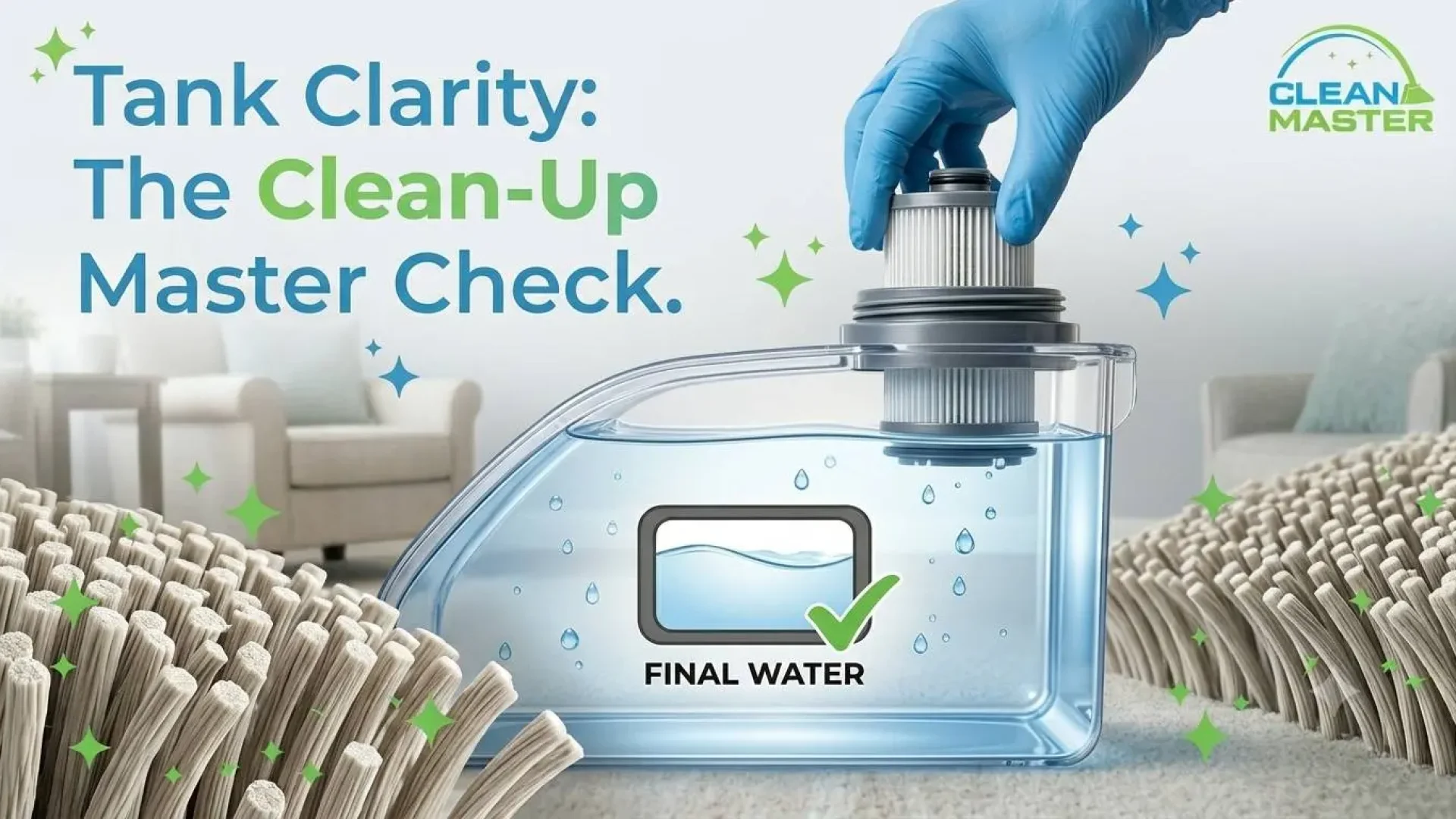
If you’ve ever cleaned your carpet with a machine and watched dark, murky water fill the recovery tank, the instinct is clear: keep going until that water runs clean. It seems logical. Dirty water means dirty carpet, clean water means clean carpet, right?
Not exactly. This is one of the most persistent myths in DIY carpet cleaning, and it leads homeowners to over-clean their carpets in ways that cause real damage while chasing a standard that heavily soiled carpet may never actually reach.
At Clean Master Carpet Cleaning, we serve the entire DFW area and we’ve seen the consequences of this misunderstanding play out regularly, clients who stopped too early convinced something was wrong, and clients who kept going far too long and left their carpet worse than they found it. Here’s the truth about what your carpet cleaning water is actually telling you, and when the right time to stop really is.
Where This Myth Comes From
The clear-water standard makes intuitive sense because it works as a mental model for some cleaning tasks. Rinsing dishes, washing hands, cleaning a paintbrush, in these contexts, clear rinse water does signal that the job is done. The logic transfers naturally to carpet cleaning.
The problem is that carpet isn’t a smooth, non-porous surface. It’s a dense fiber system that holds years of accumulated soil, skin cells, dust, pet dander, and environmental debris at varying depths, some near the surface, some embedded deep in the pile, and some worked into the backing and padding beneath. Even a carpet that looks clean to the eye and has been professionally maintained can produce noticeably discolored water during cleaning because the cleaning process is reaching material that surface appearance never reflected.
Clear water, in carpet cleaning, would mean the carpet held nothing below the surface. For any carpet that’s been lived on, that’s rarely achievable, and pursuing it is where the damage begins.
What the Water Color Actually Tells You
The color of your recovery water tells you what’s being extracted from the carpet at that moment, which is useful information, but not the complete picture most people think it is.
Very dark brown or black water in the first pass typically indicates heavy surface soil, accumulated dust, and loosened cleaning solution from the initial application. This is normal and expected, particularly on high-traffic areas or carpets that haven’t been cleaned recently.
Grey or tan water in subsequent passes indicates that surface-level extraction is largely complete and the machine is now reaching deeper-embedded material. This is the range where most DIY passes settle, and it’s also where most homeowners make the mistake of continuing unnecessarily.
Lightly tinted water, faintly grey or barely discolored, in later passes is often not soil at all. It’s frequently residual cleaning solution, minerals from the water supply, or material disturbed from the carpet backing that the machine’s suction is pulling through. Continuing past this point adds moisture without meaningfully improving cleanliness. Read our guide on getting rid of carpet cleaner residue if you suspect solution buildup is affecting your results.
Clear water on a lived-in carpet with any history of regular use is rarely achievable through consumer-grade cleaning. Professional hot water extraction with commercial equipment gets closer, but even professional equipment extracts lightly discolored water from carpets that look and are genuinely clean.
How Many Passes Is Typically Enough?
There’s no universal number, but there is a practical framework based on what the machine is actually accomplishing with each pass.
For a standard residential carpet with moderate soiling, a regularly used living room or hallway that gets cleaned every 6 to 12 months, two to three cleaning passes followed by one to two rinse passes is typically sufficient. This is the range where meaningful extraction is happening and additional passes produce sharply diminishing returns.
For heavily soiled carpet, high-traffic areas, homes with pets, or carpet that hasn’t been professionally cleaned in several years, the effective cleaning range extends to three to four cleaning passes, but the water will likely still show color at that point. That’s not a failure. That’s the limit of what the available equipment can extract in a single session, and continuing beyond it risks the carpet rather than improving it.
A useful practical test: after each extraction pass, check whether the water in the recovery tank is meaningfully darker than the previous pass. If the color difference between pass three and pass four is negligible, if you’re extracting roughly the same lightly tinted water with each additional run, you’ve hit the point of diminishing returns. Additional passes are adding moisture without adding meaningful cleaning value.
The Risks of Chasing Clear Water
Over-Wetting the Carpet
Every additional pass introduces more water into the carpet. Consumer-grade machines have limited extraction power compared to professional equipment, which means a meaningful percentage of the water introduced with each pass stays in the carpet. By the time a homeowner has made six, eight, or ten passes chasing clear water, the carpet is significantly wetter than it needs to be, and drying time has multiplied accordingly.
Over-wet carpet is slow to dry, prone to mildew growth in the backing and padding, and at risk of the musty smell that returns after cleaning when moisture is trapped too long. Read our guide on whether carpet cleaning can cause mold to understand how quickly this becomes a serious problem. The irony is that clients who’ve over-cleaned chasing clear water often end up with a carpet that smells worse after the clean than a carpet that was cleaned to the right stopping point.
Fiber Damage from Aggressive Repeated Cleaning
Carpet fibers are more vulnerable when wet than when dry. Repeated mechanical passes over wet fibers, particularly with machines that have rotating brushes, create friction and stress on the fiber structure that accumulates with each additional pass. Over time, this manifests as a matted, dull appearance in the cleaned area, reduced pile height, and a texture that feels rougher underfoot than the surrounding carpet.
High-pile and plush carpet styles are particularly susceptible. These are also the carpet types where dirty water persists longest, creating a situation where the homeowner’s instinct to keep cleaning is strongest precisely where the risk of fiber damage is highest.
Diminishing Returns on Heavily Soiled Carpet
This is the point we need to make most clearly for clients dealing with heavily soiled carpet: water may never run fully clear, and that doesn’t mean the carpet isn’t clean enough. There is a category of embedded soil, material that has been ground into the backing over years of foot traffic, that consumer-grade cleaning equipment cannot extract regardless of how many passes are made. The water will continue to show color because material continues to be disturbed, but that material isn’t moving meaningfully closer to the surface or the recovery tank.
We’ve had DFW clients contact Clean Master convinced their carpet cleaning machine was broken or that their carpet was unsalvageable, because after eight or ten passes, the water was still discolored. In most cases, the carpet was actually clean enough to look and feel significantly better. The water color was reflecting deep backing material that the machine couldn’t extract, not ongoing surface soil that more passes would resolve.

When to Stop, Even If the Water Isn’t Clear
Stop cleaning when any of the following are true:
- The color difference between your last two passes is negligible and you’re in diminishing returns territory
- The carpet has received more than four cleaning passes in a single session
- The carpet feels noticeably wet underfoot and moisture is accumulating faster than it’s being extracted
- You’ve completed your rinse passes and the water from the rinse is only lightly tinted
At this point, additional passes are doing more harm than good. Set up fans, open windows if outdoor humidity is low, run a dehumidifier if needed, and let the carpet dry fully. See our complete guide on how to dry carpet after cleaning for the fastest approach. Assess the result once it’s completely dry. Carpet often looks significantly better dry than it did immediately after cleaning, and the full result isn’t visible until the moisture is gone.
When to Call Clean Master Instead
Some carpet cleaning outcomes, particularly on heavily soiled carpet, carpet with deep pet contamination, or carpet that’s been through repeated DIY cleaning attempts, require professional equipment and professional chemistry to achieve. Consumer-grade machines are useful maintenance tools with real limits. When those limits are the issue, more passes with the same machine won’t get you past them.
Clean Master Carpet Cleaning serves the entire DFW area with professional hot water extraction equipment that operates at significantly higher water pressure, temperature, and extraction power than consumer machines. That means we reach deeper into the carpet pile, break down more embedded soil with each pass, and extract more of what we loosen, producing results that approach genuinely clear water on carpets where a consumer machine never would.
If you’ve cleaned your carpet multiple times and the results aren’t matching your expectations, the issue almost certainly isn’t technique, it’s equipment. That’s where we come in.
Beyond carpet cleaning, Clean Master also offers upholstery cleaning, tile and grout cleaning, and air duct cleaning across the DFW area, so when your carpets are done, we can take care of the rest of your home too.
If you’ve made pass after pass and the water still won’t run clear, the soil is usually deeper than a rental machine can reach. That’s where our truck-mounted equipment for carpet cleaning Fort Worth families count on finishes the job in a single visit, so you’re not over-wetting the pad chasing clear water.
More Carpet Care Guides
Frequently Asked Questions
Is very dark water on the first pass a sign my carpet is unusually dirty?
Not necessarily. Dark first-pass water is normal for any carpet that’s been regularly used, regardless of how well it’s been maintained. The first pass always extracts the most, loosened surface soil, cleaning solution, and disturbed debris all come out together. It’s dramatic-looking and completely expected.
What if my water is still very dark after three or four passes?
This usually indicates one of two things: either the carpet is heavily soiled and at the limit of what your machine can extract in a single session, or the carpet has deep contamination, pet urine, grease, or embedded soil in the backing, that requires professional treatment. In either case, continuing passes with a consumer machine is unlikely to significantly change the outcome and risks over-wetting the carpet.
Can I improve results by using more cleaning solution?
No, and this is a common mistake. More solution means more residue left in the carpet, not a cleaner result. If your water is still dark after several passes, the issue is extraction power, not solution concentration. Using more product creates a residue problem on top of the original soiling issue.
The Bottom Line: Clean to the Point of Diminishing Returns, Not to Clear Water
Clear water is not the goal. Clean carpet is the goal, and those two things are not the same on any carpet that’s been genuinely lived in.
Two to four cleaning passes followed by one to two rinse passes is the practical stopping range for most residential carpet. Once the color difference between passes is negligible, additional cleaning is adding moisture and mechanical stress without meaningfully improving the result. Stop, dry actively, and assess once the carpet is fully dry.
If the result still isn’t where it needs to be, that’s not a reflection of how much harder you should clean. It’s a signal that professional equipment is the right next step. Contact Clean Master Carpet Cleaning today for professional carpet cleaning across the entire DFW area and find out what your carpet looks like when it’s genuinely extracted clean.