There’s no single “best” tile cleaner, the right answer depends entirely on what your floor is actually made of. A cleaner that works beautifully on ceramic can permanently etch marble. A product safe for porcelain might be too harsh for sealed grout. Matching the cleaner to the material is the difference between a floor that stays looking good for years and one that develops dullness, discoloration, or damage that no amount of cleaning fixes afterward.
At Clean Master Carpet Cleaning, tile and grout cleaning is one of our core DFW services. Here’s the tile-by-tile breakdown of what actually works best, and the products that consistently cause problems regardless of how clean they seem to leave the surface.
Ceramic Tile: The Most Forgiving Surface
Ceramic is the most common residential tile material and also the most tolerant of a range of cleaning products, but “tolerant” doesn’t mean “anything goes.”
Best cleaner: a pH-neutral to mildly alkaline tile cleaner (pH 7 to 10) is the right baseline. Commercial tile and grout cleaners labeled for ceramic, like Black Diamond Stoneworks Ceramic and Porcelain Tile Floor Cleaner or similar purpose-made products, clean effectively without degrading the glaze over repeated use.
For routine maintenance, a mild dish soap diluted in warm water (a few drops per bucket) works reasonably well between deeper cleans, applied with a microfiber mop and not oversaturated.
Why mild alkaline works here: ceramic’s glazed surface is non-porous and chemically resistant to mild alkaline chemistry, which is also what breaks down everyday soils, food residue, body oils, general traffic grime, effectively.
Porcelain Tile: Similar to Ceramic, With One Texture Caveat
Porcelain is denser and less porous than ceramic, which makes it generally just as tolerant of standard tile cleaners, with one distinction worth knowing.
Best cleaner: the same pH-neutral to mildly alkaline tile cleaners appropriate for ceramic work well on polished porcelain. For textured or matte-finish porcelain, increasingly common in wood-look and stone-look porcelain planks, the same chemistry applies, but technique matters more: textured surfaces trap soil in the surface variation, so a cleaner paired with light agitation (mop with a scrubbing pad, or a soft-bristle brush on heavily soiled sections) gets better results than the cleaner alone.
What to watch for: highly polished porcelain can show streaking more readily than matte finishes if the cleaner isn’t fully rinsed or the mop isn’t wrung properly. A clean water rinse pass after the main clean reduces this.
Natural Stone (Marble, Travertine, Limestone, Slate): The Strictest Requirements
This is where cleaner selection matters most, because the wrong product doesn’t just leave residue, it causes permanent, unfixable surface damage.
Best cleaner: only a pH-neutral cleaner specifically labeled safe for natural stone (pH 6.5 to 8). Products like StoneTech Revitalizer, Black Diamond Natural Stone Floor Cleaner, or any cleaner explicitly marketed for marble, travertine, or limestone are the appropriate choice. These are formulated to clean without disturbing the stone’s surface chemistry.
Why the pH range is non-negotiable: marble, travertine, and limestone are calcium carbonate-based. Anything acidic, even mild household acids, reacts with calcium carbonate and etches the surface, creating dull, rough patches that can’t be buffed or polished away without professional stone restoration. Anything too alkaline can also degrade certain stone sealants and finishes over repeated exposure.
The single most important rule for natural stone: if a cleaning product isn’t explicitly labeled as stone-safe, don’t use it, “tile cleaner” alone, without a specific stone-safe label, isn’t a reliable enough indicator.
Vinyl and Luxury Vinyl Tile (LVP): A Different Material Entirely
Vinyl and LVP look like tile but are a different material category, which changes what’s appropriate.
Best cleaner: a pH-neutral cleaner formulated for vinyl or resilient flooring, products like Bona Stone, Tile and Laminate Floor Cleaner or manufacturer-specific cleaners recommended by the vinyl brand. Vinyl’s wear layer is more sensitive to harsh alkaline or solvent-based cleaners than ceramic or porcelain, and the wrong product can dull the finish or leave a residue that attracts dirt faster.
Application note: vinyl tolerates less standing water than ceramic or porcelain, use a well-wrung microfiber mop rather than a heavily wet one, particularly at seams between planks where moisture can work its way underneath over time.

What to Avoid Across All Tile Types
These products show up repeatedly in DIY tile cleaning advice and cause real, recurring problems, worth flagging regardless of which tile type you have.
Vinegar on natural stone, never. This is the single most common and most damaging mistake. Vinegar’s acidity etches marble, travertine, and limestone on contact, and the damage is immediate even from a single application. Vinegar is sometimes acceptable in heavily diluted form on ceramic or porcelain, but it has no place anywhere near natural stone.
Bleach can discolor grout unevenly, degrade grout sealant over repeated use, and on some tile finishes causes dulling or color change. It’s also unnecessary for routine cleaning, purpose-made tile cleaners and, where needed, oxygen bleach handle mold and staining without the downsides of chlorine bleach.
Ammonia-based cleaners can dull tile glazes over time and are particularly inappropriate on natural stone, where ammonia can interact poorly with the stone’s sealant. It’s also a poor combination with bleach if both happen to be used in the same area, that combination produces dangerous fumes.
Oil-based or wax-based “cleaners” on any glazed or sealed tile leave a film that builds up over repeated use, creating a hazy, dulled appearance that requires stripping to correct, counterproductive to the goal of a clean-looking floor.
At a Glance: Best Cleaner by Tile Type
| Tile Type | Best Cleaner | What to Avoid |
| Ceramic | pH-neutral to mildly alkaline tile cleaner | Vinegar in high concentration, bleach, ammonia |
| Porcelain | Same as ceramic; pair with light agitation on textured finishes | Same as ceramic |
| Natural stone (marble, travertine, limestone) | pH-neutral, stone-specific cleaner only | Vinegar, any acidic cleaner, ammonia, generic “tile cleaner” without stone-safe labeling |
| Vinyl and LVP | pH-neutral cleaner for resilient flooring | Harsh alkaline cleaners, excess water, wax-based products |
How to Apply Any Tile Cleaner for the Best Result
Regardless of which product matches your tile type, the application technique affects the outcome as much as the product choice:
- Sweep or vacuum first, loose debris mixed with cleaning solution creates a muddy residue that’s harder to remove than the original dry soil
- Apply to a mop pad rather than flooding the floor, better control over moisture, particularly important for vinyl and natural stone
- Work in sections and rinse the mop frequently in clean water, a soiled mop redistributes rather than removes
- Follow with a clean water rinse pass on heavily soiled areas to remove any cleaner residue before it dries as a film
When the Floor Needs More Than Mopping
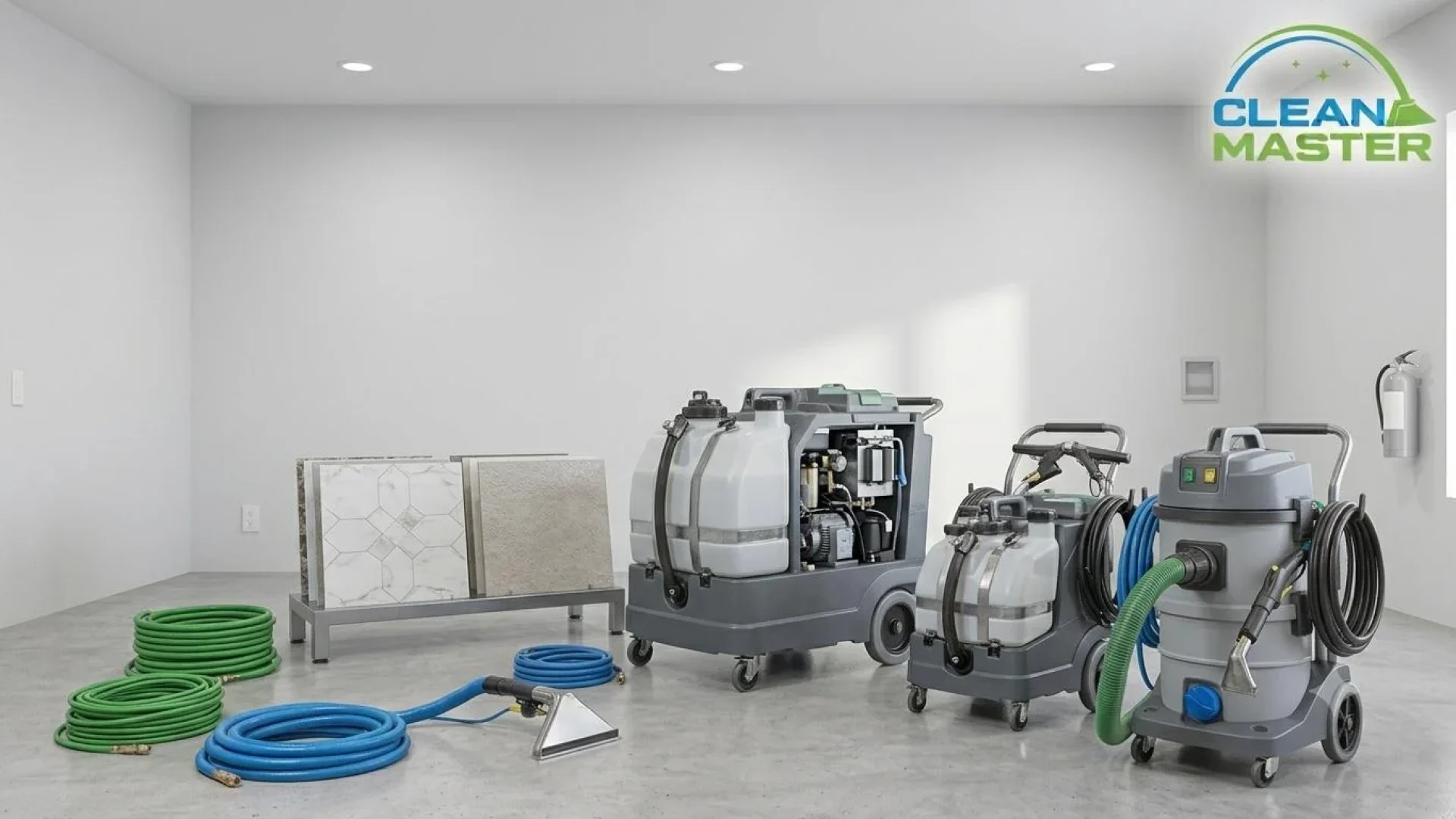
A purpose-made cleaner handles routine maintenance well, but it has a ceiling, particularly for grout lines, where mopping reaches only the surface of a porous material. For deeper cleaning, periodic professional tile and grout cleaning with hot water extraction reaches contamination embedded below what any mop-applied cleaner addresses, regardless of how well-matched the product is to the tile type.
Clean Master serves the entire DFW area with professional tile and grout cleaning, using chemistry matched to your specific tile and grout material, confirmed before any product touches the floor.
Frequently Asked Questions
Can I use the same cleaner on tile and grout?
Generally yes, for ceramic and porcelain, the cleaners discussed above are formulated to be safe for both surfaces. For natural stone with sealed grout, confirm the cleaner is compatible with both the stone and any sealant, since some stone-safe cleaners are still too aggressive for certain grout sealants used frequently.
How do I know what kind of tile I have if I’m not sure?
If your tile has obvious natural variation in pattern and color, no two tiles look identical, it’s likely natural stone, and you should default to stone-safe products until confirmed otherwise. Uniform, consistent patterning across all tiles typically indicates ceramic or porcelain. When genuinely uncertain, test any product in a small hidden area first, or treat the floor as natural stone (the more cautious assumption) until you can confirm.
Is steam cleaning a good alternative to chemical cleaners?
For ceramic and porcelain, yes, steam cleans effectively without any chemical product. For natural stone, check manufacturer guidance first, as heat and moisture can affect certain stone types and sealants differently than mopping does.
The Bottom Line: Match the Cleaner to the Material, Every Time
There’s no universal “best” tile cleaner, only the best cleaner for your specific tile type. Ceramic and porcelain tolerate a fairly wide range of pH-neutral to mildly alkaline products. Natural stone requires strictly neutral, stone-specific chemistry with zero tolerance for acid. Vinyl needs gentler, low-moisture care. And vinegar, bleach, and ammonia are worth avoiding across the board, regardless of tile type.
For cleaning that goes deeper than any mop-applied product can reach, contact Clean Master Carpet Cleaning today for professional tile and grout cleaning across the entire DFW area.