Clean Master Carpet Cleaning
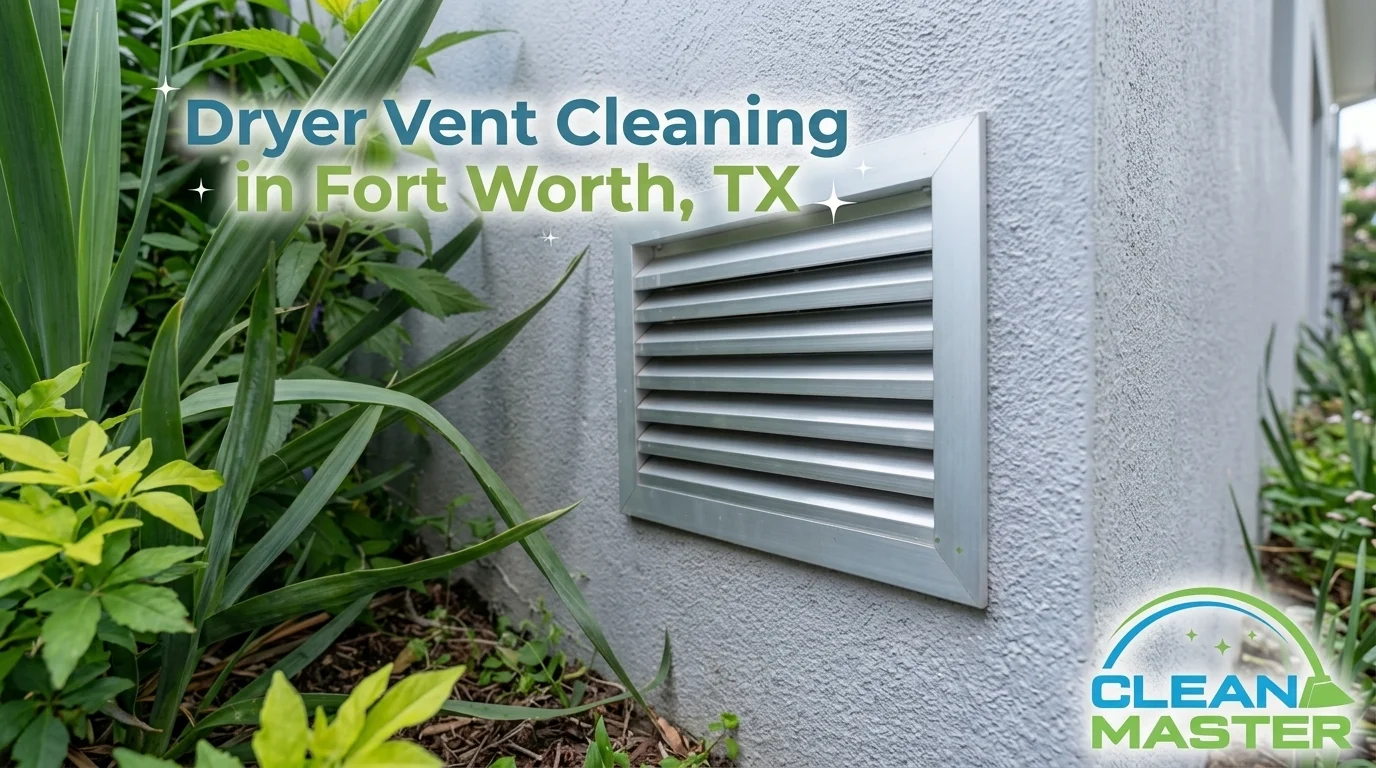
Dryer Vent Cleaning in Fort Worth, TX

Dryer Vent Cleaning in Fort Worth, TX

Most homeowners think about dryer maintenance in terms of cleaning the lint trap after every load, and that’s a great habit to have. But the lint trap only catches a portion of the lint your dryer produces. The rest travels through the vent line, and over time, it builds up inside that line where it’s completely out of sight. Unlike carpet or upholstery, a dryer vent isn’t something you’ll notice getting dirty just by looking at it, which is exactly why it tends to get overlooked until something goes wrong. This guide covers why dryer vent cleaning from Clean Master Carpet Cleaning matters, the warning signs that your vent needs attention, what the cleaning process involves, and how often it should be done for homes across Fort Worth. Who Cleans Dryer Vents In Fort Worth? Clean Master Carpet Cleaning cleans dryer vents in Fort Worth homes. It is a family-owned, IICRC certified company that has served Dallas-Fort Worth for 26 years. Call (817) 253-2867 or request a quote. Why Dryer Vent Cleaning Is About More Than Just Efficiency It’s easy to assume a slow-drying dryer is just an inconvenience, but a clogged dryer vent is actually one of the more overlooked fire risks in a home. Lint is highly flammable, and as it builds up inside the vent line, it restricts airflow and traps heat that would normally escape outside. This buildup is a leading contributor to house fires that start in the laundry area, according to fire safety data tracked by organizations like the National Fire Protection Association. Beyond the safety angle, a clogged vent also means: Over time, these effects compound. A dryer that’s quietly working harder every cycle wears down its internal components faster, which often means costlier repairs or a shorter appliance lifespan than a well-maintained one would have. Signs Your Dryer Vent Needs Cleaning A few signs point pretty clearly to a vent that needs attention: If you’re noticing even one or two of these signs, especially longer drying times combined with excess heat, it’s worth having the vent checked. It’s worth noting that these signs tend to develop gradually, which means many homeowners adjust unconsciously, running an extra cycle here or there, without realizing how much the vent’s condition has changed over time. How Lint Builds Up Inside a Dryer Vent Even with a lint trap cleaned after every load, a portion of lint still escapes into the vent line during each drying cycle. Over time, this lint accumulates along the walls of the vent, gradually narrowing the space available for air to pass through. The longer the vent line, the more bends it has, or the longer it’s gone without cleaning, the more buildup tends to accumulate. Vents with several turns or a long run to the exterior wall are often more prone to significant buildup than a short, straight vent line. Homes with the laundry room located in the interior of the house, rather than along an exterior wall, often have longer, more winding vent runs by necessity. These setups are worth monitoring a bit more closely, since the extra length and bends give lint more surface area to catch and accumulate on with every cycle. How We Clean Dryer Vents in Fort Worth Our dryer vent cleaning is a standalone service, separate from air duct cleaning, since dryer vents are a distinct system with their own specific cleaning needs. Here’s what the process generally involves: Most standard residential dryer vent cleanings are completed in under an hour, though vent lines with more bends or a longer run to the exterior wall can take a bit more time to fully clear. Why the Exterior Vent Cap Matters Too It’s common for homeowners to think of dryer vent cleaning as only an interior job, but the exterior vent cap plays just as important a role. This is the cover on the outside of the house where hot, moist air is supposed to exit freely. Over time, lint can build up around this opening, and in some cases, the flap itself can get stuck or clogged enough that it barely opens, even when the dryer is running at full heat. A vent line can be perfectly clean on the inside and still cause drying problems if the exterior cap is restricted. Because of this, cleaning the exterior vent cap is included as part of our standard service, not treated as a separate add-on. Homeowners sometimes assume drying problems must be coming from inside the wall since that’s the part they can’t see, when in reality a quick look at the exterior cap can sometimes reveal the more obvious culprit, especially in homes with nearby trees or plants that shed debris near the vent opening. Dryer Vent Cleaning Cost in Fort Worth, TX Pricing is generally flat-rate for a standard residential dryer vent cleaning. As a general guide: Service Typical Price Range Standard dryer vent cleaning (interior line and exterior cap) $75 to $150 Longer or more complex vent runs (multiple bends, longer distance) Toward the higher end of that range For an exact number based on your specific setup, the best step is a quick, free quote. Check our current specials as well, since dryer vent cleaning is sometimes eligible for savings when bundled with other home services. How Often Should Dryer Vents Be Cleaned? The right frequency depends on how often the dryer is used and the length and layout of the vent line: Household Situation General Guidance Average household use Once a year Larger families or frequent laundry use Every 6 to 12 months Long or complex vent runs (multiple bends, long distance to exterior) More frequent cleaning may be worth considering Noticing warning signs (long drying times, excess heat) As soon as possible, regardless of last cleaning date If you’re not sure when the vent was last cleaned, or if it’s ever been done since the home was built, that’s generally a good sign it’s overdue. This is especially true

Read more
Tile and Grout Cleaning Fort Worth,TX

Tile Floor Cleaning Services in Fort Worth, TX

Fort Worth is one of the largest cities in Texas, spanning around 350 square miles with everything from century-old homes in the historic core near Fairmount and Ryan Place to brand new construction in the far west and south suburbs. That range means no single tile type or grout condition applies citywide, but one issue shows up consistently in both old and new areas: grout mold and mildew from bathroom moisture.This is based on 26+ years of hands-on tile and grout cleaning across the Dallas–Fort Worth (DFW) metro area, including Fort Worth. Who Cleans Tile And Grout In Fort Worth, TX? Clean Master Carpet Cleaning cleans tile and grout in Fort Worth. The price is $0.75 per square foot plus tax. Clean Master is a family-owned, IICRC certified company with a 5.0 rating on Google from more than 445 reviews. Call (817) 253-2867 or request a quote. Why Moisture Is Fort Worth’s Most Consistent Grout Problem Fort Worth gets 100% of its municipal water from surface sources, a blend of five area lakes, including Lake Worth, which the city owns outright, plus the Trinity River. That supply runs hard, but water hardness isn’t what drives most of the calls we get here. Instead, it’s moisture management in bathrooms, and that challenge looks a little different depending on which part of the city a home sits in. Area Common Moisture Issue Why It Happens Historic core neighborhoods Aging bathroom ventilation Original exhaust fans and vents haven’t kept pace with decades of use Newer far west/south suburbs Larger bathrooms, heavier daily use Bigger primary suites generate more moisture, sometimes outpacing airflow Both Grout mold and mildew along tub and shower lines Porous, unsealed grout traps moisture regardless of home age The top challenge across Fort Worth homes is grout mold and mildew from humidity or bathroom moisture, appearing in the city’s oldest neighborhoods and its newest subdivisions for slightly different underlying reasons. The Tile Situation Across Fort Worth Because Fort Worth spans such a wide range of home ages and neighborhoods, there’s no single dominant tile type the way there is in smaller, more uniform towns. Historic homes near the urban core often have original ceramic tile, while newer suburban construction leans toward porcelain. In both cases, the grout is porous, and that’s where moisture settles in and creates the conditions mold needs to grow. DIY vs. Professional Cleaning: An Honest Breakdown When DIY Cleaning Is Safe and Sufficient What works well for DIY: a diluted bleach solution or hydrogen peroxide based cleaner applied to visible spots, followed by running the exhaust fan or opening a window until the area is fully dry. When You Need a Professional At this point, moisture has generally worked its way into the grout’s pores, past what most DIY products can reach. A Recent Example from Our Fort Worth Service Area A pattern that shows up across the city: a homeowner in one of Fort Worth’s newer far west suburbs had a primary bathroom with a large walk-in shower used daily by the household. Despite a working exhaust fan, mildew kept returning along the shower grout every few weeks, since the fan simply couldn’t keep pace with how much moisture a bigger, more frequently used bathroom generated. Using hot water extraction at high heat with a mold and mildew targeted solution, we cleared the discoloration in a single visit, treating the grout at a depth daily cleaning couldn’t reach. We finished with grout sealing, included on every job, which made the lasting difference here, since sealed grout resists moisture absorption far better than unsealed grout, directly cutting down how often mildew could return. This kind of recurring mildew despite working ventilation is a pattern we see in both Fort Worth’s older and newer neighborhoods, just for different reasons behind the moisture load. What Professional Tile and Grout Cleaning Actually Involves Why Grout Sealing Matters Across Every Fort Worth Neighborhood Whether a home is a century old property near the historic core or a newer build in a far west or south suburb, unsealed grout absorbs moisture the same way over time. Sealing after a deep clean creates a barrier that slows future mold and mildew growth, which matters most in older homes with dated ventilation, but is just as useful in newer homes with larger, heavily used bathrooms. Tile and Grout Cleaning and Indoor Air Quality This connects directly to indoor air quality across Fort Worth’s wide range of housing. Grout mold and mildew don’t just affect appearance, they can contribute to allergens circulating through the home, especially in bathrooms with limited airflow. Since the HVAC system often pulls air from throughout the house, unresolved mold in one bathroom can affect air quality more broadly, whether the ductwork is decades old or brand new.  Pricing for Tile and Grout Cleaning in Fort Worth We price per square foot, so Fort Worth homeowners pay based on actual area cleaned rather than a flat estimate, whether the home is a historic property near downtown or a newer build in the suburbs. Pricing depends on the extent of mold or mildew present and total square footage. Nearby Tile & Grout Cleaning Service Areas Frequently Asked Questions Why does mildew keep coming back even though my bathroom has a fan? An exhaust fan helps, but it may not run long enough or move enough air to fully dry grout after frequent use, especially in larger or heavily used bathrooms. Unsealed grout continues absorbing moisture between uses, allowing mildew to regrow beneath the surface. Does an older Fort Worth home need different treatment than a newer suburban home? Older homes often have weaker or outdated ventilation, while newer homes may simply see more frequent bathroom use in bigger primary suites. Either way, the same hot water extraction and sealing process addresses the underlying moisture issue effectively. Is grout mold a health concern? Persistent mold and mildew can contribute to indoor allergens and affect air quality, especially in poorly ventilated bathrooms.
Read more
Commercial Air Duct Cleaning in Fort Worth, TX

Commercial Air Duct Cleaning in Fort Worth, TX

A commercial HVAC system works harder than most people realize. It’s constantly circulating air through a much larger space than a typical home, often running longer hours to keep offices, retail floors, or waiting rooms comfortable throughout the day. That constant use means commercial duct systems build up dust, debris, and general buildup faster than residential systems, even though it’s just as easy to overlook since it’s all hidden behind walls and ceilings. This guide covers what commercial air duct cleaning from Clean Master Carpet Cleaning involves, why it matters for businesses specifically, and what to expect from a professional service in Fort Worth. Who Cleans Air Ducts In Fort Worth, TX? Clean Master Carpet Cleaning cleans air ducts in Fort Worth homes. The price is $550 plus tax for up to 12 vents. The company is family-owned, IICRC certified and has served Dallas-Fort Worth for 26 years. Call (817) 253-2867 or request a quote. Why Commercial Duct Systems Need Regular Attention Commercial buildings put a different kind of demand on an HVAC system compared to a typical home: Because of these factors, commercial duct systems often need attention more consistently than a typical home system, especially in spaces with high daily foot traffic or specific air quality expectations. A system that runs nearly continuously through Fort Worth’s long summer cooling season, for example, moves significantly more air, and picks up significantly more buildup, than a residential system used a few hours a day. Why Air Duct Cleaning Matters for Businesses Clean air ducts play a bigger role in a commercial space than most people initially assume: Air quality is one of those factors that employees and visitors rarely comment on directly unless it’s noticeably bad, but it quietly shapes how comfortable people feel spending extended time in a space. A stale or dusty air supply can contribute to a general sense that a building feels tired or poorly maintained, even when every other part of the space looks clean. What Types of Businesses Benefit From Commercial Duct Cleaning? Duct cleaning applies broadly across almost any commercial space with a central HVAC system, including offices, retail locations, restaurants, medical and professional facilities, and other buildings with regular foot traffic and daily HVAC use. Every space is a little different in terms of system size and layout, so the right approach depends on the specific building rather than a one-size-fits-all plan. Medical offices and facilities with strict cleanliness expectations often place particular emphasis on air quality, since patients and clients may be more sensitive to musty odors or visible dust than they would be in a typical office setting. Restaurants and food-service adjacent businesses also tend to prioritize duct cleaning, since kitchen exhaust and cooking odors can interact with a poorly maintained duct system in ways that affect the whole building. Our Commercial Air Duct Cleaning Process Here’s a general look at how a commercial duct cleaning visit works: Because commercial spaces vary so much in size, from a small office suite to a much larger facility, the process is adjusted to fit the specific building rather than following a single fixed routine for every job. Larger facilities with multiple HVAC zones or older duct systems may require additional time to fully assess and clean each section, which is part of why an initial walkthrough is a useful first step before scheduling. Scheduling Commercial Duct Cleaning Commercial duct cleaning is generally scheduled during standard business hours. If your business has specific timing needs or concerns about disruption during the visit, it’s worth discussing this when scheduling so the appointment can be planned around your day-to-day operations as much as possible. For businesses with continuous operations, such as certain medical facilities or retail locations that don’t close, working around specific hours or sections of the building can help minimize any disruption to staff or customers during the cleaning process. Recurring Maintenance Plans for Businesses For businesses that want to stay ahead of duct buildup rather than waiting until it becomes a noticeable problem, we offer recurring maintenance plans. Instead of scheduling one-off cleanings whenever an issue comes up, a maintenance plan puts duct cleaning on a regular schedule, which: This tends to be a good fit for businesses with higher foot traffic, longer operating hours, or specific air quality priorities. It also removes the guesswork of trying to determine the right timing for the next cleaning, since it’s already built into the facility’s maintenance calendar alongside other recurring services. Signs Your Commercial Duct System May Need Cleaning A few signs suggest it’s worth having your commercial duct system looked at: If more than one of these signs is present at the same time, it’s usually a strong indicator that the system has accumulated enough buildup to warrant a professional assessment, even if the building otherwise looks and feels clean on the surface. Why Commercial Buildings Accumulate Buildup Faster Than Homes It’s worth understanding why commercial spaces tend to need duct attention on a different timeline than residential properties. A typical home HVAC system serves a relatively small, consistent group of occupants, while a commercial building’s system may be moving air past dozens or hundreds of different people over the course of a single week. Each person moving through the space contributes some amount of dust, skin cells, and outdoor debris tracked in on shoes and clothing, all of which eventually makes its way into the return air and through the ductwork. Commercial kitchens add another layer entirely, since grease-laden air from cooking can travel further into the duct system than many building owners realize, creating buildup that behaves differently than the dry dust typically found in office environments. This is part of why restaurant and food-service HVAC systems often require more specialized attention and more frequent service than a standard office building of similar size. The Cost of Neglecting Commercial Duct Maintenance Beyond the immediate air quality concerns, neglected commercial duct systems can contribute to less obvious costs over time. A
Read more
Tile And Grout Cleaning Midlothian,TX

Tile and Grout Cleaning Services in Midlothian

Midlothian, known locally as “Dallas–Fort Worth (DFW)’s Southern Star,” has grown steadily as families move south of the metro into Ellis County for more space and a quieter pace. That growth has brought a wide range of home ages into the city, and across nearly all of them, the same issue keeps coming up: grout that’s simply gone too long without a deep clean, gradually darkening from routine daily life until it no longer matches the tile around it.This is based on 26+ years of hands-on tile and grout cleaning across the DFW metro area, including Midlothian. Why Midlothian Homes Accumulate Grout Buildup Over Time Midlothian draws its water from Joe Pool Lake under a contract with the Trinity River Authority, treating it at two city-run plants before it reaches homes. That’s a fairly standard, consistent supply, so mineral hardness isn’t usually the main driver of what we see here. The bigger factor is time: how long a home’s grout has gone since its last real deep clean, which varies a lot given how much the city has grown and how many different home ages now exist within it. Factor Common Grout Issue How Fast It Builds Up Established Midlothian homes Deep, embedded discoloration from years without deep cleaning Builds gradually over several years Newer growth-area homes Lighter buildup, often overlooked since tile still looks recent Noticeable within 1-2 years Both Gradual gray or brown tone from everyday use Slower without maintenance, but steady The top challenge in Midlothian homes is years of buildup and neglect, showing up across the city’s mix of established and newer neighborhoods alike. The Tile Type Most Midlothian Homeowners Deal With Porcelain tile is the most common flooring across Midlothian kitchens and bathrooms, reflecting the city’s steady pace of newer home construction. Porcelain holds up well against everyday wear, but the grout lines are still porous, and that’s where dirt, oils, and residue settle in over time, regardless of how durable the tile above it is. DIY vs. Professional Cleaning: An Honest Breakdown When DIY Cleaning Is Safe and Sufficient What works well for DIY: a stiff nylon brush, warm water with mild dish soap, and a microfiber mop for routine maintenance. This keeps early buildup from becoming a bigger problem, especially useful in a newer home trying to stay ahead of it. When You Need a Professional At this stage, the buildup has settled into the grout’s pores, past what household tools can typically reach. A Recent Example from Our Midlothian Service Area A pattern we see often in Midlothian: a homeowner who’d lived in the same house for several years had porcelain tile throughout the kitchen and bathrooms with grout that had gradually gone from light gray to a dull, uneven brown. Routine mopping had kept the tile itself looking fine, but the grout told a different story, one that had built up slowly enough that the homeowner hadn’t noticed the change until a friend pointed it out. Using hot water extraction at high heat with a cleaning solution suited for porcelain tile and grout, we lifted the embedded buildup in a single visit and brought the grout back close to its original color. We finished with grout sealing, included on every job, to help protect against future staining and give the grout a real defense it hadn’t had before. This kind of gradual, easy to miss buildup is one of the most common patterns we see in Midlothian homes. What Professional Tile and Grout Cleaning Actually Involves Why Grout Sealing Matters More in Midlothian Whether a home is an established Midlothian property or a newer build from the city’s recent growth, unsealed grout absorbs dirt and moisture the same way over time. Sealing after a deep clean creates a barrier that slows future buildup, extending the time before the next deep clean is needed regardless of the home’s age. Tile and Grout Cleaning and Indoor Air Quality Grout condition connects to more than appearance. Porous, unsealed grout in bathrooms and kitchens can trap mold and mildew when moisture sits without enough airflow. This can contribute to allergens circulating through a home’s air, particularly relevant where the HVAC system is managing air quality throughout the house. Clean, sealed grout supports better indoor air quality as part of routine home maintenance, alongside professional air duct cleaning. Pricing for Tile and Grout Cleaning in Midlothian We price per square foot, so Midlothian homeowners pay based on actual area cleaned rather than a flat estimate. Pricing depends on current grout condition, extent of buildup, and total square footage. Nearby Tile & Grout Cleaning Service Areas Frequently Asked Questions How often should tile and grout be professionally cleaned in Midlothian, TX? Most Midlothian homes benefit from a professional deep clean every 12 to 18 months. Homes that haven’t been cleaned in several years may need extra attention on the first visit. Can grout that’s gone dark or black actually be restored? In most cases, yes. Even grout that’s darkened significantly over time typically responds well to professional hot water extraction, since the discoloration is usually trapped dirt and residue rather than permanent damage. Is grout sealing necessary after every cleaning? Yes. Sealing after cleaning helps prevent moisture, dirt, and minerals from resettling into the grout, extending the time before another deep clean is needed. Does Midlothian’s water contribute to grout problems? Not significantly. Midlothian’s water, sourced from Joe Pool Lake, is treated locally and runs at a fairly standard hardness level for the region. Most of the grout issues we see trace back to time and routine buildup rather than water quality specifically. What certifications should a tile and grout cleaning company have? Look for IICRC certification, the industry standard for cleaning methods, and NADCA certification if the company also offers air duct or HVAC related services. Clean Master Carpet Cleaning holds both. About Clean Master Carpet Cleaning Clean Master Carpet Cleaning has served the DFW metro area, including Midlothian, for over 26 years. We’re IICRC
Read more
Residential Air Duct Cleaning in Fort Worth, TX

Residential Air Duct Cleaning in Fort Worth, TX: Complete Guide

Air ducts work quietly in the background of a home, moving heated and cooled air through every room, day after day. Because they’re hidden inside walls and ceilings, it’s easy to forget they’re there at all, until dust starts collecting around vents, allergy symptoms seem worse indoors than outdoors, or the air in the house just feels less fresh than it should. Over time, ducts collect dust, debris, and other buildup that circulate through the home every time the HVAC system runs. This guide covers what residential air duct cleaning from Clean Master Carpet Cleaning involves, the signs it’s time to schedule one, and what to expect from a professional cleaning in Fort Worth. Who Cleans Air Ducts In Fort Worth? Clean Master Carpet Cleaning cleans air ducts in Fort Worth homes. The price is $550 plus tax for up to 12 vents. The company is family-owned, has worked across Dallas-Fort Worth for 26 years and holds a 5.0 rating on Google from more than 445 reviews. Call (817) 253-2867 or request a quote. What Builds Up Inside Air Ducts Over Time Air ducts are constantly moving air through a home, and along the way, they pick up more than most people realize: None of this happens overnight. It’s a gradual buildup that occurs over years of normal HVAC operation, which is exactly why duct cleaning isn’t something most homeowners think about until it becomes noticeable. Because the buildup happens slowly and out of sight, many homeowners are surprised at just how much has accumulated by the time they finally have the system inspected. Signs Your Air Ducts May Need Cleaning A few signs suggest it might be time to have your duct system cleaned: None of these signs guarantee duct cleaning is needed on their own, but a combination of a few of them is generally a good reason to have the system checked out. Homes that run the HVAC system heavily during Fort Worth’s long, hot summers and humid stretches also tend to see buildup accumulate a bit faster than homes in milder climates, simply due to how often the system cycles. How Residential Air Duct Cleaning Works We use portable professional-grade equipment designed specifically for reaching into and cleaning the duct system throughout a home. Here’s a general look at the process: The goal is a system that’s noticeably cleaner throughout, not just at the points closest to the main unit. A thorough cleaning pays attention to the full run of ductwork, including longer branches that feed rooms further from the central unit, since these are often the areas that get overlooked with a rushed or incomplete job. What’s Included, and What’s Optional Our standard residential duct cleaning service focuses on the duct system itself. Cleaning the vents, registers, and grilles you actually see in each room is available as a separate, optional add-on, since some homeowners prefer to handle those themselves or only want the duct system addressed. If you’d like the visible vent covers cleaned as part of the same visit, just mention it when scheduling so it can be included. Air Duct Cleaning Cost in Fort Worth, TX Pricing generally depends on the size of the home and number of vents connected to the system. As a general guide: Pricing Structure Details Per-vent pricing Falls in a general range depending on total vent count and system size Flat-rate whole-home cleaning Often available for standard-sized homes, based on square footage and number of duct runs For an accurate number specific to your home’s layout, the best step is a quick, free quote. Check our current specials as well, since duct cleaning is sometimes eligible for savings when scheduled alongside other services. Does Air Duct Cleaning Improve Air Quality? Cleaning the duct system removes built-up dust and debris that would otherwise continue circulating through the home every time the HVAC system runs. For homes with noticeable dust buildup, allergy sensitivities, or pets, this can make a real difference in day-to-day comfort. That said, air duct cleaning is one part of overall indoor air quality, alongside things like regular HVAC filter changes and general household cleaning, rather than a single fix for every air quality concern. Homeowners who combine duct cleaning with routine carpet cleaning often notice the best overall improvement in how fresh the home feels, since dust and allergens that settle into carpet fibers can otherwise get stirred back up and pulled right back into the duct system. How Often Should Air Ducts Be Cleaned? There’s no single fixed schedule that fits every home, but here’s a general guide: Household Situation General Guidance Average home, no major concerns Every 3 to 5 years Homes with pets More frequent cleaning may help with dander buildup Homes with allergy or respiratory sensitivities More frequent cleaning may be worth considering After a renovation or construction project Cleaning soon after is often a good idea, since dust and debris can enter the system during work If you’re not sure where your home falls, a good starting point is simply checking how long it’s been since the last cleaning, if you know it’s ever been done at all. Homes that have recently changed hands are also a good candidate for a first-time inspection, since new homeowners rarely have a clear history of when the ductwork was last serviced. Preparing for an Air Duct Cleaning Appointment There’s not much homeowners need to do to prepare, but a few small things help: Letting the technician know about specific rooms with noticeably worse airflow or dust also helps prioritize where extra attention may be needed during the appointment. Why Duct Cleaning Gets Overlooked So Easily Air ducts occupy a strange place in home maintenance. Unlike a dirty carpet or a stained countertop, they’re completely out of sight, tucked behind walls and ceilings, which means there’s no visual cue reminding a homeowner that attention is due. Most people only think about their ductwork when a specific symptom shows up, like unusually dusty air
Read more
tile and grout cleaning venus,TX

Tile and Grout Cleaning Services in Venus

Venus is one of the fastest-growing small towns in Johnson County, with a mix of older homes near its original railroad-junction roots and new construction filling in as the community expands. Venus doesn’t run its own water treatment either, it contracts with the City of Midlothian for supply, so water quality here tracks closely with what Midlothian delivers. Across both older and newer Venus homes, the issue we see most often isn’t the water itself, it’s grout mold and mildew from bathroom moisture. This is based on 26+ years of hands-on tile and grout cleaning across the Dallas–Fort Worth (DFW) metro area, including Venus. Why Moisture Is Venus’s Top Grout Concern Since Venus purchases its water through Midlothian, which draws from Joe Pool Lake, the supply runs at a fairly standard hardness for the region. That’s not usually what drives the calls we get in Venus. Instead, it’s how well bathrooms handle everyday moisture, whether that’s an older home with original ventilation or a newer build where a growing household is putting more daily use on the plumbing. Home Type Common Moisture Issue Why It Happens Older Venus homes Aging bathroom ventilation Original exhaust fans haven’t kept pace with decades of use Newer growth-area homes Frequent use from growing families Moisture generated faster than airflow can clear it Both Grout mold and mildew along tub and shower lines Porous, unsealed grout traps moisture regardless of home age The top challenge in Venus homes is grout mold and mildew from humidity or bathroom moisture, appearing in both the town’s small-town older homes and its newer construction, just for slightly different underlying reasons. The Tile Type Most Venus Homeowners Deal With Porcelain tile is the most common flooring across Venus homes, found in both established properties and the newer construction driving the town’s growth. Porcelain holds up well structurally, but the grout lines remain porous, and that’s exactly where moisture settles in and creates the conditions mold and mildew need to take hold. DIY vs. Professional Cleaning: An Honest Breakdown When DIY Cleaning Is Safe and Sufficient What works well for DIY: a diluted bleach solution or hydrogen peroxide based cleaner applied to visible spots, followed by running the exhaust fan or opening a window until the area is fully dry. When You Need a Professional At this point, moisture has typically worked its way into the grout’s pores, past what most DIY products can reach. A Recent Example from Our Venus Service Area A pattern that fits Venus well: a homeowner in one of the town’s newer growth-area homes had a primary bathroom used daily by a growing family. Despite a working exhaust fan, mildew kept returning along the shower grout every few weeks, since the fan simply couldn’t keep pace with how much moisture the household was generating. Using hot water extraction at high heat with a mold and mildew targeted solution, we cleared the discoloration in a single visit, treating the grout at a depth daily cleaning couldn’t reach. We finished with grout sealing, included on every job, which made the lasting difference here, since sealed grout resists moisture absorption far better than unsealed grout, directly cutting down how often mildew could return. This kind of recurring mildew despite working ventilation is a pattern we see in both Venus’s older and newer homes. What Professional Tile and Grout Cleaning Actually Involves Why Grout Sealing Matters More in Venus Whether a home is one of Venus’s original small-town properties or a newer build from the town’s recent growth, unsealed grout absorbs moisture the same way over time. Sealing after a deep clean creates a barrier that slows future mold and mildew growth, which matters most in older homes with dated ventilation, but is just as useful in newer homes with busier daily routines. Tile and Grout Cleaning and Indoor Air Quality This connects directly to indoor air quality in Venus homes. Grout mold and mildew don’t just affect appearance, they can contribute to allergens circulating through the home, especially in bathrooms with limited airflow. Since the HVAC system often pulls air from throughout the house, unresolved mold in one bathroom can affect air quality more broadly, whether the home is an older property or a recent build. Addressing grout moisture at the source supports cleaner air throughout the home. Pricing for Tile and Grout Cleaning in Venus We price per square foot, so Venus homeowners pay based on actual area cleaned rather than a flat estimate. Pricing depends on the extent of mold or mildew present, since heavier growth requires more thorough treatment, along with total square footage. Nearby Tile & Grout Cleaning Service Areas Frequently Asked Questions Why does mildew keep coming back even though my bathroom has a fan? An exhaust fan helps, but it may not run long enough or move enough air to fully dry grout after frequent use. Unsealed grout continues absorbing moisture between uses, allowing mildew to regrow beneath the surface. Does an older Venus home need different treatment than a newer one? Older homes often have weaker or outdated ventilation, while newer homes may simply see more frequent bathroom use from growing households. Either way, the same hot water extraction and sealing process addresses the underlying moisture issue effectively. Is grout mold a health concern? Persistent mold and mildew can contribute to indoor allergens and affect air quality, especially in poorly ventilated bathrooms. Addressing it early, through both cleaning and sealing, helps limit that impact. How often should tile and grout be professionally cleaned in Venus, TX? Most Venus homes benefit from a professional deep clean every 12 to 18 months, though bathrooms with frequent use or limited ventilation may need attention sooner. What certifications should a tile and grout cleaning company have? Look for IICRC certification, the industry standard for cleaning methods, and NADCA certification if the company also offers air duct or HVAC related services. Clean Master Carpet Cleaning holds both. About Clean Master Carpet Cleaning Clean Master Carpet Cleaning
Read more
Couch Cleaning in Fort Worth, TX

Couch Cleaning in Fort Worth, TX

A couch gets more daily contact than almost any other piece of furniture in the house. It’s where people sit to watch TV, where kids climb up after playing outside, and where pets curl up for a nap. All of that contact adds up, and over time, even a couch that’s wiped down regularly starts to show dullness, stains, or a slightly musty smell that vacuuming alone can’t fix. This guide covers what’s involved in professional couch cleaning from Clean Master Carpet Cleaning, how different fabric types are handled, what it typically costs, and how to keep it looking good longer between cleanings for homes across Fort Worth. Who Cleans Couches In Fort Worth? Clean Master Carpet Cleaning cleans couches, sectionals and love seats in Fort Worth. A sofa and love seat together are $195 plus tax. Clean Master is family-owned and holds a 5.0 rating on Google from more than 445 reviews. Call (817) 253-2867 or request a quote. Why Couches Need More Than Surface Cleaning Upholstery fabric works a lot like carpet in how it holds onto dirt, oils, and odors. A couch picks up: Wiping down the surface or vacuuming picks up loose dust and crumbs, but it doesn’t reach the oils and buildup that settle deeper into the fabric weave. That’s the part that eventually makes a couch look tired even when it’s kept relatively clean day to day. This buildup happens gradually enough that most people don’t notice how much has changed until they compare the seat cushions to the back of the couch or an armrest that gets less direct contact. Fabric, Leather, and Microfiber: Why the Cleaning Method Matters Not every couch can be cleaned the same way. The right approach depends heavily on what it’s actually made of: Material Cleaning Considerations Fabric upholstery Can generally handle steam cleaning, though some woven or delicate fabrics do better with low-moisture methods Leather Needs a different approach entirely, using leather-safe products rather than standard fabric cleaning solutions Microfiber Sensitive to certain cleaning solutions and water levels; using the wrong method can cause watermarking or stiffness This is exactly why testing the fabric first matters. Before starting any cleaning, we check a small, inconspicuous area to see how the material responds, which helps confirm the safest and most effective method for that specific piece. Skipping this step is one of the most common reasons DIY upholstery cleaning goes wrong, since a method that works perfectly on one fabric can leave watermarks, stiffness, or even discoloration on another. Steam Cleaning vs. Low-Moisture Cleaning for Upholstery Similar to carpet, couches can be cleaned using either steam cleaning or a low-moisture approach, depending on the fabric. Steam Cleaning Steam cleaning uses hot water and cleaning solution to deep clean fabric fibers, followed by extraction. This works well for: Low-Moisture Cleaning Low-moisture cleaning uses far less water, which makes it a better fit for: We choose the method based on what the fabric test shows, rather than defaulting to one approach for every piece of furniture. This same principle applies across our broader upholstery cleaning services, where fabric-specific testing always comes before any cleaning begins. Our Couch Cleaning Process Here’s a general look at how a couch cleaning appointment goes: Most appointments are completed in a single visit, and the couch can typically be moved back to its normal spot in the room right away, even while it’s still drying, as long as it isn’t sat on during that window. Common Couch Stains and How They’re Treated Different types of stains respond differently, and part of a thorough cleaning is treating problem areas specifically rather than just cleaning the whole piece the same way throughout: Armrests in particular tend to show the most visible wear over time, since they get consistent, direct contact with skin and clothing in a way that the back cushions typically don’t. Couch Cleaning Cost in Fort Worth, TX Pricing depends on the size of the couch, fabric type, and level of soiling. As a general guide: Service Typical Price Range Standard couch cleaning (two to three seat) $75 to $125 Larger couches or sectionals $125 to $200 or more Heavily soiled or stained pieces Slightly higher due to additional pre-treatment needed Leather cleaning Often priced separately For an exact number based on your specific couch, the best step is a quick, free quote. Be sure to check our current specials as well, especially if you’re having multiple pieces of furniture cleaned in the same visit. How Long Does a Couch Take to Dry After Cleaning? Drying time depends on the method used and the fabric type: Method Typical Drying Time Steam cleaning Several hours Low-moisture cleaning Roughly one to two hours Keeping the couch clear of use during this window helps the fabric dry evenly and prevents new dirt from being pressed back into damp fibers. If the room has good airflow, opening a window or running a fan nearby can help speed up drying time slightly, particularly after a steam cleaning appointment. How Often Should a Couch Be Professionally Cleaned? This depends a lot on how the furniture gets used day to day: Household Situation Recommended Frequency Light use, no pets Once a year Regular daily use Every 6-12 months Homes with pets Every 3-6 months Homes with kids or frequent guests Every 3-6 months If the fabric looks visibly duller than it used to, or you notice a lingering smell even after airing the room out, it’s usually a sign it’s due for a clean. Comparing the seat cushions to the armrests or back of the couch, areas that see less direct contact, is often the easiest way to spot the difference without needing a professional opinion first. Keeping Your Couch Clean Between Professional Visits A few simple habits help extend the time between deeper cleanings: What Sets Professional Couch Cleaning Apart From DIY It’s worth understanding why professional cleaning tends to outperform DIY methods, beyond just convenience. Store-bought upholstery cleaners and
Read more
Pet Odor Removal in Fort Worth, TX

Pet Odor Removal in Fort Worth, TX

Not all pet odor comes from an accident. A lot of it builds up gradually just from having a dog or cat in the house day after day, dander, oils from their coat, general shedding, and the simple fact that pets spend a lot of time lying directly on the carpet. You might not notice it yourself since you’re around it constantly, but guests often do, and it’s a different problem than a specific stain that needs spot treatment. This guide covers why everyday pet odor builds up in carpet even without any accidents, and how professional cleaning from Clean Master Carpet Cleaning addresses it for homes across Fort Worth. Who Removes Pet Odor From Carpet In Fort Worth? Clean Master Carpet Cleaning removes pet odor and pet stains from carpet in Fort Worth. The pet treatment is $45 per room plus tax and is added to a carpet cleaning. Clean Master is a family-owned, IICRC certified company with a 5.0 rating on Google. Call (817) 253-2867 or request a quote. Why Carpet Holds Onto Pet Odor Over Time Even a well-behaved pet with zero accidents contributes to carpet odor simply through normal daily life: None of this requires a specific incident. It’s simply the cumulative effect of a pet living in the home, and it builds up gradually enough that it’s easy to become used to the smell without noticing it’s there. This gradual buildup is fundamentally different from the kind of sudden, obvious mess a spill or accident creates. It happens in the background of everyday life, a little bit added every time a pet curls up in their favorite spot, shakes off after coming inside, or simply walks across the room. Over months and years, this steady, low-level contribution adds up to something noticeable, even though no single day would ever have seemed like the day the carpet “got dirty.” Why This Type of Odor Is Different From a Stain-Related Problem A pet accident creates a concentrated, localized odor source that needs specific spot treatment. Everyday pet odor is spread more broadly across the carpet, wherever your pet spends the most time, rather than being isolated to one area. This means the solution looks a bit different too. Rather than targeting one specific spot, addressing general pet odor usually calls for a more thorough, whole-area cleaning approach that reaches the broader accumulation of dander and residue throughout the carpet, not just a single problem zone. It’s worth noting that a home can have both issues at once. A household might have one or two specific accident spots that need targeted treatment, layered on top of a broader, ambient pet smell that’s built up across the whole carpeted area over time. Recognizing this distinction matters, since treating only the visible stain while ignoring the general buildup often leaves the underlying “pet house” smell largely unresolved, even after the specific spot looks and smells fine. Why You Might Not Notice It Yourself This is a genuinely common experience, and it’s not about anyone being unobservant. People who live in a space full-time naturally become accustomed to consistent background smells, a phenomenon sometimes called nose blindness. A smell that’s been building gradually over months or years often becomes essentially invisible to the people who live with it every day, while it’s immediately noticeable to a visitor walking in from outside. If you’ve ever had a guest comment on a “dog smell” you genuinely couldn’t detect yourself, this is exactly why. One practical way to test for this yourself is to step outside for ten or fifteen minutes, get some fresh air, and then walk back into the house with a deliberately fresh nose. Many homeowners are surprised at what they notice in that first moment back inside, compared to how the same space smells after being in it continuously. Another option is asking a friend or family member who visits infrequently for an honest, judgment-free opinion, since they’re in a much better position to notice a smell that’s become invisible to you. How Professional Cleaning Addresses Ambient Pet Odor Whole-Area Treatment, Not Just Spot Cleaning Since general pet odor is spread across areas your pet frequents rather than concentrated in one spot, a full carpet cleaning that treats the broader area tends to be more effective than isolated spot treatment for this specific problem. Deep Cleaning Reaches Below the Surface Regular vacuuming picks up loose fur and surface debris, but it doesn’t reach the dander and oils that have settled deeper into the carpet fibers over time. Professional cleaning equipment reaches further into the pile, addressing buildup that daily vacuuming simply can’t access. Professional-Strength Cleaning Solutions Our cleaning process uses solutions formulated to lift the kind of residue that builds up from regular pet contact with carpet, not just visible dirt, which is part of why a professional deep clean tends to make a more noticeable difference than typical at-home cleaning products. Why Heat and Extraction Matter for This Specific Problem Ambient pet odor is largely made up of oils and organic residue rather than a single concentrated spill, which means it responds well to methods that combine heat with strong extraction. Hot water extraction, in particular, helps loosen oils that have bonded to carpet fibers over time and then pulls that loosened residue back out, rather than simply spreading it around the way a lighter surface clean might.  This is part of why a genuine deep clean tends to produce a more lasting improvement in ambient odor than a quick refresh with a home carpet cleaner or a scented carpet powder, both of which primarily address the surface rather than what’s settled deeper into the pile. Signs Your Carpet Has Ambient Pet Odor Buildup, Even Without Accidents A few signs suggest this kind of gradual buildup, separate from any specific stain: If several of these apply at once, it’s a fairly reliable sign that the issue is general buildup rather than something tied to a single incident, and
Read more
Tile Cleaning in Kennedale,TX

Tile and Grout Cleaning Services in Kennedale

Kennedale doesn’t run its own water utility. The City of Arlington actually operates and maintains Kennedale’s municipal water system, which covers most of the city. But on the eastern and southern edges of town, where larger acreage properties are more common, many homes still rely on private wells instead. That split is exactly why hard water stains and mineral scale shows up more severely in some Kennedale homes than others, depending on which side of that line a property falls on.This is based on 26+ years of hands-on tile and grout cleaning across the Dallas–Fort Worth (DFW) metro area, including Kennedale. Why Water Source Varies So Much Across Kennedale Most of Kennedale receives treated municipal water through Arlington’s system, which runs moderately hard, consistent with the rest of Tarrant County. But properties on private wells, more common on Kennedale’s rural fringes, draw directly from local groundwater that tends to carry higher calcium and magnesium content before any treatment. That difference shows up clearly in how fast tile and grout develop scale. Water Source Common Grout Issue How Fast It Builds Up Municipal (via Arlington) Gradual mineral haze, moderate hardness Slower, typically 1-2 years Private well (rural/edge properties) Chalky white scale, cloudy tile film Faster, often within 6-12 months Both General buildup layered on top of mineral scale Compounds over time without deep cleaning The top challenge in Kennedale homes is hard water stains and mineral scale, and it’s noticeably more severe on the well water properties along the city’s eastern and southern edges compared to homes on the municipal system closer to the center of town. The Tile Type Most Kennedale Homeowners Deal With Porcelain tile is the most common flooring we see in Kennedale kitchens and bathrooms, holding up well structurally across both municipal and well water homes. Porcelain resists general wear, but it offers no protection against mineral scale, which settles into the grout lines regardless of how durable the tile itself is or where the water comes from. DIY vs. Professional Cleaning: An Honest Breakdown When DIY Cleaning Is Safe and Sufficient What works well for DIY: a mild, non-acidic tile cleaner and a soft brush, plus more frequent wipe-downs of wet areas if you’re on a private well, since the mineral load tends to be higher than municipal supply. When You Need a Professional At this point, the mineral deposits have typically bonded to the grout in a way that needs professional equipment to fully remove. A Recent Example from Our Kennedale Service Area A pattern that fits Kennedale’s split water situation well: a homeowner on a larger acreage property on the city’s edge, served by a private well, had porcelain tile throughout the kitchen and bathrooms that developed a persistent chalky white film within about a year of installation, much faster than a neighbor closer to town on municipal water experienced with similar tile. Using hot water extraction at high heat with a mineral-dissolving solution, we removed the buildup in a single visit and restored the tile and grout to a smooth, even finish. We finished with grout sealing, included on every job, which is especially valuable for well water properties like this one, since it significantly slows how fast new mineral deposits can settle back in. This kind of faster buildup on well water compared to municipal supply is a pattern we see consistently across Kennedale’s edge properties. What Professional Tile and Grout Cleaning Actually Involves Why Grout Sealing Matters More on Kennedale’s Well-Water Properties Since well water on Kennedale’s rural edges tends to carry a higher mineral load than the municipal supply through Arlington, sealed grout offers more meaningful protection there. Sealing significantly slows down how quickly new scale can form, which matters most for homeowners who don’t have the option of switching to treated municipal water. Tile and Grout Cleaning and Indoor Air Quality Beyond mineral scale, unsealed grout in bathrooms can trap mold and mildew when moisture sits without enough airflow, an issue that applies to both municipal and well water Kennedale homes. This can contribute to allergens circulating through a home’s air, particularly relevant on larger acreage properties where the HVAC system may be managing air quality across more square footage. Addressing both mineral buildup and moisture supports better indoor air quality regardless of water source, alongside routine air duct cleaning. Pricing for Tile and Grout Cleaning in Kennedale We price per square foot, so Kennedale homeowners pay based on actual area cleaned rather than a flat estimate. Pricing depends on the severity of mineral buildup, which tends to run higher on well water properties, along with total square footage. Nearby Tile & Grout Cleaning Service Areas Frequently Asked Questions Why does my well water leave more scale than my neighbor’s municipal water? Private wells draw untreated groundwater directly, which typically carries higher mineral content than the treated municipal supply Kennedale receives through Arlington’s water system. That difference leads to faster scale buildup on well-water properties. How do I know if my Kennedale property is on well water or municipal water? Properties closer to the center of town are typically on Arlington-supplied municipal water, while larger acreage properties on the eastern and southern edges are more likely to be on private wells. If you’re unsure, your closing documents or a quick call to the city can confirm it. Can heavy mineral scale be fully removed from porcelain tile? In most cases, yes. Professional hot water extraction with a mineral-dissolving solution can break down scale that store bought cleaners often can’t fully lift, especially after buildup has had time to set in. How often should tile and grout be professionally cleaned in Kennedale, TX? Municipal water homes typically do well with a deep clean every 12 to 18 months. Well water properties often benefit from cleaning closer to the 12 month mark given the faster mineral buildup. What certifications should a tile and grout cleaning company have? Look for IICRC certification, the industry standard for cleaning methods, and NADCA certification
Read more
Can Tile Be Cleaned After Sewage Contamination?

Can Tile Be Cleaned After Sewage Contamination?

Yes, tile can often be cleaned and safely reused after sewage contamination, but this isn’t a situation where a regular mop-and-disinfectant approach is enough. Sewage carries real health risks that go beyond typical dirt or stains, and treating it like an ordinary mess is one of the more dangerous mistakes people make after a backup or overflow. Before anything gets scrubbed, there are some important safety steps that need to happen first. This guide covers why sewage contamination is different from other cleaning situations, what needs to happen before tile is safe to clean, and when the tile itself, versus the surrounding materials, can realistically be saved. Why Sewage Contamination Is a Different Situation Entirely Sewage water falls into what the water damage restoration industry calls Category 3 water, sometimes referred to as “black water.” This category includes water contaminated with bacteria, viruses, parasites, and other pathogens that pose genuine health risks on contact. This is a meaningfully different situation than a clean water leak or an everyday spill, and it changes how the cleanup needs to be approached from the very first step. Health risks associated with sewage exposure include: Because of these risks, sewage cleanup calls for a fundamentally more cautious approach than typical tile cleaning, starting with how you protect yourself before you even begin assessing the damage. Before Anything Else: Safety Precautions If you’re dealing with sewage contamination, a few precautions matter before any cleaning begins: What Needs to Happen Before Tile Can Be Cleaned Step 1: Remove Standing Water and Contaminated Debris Any standing sewage water needs to be removed first, along with any solid waste or debris. This typically requires wet-vacuum equipment specifically suited for contaminated water, not a standard household vacuum. Step 2: Assess What’s Salvageable Tile itself, being a hard, non-porous surface (assuming it’s sealed and in good condition), is one of the more salvageable materials in a sewage situation. This is different from porous materials like carpet, carpet padding, and often drywall, which typically cannot be adequately decontaminated and need to be removed and replaced. Grout, being porous, sits somewhere in between and needs careful evaluation, since it can absorb contamination more deeply than the tile surface itself. Step 3: Disinfect, Don’t Just Clean This is the step that separates safe sewage cleanup from a regular deep clean. The tile surface needs to be disinfected using an EPA-registered disinfectant specifically effective against the pathogens found in sewage, not just a general all-purpose cleaner. This typically involves: Step 4: Address the Grout Separately Because grout is porous, it requires particular attention. Sewage contamination that’s reached into grout can be harder to fully decontaminate than the tile surface itself, and in cases of heavy or prolonged exposure, grout may need to be removed and replaced rather than treated, depending on how deeply contamination has penetrated. Step 5: Dry the Area Completely Thorough drying is essential, both to prevent mold growth in the aftermath and because dampness can allow any remaining contamination to persist longer than it would on a fully dry surface. This often involves industrial drying equipment, air movers, and dehumidifiers, particularly for larger affected areas. Step 6: Verify Before Returning to Normal Use For any significant sewage contamination, verifying that the area is genuinely safe, sometimes through professional assessment, matters before resuming normal use of the space, especially if young children, elderly individuals, or anyone with a compromised immune system will be using it. When Tile Can Be Saved vs. When It Can’t Situation Likely Outcome Minor, quickly addressed sewage exposure on sealed, undamaged tile Tile can often be properly disinfected and reused Prolonged sewage exposure with standing contaminated water Tile may be salvageable, but grout often needs closer evaluation or replacement Cracked, chipped, or unsealed tile exposed to sewage Higher risk that contamination has penetrated beyond what disinfection can fully address Grout with significant contamination Often needs to be removed and replaced rather than treated, depending on severity Surrounding porous materials (carpet, drywall, insulation) Frequently cannot be adequately decontaminated and need replacement Why This Isn’t Always a DIY Job Given the genuine health risks involved, sewage cleanup, particularly anything beyond a very minor, quickly contained situation, is generally best handled by a certified water damage or biohazard remediation professional. This isn’t about the difficulty of the physical cleaning task, it’s about ensuring the disinfection process is thorough enough to actually address the health risk, not just the visible mess. Professional remediation companies follow established protocols specifically designed for Category 3 water contamination, including proper testing to confirm an area is genuinely safe before it’s returned to normal use. For situations involving significant sewage backup, contamination that’s affected a large area, or any uncertainty about how thoroughly the space has been decontaminated, professional assessment is the safer path, both for your health and for making an accurate determination about what can be saved versus what needs to be replaced. After Proper Decontamination: Restoring the Tile’s Appearance Once an area has been properly decontaminated by a qualified remediation service, tile floors often benefit from a thorough deep cleaning to restore their appearance and address any remaining residue or discoloration from the incident. This is a different step than the disinfection process itself. It’s about bringing the tile and grout back to a clean, presentable condition once the health and safety concerns have already been properly addressed. This is where a service like our tile and grout cleaning comes in, restoring the look of the space after remediation, not as a substitute for it. Frequently Asked Questions Is it safe to clean tile myself after a sewage backup? For minor, quickly contained situations, some cleanup may be manageable with proper protective equipment and disinfection. For anything more significant, professional remediation is strongly recommended given the genuine health risks involved with Category 3 water contamination. Can grout be saved after sewage exposure, or does it always need to be replaced? It depends on the extent and duration of the contamination. Because grout is
Read more