
can you rent a steam cleaner for a tile floor

Can You Rent a Steam Cleaner for Tile Floors?

Yes, steam cleaners are widely available to rent, and it’s a genuinely reasonable option if you want to deep clean tile floors without buying equipment you might only use occasionally. Renting gives you access to a more powerful machine than most people keep at home, without the upfront cost of purchasing one outright. This guide covers where to rent a steam cleaner, what to expect from the process, typical costs, and how renting compares to hiring a professional for tile and grout cleaning. Where to Rent a Steam Cleaner for Tile Floors A few common places typically offer steam cleaner rentals: Availability and machine quality vary quite a bit between these options, so it’s worth calling ahead to confirm what specific models are in stock and whether they’re suited to tile and grout rather than carpet. What to Expect When Renting a Steam Cleaner Types of Machines Available to Rent Rental steam cleaners generally fall into a couple of categories: Type What It’s Good For Handheld steam cleaners Smaller jobs, spot cleaning, tighter areas like showers Upright or canister steam cleaners Larger floor areas, more consistent coverage across a room Commercial-grade rental units Higher steam output, closer to what a professional service would use The type available for rent depends heavily on where you’re renting from. Home improvement stores and general equipment rental companies are more likely to carry higher-output, commercial-style units, while smaller retail rental kiosks tend to offer more basic consumer-level machines. Typical Rental Costs Rental pricing varies by location and machine type, but as a general guide: Many rental locations charge either a flat daily rate or an hourly rate with a minimum charge, so it’s worth asking about both options if you’re only planning a shorter cleaning session. What to Ask Before Renting A few questions are worth asking when you call or visit a rental location: Renting a Steam Cleaner vs. Hiring a Professional Renting equipment and hiring a professional cleaning service solve the same basic problem, a need for deeper tile and grout cleaning, but they come with different tradeoffs worth weighing. Renting a Steam Cleaner Hiring a Professional Upfront cost Generally lower for a single cleaning session Typically a higher one-time cost, but includes labor and expertise Equipment power Varies widely, often lower than professional-grade tools Consistently higher-powered, purpose-built equipment Your time and effort You do the work yourself, including transport and setup Professional handles the entire process Learning curve Some trial and error with technique and machine settings No learning curve, technician already knows the equipment Best for Smaller areas, lighter buildup, one-time touch-ups Larger areas, heavily soiled or long-neglected grout, consistent results Risk of uneven results Higher, especially on a first attempt Lower, due to experience and equipment consistency When Renting Makes Sense Renting a steam cleaner is a reasonable choice if: When Hiring a Professional Makes More Sense A professional service tends to be the better option if: Tips for Getting Good Results From a Rental Steam Cleaner If you do decide to rent, a few tips help you get the most out of the machine: A Practical Way to Think About the Decision If cost is the main driver and you’re dealing with a smaller area or lighter buildup, renting a steam cleaner is a reasonable, budget-friendly option. If the area is larger, the grout has been neglected for years, or you’ve already tried DIY methods without getting the result you wanted, the gap between rental-grade equipment and professional tools tends to be significant enough that hiring a professional ends up being the more efficient and cost-effective choice overall, especially once you factor in your own time and effort into the equation. Frequently Asked Questions Where can I rent a steam cleaner for tile floors? Home improvement stores, local equipment rental companies, and some grocery store rental kiosks are common places to find steam cleaner rentals, with availability and machine type varying by location. How much does it cost to rent a steam cleaner? Costs vary by machine type and rental duration, with basic consumer-grade units typically costing less than commercial-grade rental equipment. Is a rental steam cleaner as powerful as professional equipment? Generally no. Professional-grade equipment typically produces higher steam output and pressure than most rental units, which makes a bigger difference on heavily soiled or long-neglected grout. Should I rent a steam cleaner or hire a professional? This depends on the size of the area and how much buildup you’re dealing with. Renting works well for smaller areas with moderate buildup, while professional service tends to be the better choice for larger areas or grout that’s been neglected for a long time. Do rental steam cleaners come with cleaning solution? This varies by rental location, so it’s worth asking directly whether cleaning solution is included or if you need to bring your own. What should I check before renting a steam cleaner for tile? Confirm the machine is actually suited for tile and grout rather than primarily built for carpet, and ask about included attachments, solution, and any deposit or damage policy. Final Thoughts Renting a steam cleaner for tile floors is a practical, budget-friendly option, especially for smaller areas with everyday buildup rather than years of neglected grime. The tradeoff comes down to equipment power and your own time: rental units, particularly the more basic consumer-grade machines, generally can’t match the steam output of professional equipment, and using them effectively takes some trial and error with technique. For a quick refresh on a manageable area, renting is a solid choice. For grout that’s been building up for years, larger areas, or situations where previous DIY attempts haven’t gotten the results you wanted, the gap in equipment power and expertise usually makes hiring a professional the more efficient path to a genuinely clean result. If that sounds like your situation, request a free quote and we’ll help you figure out the right approach for your tile and grout.
Read more
can you use a bissell carpet cleaner on tile floors

Can You Use a Bissell Carpet Cleaner on Tile Floors?

If you own a Bissell carpet cleaner, whether it’s a Bissell ProHeat, Little Green, or a similar model, it’s a natural thought to want to get more use out of it by running it over the tile floors too. The honest answer is that Bissell carpet cleaners are built specifically for carpet fibers, and using one on tile isn’t something the machine is actually designed to do well, even though it may seem harmless at first. This guide covers how Bissell carpet cleaners work, why they’re not a good match for tile and grout, what we’ve seen go wrong when people try it anyway, and which Bissell machines are actually built for hard floors instead. If your tile and grout need a proper deep clean, our tile and grout cleaning service is also worth considering. How Bissell Carpet Cleaners Are Designed to Work Bissell’s carpet cleaning machines, across most of their popular models, follow a similar core process: This entire design is built around carpet’s structure. Carpet fibers are thick and can temporarily hold moisture during the cleaning cycle, and the machine’s suction is calibrated to pull that moisture back out of a soft, absorbent surface. Tile and the grout between it are a fundamentally different kind of surface, and that mismatch is where problems start. Why Tile and Grout Don’t Respond the Same Way as Carpet Carpet Tile and Grout Surface type Soft, absorbent fibers Hard, flat tile with recessed, porous grout lines How moisture behaves Temporarily held in fibers, then extracted Can pool in grout lines rather than being pulled back out What the brush roll is for Agitating fibers to loosen dirt Not needed the same way on a flat surface Drying expectations Designed to take some time to dry Should dry quickly to avoid moisture sitting in grout Bissell carpet cleaners’ suction paths and brush heads are engineered around carpet’s texture and depth. On a flat tile surface, that same suction doesn’t have the same grip on moisture, particularly once it settles into lower grout lines, which is a very different shape than what the machine’s extraction system was built to handle. What Can Go Wrong Using a Bissell Carpet Cleaner on Tile Water Pooling in Grout Lines Because the suction path on a carpet cleaner is designed for pulling moisture up out of fiber depth, not out of recessed grout lines, water and cleaning solution can end up sitting in the grout rather than being fully extracted. This is one of the more common issues we’ve seen when carpet cleaning machines get used on tile, since the moisture simply doesn’t have the same extraction path it would in carpet. Mold and Mildew Risk in Grout Standing moisture left in porous grout creates the right conditions for mold and mildew to start developing underneath the surface, especially in bathrooms or other rooms without great airflow. In jobs we’ve come across where a carpet cleaner was used on tile beforehand, this is one of the more frequent underlying issues we end up addressing, since the grout had been holding onto moisture longer than it should have. Cleaning Solution Residue Bissell’s carpet cleaning solutions are formulated specifically for fabric fibers. Used on tile, these solutions don’t always rinse away cleanly from a hard, non-porous surface the same way, which can leave a filmy residue or streaking behind once the floor dries. Uneven Results Across the Floor Since the machine’s brush head and suction path are shaped for carpet, coverage on a flat tile floor tends to be inconsistent. Some areas may end up over-wetted while others get barely touched, especially compared to the more even result you’d get from equipment actually designed for hard flooring. Potential Wear on Certain Tile Finishes Depending on the specific Bissell model, some brush heads include rotating or scrubbing action intended to work carpet fibers loose. On more delicate glazed tile finishes, this kind of repeated scrubbing action carries some risk of dulling the surface over time, though this varies by tile type and how frequently it’s used. What We’ve Seen on Real Jobs In our own work across Arlington homes, we regularly come across cases where a carpet cleaning machine, including popular home models like Bissell’s, was used on tile floors as a quick fix. The most common pattern we see is grout that’s stayed noticeably damp or developed a musty smell in the days following, along with occasional streaky residue left on the tile surface itself. It’s rarely a dramatic, obvious failure right away, which is part of why the practice continues, but the underlying moisture and residue issues tend to show up shortly after. These cases often follow a similar pattern: a homeowner notices the tile looks temporarily cleaner right after using the carpet cleaner, feels satisfied with the result, and doesn’t think much more about it until a musty smell or discoloration shows up in the grout lines days or even weeks later, well after the connection to the original cleaning method has been forgotten. When It Might Be Less Risky There are a few situations where using a Bissell carpet cleaner on tile carries somewhat less risk, even though it’s still not the ideal approach: Even under these more favorable conditions, the core mismatch between the machine’s design and tile’s surface doesn’t fully go away, so it’s still worth considering the alternatives below. Bissell Carpet Cleaners vs. Bissell Hard Floor Cleaners Bissell actually makes machines specifically designed for hard floors, and understanding the difference makes it clear why these are the better choice for tile: Bissell Carpet Cleaner (e.g. ProHeat, Little Green) Bissell Hard Floor Cleaner (e.g. CrossWave) Designed for Carpet and upholstery fibers Hard floors, including tile, laminate, and sealed hardwood Water/solution delivery Deep injection into carpet pile Controlled application suited to flat, hard surfaces Suction and extraction Built to pull moisture out of thick fibers Built to pull moisture off a flat surface without pooling in grout Brush design Agitates carpet fibers Designed for scrubbing
Read more
use comet cleaner on tile and grout

Can I Use Comet Cleaner on Tile and Grout?

Comet has been a household name in scouring cleaners for decades, and it’s a common instinct to reach for it when grout lines start looking dingy. The short answer is yes, Comet can be used on tile and grout, but the full answer depends on what kind of tile you have and how you use it. Its abrasive, bleach-based formula is effective at lifting grime, but that same strength means it’s not the right choice for every surface in your home. This guide covers what Comet actually is, which tile and grout situations it works well for, which surfaces to avoid it on, and how to use it safely and effectively. If your tile and grout need more than a DIY fix, our tile and grout cleaning service is also worth considering. What Is Comet Cleaner Made Of? Comet is a scouring powder or gel that typically combines two things: a mild abrasive (fine mineral particles that physically help scrub away grime) and a bleach-based ingredient, usually calcium hypochlorite or sodium hypochlorite, that breaks down stains and kills bacteria. This combination is what makes Comet effective on tough, set-in dirt and stains, since it works both mechanically, through light scrubbing action, and chemically, through the bleaching agent. This same combination explains both why it works so well on some surfaces and why it needs to be avoided on others. Does Comet Work Well on Tile and Grout? For most ceramic and porcelain tile, along with the grout lines between them, Comet can be quite effective. Here’s why: Comet’s Properties Why It Helps With Tile and Grout Mild abrasive particles Help physically lift dirt and grime out of textured or porous grout Bleach-based formula Breaks down stains and helps address mildew or mold discoloration common in grout Thick, clinging texture Stays in place on vertical or uneven grout lines rather than running off Because grout is porous and tends to hold onto grime deep within its texture, a product that combines light abrasive scrubbing with a bleaching agent often outperforms a simple all-purpose spray cleaner, which typically isn’t designed for this level of buildup. Surfaces Where Comet Should Be Avoided This is the most important part of the answer. Comet’s abrasive and bleach-based formula makes it unsuitable for certain surfaces: If you’re not sure what your tile is made of, it’s worth testing in an inconspicuous area first, or looking up your specific tile or grout manufacturer’s cleaning recommendations before using an abrasive cleaner across a larger area. Important Safety Precautions Because Comet contains bleach, a few safety points are worth keeping in mind before you start: How to Use Comet on Tile and Grout: Step by Step What You’ll Need Step 1: Prepare the Space Open a window or turn on a fan, and put on your rubber gloves. Clear the area of anything that might get in the way while you’re cleaning. Step 2: Test a Small Area Before treating a full section, apply a small amount of Comet to an inconspicuous spot, let it sit briefly, then rinse and check the result. This step confirms your tile and grout can handle it before you commit to a larger area. Step 3: Dampen the Surface Lightly dampen the tile and grout with warm water. This helps activate the cleaner and makes the abrasive particles work more effectively without unnecessary dry scrubbing. Step 4: Apply the Cleaner Sprinkle the powder or apply the gel directly onto the grout lines and tile surface, focusing on the areas with the most visible buildup or staining. Step 5: Let It Sit Briefly Give the cleaner a few minutes to work on the grime and any staining, without letting it sit for an extended, unnecessary period. Step 6: Scrub Using a grout brush or old toothbrush, scrub along the grout lines and across the tile surface with firm, even pressure. You should see grime and staining start to lift as you work. Step 7: Rinse Thoroughly Rinse the entire area thoroughly with clean water, making sure no cleaner residue is left behind. This step matters both for the finished appearance and for safety, so no leftover residue can later react with another product. Step 8: Dry and Inspect Let the area dry and take a look at the results. Repeat on stubborn spots as needed, rather than reapplying across the whole area again. Comet vs. Other Common Tile and Grout Cleaning Approaches It can help to see how Comet compares to a few other common household approaches: Cleaning Method Best For Not Recommended For Comet (abrasive + bleach) Ceramic/porcelain tile, white or light-colored grout, mold/mildew stains Natural stone, colored grout, glossy finishes All-purpose spray cleaner Light, everyday surface cleaning Deep, set-in grout grime Baking soda and water paste Gentler scrubbing on more delicate surfaces Heavy staining or mold that needs a stronger approach Dedicated grout cleaner Surfaces where a milder, purpose-built formula is preferred Generally considered safe for most tile types when used as directed Comet tends to be one of the stronger options on this list, which is exactly why it’s effective on tough grime but also why it needs more careful use than gentler alternatives. Tips for Getting the Best Results Signs You Should Use a Different Product Instead A few situations call for a gentler or different cleaning product rather than Comet: Maintaining Tile and Grout After Cleaning A few habits help keep tile and grout cleaner for longer after treatment: Frequently Asked Questions Is Comet safe to use on all tile types? No. Comet works well on ceramic and porcelain tile but should be avoided on natural stone, since its abrasive particles and bleach content can etch, dull, or discolor stone surfaces. Can Comet damage grout color? It can, especially with repeated use on colored or dyed grout, since the bleaching agent may cause fading or an uneven appearance over time. Testing a small area first helps confirm this. Can I mix Comet with other cleaning products for a
Read more
Clean Tile Grout with toilet bowl cleaner

How to Clean Tile Grout With Toilet Bowl Cleaner: A Step-by-Step Guide

Grout has a way of looking dirty no matter how often you mop or wipe down the surrounding tile. It’s porous, it sits lower than the tile around it, and it tends to collect grime that regular cleaning products just don’t fully lift. This is exactly why a somewhat unexpected household product, toilet bowl cleaner, has become a popular DIY trick for tackling dirty grout lines. This guide walks through why toilet bowl cleaner works for grout, how to use it safely and effectively, and what precautions matter before you get started. If your grout has gone beyond what a DIY approach can fix, our tile and grout cleaning service is also worth considering. Why Toilet Bowl Cleaner Works on Grout Toilet bowl cleaner is designed to break down tough mineral deposits, soap scum, and built-up grime, which happens to be very similar to what accumulates in grout lines over time. Many toilet bowl cleaners contain ingredients like hydrochloric acid or bleach-based compounds, both of which are effective at breaking down the kind of buildup that settles into porous grout. Because these products are formulated to work on stubborn buildup in a bathroom environment, they tend to be more effective on grout than many general all-purpose cleaners, which are often designed for lighter, more general cleaning rather than deep, set-in grime. That said, this effectiveness comes from fairly strong active ingredients, which is exactly why using this method safely and correctly matters as much as the technique itself. Important Safety Precautions Before You Start Before getting into the steps, it’s worth being clear about a few safety points, since toilet bowl cleaners are stronger than typical household cleaning products. What You’ll Need Step-by-Step: How to Clean Grout With Toilet Bowl Cleaner Step 1: Prepare the Area Open windows or turn on a fan to ventilate the space. Put on your rubber gloves. Clear the floor of rugs, mats, or anything else that could get in the way while you’re working. Step 2: Do a Small Test Spot Apply a small amount of toilet bowl cleaner to an inconspicuous section of grout, let it sit for a couple of minutes, then wipe it away and check the result. This step matters more than it might seem, since grout age, color, and whether it’s been sealed can all affect how it reacts. Step 3: Apply the Cleaner to the Grout Lines Once you’re confident the test spot looks fine, apply the toilet bowl cleaner directly along the grout lines. A gel formula works well here since it tends to stay put rather than running off onto the surrounding tile. Try to keep the application focused on the grout itself rather than spreading it broadly across the tile surface. Step 4: Let It Sit Give the cleaner time to work, generally somewhere in the range of five to ten minutes. This dwell time allows the active ingredients to break down the buildup in the grout before you start scrubbing. Avoid leaving it on for an extended period beyond what’s needed, since prolonged exposure isn’t necessary and increases the chance of unwanted reactions with grout color or sealant. Step 5: Scrub the Grout Lines Using an old toothbrush or a dedicated grout brush, scrub along the grout lines with firm, steady pressure. You should start to see the grime lifting and the grout lightening as you work. Focus on small sections at a time rather than trying to cover the whole floor with cleaner applied all at once. Step 6: Rinse Thoroughly Once you’ve scrubbed a section, rinse it thoroughly with clean water, using a rag or mop to remove all traces of the cleaner. This step is important both for safety, so no residue is left where it could later come into contact with another cleaning product, and for the finished look of the grout itself. Step 7: Dry and Inspect Let the area dry, then take a look at the result. If some sections still look dirty, you can repeat the process on those specific spots rather than reapplying to the entire floor again. Tips for Better Results When This Method Isn’t the Right Choice While toilet bowl cleaner can work well on ceramic and porcelain grout, there are situations where it’s not the right approach: If your grout falls into any of these categories, or the test spot doesn’t look right, it’s worth considering a cleaning product specifically designed for that surface instead, or reaching out for professional tile and grout cleaning. Why This Works Better Than Some All-Purpose Cleaners Many all-purpose household cleaners are formulated for general, lighter cleaning rather than deeply set-in grime. Toilet bowl cleaners, by contrast, are made to break down tough buildup and mineral deposits, which happens to overlap closely with the kind of grime that settles into grout over time. This is part of why this somewhat unconventional method has gained popularity as a DIY grout cleaning trick, even though it’s not the product’s intended use. Maintaining Grout After Cleaning Once you’ve gotten your grout looking clean, a few habits help keep it that way longer: If DIY methods like this one aren’t cutting it anymore, or your grout has years of built-up discoloration that won’t lift, it may be time for professional tile and grout cleaning rather than repeated at-home attempts. Frequently Asked Questions Is it safe to clean grout with toilet bowl cleaner? Yes, when used correctly and on its own, without mixing it with other cleaning products. Proper ventilation, gloves, and testing a small area first are all important precautions. Can I use toilet bowl cleaner on natural stone tile grout? It’s best to avoid this method on natural stone surfaces like marble, travertine, or granite, since the acidic ingredients in many toilet bowl cleaners can etch or damage these materials. How long should I leave toilet bowl cleaner on grout before scrubbing? Generally around five to ten minutes is enough to let the cleaner work before scrubbing. Leaving it on
Read more
hardwood floor maintenance in Arlington,Tx

Hardwood Floor Maintenance in Arlington, TX

Hardwood floors add warmth and value to a home, but they also need a different kind of care than carpet or tile. Wood reacts to moisture in a way other flooring materials don’t, which means the wrong cleaning approach can do more harm than good over time. What works perfectly well on carpet or tile can actually damage hardwood if it involves too much water. This guide covers what proper hardwood floor maintenance from Clean Master Carpet Cleaning actually involves, why the cleaning method matters so much for wood, and when it might be time to consider something beyond regular maintenance for homes across Arlington. Why Hardwood Floors Need a Different Cleaning Approach Wood is a natural material that responds to moisture very differently than carpet, tile, or stone: Because of these factors, hardwood floors do best with a cleaning method built specifically around minimizing moisture exposure. Our Approach: Dry, Low-Moisture Cleaning for Hardwood We use a dry, low-moisture cleaning system designed specifically for hardwood floors. This approach: This is a meaningfully different approach than the steam or hot water extraction methods used for carpet, and it reflects just how differently hardwood needs to be treated compared to other flooring types. What Hardwood Floor Maintenance Involves Here’s a general look at what a maintenance cleaning visit covers: Signs Your Hardwood Floors Need Attention A few signs suggest it’s time for a maintenance cleaning: Maintenance Cleaning vs. Full Refinishing It’s worth understanding the difference between regular maintenance and full refinishing, since they solve very different problems: Maintenance Cleaning Full Refinishing What it addresses Everyday dirt, grime, and surface buildup Deep scratches, worn-through finish, significant wear Process Dry, low-moisture surface cleaning Sanding down to bare wood, followed by refinishing How often needed Regular, ongoing basis Much less frequently, typically every several years or when damage is significant Best for Floors in generally good condition Floors with heavy wear, deep scratches, or a finish that’s worn through in spots If your floors are generally in good shape but just need a deeper clean than sweeping and light mopping provide, maintenance cleaning is the right fit. If the finish itself is significantly worn through, or there’s deeper damage that cleaning alone won’t resolve, full refinishing is also available as a separate service, and we can assess your floors to help figure out which approach makes more sense. How Often Should Hardwood Floors Be Professionally Maintained? The right frequency depends on foot traffic and how the space is used day to day: Household Situation General Guidance Lower-traffic rooms Less frequent maintenance needed Regular daily use areas Periodic maintenance cleaning helps keep buildup from accumulating Homes with pets More frequent attention may help manage scratching and grit buildup High-traffic areas like entryways and hallways Often benefit from more frequent maintenance than other rooms Everyday Habits That Help Protect Hardwood Between Visits A few simple habits go a long way toward keeping hardwood floors in good shape: How Hardwood Care Fits Into Whole-Home Maintenance Hardwood floors often sit alongside other surfaces that need their own specific care. If your home also has carpeted bedrooms or living areas, our carpet cleaning service uses a fitting approach for those surfaces. Homes with tile in kitchens or bathrooms nearby may also benefit from our tile and grout cleaning service, so every surface in the home gets the specific treatment it needs rather than a one-size-fits-all approach. Frequently Asked Questions Why can’t hardwood floors be cleaned the same way as carpet or tile? Wood is sensitive to moisture, and excess water can cause warping, cupping, or damage to the floor’s finish. This is why hardwood needs a dry, low-moisture cleaning approach rather than the steam cleaning used for carpet. What’s the difference between hardwood maintenance and refinishing? Maintenance cleaning addresses everyday dirt and surface buildup on floors that are generally in good condition. Refinishing involves sanding down to bare wood and is used for floors with significant wear, deep scratches, or a finish that’s worn through. How often should hardwood floors be professionally cleaned? This depends on foot traffic. High-traffic areas like entryways and hallways generally benefit from more frequent attention than lower-traffic rooms. Is dry cleaning as effective as wet cleaning for hardwood floors? Yes, a low-moisture system designed for wood effectively lifts dirt and grime from the surface while minimizing the risk of moisture-related damage that wet cleaning methods can cause. Do you offer full hardwood floor refinishing? Yes, full refinishing is available as a separate service for floors with significant wear or damage beyond what regular maintenance cleaning addresses. What’s the biggest mistake people make cleaning hardwood floors themselves? Using too much water during mopping is one of the most common issues, since standing moisture can lead to warping or damage to the floor’s finish over time. Get a Free Hardwood Floor Maintenance Quote in Arlington, TX Whether your hardwood floors need regular maintenance cleaning or something more involved, Clean Master Carpet Cleaning has been serving homes across the Dallas-Fort Worth area, including Arlington, for over 26 years. Request a free quote and we’ll help you figure out whether maintenance cleaning or full refinishing is the right fit for your floors. Check our current specials for available savings, and learn more about our team and our approach to floor care across Arlington and the surrounding area.
Read more
Marble Floor Cleaning in Arlington,TX

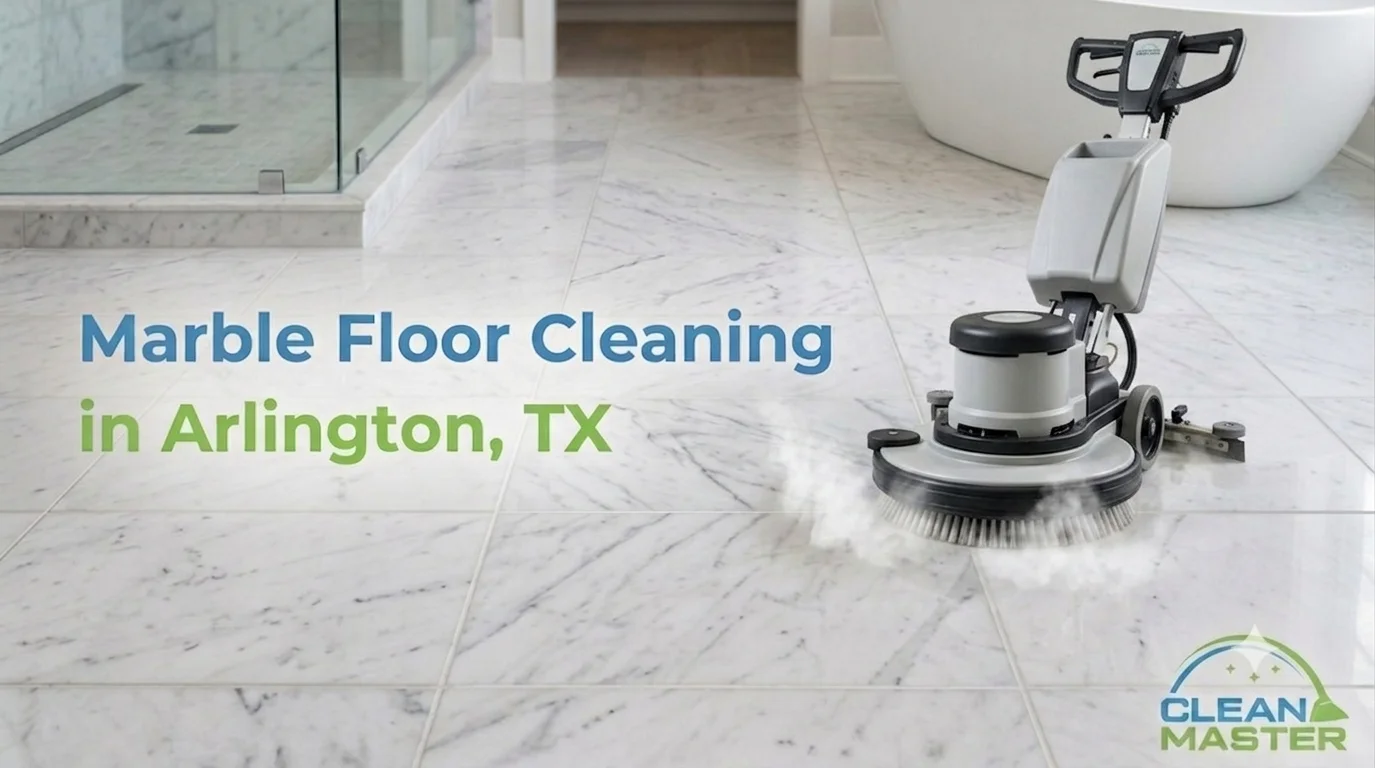
Marble Floor Cleaning in Arlington, TX

Marble floors bring a certain look to a home that few other materials can match, but they’re also one of the more sensitive surfaces to clean and maintain. Unlike ceramic or porcelain tile, marble is a natural stone that reacts differently to certain cleaning products, foot traffic, and everyday spills. Treating it the same way you’d treat any other floor can end up doing more harm than good over time. This guide covers what makes marble different, what to watch out for when cleaning it, and how professional cleaning from Clean Master Carpet Cleaning helps keep it looking its best for homes across Arlington. Why Marble Needs a Different Approach Than Other Flooring Marble is a natural stone, which means it behaves very differently from manufactured tile: Because of these differences, marble floors benefit from a cleaning approach that takes the material’s sensitivity into account, rather than treating it like a standard tile floor. Common Marble Floor Problems A few issues tend to show up repeatedly on marble floors over time: Understanding which of these issues you’re dealing with helps determine the right approach, since dulling from dirt buildup responds differently to cleaning than etching caused by an acidic reaction with the stone itself. Our Marble Floor Cleaning Process Here’s a general look at how a marble floor cleaning appointment goes: It’s worth noting that our cleaning service addresses dirt, grime, and general buildup. Etching, which is a chemical reaction with the stone’s surface rather than surface dirt, isn’t something cleaning alone can reverse, since it affects the marble at a deeper level than what cleaning is designed to address. Sealing: An Optional Add-On Worth Considering We offer marble sealing as an optional add-on to the cleaning service. Sealing adds a protective layer to the marble’s surface, which helps in a few ways: Sealing isn’t a substitute for regular cleaning or careful maintenance, but it’s a helpful additional step for marble floors that see regular use, especially in kitchens, entryways, or other spill-prone areas. Marble Floor Cleaning Cost in Arlington, TX Pricing depends on the size of the space and the current condition of the marble. As a general guide: Service Typical Price Range Standard marble floor cleaning $0.50 to $1.00 per square foot Sealing add-on Priced separately, based on total square footage For an exact number based on your specific space, the best step is a quick, free quote. Check our current specials as well, especially if you’re combining marble cleaning with other services in the same visit. Everyday Marble Care Between Professional Cleanings A few habits go a long way toward keeping marble floors looking good between deeper cleanings: How Marble Cleaning Fits Into Whole-Home Care Marble floors often share space with other surfaces that benefit from the same kind of periodic professional attention. If your home also has ceramic or porcelain tile in adjoining rooms, our broader tile and grout cleaning service covers those areas with methods suited specifically to those materials. Homes with carpeted rooms nearby may also want to consider a carpet cleaning visit at the same time, since bundling multiple surfaces into one appointment is often more convenient than scheduling separate visits throughout the year. Frequently Asked Questions Why does marble need special cleaning compared to other floors? Marble is a natural stone that’s porous and sensitive to acidic substances, which means it can etch or stain more easily than manufactured tile. It also scratches more easily due to being a softer material. Can professional cleaning fix etching on marble? Etching is a chemical reaction with the stone’s surface rather than surface dirt, so it isn’t something standard cleaning can reverse. Cleaning addresses dirt, grime, and general dulling from buildup. Does sealing marble floors help prevent damage? Yes, sealing adds a protective layer that helps the surface resist absorbing spills, which can reduce the chances of staining. It’s offered as an optional add-on to our cleaning service. How much does marble floor cleaning cost in Arlington, TX? Standard cleaning typically runs $0.50 to $1.00 per square foot, with sealing priced separately based on total square footage. What causes marble floors to look dull over time? Dulling is usually caused by everyday dirt and grit building up on the surface, which gradually reduces the stone’s natural shine until it’s cleaned. Can I use regular household cleaners on marble floors? It’s best to avoid acidic or abrasive cleaners on marble, since these can cause etching or dulling. Using products specifically suited to natural stone helps avoid this kind of damage. Get a Free Marble Floor Cleaning Quote in Arlington, TX If your marble floors are looking dull, dirty, or just need some care, Clean Master Carpet Cleaning has been serving homes across the Dallas-Fort Worth area, including Arlington, for over 26 years. Request a free quote and we’ll help you get your marble floors looking clean again, with sealing available if you’d like some added protection. Learn more about our team and our approach to floor care across Arlington and the surrounding area.
Read more
Grout Restoration Arlington,TX

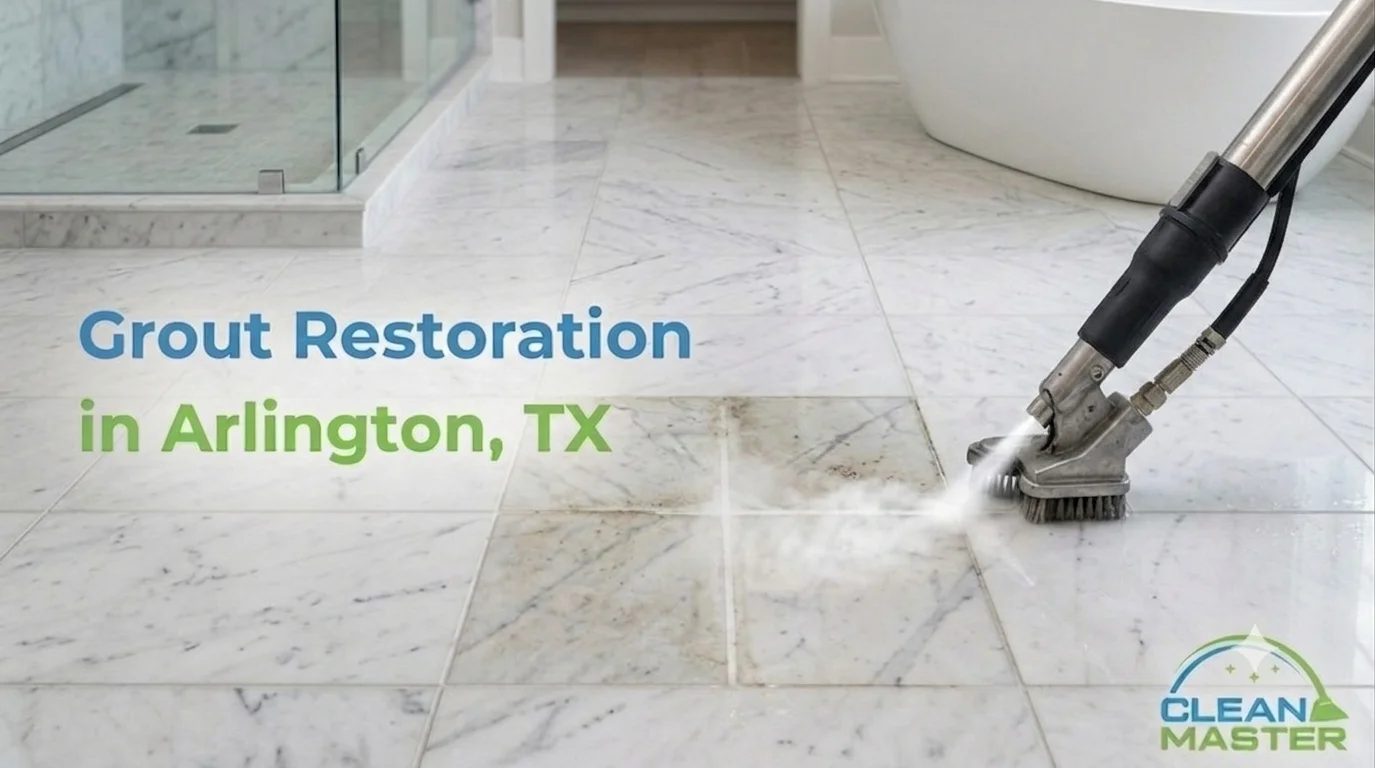
Grout Restoration in Arlington, TX

There’s a point where grout stops responding to regular cleaning. Maybe it’s been scrubbed dozens of times over the years, or maybe it’s just old enough that stains and discoloration have worked their way in deeper than any surface cleaning can reach. At that stage, a quick clean doesn’t really cut it anymore, and that’s where grout restoration comes in. This guide covers what grout restoration from Clean Master Carpet Cleaning actually involves, how it’s different from standard grout cleaning, and what to expect from the process in Arlington. What Makes Grout Look Old and Worn Over Time Grout changes gradually, which is part of why it’s easy not to notice how much it’s shifted until it’s compared to a fresh section or a photo from years earlier. A few things drive this change: At a certain point, grout that’s been through years of this cycle looks tired and discolored in a way that a standard cleaning pass just doesn’t fully reverse. This gradual shift is exactly why so many homeowners are surprised at just how much brighter grout can look once it’s properly restored, since the change from “regular cleaning” to “actual original color” often happens in a single visit rather than incrementally. Grout Restoration vs. Regular Grout Cleaning It helps to understand the difference between routine cleaning and restoration, since they’re aimed at different situations: Regular Grout Cleaning Grout Restoration Best for Grout with everyday buildup, cleaned periodically Grout that’s old, heavily discolored, or hasn’t responded to previous cleanings Approach Standard deep cleaning More intensive, thorough treatment aimed at reversing years of accumulated buildup Typical result Noticeably cleaner grout Grout that looks significantly closer to its original condition How often needed As part of regular home maintenance Less frequently, generally once grout has reached a point standard cleaning can’t fully address If your grout has been cleaned before without much improvement, or it’s simply been years since it looked anything close to its original color, restoration is generally the more appropriate approach compared to another round of standard cleaning. Homeowners sometimes go through several rounds of regular cleaning before considering restoration, not realizing that the diminishing returns they’re seeing are actually a sign that a different, more intensive approach is needed. Where Grout Restoration Is Typically Needed Grout restoration commonly applies to the areas that see the most moisture and use over time: Each of these areas tends to show wear differently, but all of them benefit from the same underlying approach: a deeper, more thorough treatment aimed at reversing buildup that regular cleaning has stopped being able to touch. Shower grout in particular tends to be the most visibly dramatic case, since the combination of constant moisture and soap residue accelerates discoloration faster than almost anywhere else in the home. Our Grout Restoration Process Here’s a general look at how a grout restoration visit works: Restoration appointments generally take longer than a standard tile and grout cleaning visit, since the process is designed to work through buildup that’s had years to settle in, rather than the lighter, more routine soiling addressed during regular maintenance cleaning. Setting Realistic Expectations Grout restoration can make a significant difference, especially for grout that’s been let go for a long time. That said, results depend on a few factors, including how old the grout is, how deeply discoloration has set in, and the condition of the grout itself. In some cases, especially with grout that’s cracked, crumbling, or structurally worn rather than just discolored, restoration may improve appearance without fully resolving underlying damage. We’re happy to take a look and give an honest assessment of what kind of improvement is realistic for your specific situation before any work begins. Being upfront about this matters to us. It’s easy to promise dramatic results in a sales pitch, but grout that’s cracked or physically deteriorating needs a different kind of repair than grout that’s simply discolored, and we’d rather set the right expectations from the start than have a homeowner disappointed after the fact. Signs You Need Grout Restoration Rather Than Regular Cleaning A few signs point toward restoration being the better fit compared to another standard cleaning: If you’re noticing more than one of these signs, it’s usually a strong indicator that the grout has reached a stage where routine cleaning products and methods simply don’t have the strength to reach what’s built up over time. Keeping Restored Grout Looking Better, Longer Once grout has been restored, a few habits help maintain the results: How Grout Restoration Fits Into Broader Tile Care Grout restoration is often the more intensive counterpart to our standard tile and grout cleaning service, reserved for grout that’s reached a point where routine maintenance cleaning can no longer make a meaningful difference. Once grout has been restored, shifting to a regular cleaning schedule going forward helps keep it from reaching that same worn-down point again. Homeowners tackling a full home refresh often pair grout restoration with other services in the same visit, such as carpet cleaning for adjoining rooms, which can be a practical way to address multiple tired-looking surfaces throughout the house at once rather than treating each one separately over time. Frequently Asked Questions What’s the difference between grout cleaning and grout restoration? Regular cleaning addresses everyday buildup and is done periodically as part of routine maintenance. Restoration is a more intensive process aimed at reversing years of accumulated discoloration that standard cleaning hasn’t been able to fully address. Can grout restoration fix grout that’s been discolored for years? In many cases, yes, restoration can make a significant improvement. The exact result depends on how deeply the discoloration has set in and the overall condition of the grout. Where is grout restoration typically needed? Common areas include floors, showers, and kitchen backsplashes, since these areas see the most moisture and use over time. Will grout restoration fix cracked or damaged grout? Restoration is primarily focused on discoloration and buildup. Structural issues like cracking or crumbling grout
Read more
Bathroom Tile Cleaner in Arlington ,TX

Bathroom Tile Cleaning in Arlington, TX: Getting Tile and Grout Really Clean

Bathroom tile deals with a different kind of daily wear than tile anywhere else in the house. Between constant moisture, soap residue, shampoo and body wash buildup, and everyday humidity, bathroom tile and grout tend to get dirty faster and in ways that are harder to fully clean with regular mopping or scrubbing. Grout lines especially seem to hold onto grime no matter how much elbow grease goes into cleaning them. This guide covers why bathroom tile and grout are so tricky to keep clean, what professional cleaning from Clean Master Carpet Cleaning actually addresses, and what to expect from the process in Arlington. Why Bathroom Tile and Grout Get Dirty So Fast A few things make bathrooms different from the rest of the house when it comes to tile buildup: This combination is exactly why bathroom grout lines often look dingy even in bathrooms that get cleaned regularly. Regular household cleaning tends to address the surface of the tile, but grout holds onto much more than a quick scrub can fully lift out. In homes without strong exhaust fans, or where the fan doesn’t run long enough after a shower, this effect compounds even further, since trapped humidity gives soap residue and grime extra time to bond with the porous grout surface. What Regular Cleaning Misses Most household bathroom cleaning routines focus on wiping down tile surfaces and maybe scrubbing grout lines occasionally with a brush. This approach: Professional cleaning takes a more thorough approach, targeting both the tile surface and the grout lines themselves, rather than relying on surface wiping and manual scrubbing alone. Many homeowners spend a significant amount of time each month scrubbing at grout lines with limited results, not realizing that the issue isn’t effort, it’s that surface-level cleaning simply can’t reach buildup that’s already worked its way into the porous material. Tile Types We Clean Bathroom tile comes in a range of materials, and we clean the most common types found in Arlington homes: Tile Type What to Know Ceramic A common, durable choice that generally responds well to standard tile cleaning methods Porcelain Similar to ceramic in cleaning approach, known for being especially durable and moisture-resistant Natural stone Includes materials like marble, travertine, and slate, which can be more sensitive to certain cleaning products and often benefit from a more careful approach Because natural stone tile can react differently to cleaning solutions than ceramic or porcelain, the specific tile type helps determine the right method and products for the job. Natural stone in particular can be etched or dulled by acidic cleaners that work perfectly fine on ceramic, which is one more reason identifying the material correctly before cleaning begins matters so much. Our Bathroom Tile and Grout Cleaning Process Here’s a general look at how a bathroom tile cleaning appointment goes. Grout cleaning is included as a standard part of the service, not treated as a separate charge: Most standard bathroom appointments are completed within an hour or two, depending on the size of the space and how much buildup has accumulated in the grout lines specifically. Why Grout Needs a Different Cleaning Approach Than Tile Tile surfaces are relatively smooth and non-porous, which means dirt mostly sits on top where it’s easier to wipe away. Grout is the opposite. Its porous texture means grime works its way in over time, rather than staying on the surface. This is why grout often looks dirty even when the surrounding tile looks fine, and why scrubbing grout with a household brush and cleaner often only makes a partial difference. A thorough cleaning approach designed specifically for grout, rather than treating it the same as the tile around it, makes a much bigger difference in restoring its original look. This distinction is part of why so many homeowners feel like they’re fighting a losing battle with grout specifically, even in bathrooms where the tile itself always looks fine. The tile and grout aren’t actually behaving the same way under the surface, even though they’re cleaned side by side every week. Bathroom Tile Cleaning Cost in Arlington, TX Pricing generally depends on the size of the bathroom and the condition of the tile and grout. As a general guide: Bathroom Condition Typical Price Range Standard bathroom tile and grout cleaning $75 to $150 per bathroom Larger bathrooms or heavily soiled grout Toward the higher end of that range Natural stone tile May be priced slightly differently based on material For an exact number based on your bathroom’s size and condition, the best step is a quick, free quote. Be sure to check our current specials as well, especially if you’re having multiple bathrooms cleaned in the same visit. Signs Your Bathroom Tile Is Due for a Professional Clean A few signs suggest it’s a good time to schedule a cleaning: A good way to check is to compare grout in a shower or tub area to grout in a lower-traffic part of the bathroom, like near a doorway. If there’s a noticeable difference in color or brightness, that’s usually a clear sign the higher-moisture area is due for a deeper clean. Keeping Bathroom Tile Cleaner Between Professional Visits A few habits can help extend the time between deeper cleanings: How Bathroom Tile Fits Into Whole-Home Tile Care Bathrooms are often just one part of a home’s overall tile footprint. Many Arlington homeowners also have tile in kitchens, entryways, or open living spaces, all of which benefit from the same kind of periodic deep cleaning covered under our broader tile and grout cleaning service. Scheduling bathroom tile cleaning alongside these other areas is often more efficient than treating each room as a separate, one-off project. Homes that are also due for a refresh elsewhere may want to consider pairing bathroom tile cleaning with a carpet cleaning visit, since bundling multiple services into one appointment tends to be more convenient than scheduling separate visits throughout the year. Frequently Asked Questions Is grout cleaning included with bathroom tile
Read more

Professional Tile and Grout Cleaning Services in Decatur, Texas

Clean Master Carpet Cleaning is proud to serve Decatur, Texas, with professional tile and grout cleaning services that make your floors look brand new. Over time, tile can trap grime and discolor grout, dulling your home’s appearance. Our deep-cleaning methods remove tough stains and restore your surfaces to a like-new shine. Why Decatur Residents Choose Clean Master Carpet Cleaning Homeowners in Decatur trust Clean Master for our reliable service and exceptional results. Here’s why we’re the preferred tile and grout cleaners in town: ‍ Our Tile and Grout Cleaning Process in Decatur We follow a proven, multi-step process to deliver consistent, high-quality results for every job in Decatur: Step 1: Initial Inspection We assess the tile type and grout condition to determine the best cleaning approach. Step 2: Pre-Treatment A powerful yet safe cleaning solution is applied to loosen grime and prepare the surface for deep cleaning. Step 3: Deep Cleaning We use high-pressure scrubbing or steam cleaning techniques to lift embedded dirt from tiles and grout lines. Step 4: Optional Grout Sealing We offer sealing to protect the grout from future staining and extend cleanliness. Step 5: Final Rinse and Walkthrough A thorough rinse removes residue, followed by a post-clean inspection to ensure your complete satisfaction. Where We Clean Tile in Decatur Homes Tile is a durable and beautiful flooring option, but it requires regular maintenance to look its best. Our team cleans tile in many areas of your home, including: ‍ Tile Cleaning Trends in Decatur Decatur homes are embracing tile styles like porcelain, natural stone, and ceramic for both their visual appeal and durability. However, these surfaces still require professional cleaning to eliminate grime, mold, and residue that regular mopping can’t reach. Book Your Tile and Grout Cleaning in Decatur Today Bring your floors back to life with Clean Master Carpet Cleaning. Whether it’s a one-time deep clean or routine maintenance, we’re ready to help. Call now, request a free online quote, or book a convenient appointment time with our friendly Decatur team. Your satisfaction is always guaranteed! Frequently Asked Questions: Q 1. How often should tile and grout be professionally cleaned? We recommend professional tile and grout cleaning every 12–18 months, depending on foot traffic and exposure to moisture. High-use areas like kitchens and bathrooms may benefit from more frequent cleanings. Q 2. Is grout sealing necessary after cleaning? While optional, grout sealing is highly recommended. It creates a protective barrier that helps resist stains and moisture, keeping your grout cleaner for longer. Q 3. Are your cleaning solutions safe for kids and pets? Yes! At Clean Master Carpet Cleaning, we only use non-toxic, eco-friendly solutions that are safe for children and pets while still delivering powerful cleaning results. ‍
Read more

Expert Tile Cleaning Services in Haslet, Texas

Tile floors are durable and attractive, but without regular maintenance, the grout lines can trap dirt, discoloration, and bacteria. At Clean Master Carpet Cleaning, we specialize in restoring the natural beauty of your tile surfaces. Our advanced methods and trained technicians deliver deep-clean results that leave your home looking refreshed and sanitized. Why Haslet Residents Choose Clean Master Carpet Cleaning Clean Master Carpet Cleaning has earned a stellar reputation among Haslet homeowners for consistently delivering high-quality tile and grout cleaning solutions. We understand how important clean, well-maintained floors are for both comfort and property value. Whether you’re looking to preserve newly installed tile or bring older floors back to life, our professional team provides the experience and equipment needed to get the job done right. We combine local knowledge, eco-conscious practices, and top-tier customer service to ensure each project exceeds expectations. Our Tile and Grout Cleaning Process in Haslet At Clean Master Carpet Cleaning, our tile and grout cleaning process is designed to be thorough, efficient, and safe for every surface in your home. We don’t believe in one-size-fits-all approaches. That’s why each job begins with a tailored assessment of your tile type, level of soiling, and overall floor condition. From there, we use targeted methods to treat and lift years of grime and discoloration, ensuring your floors are not only clean but hygienically restored. Our process enhances the life of your tile and grout while leaving your space noticeably fresher. Where We Clean Tile in Haslet Homes Tile is a popular choice in homes across Haslet for its durability and clean look, but it can quickly become dull and stained in high-traffic areas. That’s why Clean Master Carpet Cleaning offers specialized cleaning services tailored for every corner of your home. Whether it’s the entryway that welcomes your guests, the kitchen where life happens, or your relaxing bathroom sanctuary, our team ensures a deep clean that enhances the appeal and hygiene of every tiled space. We also take care of outdoor spaces where weather and foot traffic take a toll on grout. Tile Cleaning Trends in Haslet In Haslet, homeowners are staying ahead of interior design trends by choosing sleek, long-lasting tile options that add both style and function to their homes. From ceramic wood-look planks that add warmth to contemporary spaces, to luxurious natural stone tiles that create a sophisticated atmosphere, tile is more than just practical—it’s a design choice. However, as visually appealing as these tiles are, their beauty can be compromised without regular maintenance. That’s why professional deep cleaning remains essential in preserving the finish and longevity of these surfaces. Book Your Tile and Grout Cleaning in Haslet Today When it comes to tile and grout cleaning in Haslet, no one does it better than Clean Master Carpet Cleaning. Our skilled professionals are equipped to handle dirt, bacteria, and stains, bringing back the original shine and color of your flooring. We know your time is valuable, which is why we offer convenient scheduling options and fast, responsive service. Whether you’re planning a renovation or simply doing seasonal deep cleaning, let us help elevate your home’s cleanliness and appearance with a service you can trust. Frequently Asked Questions: Q1. How often should tile and grout be professionally cleaned?‍ We recommend professional cleaning at least once a year to maintain tile appearance and prevent buildup of grime and bacteria. In homes with pets, kids, or high foot traffic, scheduling cleanings every 6 to 9 months is ideal. Q2. Is your tile cleaning process safe for children and pets?‍ Yes, we use eco-friendly, non-toxic products that are safe for your entire family, including kids and pets. Our cleaning solutions are free of harsh chemicals and leave no harmful residue behind, making your home safe to enjoy immediately after cleaning. Q3. Can you remove tough grout stains and discoloration?‍ Absolutely. Our specialized tools and cleaning agents are designed to penetrate deep into grout lines and lift stubborn stains effectively. Whether the discoloration is due to mold, mildew, or embedded dirt, we work to restore a clean, like-new finish. ‍
Read more