
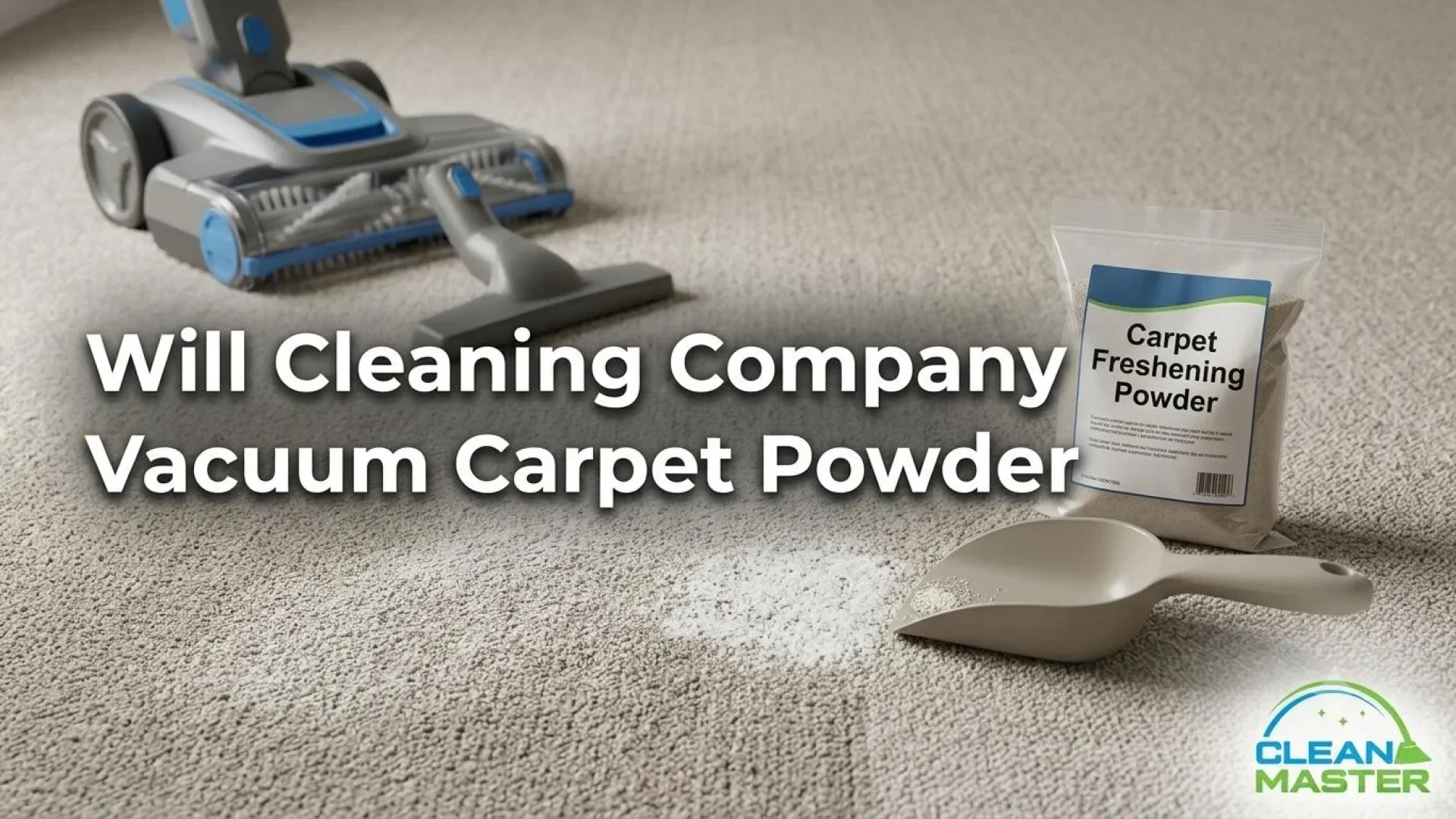
Carpet deodorizing powders, baking soda, commercial dry carpet cleaners like Arm & Hammer, BISSELL, and similar products, are widely used as a between-clean freshener. They work reasonably well for what they’re designed for: absorbing surface odor and providing temporary freshness. But they come with an accumulation problem that builds quietly over months and years, and when professional cleaning eventually comes around, that accumulation is part of what needs to be addressed.
The short answer to whether professional cleaning removes carpet powder is yes. The longer answer, from Clean Master Carpet Cleaning’s experience across DFW homes, is that it takes more than a standard pass to address, and knowing about it before the appointment helps produce the best result.
Why Carpet Powder Accumulates Even With Regular Vacuuming
This is the part that surprises most homeowners who use carpet powder regularly: vacuuming removes most of the powder, but not all of it. Every application leaves behind a small percentage of fine particles that work their way to the base of the carpet pile, below the reach of most vacuum suction, where they accumulate with each subsequent application.
The physics of carpet fiber explain why. Carpet pile is not a flat surface, it’s a dense matrix of fibers that funnel material downward toward the backing. Fine powder particles, particularly baking soda and similar fine-grain products, are light enough to migrate down through the fiber under their own weight and through the compression of foot traffic. Once at the base of the pile, they’re effectively below the vacuum’s functional reach, the suction path pulls from the surface, not the bottom of the fiber matrix.
Over months of regular application:
- The base of the carpet pile becomes progressively coated with accumulated powder
- The coating attracts and holds soil, dry powder residue has a surface chemistry that grabs dust and debris more readily than clean fiber
- The carpet may look dull or slightly off-color, a chalky, flat appearance in areas of heaviest powder use
- The carpet feels different underfoot, slightly stiffer or less soft than areas where powder hasn’t been used as frequently
We’ve cleaned DFW homes where the homeowner used carpet powder every one to two weeks for several years. When the hot water extraction pass began, the recovery water was visibly cloudy with suspended powder from the first pass, material that had accumulated over the entire history of powder use but never came out under vacuuming alone.
How Powder Residue Affects Carpet Appearance and Soil Attraction
The soil attraction effect is the most practically significant consequence of powder accumulation, and the one that most directly affects why the carpet looks worse over time despite regular maintenance.
Carpet fiber in its clean state has a relatively low-tack surface that soil contacts but doesn’t strongly bond to, which is why regular vacuuming removes a meaningful percentage of surface soil. Powder residue changes this. The fine particles at the base of the pile create a coating that:
- Holds soil particles that contact it rather than releasing them under vacuum suction
- Creates a progressively darker appearance in high-traffic areas as soil accumulates in the powder-coated base
- Gives the carpet a flat, dull look that doesn’t respond to vacuuming because the soil is bonded below the surface vacuum reaches
This is why DFW homeowners who use carpet powder regularly sometimes notice their carpet looks dirty faster and responds less well to vacuuming over time, the accumulation has changed the soil-holding properties of the fiber base. Read our guide on why carpets get dirtier after cleaning for more on how residue drives this pattern.
What Professional Hot Water Extraction Does That Vacuuming Can’t
Professional hot water extraction resolves powder accumulation in a way that no amount of vacuuming can, because it addresses the base of the pile where the accumulation lives, not just the surface the vacuum contacts.
Here’s the mechanism:
- Hot water and cleaning solution are injected under pressure into the carpet fiber, reaching the base of the pile where powder residue has accumulated
- The solution dissolves and suspends the accumulated powder, converting it from a dry coating bonded to the fiber into a liquid suspension
- Powerful extraction suction pulls the suspension back out, removing the dissolved powder along with the soil that was trapped in it
The result is visible in the recovery water, particularly in the first pass on heavily powder-laden carpet, where the extracted water carries a significant suspended load of dissolved powder and accumulated soil. By the second or third extraction pass, the water clears noticeably as the accumulation is removed.
For moderate powder use over a reasonable period, a standard professional clean resolves the accumulation in the normal number of passes. For homes where powder has been used heavily and frequently over several years, additional pre-treatment and extraction passes may be needed, which is worth communicating at the time of booking.
How to Prepare for a Professional Clean When You Use Carpet Powder
Two steps make a meaningful difference to the outcome when carpet powder has been used regularly.
Vacuum as thoroughly as possible before the appointment. This is always recommended before professional cleaning, but it matters more when powder is involved. The goal is to remove as much surface and accessible powder as possible before the professional clean begins, reducing the total load the hot water extraction has to handle and allowing the extraction to focus on the base-of-pile accumulation that vacuuming can’t reach. Use slow, multi-directional passes and a vacuum with good suction. Read our guide on whether you should vacuum before carpet cleaning for the right technique. The more you remove dry, the cleaner the extraction result.
Tell Clean Master about your powder use when you book. This isn’t about judgment, it’s about preparation. Knowing that a carpet has significant powder accumulation allows us to plan the appropriate number of extraction passes and adjust the cleaning approach accordingly. A carpet with years of heavy powder use may need pre-treatment or additional passes that a standard appointment time doesn’t automatically include. Flagging it at booking means we arrive prepared to address it fully rather than discovering mid-clean that more work is involved than anticipated.
Going Forward: How to Avoid the Accumulation Problem
Once professional extraction has cleared the accumulated powder, the path forward is straightforward:
- Use powder products sparingly, occasional use doesn’t create the same accumulation problem as frequent application
- Allow adequate dwell time and vacuum thoroughly each time, the more that comes out under vacuuming, the less accumulates in the pile base
- Consider baking soda as your primary powder product, coarser grain than commercial powders, slightly easier to vacuum fully from the pile
- For odor between professional cleans, consider non-powder alternatives, enzyme cleaner for organic odor sources, activated charcoal deodorizers that sit on the surface and are fully removed, or professional-grade deodorizers that don’t leave solid residue
The fundamental principle: anything that goes into carpet fiber that isn’t fully removed accumulates over time. Professional extraction resets the baseline. Moderate use and thorough vacuuming maintains it.
More Carpet Care Guides
Frequently Asked Questions
Will one professional clean remove all the powder buildup?
For moderate accumulation from reasonable powder use over 12 to 18 months, one professional clean typically removes the bulk of the residue in the standard number of extraction passes. For heavy, long-term accumulation, daily or weekly use over several years, the first clean removes the majority and a follow-up clean several weeks later may be needed to fully clear what remained after the first pass. This is less common but worth discussing at booking if your powder use has been heavy and sustained.
Can carpet powder damage my carpet permanently?
In most cases, no. Powder accumulation affects appearance and soil attraction but not the structural integrity of the fiber. Professional cleaning restores the carpet to a significantly better state than the accumulation created. In rare cases of very heavy accumulation over many years, the coating at the fiber base can be more stubborn and may require multiple professional cleaning sessions to fully resolve.
Does Clean Master charge more for heavily powder-laden carpet?
We assess the carpet at the start of every appointment. If significant powder accumulation requires additional passes or pre-treatment beyond standard cleaning, we communicate that before proceeding, we don’t surprise clients with additional charges after the work is done. Flagging powder use at booking helps us give an accurate quote upfront.
The Bottom Line: Professional Cleaning Handles Carpet Powder, Preparation Helps
Yes, professional hot water extraction removes carpet powder residue, including the accumulated material at the base of the pile that vacuuming never reached. The more thoroughly you vacuum before the appointment and the more clearly you communicate your powder use history, the better the outcome from a single professional clean.
For DFW homes where carpet powder has been a regular part of the routine, Clean Master Carpet Cleaning provides the extraction depth and pass flexibility to restore the carpet fully. Contact Clean Master Carpet Cleaning today for professional carpet cleaning across the entire DFW area and bring us a carpet with as much powder vacuumed out as possible for the best possible result.