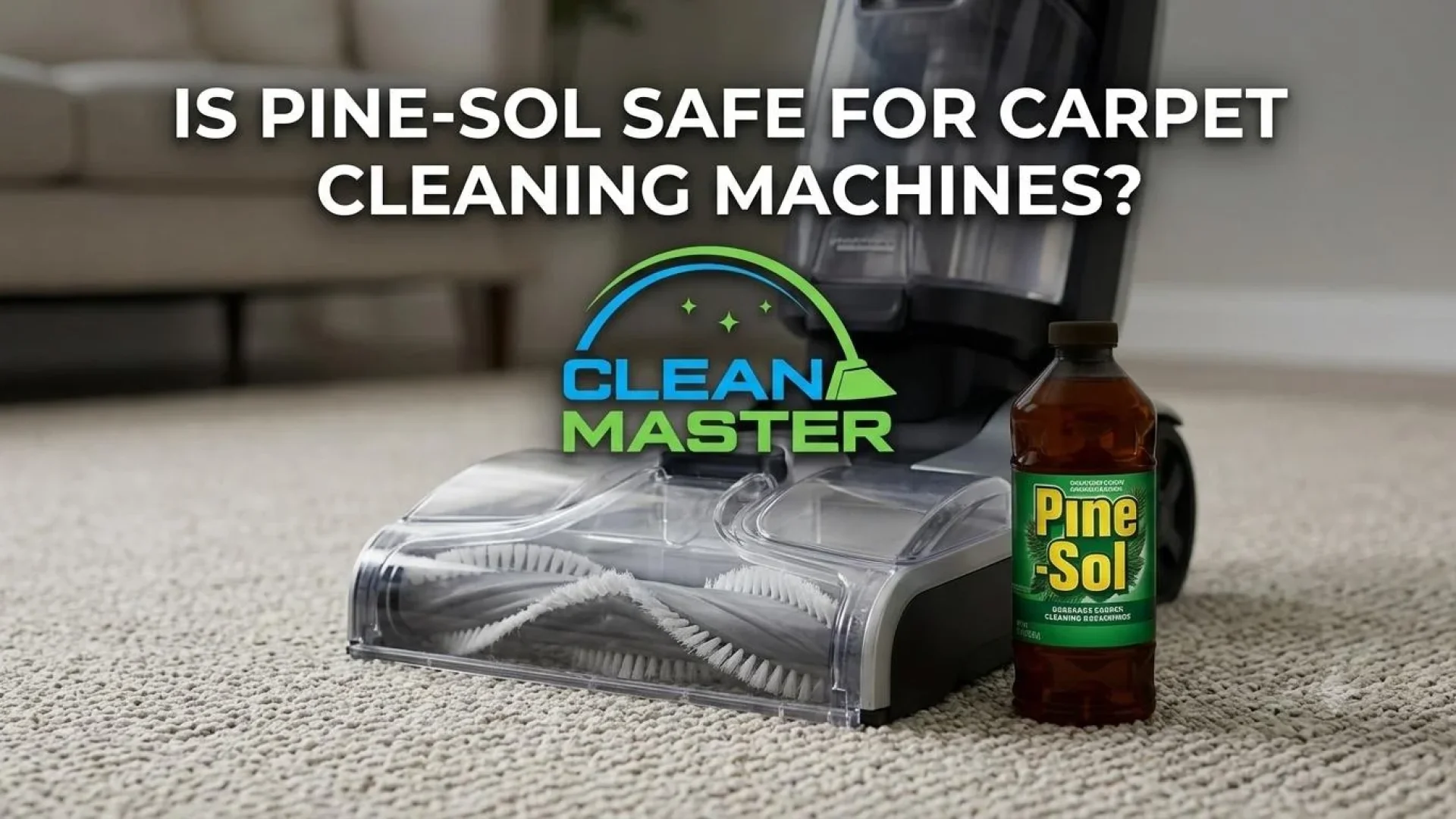
Pine-Sol is one of those household cleaners that feels universally capable. It cuts through grease, disinfects hard surfaces, and leaves a clean, pine-fresh smell, so the logic of adding it to a carpet cleaner for a fresh-smelling, disinfected carpet seems reasonable enough.
The problem is that Pine-Sol was never formulated for carpet, and putting it in a carpet cleaner creates problems the familiar smell can’t compensate for. At Clean Master Carpet Cleaning, we’ve seen multiple outcomes from Pine-Sol in carpet cleaners across DFW homes, none of them outcomes the homeowner intended.
What Pine-Sol Actually Is and Why That Matters
Pine-Sol is a multi-surface disinfectant cleaner. Its active ingredients are glycolic acid and, in original formulations, pine oil, designed to cut through grease and kill bacteria on hard, non-porous surfaces like floors, countertops, and bathroom fixtures.
That application profile is significant. Hard surfaces are cleaned with product applied and then wiped or mopped away, the contact time is brief, there’s no fiber to absorb the product, and excess is removed entirely. Carpet is the opposite: a dense fiber system that absorbs what contacts it, holds it against an extraction mechanism that isn’t always powerful enough to pull everything back out, and then sits on the floor for months with whatever was left behind.
Pine-Sol’s surfactant system is also calibrated for hard surface cleaning, not for the fiber-penetrating, low-residue chemistry that carpet cleaning solutions are designed around. That mismatch is where the problems start.
The Risks: What Pine-Sol Does in a Carpet Cleaner
Excessive Foaming Causes Machine Problems and Residue
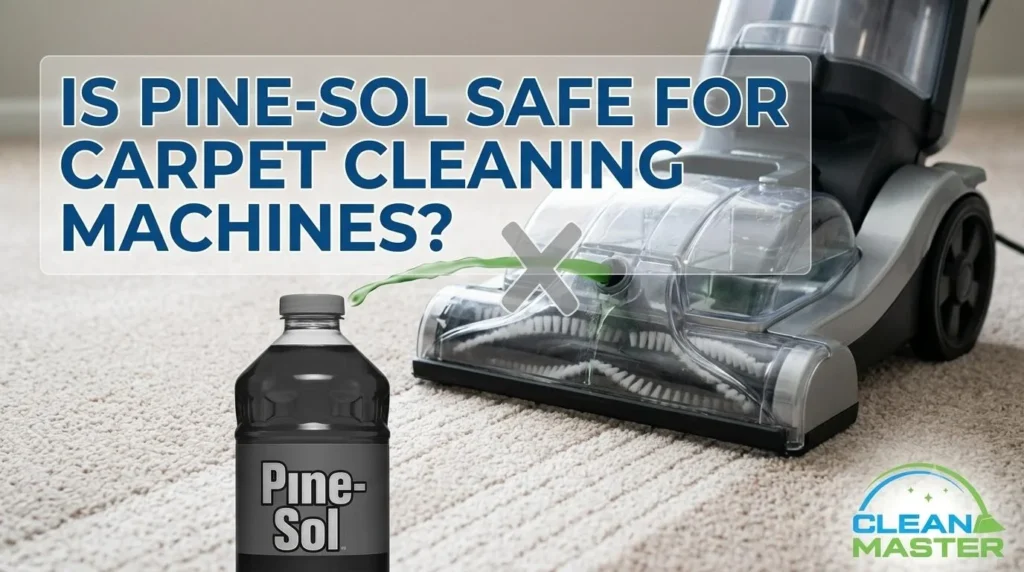
Pine-Sol produces significant foam when agitated in water, far more than carpet cleaning solutions, which are specifically formulated to be low-foaming for machine use. In a carpet cleaner tank and spray system, that foam:
- Fills the machine’s recovery tank faster than liquid, requiring frequent emptying and reducing the effective cleaning time per tank
- Reduces suction power progressively as foam accumulates in the extraction path, leaving more moisture and solution in the carpet with each pass
- Leaves a soapy film in the carpet fiber that the machine can’t fully extract, particularly where foam has built up and collapsed rather than being pulled out as liquid
That film is the residue problem. Dried Pine-Sol surfactant in carpet fiber is tacky, it attracts and holds dust, debris, and foot traffic soil the way any surfactant residue does. Carpet treated with Pine-Sol in a cleaner typically re-soils noticeably faster than untreated carpet, defeating the cleaning purpose entirely. Read our guide on getting rid of carpet cleaner residue if you’re already dealing with this problem.
We’ve had DFW clients contact us after Pine-Sol carpet cleaner use wondering why their carpet looks dirty again days after cleaning. Residue from the Pine-Sol, left because the machine couldn’t fully extract the foaming solution, was the direct cause in every case.
Color and Dye Risk on Light-Colored Carpet
Original Pine-Sol and several colored Pine-Sol variants, including the lavender, lemon, and orange scented versions, contain dyes and pigments that give them their characteristic color. These pigments are not designed to contact carpet fiber, and on light-colored or neutral carpet they present a real discoloration risk.
The risk is highest when:
- The solution is applied in higher concentration than intended
- The machine makes slow passes that allow extended contact time between the colored solution and the fiber
- The carpet is already slightly wet, which opens the fiber to faster dye absorption
On darker carpet, this risk is less visible but still present, the pigment chemistry can alter the dye balance of the carpet fiber subtly, creating uneven tone in areas of heaviest application. On light beige, cream, or white carpet, visible discoloration is a genuine possibility with any colored Pine-Sol variant.
Wrong Chemistry for Carpet Fiber
Carpet cleaning solutions are formulated at a specific pH and surfactant concentration to penetrate carpet fiber, loosen embedded soil, and rinse out cleanly during extraction. Pine-Sol’s disinfectant chemistry, including its glycolic acid content and pine oil base, isn’t calibrated for any of this.
The acid component in Pine-Sol can interact with carpet dyes and alter fiber color subtly over repeated use. The pine oil doesn’t rinse cleanly from carpet fiber the way purpose-made solutions do, contributing to the residue issue above. And the disinfecting action Pine-Sol provides, the main reason people consider it, is effectively neutralized by the presence of soil in the carpet fiber anyway. Disinfectants require clean surfaces to work; applied to soiled carpet, they interact with the organic material rather than killing bacteria at the fiber level.
At a Glance: Pine-Sol in a Carpet Cleaner
| Issue | What Happens | Result |
| Foaming | Excessive foam in machine and carpet | Residue, reduced suction, faster re-soiling |
| Pigment and dye content | Color contacts carpet fiber | Discoloration risk on light carpet |
| Surfactant chemistry | Not formulated for fiber or extraction | Poor rinse-out, tacky residue |
| Disinfecting on soiled carpet | Active ingredients neutralized by organic soil | No meaningful disinfection achieved |
What to Use Instead
Purpose-Made Carpet Cleaning Solution
The straightforward answer for machine use. Carpet cleaning solutions are formulated specifically for the application, low-foaming, pH-appropriate for synthetic fiber, designed to rinse out cleanly during extraction. They clean more effectively than Pine-Sol in a carpet cleaner and leave no residue problems. For the vast majority of residential carpet cleaning, this is the only product that should go in the machine tank.
Enzyme Cleaner for Organic Odors
If the reason Pine-Sol seems appealing is odor elimination, particularly pet smells or organic odors, enzyme cleaners are the appropriate tool. They address the odor source by breaking down organic compounds rather than masking them with fragrance, and they’re safe for carpet fiber and machines when used as directed. Read our guide on how to use enzyme cleaner on carpet for the right technique. For pet urine specifically, enzyme treatment is what actually works, Pine-Sol’s disinfectant chemistry doesn’t break down uric acid crystals, so even if it didn’t create the foaming and residue problems above, it wouldn’t solve the underlying odor.
Clean Master Professional Cleaning for Deep Disinfection
For genuine disinfection needs, post-illness carpet treatment, heavily contaminated areas, or situations where sanitation is the primary concern, professional carpet cleaning with appropriate antimicrobial chemistry is the right solution. At Clean Master, we use EPA-registered products formulated specifically for carpet fiber and applied with commercial extraction equipment that removes them fully after the required dwell time.
The disinfection result that Pine-Sol promises on hard surfaces is achievable on carpet, just not with Pine-Sol, and not with a consumer carpet cleaner as the delivery mechanism.
Pine-Sol can leave a slick residue that dulls carpet and may void some manufacturer warranties. If you’ve already run it through your machine, our carpet cleaning Dallas technicians can neutralize and rinse it out before it starts attracting more dirt.
More Carpet Care Guides
Frequently Asked Questions
What if I’ve already used Pine-Sol in my carpet cleaner?
Flush the machine’s tank and internal components with plain clean water, run at least two full tanks of water through the system before using approved solution again. For the carpet, run a rinse pass with clean warm water to dilute and extract as much Pine-Sol residue as possible, then blot the treated area and allow to dry fully. If the carpet feels tacky after drying or re-soils quickly in the coming days, a professional extraction clean will remove the residue more completely than a consumer machine rinse pass.
Can I use Pine-Sol directly on carpet without the machine?
Spot application of diluted Pine-Sol on a non-visible area of carpet to test is lower-risk than machine use, but the residue and dye risks still apply. For hard surface odors or disinfection needs, Pine-Sol on its intended surfaces (hard floors, countertops, fixtures) works well. For carpet odor and stain treatment, enzyme cleaners and purpose-made carpet spotters are safer and more effective alternatives.
Does Pine-Sol damage carpet cleaner machines?
The foaming causes functional problems, reduced suction and recovery tank filling with foam rather than liquid, and repeated use may affect internal seals and pathways over time. More immediately, most carpet cleaner manufacturers explicitly state that only approved cleaning solutions should be used in their machines. Using Pine-Sol or any non-approved product typically voids the machine warranty.
The Bottom Line: Pine-Sol Belongs on Hard Surfaces, Not in Carpet Cleaners
Pine-Sol is a good product for what it’s designed for, hard surface disinfection and cleaning. In a carpet cleaner, it produces excessive foaming, leaves sticky residue that accelerates re-soiling, presents a color risk on light carpet, and doesn’t achieve the disinfection result that made it seem like the right choice in the first place.
For machine use, purpose-made carpet cleaning solution. For odor, enzyme cleaner. For deep disinfection, Clean Master’s professional treatment with appropriate chemistry and equipment. Contact Clean Master Carpet Cleaning today for professional carpet cleaning across the entire DFW area and the right chemistry for every carpet situation.