Clean Master Carpet Cleaning
How Much Does Renting A Carpet Cleaner Cost 2

How Much Does Renting A Carpet Cleaner Cost?

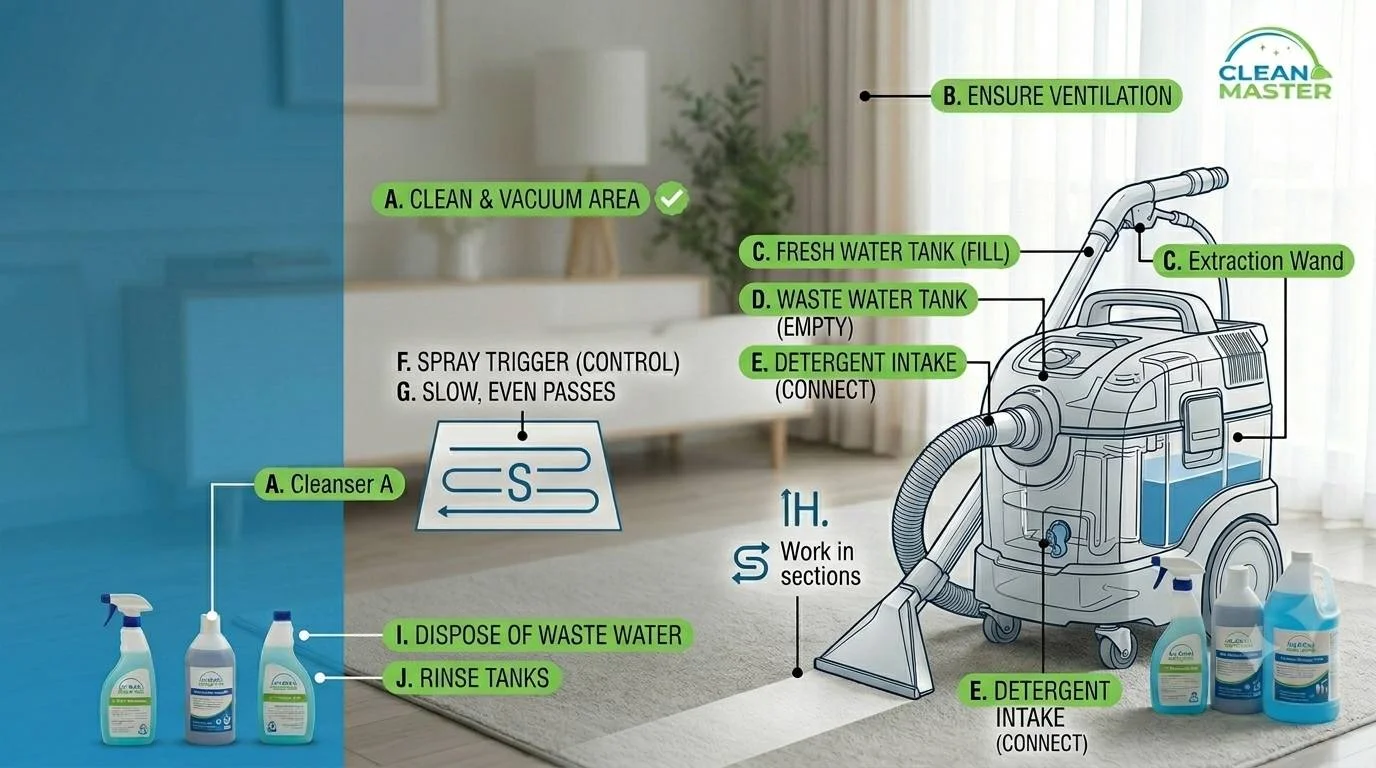
Renting a carpet cleaner looks affordable at first glance, until you add up everything that goes alongside the machine. The headline rental rate is just the starting point. By the time you’ve bought cleaning solution, paid optional fees, and factored in your time, the real cost of a DIY rental clean is meaningfully higher than the number on the rental kiosk. At Clean Master Carpet Cleaning, we’re not in the business of discouraging DIY, but we do think homeowners deserve a clear picture of what rental cleaning actually costs before they decide. Here’s the honest breakdown for Dallas–Fort Worth (DFW). Rental Machine Types and What They Cost Portable and Handheld Units Smaller, lighter machines designed for spot cleaning and upholstery, not whole-room carpet cleaning. These are available at some grocery stores and pharmacy chains. Full-Size Upright Extractors The standard rental carpet cleaner, the Bissell Big Green, Rug Doctor, or equivalent. These are what most homeowners picture when they think of a rental carpet cleaner and what you’ll find at Home Depot, Lowe’s, Kroger, and similar locations across DFW. The 24-hour rate is the most common rental structure and the one most DFW homeowners use. The 4-hour option exists at some locations but is tight for anything beyond a one or two-room job, factoring in pickup, setup, cleaning, and return, four hours goes quickly. The Real Cost: What Gets Added On Top This is where the rental price diverges from the total cost, and where most rental first-timers are surprised. Cleaning Solution Rental machines require brand-specific or compatible cleaning solution, and it’s almost never included in the rental rate. At the rental counter or nearby display, expect to see: Solution Type Size Typical Cost Standard carpet shampoo (brand-specific) 32 oz $10 to $18 Standard carpet shampoo 64 oz $18 to $28 Pet formula solution 32 oz $14 to $22 Deodorizer and booster add-on per bottle $8 to $14 For a standard 3-bedroom home, most homeowners use at least one 64 oz bottle, sometimes two for heavily soiled carpet or larger homes. Budget $20 to $45 in solution on top of the machine rental rate. Damage Waiver Fee Most rental locations offer an optional damage waiver, typically $5 to $12, that covers the machine if it’s damaged during your rental. It’s optional but commonly taken. Some locations bundle it into the rate automatically; others present it at checkout. Fuel and Transport Rental machines are large, heavy, and awkward to transport. If you don’t have a vehicle that accommodates a full-size Rug Doctor easily, you’ll need to make it work. Round-trip fuel to the pickup location is a minor cost in most DFW scenarios but worth noting in the total. The True Total: What a Rental Clean Actually Costs Adding everything together for a typical DFW whole-home rental clean: Cost Item Typical Range Machine rental (24 hours) $35 to $55 Cleaning solution $20 to $45 Damage waiver $5 to $12 Total out-of-pocket $60 to $112 That’s the cash cost. The time cost is separate, pickup and return trips, setup, actual cleaning time (40 to 60 minutes per room for a careful DIY operator), and breakdown. For a 3-bedroom home, budget a full half-day to a full day including all of this. What Rental Machines Can’t Do That Professional Equipment Can The price gap between a $60 to $112 rental clean and a professional carpet clean is real, but so is the performance gap. Here’s what separates them. Water pressure and heat. Truck-mounted professional systems operate at significantly higher water pressure and temperature than rental machines. Higher temperature loosens embedded soil more effectively; higher pressure drives solution deeper into the pile and extracts more completely. Extraction power. This is the most significant practical difference. Rental machines leave more moisture in the carpet after cleaning than professional equipment, which means longer drying times (12 to 24 hours vs. 6 to 12 hours for professional), higher residue risk, and less complete removal of the soil they loosen. Read our guide on how to dry carpet after cleaning to understand how much drying time matters. Results on heavily soiled carpet. For lightly maintained carpet cleaned regularly, rental machines produce reasonable results. For carpet with embedded soil, pet contamination, or significant staining, the extraction power gap becomes visible in the outcome, rental clean produces an improvement, professional clean produces a transformation. No setup, no transport, no time investment. Clean Master brings everything to your door and does the work while you continue your day. The time you’d spend on pickup, cleaning, and return is yours back. Rental vs. Professional: The Side-by-Side DIY Rental Clean Master Professional Out-of-pocket cost $60 to $112 From ~$120 for standard jobs Time investment 4 to 8 hours 1.5 to 2.5 hours (you’re not doing it) Drying time 12 to 24 hours 6 to 12 hours Extraction power Consumer-grade Commercial truck-mount Results on heavy soil Moderate Significantly better Setup and transport Your responsibility Included For lightly soiled carpet in a small home where budget is the primary concern, rental cleaning makes sense. For heavily soiled carpet, whole-home cleans, or any situation where results and convenience matter, the price gap between rental and professional narrows considerably once time is factored in, and the outcome gap makes the professional option the better value. Frequently Asked Questions Is it cheaper to rent a carpet cleaner or hire a professional? On cash cost alone, rental is cheaper for small jobs. On total value, time, results, drying time, and convenience, professional cleaning is competitive for any job covering three or more rooms. For a single room or small area, rental often makes sense. For a whole home, the calculation is closer than most people expect once all costs are added. See our guide on how much carpet cleaning costs per room for a full comparison. Can I rent a carpet cleaner and use my own solution? Most rental machines are compatible with third-party solutions, but some manufacturers, Rug Doctor in particular, recommend their own branded products to avoid
Read more

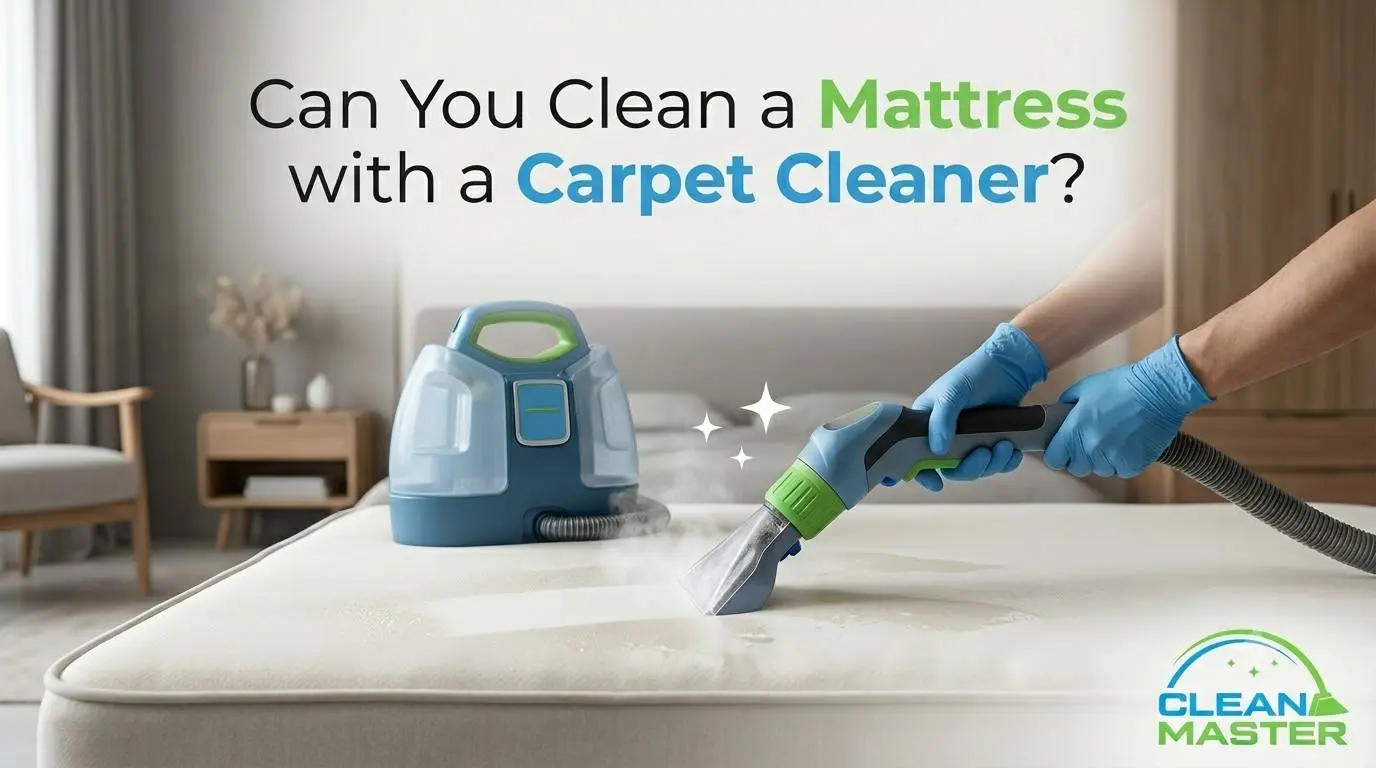
Can You Clean a Mattress With a Carpet Cleaner?

If you’ve already read our post on using an upholstery cleaner on a mattress, you know the answer there is a cautious yes, with strict technique, minimal moisture, and careful drying. A carpet cleaner is a different conversation entirely. Where an upholstery cleaner applied carefully introduces controlled, limited moisture, a carpet cleaner is engineered to do the opposite: inject significant volumes of water and solution deep into a surface and extract it back out. That process works brilliantly on carpet. On a mattress, it’s a setup for damage that unfolds slowly, invisibly, and expensively. We’re not saying it’s physically impossible to run a carpet cleaner over a mattress. We’re saying that in most cases, the aftermath isn’t worth it, and we’ve had Dallas–Fort Worth (DFW) clients call us to deal with exactly that aftermath. What a Carpet Cleaner Actually Does to a Mattress To understand why this combination is problematic, it helps to understand what a carpet cleaner is designed to do. Hot water extraction, the method used by both consumer and professional carpet cleaning machines, works by forcing heated water and cleaning solution into the surface material under pressure, then immediately extracting it along with the loosened dirt. Carpet handles this process because it’s engineered for it. The fibers are synthetic and moisture-resistant, the backing dries relatively quickly, and the subfloor beneath allows airflow from below. A mattress has none of these properties. When a carpet cleaner is used on a mattress, the water and solution don’t just clean the surface fabric, they penetrate into the layers beneath. Memory foam, latex, and the batting layers inside hybrid and innerspring mattresses are highly absorbent materials with almost no capacity to release moisture quickly. The extraction pass pulls back what it can from the surface, but a significant volume of water remains trapped inside the mattress where no fan or dehumidifier can reach it. That trapped moisture is where the problems begin. The Risks and Why They’re Worse Than You’d Expect Mold and Mildew Deep Inside the Mattress This is the outcome we see most often in the aftermath calls we receive, and it’s the hardest to fix. Mold established inside a mattress, in the foam core, the batting layers, or the border material, is not accessible from the surface. You can’t treat it with a spray. You can’t extract it with a machine. By the time it’s detectable as a smell, it’s already throughout the interior of the mattress. We’ve had clients in the DFW area contact us weeks after attempting a carpet cleaner clean on their mattress, convinced their bedroom had a mold problem somewhere in the walls or HVAC system. The source was the mattress, specifically the moisture that had been sealed inside it since the cleaning. In more than one case, the mattress was unsalvageable. The timeline is what catches people off guard. The mattress surface dries within a day or two, everything seems fine, and the mold develops quietly over the following weeks in layers the surface temperature never reflects. By the time it’s noticeable, replacement is often the only option. Structural Damage to Foam and Latex Layers Carpet cleaning solutions are formulated for synthetic carpet fibers, not for the foam and latex materials inside mattresses. The surfactants, enzymes, and chemical compounds in these solutions interact with foam and latex in ways they don’t interact with nylon or polyester carpet. Memory foam exposed to carpet cleaning solution can break down at a cellular level, losing the resilience and pressure-relief properties that make it functional. The foam may feel normal initially but gradually develops soft spots, loses its ability to return to shape after compression, or begins to crumble at a microscopic level that eventually becomes visible as surface degradation. Latex is similarly vulnerable. Natural latex in particular reacts poorly to the alkaline pH of most carpet cleaning solutions, which can cause the material to stiffen, crack, or degrade unevenly over time. This isn’t always immediately obvious, it can take weeks or months to manifest as noticeable changes in how the mattress feels to sleep on. Chemical Residue on Your Sleeping Surface Carpet cleaning solution residue left in mattress fabric is a different category of concern than residue left on a carpet. You walk across carpet occasionally. You spend 7 to 8 hours with your face and body in direct contact with a mattress every night. Carpet cleaning solutions contain surfactants, fragrances, optical brighteners, and pH-adjusting compounds that are appropriate for floor surfaces you contact intermittently. None of these were designed for prolonged skin contact or inhalation at close range during sleep. Residue that remains in mattress fabric after a carpet cleaner treatment, and some always does, is in contact with your airways and skin throughout every night until the mattress is either professionally cleaned to remove it or replaced. For households with children, people with skin sensitivities, or anyone with respiratory conditions, this risk is particularly significant. Read our guide on getting rid of carpet cleaner residue to understand how persistent solution residue can be even on surfaces with better drainage than a mattress. What Our Clients Learned the Hard Way The calls we receive in the aftermath of carpet cleaner mattress cleaning tend to follow a similar pattern. The client cleaned the mattress, it looked and smelled noticeably better immediately afterward, and they considered it a success. Then, somewhere between two weeks and two months later, a musty smell appeared in the bedroom that they couldn’t locate or eliminate. In one case, a client had already replaced their HVAC filters, cleaned their air vents, and checked behind furniture for mold before calling us. The mattress hadn’t crossed their mind as the source, it had seemed fine after the clean. When we inspected it, the interior foam layers were visibly discolored with mold growth that had been developing since the cleaning. In another case, a client noticed their memory foam mattress had developed an uneven sleeping surface, a soft depression on one side that hadn’t
Read more
How To Get Carpet Cleaner Residue Out Of Carpet 2

How To Get Carpet Cleaner Residue Out Of Carpet

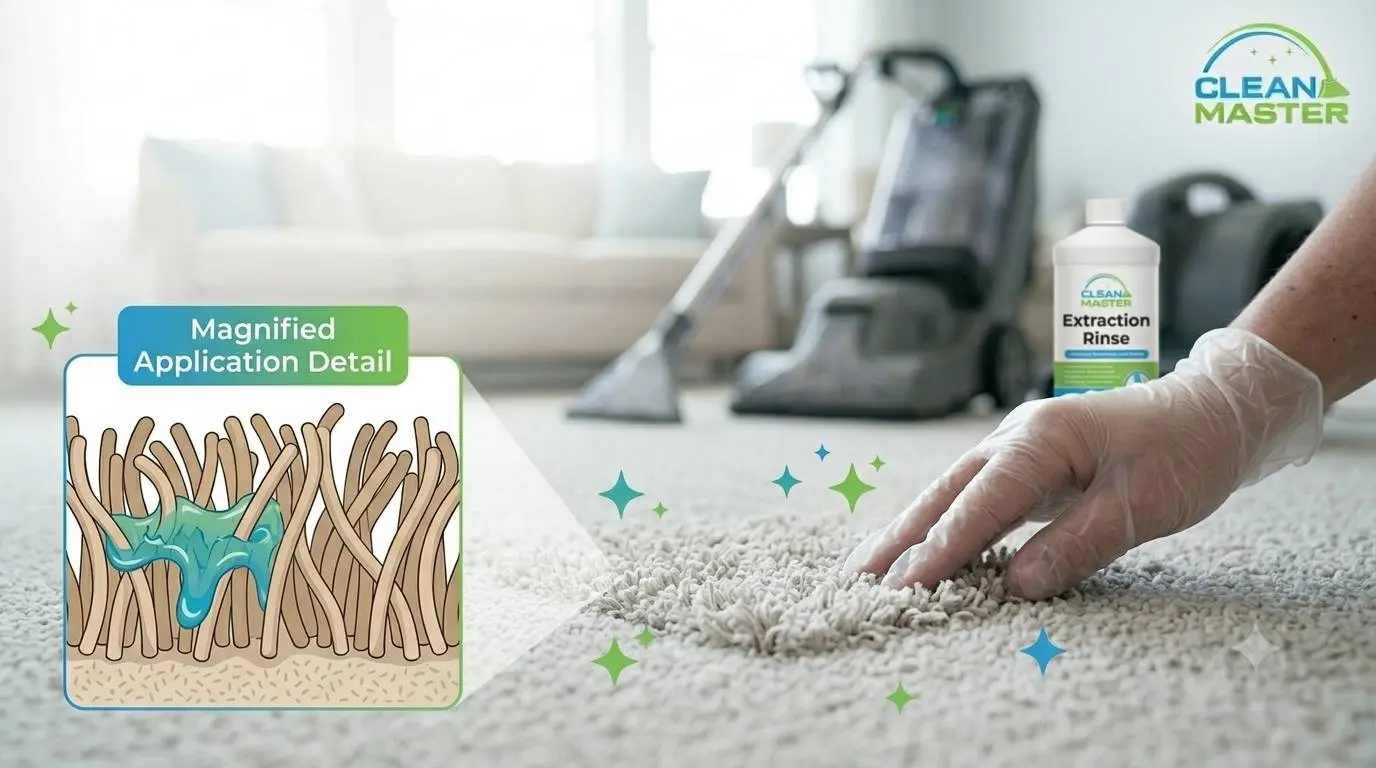
‍You cleaned your carpet, so why does it feel worse than before? If your carpet is sticky underfoot, looks dull, or seems to be attracting dirt faster than ever, you’re not imagining it. You’re dealing with carpet cleaner residue, and it’s one of the most common post-cleaning frustrations homeowners run into. The good news is that residue is fixable. As professional carpet cleaners serving the Dallas–Fort Worth (DFW) area, we see this regularly, and we know exactly what causes it, how to identify it, and how to get rid of it for good. Here’s the complete breakdown. What Is Carpet Cleaner Residue? Residue is cleaning solution, or the dirt it loosened, that wasn’t fully extracted from your carpet fibers during the cleaning process. Instead of being pulled out with the wastewater, it dried in place inside the fibers. Once dry, that leftover solution acts like a magnet. It has a sticky, slightly tacky quality that traps airborne dust and foot traffic debris far more aggressively than clean carpet fibers would. The result: a carpet that looks and feels worse than it did before cleaning, and that re-soils at an accelerated rate going forward. How to Tell If Your Carpet Has Residue Residue doesn’t always announce itself obviously. Here are the four signs to look for. Sticky or Crunchy Texture Run your hand across the carpet or walk across it in bare feet. If the fibers feel sticky, stiff, or slightly crunchy rather than soft and springy, that’s a strong indicator of trapped solution. This is most noticeable in areas that received the most cleaning product, high-traffic zones, stain-treated spots, or areas that were scrubbed repeatedly. Carpet Re-Soiling Unusually Fast If you cleaned your carpet last week and it already looks grimy again, residue is almost certainly the reason. The sticky film left behind by unextracted solution grabs onto everything, dust, pet dander, tracked-in dirt, and holds it on the surface. Carpets with residue can look dirty again within days of cleaning, no matter how carefully you maintain them. Read our guide on why carpets get dirtier after cleaning for more on this pattern. White or Chalky Marks on Carpet Fibers In some cases, residue is visible, particularly with solution-heavy DIY cleans. Look for white or chalky marks along carpet fibers, especially in areas where product was applied directly or where the machine overlapped repeatedly. This is dried cleaning solution, and it won’t brush away with vacuuming alone. Dull or Flat Appearance Clean carpet fibers have a natural reflectivity and texture that makes the surface look fresh and even. Residue coats the fibers and mutes that appearance, leaving the carpet looking flat, lifeless, and grey, even if it was just cleaned. If your carpet looks duller after cleaning than before, residue is a likely culprit. What Causes Carpet Cleaner Residue? Understanding the cause helps you fix the right problem and avoid repeating it. Insufficient Rinsing and Extraction Passes This is the most common cause. Cleaning solution is applied to the carpet, but not enough rinse passes are made to flush it out fully before extraction. The solution loosens dirt effectively, but if it isn’t thoroughly flushed and pulled from the fibers, it dries in place. With DIY machines especially, it’s tempting to do a single pass and move on, but carpets, particularly in high-traffic areas, often need multiple rinse passes to extract cleaning product completely. Skipping this step leaves residue behind every time. Using the Wrong Product Laundry detergent, dish soap, and general-purpose household cleaners were not designed for carpet cleaning. They’re high-sudsing formulas that foam excessively when agitated in a carpet cleaner, produce far more residue than purpose-made carpet solutions, and are much harder to extract fully. Even small amounts of these products left in carpet fibers create significant residue problems. This is one of the reasons we consistently advise against using laundry soap in a carpet cleaner, not just because of machine damage risk, but because the residue outcome is almost guaranteed. DIY Carpet Cleaners with Low Extraction Power Consumer carpet cleaning machines are useful tools, but their suction power is considerably lower than professional-grade equipment. That extraction gap means more solution and more loosened dirt stays in the carpet after each pass. Even when the right product is used at the right concentration, a machine that can’t extract powerfully enough will leave residue behind simply because it lacks the capability to remove everything it disturbed. This isn’t a reason to avoid DIY carpet cleaning altogether, but it is a reason to understand its limits and compensate with thorough rinsing technique. How to Remove Carpet Cleaner Residue Method 1: Warm Water Rinse Pass This is the first thing to try, and it works well for mild to moderate residue from purpose-made cleaning solutions. Fill your carpet cleaner’s tank with plain warm water, no solution, no additives. Run slow, overlapping passes over the affected area, allowing the warm water to penetrate the fibers and re-dissolve the dried residue. Follow each pass immediately with an extraction pass to pull the water and the residue it’s carrying back out. For best results, make at least two full rinse-and-extract cycles over the area. After the final pass, run the machine in extraction-only mode to remove as much remaining moisture as possible. Then set up fans and allow the carpet to dry fully before assessing. See our guide on how to dry carpet after cleaning for the fastest drying approach. For many cases of mild residue, one thorough warm water rinse is all it takes. The carpet will feel noticeably softer and look brighter once dry. Method 2: Baking Soda Dry Absorption For residue that has fully dried, particularly the white, chalky variety visible on fibers, a dry absorption approach can be effective as either a standalone treatment or a complement to the rinse method above. Sprinkle a generous, even layer of baking soda over the affected area. Work it gently into the fibers with a soft brush or your fingertips, then allow
Read more
Will Carpet Cleaning Get Rid of Fleas 2

‍Will Carpet Cleaning Get Rid of Fleas

If you’ve discovered fleas in your home, carpet cleaning is a reasonable instinct, fleas live in carpet, cleaning removes things from carpet, so cleaning should remove fleas. That logic is partially correct, and partially why so many homeowners clean their carpet, think the problem is solved, and find themselves dealing with fleas again two weeks later. At Clean Master Carpet Cleaning, we’ve seen this play out from both sides across Dallas–Fort Worth (DFW) homes. Carpet cleaning is a valuable part of flea elimination, but only when it’s part of the right plan. Here’s what it actually does, what it doesn’t, and what the complete approach looks like. What Carpet Cleaning Does to Fleas Professional hot water extraction removes a meaningful portion of the flea population living in carpet, adult fleas, some larvae, and flea dirt, the dried blood that flea larvae feed on. The heat and suction combination is effective at disrupting the surface-level flea environment, and vacuuming before a professional clean further reduces the population before the machine starts. Steam cleaning also kills adult fleas and some larvae on contact through heat, temperatures above 95°F kill fleas at all life stages, and steam cleaners operate well above that threshold. So yes: carpet cleaning helps. The adult flea count in your carpet goes down after a professional clean. The flea dirt that sustains larvae is removed. The carpet environment becomes significantly less hospitable. The problem is what carpet cleaning doesn’t reach. Why Carpet Cleaning Alone Doesn’t Solve a Flea Problem Flea Eggs Are Designed to Survive This is the core issue, and understanding it explains why re-infestation happens even after thorough cleaning. Flea eggs are smooth, non-sticky, and tiny, roughly 0.5mm. They don’t attach to carpet fibers the way pet hair or debris does. Instead, they fall deep into the carpet pile where they sit near the base of the fiber, close to the backing. Standard carpet cleaning, even professional hot water extraction, doesn’t reliably reach and remove eggs at that depth. Many survive the clean, hatch within 2 to 10 days, and the cycle begins again. Flea larvae fare slightly better against cleaning than eggs because they’re mobile, but they burrow into the deepest parts of the carpet pile and into carpet edges and corners where machine coverage is least effective. The result: a carpet clean that removes the visible, surface-level flea population while leaving the next generation intact and developing below the surface. Carpet Is Only One Part of the Environment Even if a carpet clean removed every flea and egg in the carpet, which it doesn’t, fleas don’t live exclusively in carpet. They live in: A carpet clean that doesn’t address these simultaneously is like bailing out a boat without plugging the hole. The carpet clears temporarily while the rest of the environment continues to sustain and reintroduce the population. What Actually Works: The Multi-Step Approach Clients who successfully eliminate fleas through a process that includes Clean Master carpet cleaning share a common pattern, they treated the entire environment simultaneously, not just the carpet. Step 1: Treat the Pet First This is non-negotiable. The pet is the host, fleas feed on the pet, lay eggs on the pet, and drop those eggs throughout every room the pet enters. Without vet-recommended flea treatment on the pet before cleaning begins, every cleaned surface gets re-seeded within hours. Talk to your vet about appropriate treatment, oral medications, topical treatments, or flea collars depending on your pet’s situation. The timing matters: treat the pet on the same day as the home treatment, not after. Step 2: Vacuum Thoroughly Before Professional Cleaning Vacuuming before a professional clean serves two purposes: it removes surface debris that would otherwise absorb cleaning capacity, and, critically for fleas, the vibration of vacuuming stimulates flea pupae to hatch, bringing them into a lifecycle stage that’s more vulnerable to both cleaning and pesticide treatment. Vacuum every carpeted surface, all upholstery, along baseboards, and under furniture. Seal and dispose of the vacuum bag or canister contents immediately outside the home. Step 3: Professional Carpet Cleaning This is where Clean Master comes in. Professional hot water extraction removes adult fleas, larvae, flea dirt, and the organic material that sustains the flea population at the carpet level. Combined with the pre-vacuum and pet treatment, the carpet clean addresses what it’s actually effective against rather than being asked to solve the whole problem alone. For homes with heavy flea infestation or multiple pets, upholstery cleaning at the same visit addresses the furniture environment simultaneously, a logical addition given the equipment is already on site. Step 4: Coordinate With Pest Control if Needed For moderate to severe infestations, professional pest control treatment, IGR (insect growth regulator) spray that prevents flea larvae from developing into adults, is the most reliable way to break the lifecycle in the home environment. Timed alongside professional carpet cleaning, the two treatments address different lifecycle stages that neither handles completely alone. If you’re dealing with a heavy infestation, coordinate your Clean Master appointment with your pest control treatment on the same day for maximum impact. At a Glance: What Carpet Cleaning Does and Doesn’t Do for Fleas Carpet Cleaning Effective? Better Solution Adult fleas in carpet Yes, removed by extraction Professional clean Flea larvae in carpet Partial, misses deep pile Professional clean and IGR treatment Flea eggs in carpet Largely survives cleaning IGR and repeat vacuuming Fleas on pet Not addressed Vet-recommended pet treatment Fleas in upholstery Not addressed by carpet clean Upholstery cleaning add-on Flea lifecycle continuation Not broken by cleaning alone Multi-step plan above Frequently Asked Questions How soon after carpet cleaning will fleas come back if I don’t treat the pet? Within days. A treated pet re-enters the home and immediately begins dropping eggs into the freshly cleaned carpet. Without pet treatment, carpet cleaning provides a very short window of improvement before the population rebuilds from the continuous source. Should I vacuum after carpet cleaning to help with fleas? Yes, daily vacuuming for two to
Read more
How Long Does Carpet Cleaning Take

How Long Does Carpet Cleaning Take

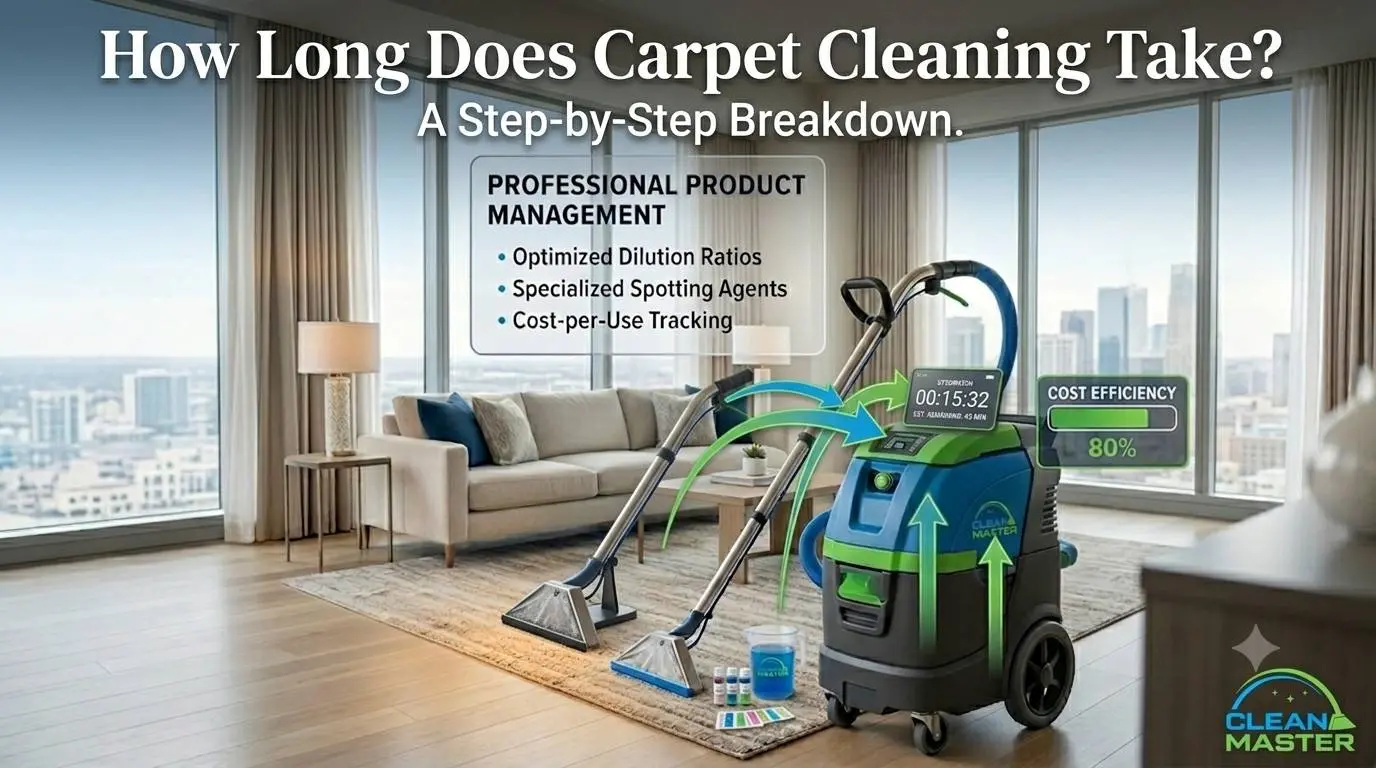
One of the most practical questions before booking a carpet clean, or doing one yourself, is how long it’s actually going to take. The answer depends on three things: how many rooms, which method, and what condition the carpet is in. At Clean Master Carpet Cleaning, we give every Dallas–Fort Worth (DFW) client a time estimate before we start. Here’s the framework we use, and what you should realistically expect whether you’re booking a professional or picking up the machine yourself. The Baseline: Time Per Room Everything in carpet cleaning time estimation starts at the room level. A single standard bedroom, roughly 150 to 200 square feet, moderately furnished, average soil level, is the unit everything else scales from. Method Time Per Room Includes Setup? Professional hot water extraction 20 to 35 minutes Yes, setup is fast with truck-mount Steam cleaning (consumer machine) 30 to 50 minutes No, add 10 to 15 min setup per session DIY carpet shampooer 40 to 60 minutes No, add 15 to 20 min setup and breakdown These are active cleaning times for a standard room in average condition. Several factors push each of these ranges upward, covered below. What Adds Time to Any Job Furniture Moving Furniture that needs to be moved before cleaning and returned after adds time to every room it affects. For a professional team, moving a standard set of living room furniture, sofa, chairs, coffee table, adds 10 to 15 minutes to that room’s total. For a solo DIY operator, it’s longer. Rooms that are pre-cleared by the homeowner before the appointment run 15 to 20% faster than rooms that require furniture handling on the day. If your schedule is tight, clearing what you can before the cleaner arrives, or before you start your own machine, is the most effective time-saving step available. Soil Level and Stain Pre-Treatment Lightly soiled carpet in a low-traffic guest room takes less time than heavily soiled carpet in a main hallway or living room that hasn’t been professionally cleaned in several years. Heavily soiled areas typically require: Stain treatment adds further time, spot pre-treatment, dwell time, and often a check pass after the main clean to confirm the result. A single heavy stain can add 10 to 20 minutes to a room’s total time depending on stain type and how it responds. Cleaning Method The method matters more than most people expect, not just for results, but for how long the job actually takes. Professional hot water extraction is faster per room than it sounds, because truck-mounted systems operate at high pressure and extract powerfully, fewer slow passes are needed to achieve thorough cleaning. A professional team running a whole home efficiently moves faster per room than any consumer machine. Consumer steam cleaners are slower per square foot because lower pressure means slower passes are required for adequate steam contact time. They also require more frequent water tank refills than a truck-mount, which adds interruption time on larger jobs. DIY carpet shampooers are the slowest overall. Lower extraction power means multiple passes are often needed, and the setup and breakdown time for a rental machine adds to the total. A living room that takes a professional 25 minutes can take a careful DIY operator 50 to 70 minutes to achieve a comparable level of clean. Full-Home Time Estimates: Professional vs. DIY Scaling from the per-room baseline to a whole home, here’s what realistic total appointment times look like: Home Size Professional Team DIY Operator 1 bedroom and living room (2 rooms) 45 min to 1.25 hrs 1.5 to 2.5 hrs 3 bedroom home (4 to 5 rooms) 1.5 to 2.5 hrs 3 to 5 hrs 5 bedroom home (6 to 8 rooms) 2.5 to 4 hrs 5 to 8 hrs These estimates include furniture moving on moderately furnished rooms and assume average soil levels. Heavy soiling, multiple stain treatments, or a large number of stairs add time to both columns. The time gap between professional and DIY widens significantly at larger home sizes, a 5-bedroom DIY clean is a full day’s work for one person, while a professional team covers the same home in half a morning. What a Clean Master Appointment Actually Looks Like When Clean Master Carpet Cleaning arrives at a DFW home, here’s how the time breaks down: For a standard 3-bedroom DFW home with average soil level and moderate furniture, our total appointment time, arrival to departure, typically runs 1.5 to 2.5 hours. We give a narrower estimate during booking once we know the room count and any specific concerns. Frequently Asked Questions Can I be home during the carpet cleaning appointment? Yes, most clients are home during Clean Master appointments. We work room by room, so you can move through the house as needed. The main thing to plan for is keeping pets and young children away from areas being cleaned and drying. Does carpet cleaning take longer if the carpet hasn’t been cleaned in years? Yes, meaningfully so. Heavily soiled carpet requires pre-treatment, slower passes, and often additional extraction to achieve a thorough result. For carpet that hasn’t been professionally cleaned in several years, add 20 to 30% to standard time estimates. We flag this during the initial walkthrough so expectations are set before we start. How much of my day does carpet cleaning actually take? For most DFW homeowners booking a standard professional clean, the appointment itself is half a morning or afternoon. Add the drying time, 6 to 12 hours with air movers running, and planning the clean for a day when the rooms can be off-limits until evening covers everything comfortably. Read our guide on how to dry carpet after cleaning for tips on speeding up that window. The Bottom Line: Plan for the Method, Not Just the Job A single room with a professional takes under 30 minutes. A whole home done right by a professional team takes half a day including drying. The same home done with a consumer machine takes most
Read more
How Much Does Upholstery Cleaning Cost 2

How Much Does Upholstery Cleaning Cost?

Upholstery cleaning quotes vary more than most homeowners expect, and the variation isn’t random. The price you pay for a professional upholstery clean reflects specific, understandable factors: what pieces are being cleaned, how large they are, and what add-on services are included. Once you understand those factors, any quote you receive makes immediate sense. At Clean Master Carpet Cleaning, upholstery cleaning is one of our core services across the entire Dallas–Fort Worth (DFW) area. Here’s a transparent breakdown of what drives the cost, and how professional cleaning compares to doing it yourself. What Drives Upholstery Cleaning Cost Factor 1: Size and Number of Pieces Per-piece pricing is the standard model for upholstery cleaning, and it’s the most straightforward way to understand what you’re paying for. Larger pieces take more time, more product, and more extraction work, the price reflects that directly. The number of pieces being cleaned in a single visit also affects total cost, though most professional companies, Clean Master included, don’t apply a per-piece discount for volume the way carpet cleaning has a natural economy of scale. Each piece requires individual setup, fabric assessment, and technique adjustment regardless of how many are being done in the same session. Factor 2: Protective Treatment as an Add-On Fabric protector, applied after cleaning, is the upholstery equivalent of carpet sealing. It creates a barrier on the fabric surface that repels liquid spills before they penetrate the fiber and slows the resoiling that accumulates with everyday use. For furniture that gets heavy use, family sofas, pet-friendly chairs, dining chairs with upholstered seats, protective treatment is worth the addition. It doesn’t change the cleaning cost but adds meaningfully to the total invoice. More on the specific numbers below. Per-Piece Pricing: What to Expect in the DFW Market Furniture Piece Professional Cleaning With Fabric Protector Accent / dining chair $25 to $45 per chair $35 to $60 per chair Armchair / recliner $60 to $95 $80 to $125 Loveseat $90 to $130 $115 to $165 Standard sofa (3-seat) $120 to $175 $155 to $225 Large sectional $200 to $350+ $260 to $450+ Ottoman $35 to $65 $45 to $85 A typical DFW living room with a sofa, loveseat, and two accent chairs runs $270 to $445 for a professional clean without protector, and $345 to $575 with fabric protector included. Most clients find the full-room quote lands somewhere in the middle of those ranges depending on piece size and soil level. Sectionals vary the most in price because configuration matters significantly, an L-shaped three-piece sectional is priced differently than a large modular U-shape. Any reputable company should measure or assess the sectional before quoting rather than giving a flat sectional price sight unseen. DIY vs. Professional: The Real Cost Comparison The DIY approach for upholstery cleaning typically involves a rented upholstery cleaning machine or a handheld extractor, plus cleaning solution. Here’s what that realistically costs. DIY costs: The limitations are real. Consumer upholstery cleaning machines have lower water pressure and significantly less extraction power than professional equipment. They clean surface-level soil effectively but struggle with: The result on lightly soiled furniture can be satisfying. On heavily used sofas, pet-occupied chairs, or anything with real staining, DIY results typically plateau well below what professional equipment achieves, and the over-wetting risk is higher with consumer machines. Professional cleaning costs more upfront but delivers more. The $120 to $175 for a professional sofa clean versus $45 to $75 DIY is a real difference, but professional extraction removes what DIY leaves behind, and the results last longer between cleans. For furniture that gets daily use or has pets, the professional outcome is typically worth the gap. What’s Included in a Clean Master Upholstery Clean When Clean Master handles upholstery cleaning across DFW, every job includes: We also clean upholstery as part of combined visits, carpet and upholstery cleaned in the same appointment, which is the most efficient use of a single service call and how most DFW clients book with us. More Upholstery Care Guides Frequently Asked Questions Is it worth cleaning upholstery that’s several years old? Usually yes, professional cleaning restores fabric texture and removes the accumulated soil that makes older furniture look worse than it is. Unless the fabric is structurally damaged, torn, fraying, or degraded beyond the surface, cleaning adds meaningful life to the piece. We’ve restored sofas that clients assumed were past saving. How often should upholstery be professionally cleaned? For average household use: once every 12 to 18 months. For homes with pets, children, or heavy daily use: every 6 to 12 months. Fabric protector extends this interval by slowing resoiling between cleans. Can all upholstery fabrics be professionally cleaned? Most synthetic fabrics, microfiber, polyester blends, olefin, can be professionally cleaned with hot water extraction. Natural fibers like linen, silk, and some cottons require low-moisture or solvent-based methods. Any reputable professional checks the care label (W, S, W/S, or X coding) before selecting a method. Clean Master does this on every job. The Bottom Line: Know the Factors, Then Get the Quote Upholstery cleaning cost in DFW comes down to what pieces you’re cleaning and whether fabric protection is added. Per-piece pricing is transparent and predictable, a sofa and loveseat combined runs $210 to $305 for cleaning alone in this market, with protector adding 25 to 30% on top. DIY cleaning costs less but delivers less on anything beyond light soil. For furniture that’s genuinely used, professional extraction produces results that justify the price difference and last longer between cleans. Contact Clean Master Carpet Cleaning today for upholstery cleaning across the entire DFW area and furniture that looks and feels the way it should.
Read more
Is Carpet Cleaning Really Profitable 2

Is Carpet Cleaning Really Profitable?

The short answer is yes, carpet cleaning can be genuinely profitable, with margins that outperform most service businesses at the same startup cost level. The longer answer is that profitability isn’t guaranteed by the business model alone. It’s determined by how you start, what you charge, and whether you build the job structure that captures the full value of every appointment. At Clean Master Carpet Cleaning, we’ve built a multi-service operation across the entire Dallas–Fort Worth (DFW) area. Here’s an honest look at what the numbers actually look like for a solo operator starting out, and what separates the operators who make good money from those who don’t. Startup Costs: What You’re Actually Getting Into The capital required to start a carpet cleaning business varies significantly based on one decision: portable equipment or truck-mount. Setup Type Equipment Cost Van / Vehicle Insurance + Licensing Est. Total Startup Portable unit (entry-level) $1,500 to $5,000 Existing vehicle or $5,000 to $15,000 used van $1,500 to $3,000/yr $8,000 to $23,000 Truck-mounted system $15,000 to $40,000+ $20,000 to $45,000 van $3,000 to $5,000/yr $38,000 to $90,000+ The trade-off is real. Portable units get you started for less, but they extract less effectively than truck-mounts, which affects results, client retention, and what you can honestly charge. Truck-mounted systems produce professional results that justify professional pricing and generate the reviews and referrals that build a sustainable client base. Most successful solo operators in the DFW market start with a mid-range portable unit to learn the business and generate early revenue, then transition to truck-mount within the first one to two years as cash flow allows. Starting with the cheapest possible setup and competing on price is the path to low margins and high churn. Additional startup costs to budget for: Revenue Potential: What Can One Operator Actually Earn? A solo carpet cleaning operator running a full schedule in the DFW market can realistically complete 3 to 5 residential jobs per day. Here’s what that translates to at market rates: Jobs Per Day Avg. Job Value Daily Revenue Annual Revenue (240 working days) 3 jobs $180 $540 $129,600 4 jobs $180 $720 $172,800 5 jobs $180 $900 $216,000 These numbers assume a $180 average job value, realistic for a 3-room residential carpet clean in DFW at current market rates. Before expenses, a full-schedule solo operator is looking at $130,000 to $216,000 in gross revenue. Gross revenue isn’t profit. From that, subtract: A well-run solo operation typically nets 40 to 55% of gross revenue after these expenses, putting take-home income in the $52,000 to $118,000 range depending on volume, efficiency, and how well startup costs are managed. That’s a meaningful income from a one-person operation, but it requires full scheduling, correct pricing, and the upsell structure below. Upsells: Where Profitability Actually Gets Built The difference between a $150 job and a $250 job is often 20 minutes of additional service. Upsells are where carpet cleaning businesses either capture that value or leave it on the table on every single appointment. The most effective upsells for carpet cleaning operators: Carpet protector (Scotchgard or equivalent): Applied after cleaning, takes 10 to 15 minutes per room, adds $30 to $60 per room to the invoice. One of the highest-margin add-ons available, the product cost is low, the application time is short, and the value to the client (protection that extends the clean) is easy to explain. Upholstery cleaning: A sofa or sectional cleaned alongside the carpet is a natural add-on, the equipment is already set up, the client is already home, and sofa cleaning typically adds $80 to $150 to the job. Operators who offer this consistently report it increasing average job value by 25 to 40%. Tile and grout cleaning: If you expand your service offering, as Clean Master has, tile and grout cleaning on the same visit captures additional revenue from the same client without an additional marketing cost. In DFW homes where tile is common in kitchens, bathrooms, and entryways, this is a high-conversion upsell. Deodorizing treatment: For pet owners especially, a deodorizing or enzyme treatment add-on at $40 to $80 per area is easy to present and frequently accepted. A solo operator who consistently upsells on 50% of jobs can increase their annual revenue by $20,000 to $40,000 without adding a single new client. What Determines Success or Failure Carpet cleaning businesses that struggle share common patterns: The operators who build profitable businesses do the opposite: they price correctly from the start, invest in equipment that justifies those prices, make upsells part of every appointment, and treat every job as a referral opportunity. The Bottom Line: Profitable, If You Build It Right Carpet cleaning offers genuine profitability for solo operators willing to start with the right equipment, price their work at market rates, and build the upsell habits that turn average job values into strong ones. The margin structure is favorable. The recurring revenue from repeat clients is real. The DFW market has consistent demand year-round. What it isn’t is a guaranteed income from day one with minimal investment. The operators who treat it as a real business, with real pricing, real equipment, and real service quality, are the ones who make it work. Clean Master Carpet Cleaning serves the entire DFW area with carpet cleaning, upholstery cleaning, tile and grout cleaning, and air duct cleaning. We’ve built the business that new operators are trying to build, and the foundation is always the same: do the work right, charge what it’s worth, and never leave value on the table.
Read more
How Much Tile And Grout Cleaning Costs 2

How Much Tile And Grout Cleaning Costs

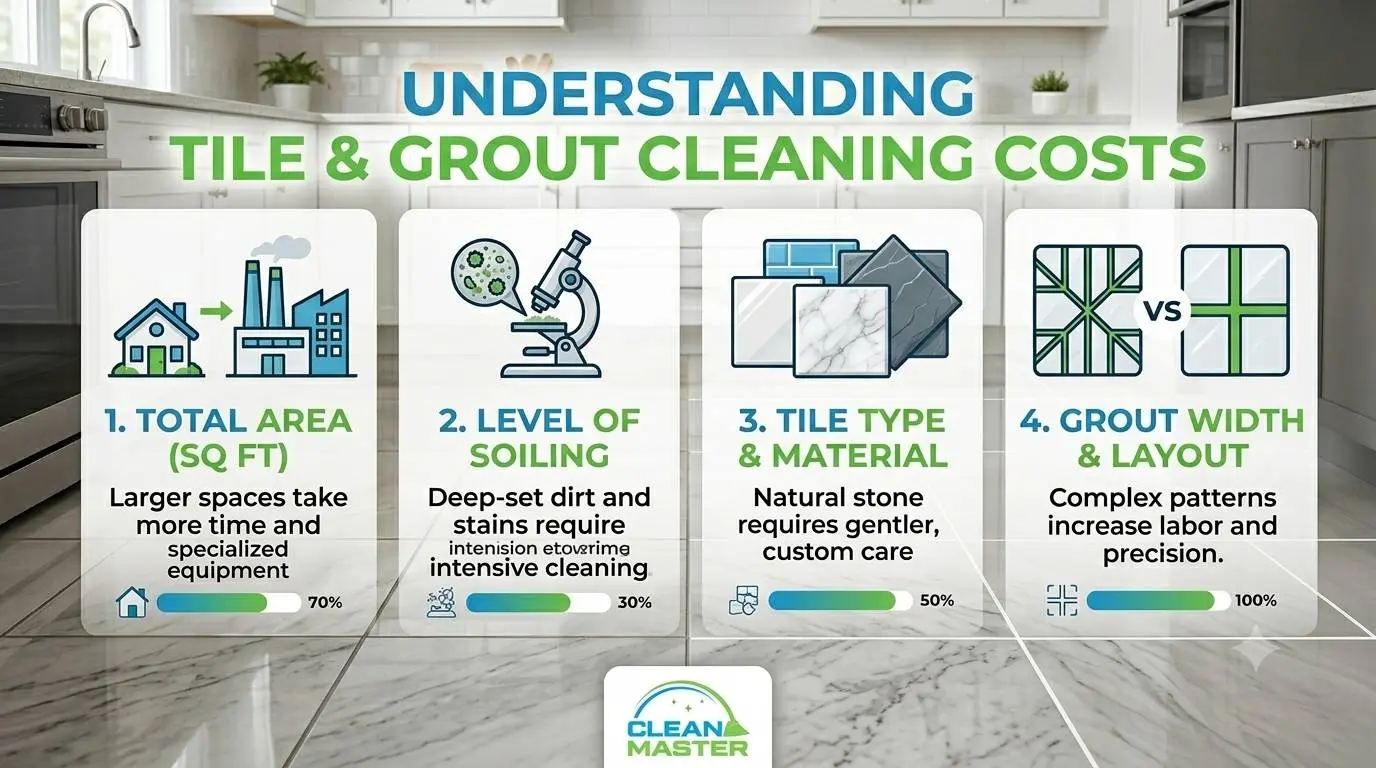
Pricing tile and grout cleaning is one of the decisions that new cleaning businesses get wrong most often, and in both directions. Undercharge and you’re doing physically demanding, equipment-intensive work for margins that don’t sustain a business. Overcharge without understanding the local market and you lose jobs to competitors who’ve done their homework. At Clean Master Carpet Cleaning, we’ve built our tile and grout pricing through real Dallas–Fort Worth (DFW) market experience. Here’s the structure we use and recommend, per square foot base rates, minimum job fees, and add-on pricing that reflects the actual value of each service. Start With Per Square Foot as Your Base Per square foot pricing is the standard model for tile and grout cleaning for good reason: it scales naturally with job size, it’s easy for clients to understand, and it allows accurate quoting based on a quick measurement rather than a subjective assessment of effort. Your per square foot rate should reflect three things: your equipment and supply costs, your time including setup, cleaning, and breakdown, and a margin that makes the business viable. In the DFW market, here’s where rates land by tile type: Tile Type Cleaning Only (per sq ft) Cleaning + Sealing (per sq ft) Ceramic $0.50 to $0.75 $0.75 to $1.10 Porcelain $0.60 to $0.85 $0.85 to $1.20 Natural stone $0.85 to $1.50+ $1.20 to $2.00+ Why tile type affects rate: Minimum Job Fees: Protect Your Time on Small Jobs Per square foot pricing breaks down on small jobs. A bathroom at 60 square feet at $0.65/sq ft is a $39 job, which doesn’t cover the time to load the van, drive to the location, set up equipment, clean, break down, and drive back. Minimum job fees solve this. In the DFW market, a reasonable minimum is $125 to $175 for a standalone tile and grout cleaning appointment. This covers: Communicate the minimum clearly at quoting. Most clients understand it, and if a small bathroom job triggers the minimum, offering to add an adjacent area such as a laundry room, entryway, or second bathroom at the per-square-foot rate is often an easy upsell that gets both parties better value from the visit. Add-On Pricing That Reflects Real Value Add-ons are where tile and grout cleaning jobs become significantly more profitable without significantly more time. The key is pricing them to reflect the actual value delivered, not as a token fee that undercuts the service. Grout Sealing Sealing is the most natural add-on to a tile and grout clean. The floor is already clean, the setup is already done, and applying sealer adds 15 to 30 minutes depending on area size. Price it at $0.25 to $0.40 per square foot on top of the cleaning rate, or as a flat add-on of $50 to $100 for standard residential jobs. The value proposition for the client is clear: sealing protects the clean they just paid for and significantly extends the interval before the next professional clean is needed. That’s an easy conversation. Offer it on every job, many clients who weren’t planning to seal will say yes when it’s explained simply. Heavy Stain or Grout Discoloration Treatment Heavily stained grout, particularly in kitchens, around showers, or in high-traffic entryways, requires pre-treatment, extended dwell time, and additional agitation beyond standard cleaning. This isn’t a premium the client should negotiate down; it’s additional work with a clear outcome. Charge a heavy soil surcharge of $0.15 to $0.25 per square foot on affected areas, or include it as a flat add-on of $35 to $75 depending on scope. Identify this during the walk-through before quoting so the client understands why it’s on the invoice. Grout Recoloring Grout recoloring, applying a colorant to restore or change grout color, is a higher-skill, higher-margin service that pairs naturally with deep cleaning. Pricing varies significantly by scope and product, but in the DFW market $1.50 to $3.00 per linear foot of grout is a reasonable range for professional recoloring. This is a service worth adding to your offering as your process matures, the margins are strong and the visual impact impresses clients immediately. How to Avoid Underpricing in a Competitive Market The DFW market has cleaning companies at every price point. When you encounter competitors quoting significantly below the ranges above, it’s worth understanding what they’re likely doing differently: Don’t race to the bottom. Price your work to reflect the equipment you run, the chemistry you use, and the outcome you deliver. Clients who choose the lowest quote and get poor results often become the clients who call Clean Master, or you, for a corrective clean. Position your pricing to attract clients who value the work, not just the number. A simple way to frame it in conversations with prospective clients: tile and grout cleaning priced below $0.40 per square foot in DFW rarely includes the equipment pressure, extraction thoroughness, or dwell time that produces lasting results. Know your value and hold it. Quick Reference: DFW Tile and Grout Pricing Summary Service Pricing Model DFW Range Ceramic tile cleaning Per sq ft $0.50 to $0.75 Porcelain tile cleaning Per sq ft $0.60 to $0.85 Natural stone cleaning Per sq ft $0.85 to $1.50+ Grout sealing (add-on) Per sq ft or flat $0.25 to $0.40/sq ft or $50 to $100 Heavy soil surcharge Per sq ft or flat $0.15 to $0.25/sq ft or $35 to $75 Grout recoloring Per linear foot $1.50 to $3.00 Minimum job fee Flat $125 to $175 The Bottom Line: Price the Work, Not Just the Square Footage Per square foot is your foundation, but a complete pricing structure includes minimum fees that protect your time on small jobs and add-ons that capture the real value of sealing, heavy treatment, and specialty services. Together, these elements build a tile and grout cleaning business that’s profitable at every job size and competitive in the DFW market without underselling the work. At Clean Master Carpet Cleaning, tile and grout cleaning is one of four core services we
Read more
Can You Walk on Wet Carpet After Cleaning 2

Can You Walk on Wet Carpet After Cleaning

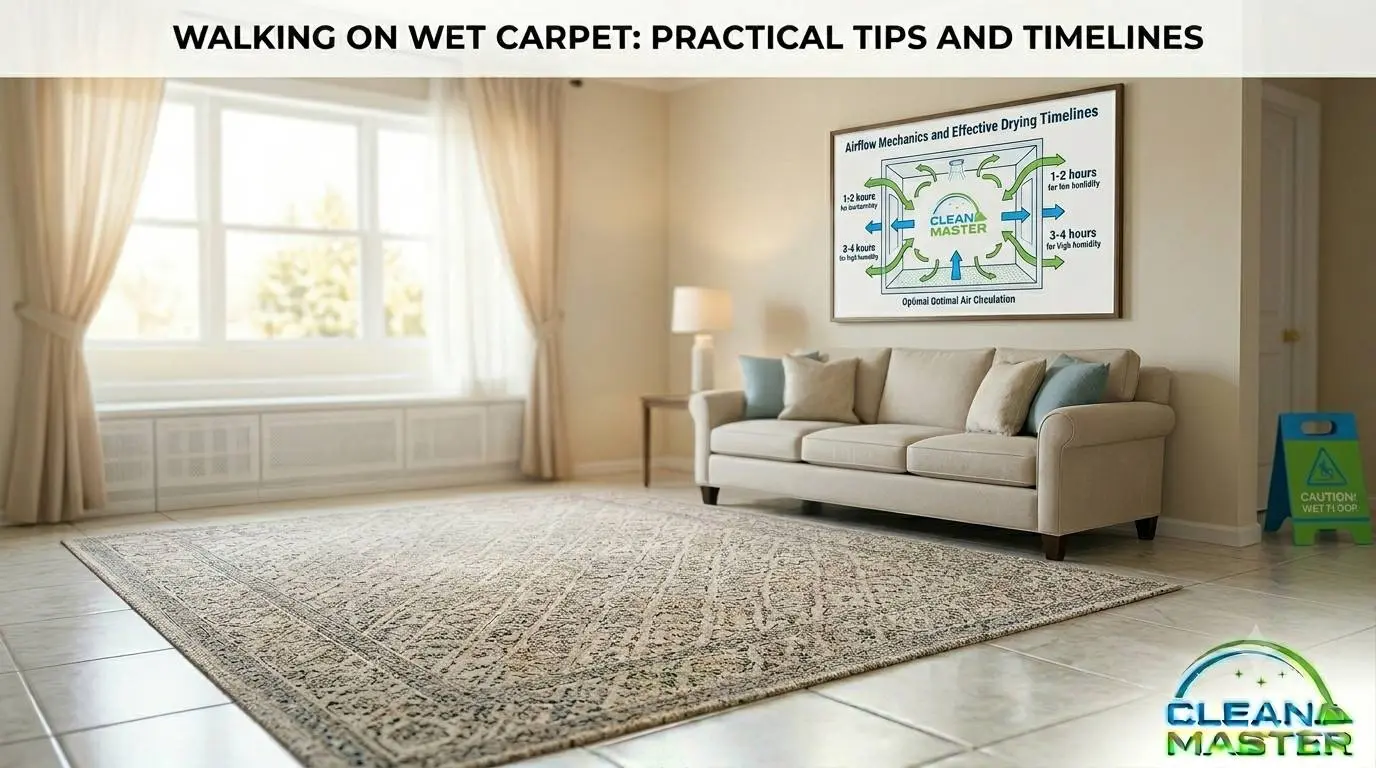
The carpet is clean, the technician has packed up, and you’re standing at the edge of the room in your shoes wondering how long you’re actually supposed to stay off it. Or maybe the cleaning happened yesterday and you’re just going about your morning, but the carpet still feels damp underfoot. The honest answer is: it depends on how wet the carpet is and what you’re wearing on your feet. At Clean Master Carpet Cleaning, here’s the practical guidance we give every Dallas–Fort Worth (DFW) client before we leave a job. The Short Answer Why Walking on Wet Carpet Is a Problem Re-Soiling From Feet and Shoes Wet carpet fibers are open and absorbent, the opposite of their normal state. In that condition, they pick up and hold whatever contacts them far more readily than dry fibers would. The result is re-soiling at exactly the spot you just paid to have cleaned, visible as darker traffic paths once the carpet dries, particularly in doorways and high-crossing areas. Fiber Compression and Matting Carpet fibers are significantly more vulnerable to compression when wet than when dry. The mechanical pressure of a footstep on a dry carpet pile is absorbed and released, fibers spring back. On wet fibers, that same pressure flattens the pile in the direction of the step and holds it there as the fiber dries. The result is matting, a directional flattening that makes traffic paths visible even after the carpet is fully dry. On plush or saxony carpet styles, this is particularly noticeable. Once the fibers have dried in a compressed position, they need mechanical agitation such as grooming with a carpet rake or professional re-cleaning to restore, and even then don’t always fully recover. How Long to Wait by Cleaning Method The right answer to “can I walk on it?” is closely tied to which cleaning method was used, because different methods leave very different amounts of moisture in the carpet. Cleaning Method Typical Drying Time Safe to Walk On (Clean Socks) Fully Dry for Normal Use Steam cleaning 1 to 3 hours After 30 to 60 minutes After 1 to 3 hours Professional hot water extraction 6 to 12 hours After 2 to 3 hours After 6 to 12 hours DIY carpet shampooer 12 to 24 hours After 4 to 6 hours After 12 to 24 hours Steam cleaning introduces the least moisture of any method, vapor rather than liquid water, so carpet reaches a walkable state faster than any other approach. Light sock traffic after 30 to 60 minutes is generally fine; normal use resumes once the hand-test passes, usually within 1 to 3 hours. Professional hot water extraction uses more water than steam but extracts powerfully. Clean Master’s truck-mounted equipment leaves carpet damp rather than wet. With air movers running after the clean, we typically see carpet ready for careful sock traffic within 2 to 3 hours and fully dry within 6 to 12 hours. In DFW summer humidity, add time accordingly. DIY carpet shampooer introduces the most moisture and extracts the least, the extraction power gap between consumer machines and professional equipment is significant. These carpets stay wetter longer, and the safe-to-walk window is correspondingly extended. 4 to 6 hours before even careful sock traffic, and 12 to 24 hours before normal use, is a realistic expectation. Read our guide on how long it takes carpet to dry after cleaning for a full breakdown of drying variables. How to Know When It’s Actually Dry Don’t go by surface feel alone, carpet can look dry while still holding moisture deeper in the pile. Use the hand-test: Check multiple spots across the room, particularly near walls and under where furniture was positioned, these areas tend to dry slower than the open floor. What to Do When You Can’t Avoid the Room Sometimes a room needs to be crossed before it’s fully dry, a bathroom that’s the only access route, a hallway, a child’s bedroom. In those cases: Minimize traffic to essential crossings only. Every footstep on wet carpet increases the re-soiling and compression risk. If the room can be avoided, avoid it. If it can’t, keep crossings to the absolute minimum. Wear clean socks. Of all the options, clean dry socks cause the least damage. They don’t introduce the oils and residue of bare feet, and they distribute foot pressure more evenly than shoes without the debris risk. If you need to cross a freshly cleaned room, put on a clean pair of socks specifically for that purpose. Step lightly and don’t shuffle. Heavy footfalls and shuffling feet press fibers down and twist them. Light, deliberate steps with a full heel-to-toe motion cause less compression and fiber disturbance than dragging or sliding. Frequently Asked Questions Can pets walk on wet carpet after cleaning? No, pet paws carry outdoor debris, oils, and in the case of dogs, whatever they’ve walked through outside. They should be kept out of cleaned rooms until fully dry. This is also relevant for pet odor treatments, letting a pet back onto a treated area before it’s dry can reintroduce the contamination you just addressed. My carpet dried with visible traffic marks. Can they be fixed? Often yes. Once the carpet is fully dry, try grooming the affected areas with a carpet rake or stiff brush, working against the direction of the compression. This lifts flattened fibers and can significantly reduce the appearance of traffic marks. If the matting is severe, a professional re-clean and grooming from Clean Master can restore the pile more completely. Read our guide on how to fluff carpet after cleaning for step-by-step technique. What about children crawling on the carpet? Keep children off until the carpet is fully dry, not just for re-soiling reasons but because residual cleaning solution, even in small amounts, shouldn’t be in direct contact with crawling infants. The same applies to pets that spend time lying on carpet. Fully dry means the hand-test passes, not just that it looks dry at the surface.
Read more
Can Steam Cleaning Carpet Eliminate Odors or Just Mask Them_ 2 (1)

Can Steam Cleaning Carpet Eliminate Odors or Just Mask Them?

Steam cleaning has a genuine deodorizing effect on carpet, the heat neutralizes many odor-causing compounds and the vapor lifts surface contamination that contributes to stale smells. For a lot of common carpet odors, it works well. But steam has a ceiling. For odors rooted deep in the carpet backing, padding, or fiber structure, steam addresses the symptom without reaching the source, and in one important case, it can actually make the problem worse before making it better. At Clean Master Carpet Cleaning, we’ve seen both outcomes across Dallas–Fort Worth (DFW) homes. Here’s the odor-by-odor breakdown of what steam handles, what it doesn’t, and what to reach for instead. Odor-by-Odor: What Steam Cleaning Actually Does General Stale Carpet Smell: Works Well The flat, musty odor that accumulates in carpet over months of normal use, foot traffic, dust, skin cells, ambient household smells, responds well to steam cleaning. The heat disrupts the volatile compounds responsible for that background stale smell, and the vapor lifts the surface-level organic material contributing to it. For carpets that simply smell lived-in and need refreshing, steam cleaning delivers a noticeable improvement that lasts for weeks with regular vacuuming maintenance. Food and Cooking Odors: Works Well for Recent Odors Food odors absorbed into carpet fiber, spilled cooking oil, food particles, general kitchen traffic, respond reasonably well to steam, particularly when the source is relatively recent. The heat breaks down volatile fatty acids and organic compounds that carry food smell. For older or deeply embedded food odors, a baking soda pre-treatment applied before steaming significantly improves results. Sprinkle generously, leave for 30 minutes to absorb odor compounds, vacuum thoroughly, then steam. The combination addresses both surface and absorbed odor more effectively than steam alone. Pet Urine Odor: Steam Alone Makes It Worse This is the most important exception, and the one that catches the most people off guard. Steam heat activates the uric acid crystals in pet urine, temporarily intensifying the odor before it dissipates. Without enzyme pre-treatment to break down those crystals first, steam doesn’t solve pet urine smell. It briefly amplifies it, then leaves the underlying source intact. The correct sequence for pet urine odor is always: Enzyme cleaner breaks down uric acid at the molecular level, eliminating the odor source rather than temporarily masking or activating it. Read our full guide on how to use enzyme cleaner on carpet for the right technique. Steam alone is never the right first response to pet urine smell. Musty and Mildew Odor: Works on Surface, Not Deep Mildew Steam’s heat kills surface mold and mildew spores effectively, which is why it works on the mild mustiness that develops in carpet in humid conditions. For light, surface-level mildew odor, steam cleaning often resolves it completely. For mildew that has established itself in the carpet backing or padding, typically from a previous over-wetting event or persistent humidity, steam can’t reach deep enough to address the source. The surface smell may improve temporarily, but if the mildew is in the padding, it returns. This situation requires professional extraction and in more serious cases, padding replacement. Read our guide on whether carpet cleaning can cause mold to understand how moisture and mildew develop in carpet systems. If the musty smell returns within a few days of steam cleaning, the source is below the surface and needs professional assessment. Smoke and Tobacco Odor: Steam Alone Is Insufficient Smoke odor is one of the most persistent carpet odors to eliminate because the compounds responsible, polycyclic aromatic hydrocarbons and other particulates, penetrate deeply into fiber, backing, and padding. They also settle into walls, upholstery, and HVAC systems simultaneously, which means carpet-only treatment addresses one part of a whole-room problem. Steam improves smoke odor in carpet noticeably, the heat volatilizes some surface-level smoke residue and the vapor lifts particulates from the fiber. But for meaningful, lasting smoke odor removal from carpet, professional hot water extraction with odor-neutralizing chemistry is required. Steam alone produces a temporary improvement that fades as remaining compounds off-gas from deeper fiber layers. At a Glance: Steam Cleaning Odor Effectiveness Odor Type Steam Effectiveness Best Approach General stale smell Very good Steam clean as normal Food and cooking odors Good Baking soda pre-treatment then steam Pet urine odor Can worsen Enzyme cleaner first, then steam Musty and surface mildew Good for surface only Steam for light cases; pro clean for deep mildew Smoke and tobacco Temporary improvement only Professional extraction and odor treatment When to Call Clean Master Instead Steam cleaning handles maintenance-level odor effectively. When the smell is coming from deeper in the carpet system, backing, padding, or embedded contamination, professional hot water extraction is what reaches it. At Clean Master Carpet Cleaning, we combine professional-grade extraction with chemistry matched to the specific odor type. Pet odor, smoke, mildew, each requires a different treatment approach, and getting it right means the odor doesn’t come back in a week. We serve the entire DFW area with carpet cleaning, upholstery cleaning, tile and grout cleaning, and air duct cleaning. If steam hasn’t resolved the smell, we will. Hot-water extraction removes the source of most odors, but deep pet contamination needs targeted treatment before the steam ever touches the carpet. That’s the approach we take with every job involving carpet cleaning in Fort Worth homes where odors have set in. More Carpet Care Guides Frequently Asked Questions How long after steam cleaning does carpet odor go away? For odors steam handles well, stale smell and light food odors, the improvement is noticeable once the carpet dries, typically within 1 to 3 hours. If odor returns after the carpet is fully dry, the source is deeper than steam reached. Read our guide on why carpet smells worse after cleaning if you’re dealing with a persistent post-clean smell. Can I add deodorizer to my steam cleaner to boost odor removal? Most steam cleaner manufacturers recommend distilled water only in the tank. Adding deodorizing products risks machine damage and can leave residue. If you want to boost odor
Read more